Parents and Caregivers Barred from Early Childhood Services

Search Newsroom Posts
FamilyBoost childcare tax rebate helping families with ECE costs

Parent vaccination issues.
November 19, 2021.

How many parents and caregivers will be limited from participating in ECE and how many children will have a delayed start or be withdrawn from early childhood education because the Ministry of Education has said that parents performing certain roles do not have to be vaccinated and parents performing other roles do. Yet it hasn’t said that parent vaccination is mandatory. As reported today by Radio NZ, the Ministry is not keeping unvaccinated parents out of schools.

Contradictions and confusion on parent vaccination

The COVID-19 Public Health Response (Vaccinations) Order 2021 requires all workers (voluntary and paid) in education and health to be vaccinated against Covid-19.  This applies to any person over the age of 12 years who carries out work at or for a licensed ECE service, as well as all persons in the home where licensed homebased care is provided.

But the Order does not cover clients and patients of health and education services. It does not require parent vaccination.

In our newsletter of 29 November, we stated that the Order “does not prevent parents from being involved in their child’s learning and ECE services can continue to welcome parents to stay. This is an important part of the philosophy of early childhood education and care, and is central to achieving better outcomes for children. But all ECE services will need to provide clear communication to parents and whānau that before assisting, for example reading a story to other children or doing dishes, they will need to provide proof of vaccination.”

However, the Ministry of Education wrote in its 3rd Nov 2021 Bulletin that early learning (sic. early childhood education (ECE) services) could only allow unvaccinated parents and caregivers to drop off or pick up their child, attend a meeting (the example given was a parent-teacher interview), or to settle their child in. Parents and caregivers must be vaccinated to stay in education and care centres that provide specialist early intervention support for children and parents/caregivers.

The Ministry of Education provided services with a template of a letter to give to parents that explicitly states families are not to spend any time in the service once their child has settled in, unless they have had a first vaccination by 15th November and are fully vaccinated by 1 January 2022.

A lack of clarity from the Ministry on several matters will see more services changing from an open-door policy with parents, caregivers and whānau to a closed-door policy for all (including those who are vaccinated)

  • The Ministry has not done well in communicating with services and teaching staff on whether they have a right to ask for vaccination certificates from whānau.
  • The template for a Vaccination Register it provided to services is for workers (paid and voluntary) and includes fields to write in the employee’s number and the type of work undertaken. It has not instructed ECE services to use the Vaccination Register for parents, caregivers and whānau.
  • Different ECE services have interpreted what the Ministry wants them to do differently. For example, one has decided not to let any parents in the door, no matter what, even on an infant’s first day.
  • The Ministry has not defined what constitutes “settling-in” and how long would be too long for a parent or caregiver to stay with their child for settling-in before the unvaccinated parent would be in breach of the Order.  Does the exception for “settling-in” apply only for families new to a service?  What about children who become anxious about their parent leaving for whatever reason at any time? And, children returning from a holiday break can need a period of settling-in. 
  • It’s inconsistent to allow unvaccinated people to stay when setting-in their child but not allow an unvaccinated mum to stay and breastfeed her infant, or not allow parents to respond to their child’s pleas to stay and watch them paint a picture for them.
child learning discussion

The Problem

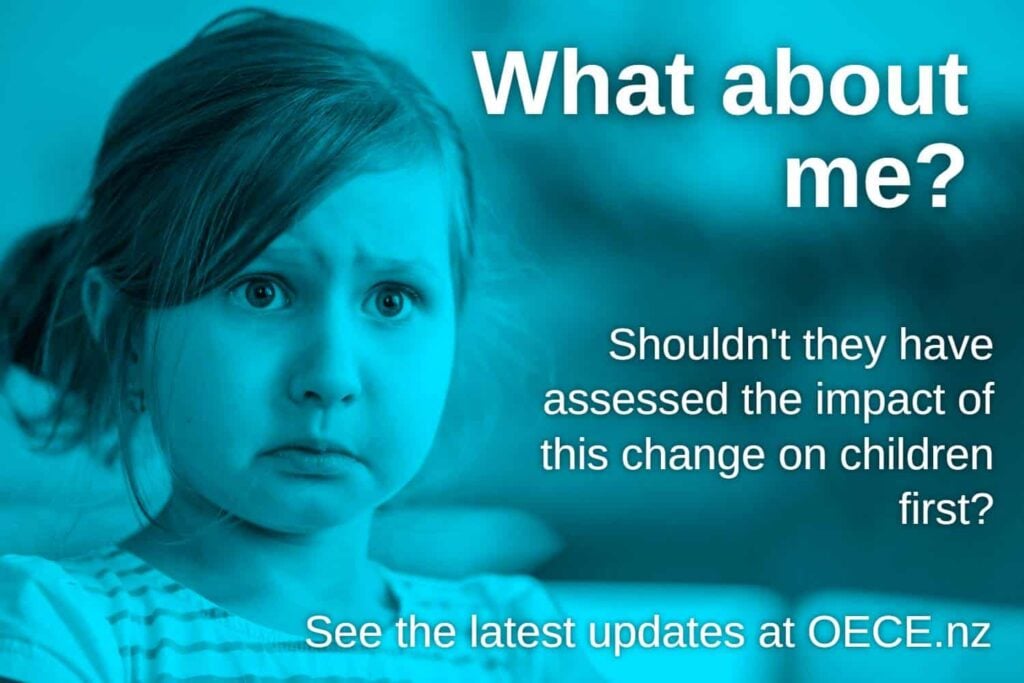
The Ministry of Education either believes that it will be good for all teacher-led centres and home-based services to reduce their quality by becoming ‘drop and run’ services, or it has not thought through the implications of its messaging.  As a sector is this what we want services to become?

Quality teaching builds partnerships with children’s family and whānau.

(MoE Best Evidence Synthesis, Early Foundations, 2003).

Should the Ministry be keen to avoid the headline that parents, caregivers and whānau (and therefore in some cases their children too) are banned from ECE (along with non-vaccinated workers), perhaps it could say it will review its position and interpretation of the Vaccination Order when under 12s can be vaccinated?

Implications

Because vaccination is not yet available for under 12s, it is understandable that the Ministry of Education feels it has no choice but to limit non-vaccinated/ non-disclosing parents and caregivers from being on site and near other people’s children.

But this will result in children being excluded from ECE. It will also limit the participation of children, especially children with special needs whom teaching staff are unwilling or unable to meet, such administering Rectal Diazepam to manage epilepsy seizures or applying emollients to the child’s body several times a day as treatment for eczema.

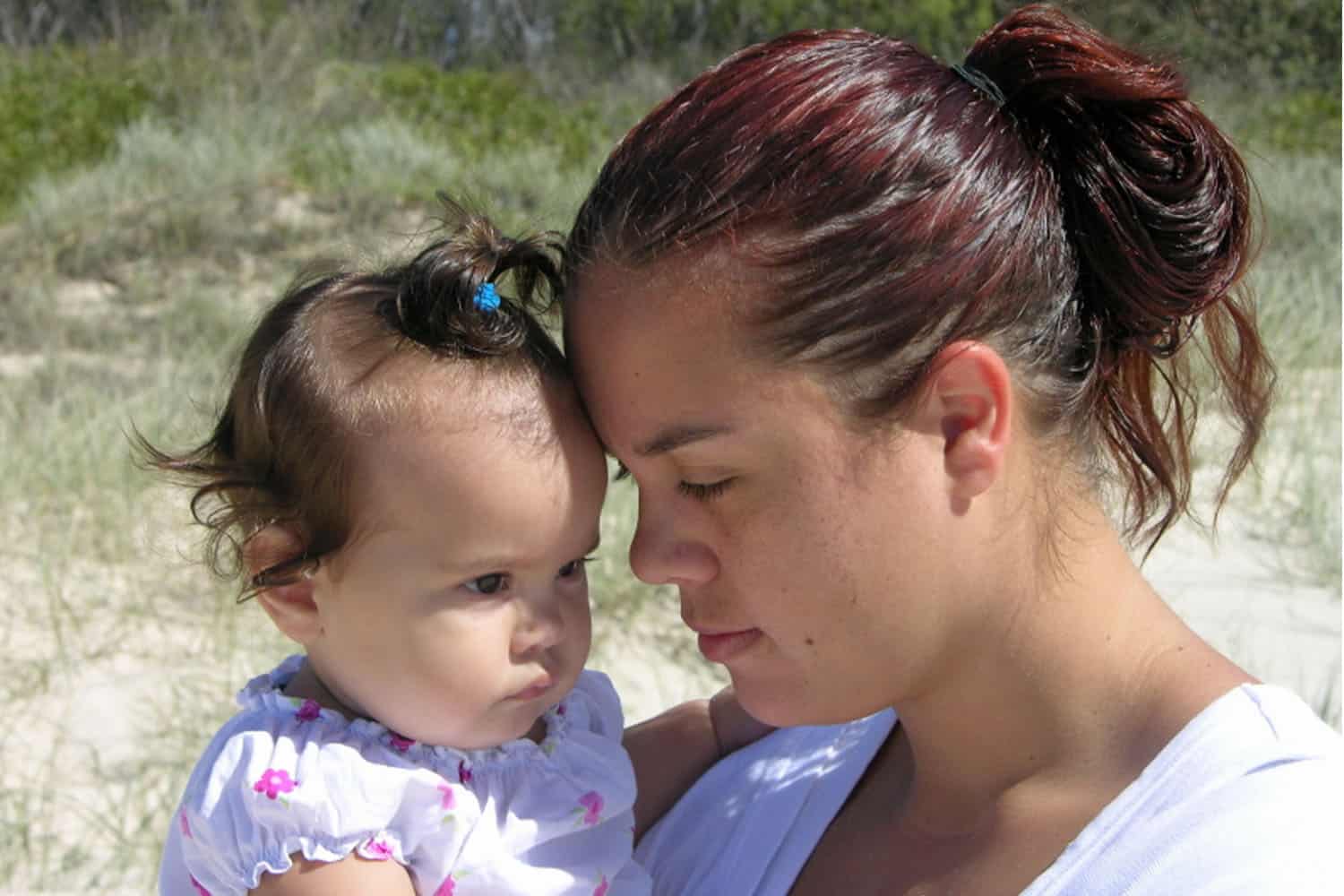
Parent breastfeeding infant. Childcare fees. Search

Parents who are breastfeeding may feel they have no choice but to withdraw their child or delay enrolment, as will parents who are concerned that they are unable to see what happens to children behind closed doors.

The Ministry of Education told service providers in its Bulletin that they could call the Police if they have trouble with an unvaccinated person wanting to come on site. ECE staff and managers could be faced with some very tricky situations to manage and explain, especially when separation, exclusion, and reporting of parents and caregivers is not in the best interests of the child.

So far, the Ministry of Education has left ECE services wishing to uphold the kaupapa of early childhood education to work out how they can possibly do this. An option some services are considering or have already resorted to doing, is to meet with individual families outside of the licensed space and funded hours of operation.  

Given these implications what do you think needs to happen now?
Already subscribed?
ECE Newsroom

NZ’s own specialist ECE newsroom. 
Access national and local stories, in-depth analysis, & original commentaries.  

Membership Support for Teachers & Educators

(Comes with free Newsroom and Research access)

Membership Support for ECE Service Owners, Managers, & Community Organisations

(Comes with free Newsroom and Research access)

Researchers & Tertiary Education Libraries

Full access to over 25 years of ECE academic research articles – NZIRECE Journal.
Plus, guidance and resources on doing and publishing research

Has this been useful?  Give us your feedback.

You are welcome to add a link to this page on your website. Copyright belongs to the OECE so please do not copy any content without our written permission.

Information provided is of a general nature. It is provided ‘as is’, and we accept no liability for its accuracy or completeness. See our Terms and Conditions.

Related Posts

teacher wages, pay scales, in childcare and early childhood education

What ECE Teachers and Workers Earn: Pay, Benefits and Conditions

Anyone thinking about getting a job in ECE working in ECE or thinking about moving to a different service will find clear, practical information in this article about pay rates, employment conditions, and what to expect in different roles. It explains everything from starting salaries and pay‑step calculations to workplace rights, benefits, and how to recognise a supportive, professional environment.

Read More »
ECE Services staff immunisation and vaccination

How to do a Press Release Right

Education Press Release.

If you are planning to invite a local reporter along to your event or send an education press release out to manage what the media reports about something that has happened at your service, it pays to do a bit of planning beforehand to increase your chances of success.

Here are some tips to get you started on the ri

This is a member/subscriber only post. To access it, please see the message below for details on access and joining.

Read More »
caring and teaching children with additional needs - image of down syndrome child

We’re All in This Together: Approaches to Inclusive Early Childhood Education for Disabled Children in Aotearoa New Zealand and the United States, and What We Can Learn From One Another

FULL REFERENCE: McAnelly, K., Purdue, K., Hall, L.J., Odom, S.L., & Hall, E. (2025). We’re all in this together: Approaches to inclusive early childhood education for disabled children in Aotearoa New Zealand and the United States, and what we can learn from one another.  NZ International Research in Early Childhood Education Journal, 27, pp. 1-16.

ABSTRACT: Research from Aotearoa New Zealand and the United States continues to explore disabled children’s right to an inclusive early childhood education (ECE). In this article we examine ECE provision, key legislation and policy, and research on inclusion in our two countries. We also look at how initial teacher education and professional learning and development programmes help to strengthen inclusive practice in our respective countries. There is a lot that each country can draw on and learn from the other in relation to supporting disabled children’s inclusion in ECE. Drawing on insights from our cross-country comparisons, we offer recommendations aimed at amplifying disabled children’s rights to inclusive ECE.  

KEY WORDS: Disability, inclusion, children’s rights, teacher education, cross-country comparison.

Log-in to read the full research paper below. Or order a pdf copy of the article from the main NZIRECE Journal page.

Introduction

The provision of equitable and inclusive early childhood education (ECE) for disabled children differs from country to country, based on each country’s values and imperatives. Although direct adoption of other nations’ approaches is not advisable, countries can learn from each other and improve their own inclusive ECE practices.

A review of literature highlighted for us – early childhood researchers from Aotearoa New Zealand, hereafter, Aotearoa, and the United States (US) – a lack of cross-national comparative studies on equitable and inclusive ECE for disabled children and their families.  As a step towards addressing that gap, we compared approaches to inclusive education in our respective jurisdictions. We agreed that comparative research could offer fresh insights into how inclusive ECE can be conceptualised and enacted in ways that uphold the rights of disabled children.

This is a member/subscriber only post. To access it, please see the message below for details on access and joining.

Read More »
NZIRECE Journal early childhood education research

Through the Eyes of the Puppet: Using Puppetry to Foster Children’s Sense of Wellbeing and Belonging

FULL REFERENCE: Karaolis, O. and Little, C. (2021). Through the eyes of the puppet: Using puppetry to foster children’s sense of wellbeing and belonging.  NZ International Research in Early Childhood Education Journal, 23(2), 52 – 62.

Log-in to read the full research paper below. Or order a pdf copy of the article from the main NZIRECE Journal page.

ABSTRACT: In studies of health, wellbeing and children with diverse abilities, the UN Convention on the Rights of the Child is often referenced due to its emphasis on the entitlement of all children to receipt of a “full and decent life” (United Nations, 1989, p. 7). The Convention argues that all children have the right to an education that celebrates their culture and identity, maximises individual ability and which recognises the rights of children as autonomous participants in decisions about their lives. Early childhood programmes serve a pivotal role in establishing a child’s sense of wellbeing, supporting a sense of belonging by communicating the message that all children and their families are valued members of the learning community. This article tells the research story of how puppetry was used as a tool to support educators in facilitating the engagement of children in their early childhood classrooms. It illustrates, how puppetry can actively support young children’s wellbeing by encouraging positive interactions, facilitating friendships, and providing opportunities for educators to express the value of every child.

Key words: Puppetry, puppets, wellbeing, belonging, inclusion, professional learning.

This is a member/subscriber only post. To access it, please see the message below for details on access and joining.

Read More »
NZ International Research in Early Childhood Education journal

Pedagogical Development in Long Day Care Centres

The results of an investigation into the efficacy of a suite of different learning options for teachers and leaders/ directors intended to improve preschool programme quality.

FULL REFERENCE: McInnes, E., Whitington, V., Colmer, K., Sisson, J. & Scales, M. (2017). A multi-dimensional approach to pedagogical development in long day care centres. NZ International Research in Early Childhood Education Journal, 20(1), 46-58.

Log-in to read the full research paper below. Or order a pdf copy of the article from the main NZIRECE Journal page.

ABSTRACT: Since 2013 Australian Long Day Care Centres have offered universal access to four year olds to a preschool programme for fifteen hours per week, led by a four year early childhood degree qualified teacher. The South Australian Department for Education and Child Development funded research and consultancy to strengthen universal access to preschool programmes in child care centres. This study reports on a project developed by Gowrie SA and the University of South Australia. The aim of the research reported in this paper was to investigate the efficacy of the suite of learning options intended to improve preschool programme quality. The project used an action research approach with multiple learning options offered to directors, teachers and other educators to establish site-based Professional Learning Communities. The University of South Australia investigated the suite of learning options using both qualitative and quantitative data with the aim of determining their efficacy. This paper reports on that investigation. The engagement of directors in pedagogical leadership was found to be vital to creating teamwork and enabling early childhood teachers to work in collaboration with a group of educators. Teachers and directors engaged in critical reflective practices, resulting in curriculum innovations that were integrated into preschool programmes. This paper argues that both centre leadership, and educators’ extended engagement in professional learning communities are central to transforming Long Day Care Centres to become effective providers of universal access to preschool programmes.

Key words: Preschool programmes; leadership; professional learning; action research.

INTRODUCTION

In 2014-15 early childhood professional learning provider, Gowrie SA, and the University of South Australia were funded by the Department for Education and Child Development to develop a capacity-building project to support the implementation of early childhood degree qualified teacher-led preschool programmes in UA settings. This article reports on an evaluation of a multi-faceted strategy to support Long Day Care Centres’ (LDCC) integration of ECTs following the establishment of preschool programmes in these sites. The federal Universal Access (UA) preschool programme funds state education departments to provide all four year olds with access to 15 hours preschool programme, 41 weeks per year, regardless of whether children attend stand-alone preschool sites or long day care centres operated by private or community sector providers. The policy requires that programmes be led by a four year bachelor qualified early childhood teacher (ECT), working with LDCC directors and other Diploma and Certificate qualified educators to implement the preschool programme. In South Australia the Department for Education and Child Development (DECD) has carriage of implementing the UA programme..

This is a member/subscriber only post. To access it, please see the message below for details on access and joining.

Read More »
The Office of ECE

Share This Information

Table of Contents

Table of Contents

The Office of ECE Login

Take Action!

Help spread this vital ECE information, join our free social and email groups and become a member of OECE.

pay parity funding policy

1. Share This Information

2. Follow Our Social Pages

3. Get Regular Updates

Sign up to our free newsletters.

4. Become a Member