2024 NZIRECE Journal (Vol. 26)

Search in Research

You are not logged-in.  Or, you don’t hold an active membership for this particular area.

Check if this membership is relevant to you.

This category can only be viewed by members.

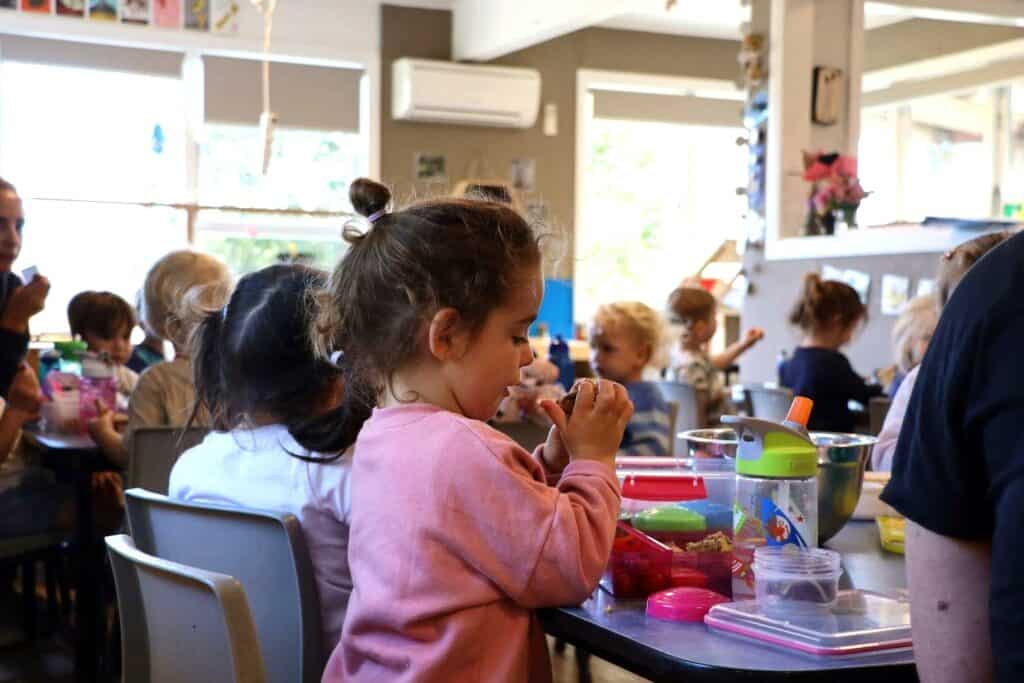
Impact of food-related choking prevention guidance in ECE

FULL REFERENCE: Young, L., Agar, S., Chiwawa, B., and Gerritsen, S. (2024).  Impact of food-related choking prevention guidance on the food environment in early childhood education.  NZ International Research in Early Childhood Education Journal, 26, pp.  1-13.

ABSTRACT: Young children are at risk of choking on food. In 2020, the New Zealand Ministry of Education mandated food-related choking guidance for licensed early childhood education (ECE) services. Prior to implementation there was concern about the guidelines from some parts of the ECE sector. A survey was conducted to assess the impact on food access and nutrition practices in centres. Survey data was collected from centre managers using an online questionnaire in four regions across New Zealand. Responses are presented using descriptive statistics and thematic analysis of open-ended questions. Survey responses were received from centre managers of 179 centres (17%). The survey showed that changes were made in response to the new guidance to food provision, staff duties and supervision of children, and to the centre’s connection with whānau (family) through events and celebrations. The guidelines raised awareness of choking prevention and resulted in changes aligned with the recommended actions. However, some changes adversely impacted the food environment e.g., less access to onsite vegetable gardens, removal of fresh fruit and vegetables from menus, and learning opportunities about food. There is a need for education on how to adopt food safety practices within the context of growing food onsite and continuing family/cultural celebrations. The guidelines need to be clear and practical for ECE services to implement.  

KEY WORDS:  Food-related choking prevention; early childhood education; food environment, young children; food policy, food, kaupapa-policy; whānau-family group; kai-food; māra kai-gardening for food; tikanga-practices; tamariki-children; kanohi ki te kanohi-face to face.

Log-in to read the full research paper below. Or order a pdf copy of the article from the main NZIRECE Journal page.

INTRODUCTION

Young children (0-5 years), especially children under one year of age, are at higher risk of choking on food due to their body’s immature physiology (narrow airways), chewing, swallowing and coughing ability (Sidell et al., 2013). In New Zealand (NZ) choking on food was responsible for eight deaths (4.9%) during the period 2006-2010 and was the leading cause of hospitalisations within the category of injury from unintentional suffocation, strangulation and choking in children aged 0-14 years from 2008 to 2012 (N=134, 45%) (Safekids Aotearoa, 2015). Foods associated with child deaths from choking in NZ were meat/sausage, peanuts, apple, and grapes (Ministry of Health, 2012). Furthermore, non-fatal choking can result in acute and chronic health issues including hypoxic brain damage (Ministry of Health, 2012).
Read More »
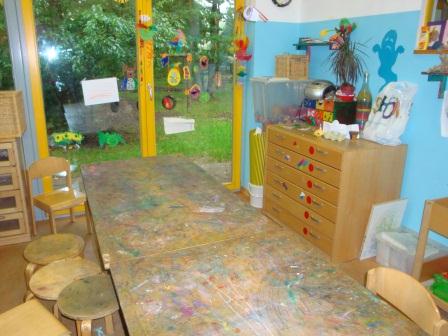
art room

The teacher’s role in visual arts learning

FULL REFERENCE: Probine, S. (2024).  Colouring outside the lines: Re-exploring the teacher’s role in visual arts learning in early childhood.  NZ International Research in Early Childhood Education Journal, 26, pp. 14 -29.

ABSTRACT: Teachers can be powerful influences on how young children experience the visual arts. It is often teachers who make choices about when, where, and how children will experience the visual arts in early childhood education. This paper explores an interpretivist, qualitative research project that examined the visual arts experiences of young children (aged 3-4) at three early childhood settings in Auckland, New Zealand. This paper focuses on the experiences and visual arts pedagogies of the teachers who participated in this study. In response to the literature, which suggests that many early childhood teachers continue to experience uncertainty around their roles as teachers of the arts, settings where the visual arts were deeply valued within the curriculum, were purposively selected. The rationale for selecting settings that valued this domain was to determine what factors and choices had enabled these settings to develop a rich visual arts curriculum for children. The study aimed to discover what influences had shaped teachers’ visual arts pedagogies, and how this impacted young children’s learning through the visual arts. The research found that when teachers nurture their own visual arts knowledge and confidence, both personally and professionally, they are equipped to engage authentically with children’s visual arts making and make intentional and creative choices about visual arts curriculum and pedagogy.  

KEY WORDS: Visual arts pedagogy, early childhood education, co-construction, co-artists.

Log-in to read the full research paper below. Or order a pdf copy of the article from the main NZIRECE Journal page.

INTRODUCTION

The visual arts support young children in exploring, theorizing, communicating, and reflecting on their experiences of the world (Brooks, 2017; Richards & Terreni, 2023). Formative visual arts experiences shape children’s identities as learners and creators. Early childhood teachers play a pivotal role in initiating children into the visual arts and fostering positive self-images as art-makers and creative thinkers (Denee et al., 2023). However, confusion persists about what constitutes appropriate visual arts curriculum and pedagogy (Denee, 2022; Lindsay, 2017; 2021). Some teachers hesitate to ‘intervene’ in children’s creative processes, while others overly control activities, which can result in identical artworks (Lindsay, 2017). There are also teachers, informed by sociocultural theories and the associated pedagogies, who have found a place in between these positions. These teachers actively plan for and engage in children’s art making, recognising the importance of ensuring children’s ideas and interpretations remain at the forefront. Developing such practices, however, can be challenging if teachers have had little prior experience in the visual arts or recall negative visual arts encounters from their own educational histories (Denee et al., 2023; Lindsay, 2017).

This is a member/subscriber only post. To access it, please see the message below for details on access and joining.

Read More »
sandpit play in summer

Inclusion and equity for teachers with disabilities

FULL REFERENCE: Purdue, K., Griffiths, V., Hall, E., Hartley, D., Hohaia-Rollinson, F., Malcolm, J., Solomon, J., Tate, A. & Williamson-Garner, D.  (2024).  Barriers to and facilitators of inclusion and equity for teachers with disabilities in early childhood education: Advancing the conversation in Aotearoa New Zealand.  NZ International Research in Early Childhood Education Journal, 26, pp. 30 – 44.

Log-in to read the full research paper below. Or order a pdf copy of the article from the main NZIRECE Journal page.

ABSTRACT: In April 2023, we initiated a kōrero/conversation about the rights of kaiako/teachers with disabilities in early childhood education (ECE) in Aotearoa New Zealand.  We noted that national research regarding the training and workforce experiences of disabled kaiako/teachers in ECE was limited. Accordingly, we wanted to find out more about what constitutes quality learning, teaching, and workplace environments for disabled kaiako/teachers, what their inclusion and exclusion experiences are, and the implications of these experiences for their rights, sense of belonging, and wellbeing.

We invited disabled kaiako/teachers who were either training and/or working in ECE to share their experiences by completing an open-ended questionnaire delivered online via Survey Monkey. The 56 respondents shared their positive and negative experiences with us. In this article, we share insights gained into the barriers to and facilitators of inclusion and equity in initial teacher education (ITE) and ECE for disabled kaiako/teachers. We also offer some recommendations for the ITE and ECE sector about what needs to be done to ensure an equitable and inclusive teaching sector for this group of kaiako/teachers both now and in the future.  

KEY WORDS:  Disabled teachers, disability, inclusion, equity.

INTRODUCTION

Over the past three years, our research into kaiako/teacher diversity in early childhood education (ECE) in Aotearoa New Zealand has explored the extent to which ECE learning and teaching environments are inclusive, culturally safe, and supportive of all kaiako/teachers (Griffiths et al., 2021, 2022, 2023a). Most recently, we have turned our attention to the rights and wellbeing of disabled kaiako/teachers (Griffiths et al., 2023b). The United Nations’ Convention on the Rights of Persons with Disabilities (UNCRPD) states that “persons with disabilities include those who have long-term physical, mental, intellectual or sensory impairments which in interaction with various barriers may hinder their full and effective participation in society on an equal basis with others” (United Nations, 2006, p. 4). The New Zealand Disability Strategy 2016–2026 (Office for Disability Issues, 2016) defines disability as “something that happens when people with impairments face barriers in society … it is something that happens when the world we live in has been designed by people who assume that everyone is the same” (p. 12). Kaiako/teachers with disabilities currently working towards an early childhood teaching qualification and/or working within the sector can have a wide range of disabilities, including neurodiversity, learning, mental health, physical, sensory, and health.

Read More »
Fijian teacher caring for children

Decolonising early childhood education: An Indigenous Fijian perspective

FULL REFERENCE: Nabou, S., Matapo, J., & Utumapu-McBride, T. (2024).  Decolonising early childhood education: An indigenous Fijian perspective.  NZ International Research in Early Childhood Education Journal, 26, pp. 45- 55.

Log-in to read the full research paper below. Or order a pdf copy of the article from the main NZIRECE Journal page.

ABSTRACT: This paper is based on the first phase of a doctoral research study that aimed to decolonise early childhood education (ECE) in Fiji. The review of literature undertaken in this phase highlights the need to prioritise Indigenous Fijian values and aspirations in educating Indigenous Fijian children and indicates ways in which ECE can contribute to the broader decolonisation of education. From 1990 to the late 2000s, ECE in Fiji, largely influenced by Western knowledge and ways of thinking, became formalised in schooling. Noting that the doctoral research is to be conducted using an Indigenous Fijian methodology known as veiwasei yaga (sharing meaningful ideas) as well as Talanoa discussions and the Fijian Vanua Research approach, the article emphasises literature that indicate the importance of understanding Indigenous Fijian viewpoints to the successful delivery of early childhood development, care, well-being, and education. The literature strongly suggests that recognising and incorporating Indigenous Fijian knowledge and methods of knowing into ECE is vital for broader acceptance of and integration into this learning environment. Through its presentation of the significance of Indigenous Fijian community cultural knowledge, concepts, customs and collective goals, both in general and as they relate to early childhood education, this first phase of the study lays a foundation for the investigation of the relevant perceptions of the people of the village of Dromuna in Viti Levu, Fiji.

KEY WORDS:  Decolonisation, early childhood education, Indigenous Fijian childhood, Fijian Vanua Research, Talanoa.

INTRODUCTION

The decolonisation of education involves undertaking the deconstruction of ‘colonising practices’ by interrogating and challenging the dominant power perpetuated through education philosophies and practices (Matapo et al., 2023). A Western model of early childhood education (ECE) in Fiji, according to Whippy (2018), was introduced in the early 1960s to educate young Pacific children and their families (UNICEF, 2017). Historically, ECE in Fiji was run by non-governmental organisations (NGOs) and the community until the 1990s, and in late 2000, it was formalised in the school system (Tausere-Tiko, 2015; Whippy, 2018). In order to decolonise ECE in Fiji, we must both explore the impact of Western-centric education on Indigenous Fijian perceptions of early years learning and care and understand how Indigenous Fijians view early childhood development, care, well-being, and learning. Creating spaces for Indigenous Fijian narratives within these subjects is crucial to affirm and position Indigenous cultural knowledge and epistemology within the greater knowledge frame (Tausere-Tiko, 2015; Tiko, 2021).

This is a member/subscriber only post. To access it, please see the message below for details on access and joining.

Read More »
Early childhood teacher engagement with place-based education: Professional learning

Early childhood teacher engagement with place-based education

FULL REFERENCE: Postlewaight, G.  (2024).  Early childhood teacher engagement with place-based education: Professional learning at the Ōtātara Outdoor Learning Centre.  NZ International Research in Early Childhood Education Journal, 26, pp. 69-83.

Log-in to read the full research paper below. Or order a pdf copy of the article from the main NZIRECE Journal page.

ABSTRACT: This article explores the second cycle of an action research project, undertaken to determine how to support local early childhood education [ECE] settings to utilise the nature-based education space, the Ōtātara Outdoor Learning Centre [ŌOLC], at Te Aho a Māui Eastern Institute of Technology [EIT] in the Hawke’s Bay (NZ). The first cycle of the research involved a focus group to introduce local early childhood kaiako (teachers) to the space and to ascertain the possibilities and opportunities for them to make use of the location with tamariki (children) to facilitate place-based education (PBE). This second cycle examined the professional learning experiences provided to the focus group to increase their knowledge and confidence to facilitate appropriate and inclusive nature and place-based experiences with tamariki. Two professional learning workshops enabled participant kaiako to familiarise themselves with the ŌOLC space through the sharing of whakapapa (genealogy) and pūrākau (historical stories) of the rohe (region), and to experience possible approaches for place- based teaching and learning. Although this is a small-scale research project, the value of the experiential learning about PBE, and the need for kaiako professional learning is evident from the participant discussion, reflection and feedback. Participants recognised this pedagogical approach and its relationship to bicultural practice, honouring Te Tiriti o Waitangi and building local curriculum as a foundation of authentic practice.

KEY WORDS:  Kaiako, action-research, professional learning, place-based education, kaupapa Māori (customary practice, approaches), pūrākau, learning in nature, play.

INTRODUCTION

The whakataukī (significant traditional saying) above aligns with the intent of Te Whāriki: He whāriki mātauranga mō ngā mokopuna o Aotearoa, Aotearoa, New Zealand’s early childhood education curriculum(Ministry of Education [MOE], 2017).  Te Whāriki (2017) articulates how tamariki learn in a holistic way that encompasses each of the contexts identified in Bronfenbrenner’s (1979) ecological model: whānau (adults in the life of the tamaiti, (the child), local and wider community, and national and global contexts. Such learning occurs when their whakapapa (genealogy), identity, mana (prestige) and mauri (life force) are nurtured within learning experiences and teaching approaches that value, respect and affirm their connection with papatūānuku (mother earth), place, language and culture. The teaching approaches include; place-based education (PBE), which offers tamariki opportunities to: connect with: taiao (nature), papatūānuku, local pūrākau and to experience te ao Māori (Māori world view) kaupapa. Williams, et al. (2023) describe te ao Māori further, as ngā aronga, identifying that this acknowledges that there are multiple world views that are iwi and hapū (tribe) based. Embedding kaupapa Māori pedagogies of learning and teaching, as described above promotes, respects and protects Te Tiriti o Waitangi (The Treaty of Waitangi) (University of Auckland, n.d.). Embodied within place-based experiences is a rich local holistic curriculum that includes; te reo and tikanga Māori(language, values, philosophies, and cultural customs), literacies, mathematics, science, the Arts, history – both Māori and Pākeha (New Zealander of European descent).  These experiences also foster social and emotional competency, education for kaitiakitanga (guardianship and sustainable approaches), utilising play and child initiated experiential learning approaches.

This is a member/subscriber only post. To access it, please see the message below for details on access and joining.

Read More »
child up high on wooden fort at early childhood centre

Satisfaction with Autism NZ’s early support programme, EarlySteps

FULL REFERENCE: Moffat, T.K., Stuart, N.A., Fitzgerald, H., Shepherd, D. & Patrick, L. (2024).  An evaluation of parent/whānau satisfaction with Autism New Zealand’s early support programme, EarlySteps.  NZ International Research in Early Childhood Education Journal, 26, pp. 56- 68.

Log-in to read the full research paper below. Or order a pdf copy of the article from the main NZIRECE Journal page.

ABSTRACT: EarlySteps was the first autism specific NZ early support (formerly known as ‘early intervention) programme. Research on the provision of early support tells us that early diagnosis of autistic children maximises developmental outcomes and reduces or prevents secondary behaviours, such as regression. Early support can reduce parental stress, increase acceptance of diagnosis earlier, and increase children ability to manage challenges later in life. This practitioner-led evaluation of the EarlySteps programme sought to understand the impact it had on parents and families with autistic children under the age of six and to identify improvements that could be made to the programme. Parents from 12 families who had participated in all aspects of the EarlySteps programme were interviewed and completed questionnaires. The results indicate satisfaction with the programme in relation to the quality of support provided, partnership, education programmes provided, focus for support plan (FFSP), play sessions and transitions to school support. Future research could identify the barriers for families to participation in certain aspects of the programme, the experience for Māori and Pacifica families and comparing the experience of families within an autism specific service to that of a generic additional needs programme.

KEY WORDS:  Autistic children, autism, play, parent education, school transition, playdates.

This is a member/subscriber only post. To access it, please see the message below for details on access and joining.

Read More »
Experiencing joy as an early childhood teacher or educator

On a Joyful Note: The Practice of Attending to Joy for Educator Wellbeing

FULL REFERENCE: Karaolis, O. and Little, C. (2024). On a joyful note: The practice of attending to joy for educator wellbeing. NZ International Research in Early Childhood Education Journal, 26, pp. 84-88.

Log-in to read the full research paper below. Or order a pdf copy of the article from the main NZIRECE Journal page.

ABSTRACT: Do early childhood educators experience joy in their work with young children? Is early childhood education a joyful profession or is joy all but lost? These questions have guided a recent study by researchers from the University of Sydney, exploring the perception and concept of joy in early childhood education. Through a mixture of qualitative and quantitative methods, including in depth interviews and observations, educators shared with us the presence of joy in their work with children and with one another. The findings suggest that educator wellbeing may be enhanced through the practice of joy and has implications for teaching practices and policy.

KEY WORDS:  Early childhood educators, wellbeing, workplace, working conditions, emotion, professional learning, professional support.

INTRODUCTION

Early childhood education is often represented in the media as a sector in crisis, with many educators feeling overwhelmed, overworked, and unappreciated (Ng et al., 2023; Rogers et al., 2023). Studies in Australia, New Zealand, Europe and the United States have shown how a lack of professional recognition, reflected in both lower financial compensation and the perceived view of their qualifications as being less than other teachers have impacted educators’ wellbeing, their attitude toward the value of their role and contributed to the critical teacher shortage (Dean, 2022; McDonald et al., 2018; Ng et al., 2023; Office of Early Childhood Education, 2024; Pangalangan et al., 2025).

In the light of such reported global adversity, our study sought to hear first-hand of the perspectives of educators. We wanted to hear their view of the current crisis, the personal and professional challenges they faced in their work but also explore, more positive factors that both drew them to the field initially but also kept them showing up and engaging in their work each day.

Read More »
The Office of ECE
Research Categories

The Office of ECE Login

Take Action!

Help spread this vital ECE information, join our free social and email groups and become a member of OECE.

pay parity funding policy

1. Share This Information

2. Follow Our Social Pages

3. Get Regular Updates

Sign up to our free newsletters.

4. Become a Member

Member Categories
Research