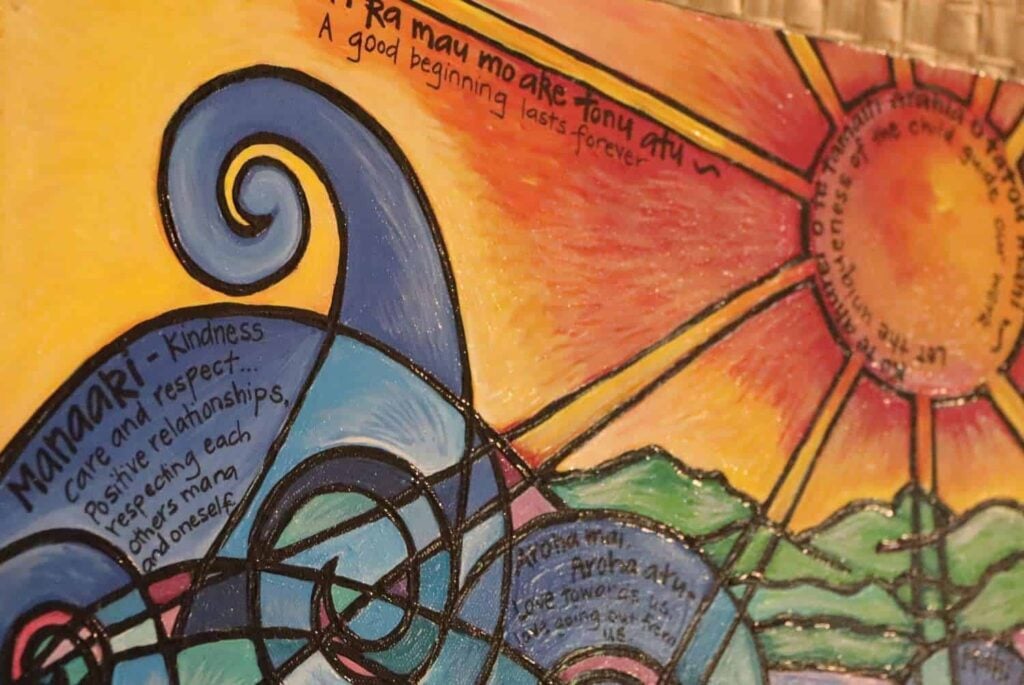
2021 NZIRECE Journal, 23(2) – Special Issue

Search in Research

You are not logged-in.  Or, you don’t hold an active membership for this particular area.

Check if this membership is relevant to you.

This category can only be viewed by members.

Editorial: Child health and wellbeing are inextricably linked with early education – research from across the sector

FULL REFERENCE: Young, L.  and Gerritsen, S. (2021). Editorial. Child health and wellbeing are inextricably linked with early education: research from across the sector.  NZ International Research in Early Childhood Education Journal, 23(2), 1 – 3.

Log-in to read the full research paper below. Or order a pdf copy of the article from the main NZIRECE Journal page.

This special issue on Health and Wellbeing in the New Zealand Research in Early Childhood Education Journal has elicited papers on a range of topics, representing viewpoints from a mix of disciplines related to the health and wellbeing of our young children. The breadth of articles demonstrates that many factors contribute to child health and wellbeing, and how interwoven these are with early education. The research presented in this special issue highlights areas to strengthen the vital contribution early education environments make to the health and wellbeing of young children.

The series begins with a commentary paper from Lisa Baker, Lindsay Oades and Bridie Ravan, titled Well-being literacy and early education which provides an excellent introduction to the theme of this special issue by signaling the important role of high-quality early childhood education and care (ECEC) in laying strong foundations for learning and wellbeing throughout life. Since wellbeing has multiple facets, contexts, and framing depending on the discipline, the authors propose Wellbeing Literacy as a new way to conceptualise wellbeing within ECEC to develop wellbeing ‘capability’ in children.

Read More »
NZIRECE Journal early childhood education research

Wellbeing Literacy and Early Childhood Education

FULL REFERENCE: Baker, L.M., Oades, L.G., and Raban, B. (2021). Wellbeing literacy and early childhood education.  NZ International Research in Early Childhood Education Journal, 23(2), 4 – 19.

Log-in to read the full research paper below. Or order a pdf copy of the article from the main NZIRECE Journal page.

ABSTRACT: The early years for children, between birth and 5 years, are critical years for growth and learning, with life trajectory implications. Education in these early years is key for learning, development and wellbeing outcomes. Contemporary early childhood education curricula, policy and regulations internationally mandate a focus on academic achievement and wellbeing enhancement, but child wellbeing is complex and multi-dimensional. Wellbeing literacy is proposed as a necessary and relevant construct in early childhood education to facilitate and conceptualise child wellbeing. The capability model of wellbeing literacy can be contextualized for early childhood education, with child, educator and family benefits. As a ‘fresh’ theory leveraged from wellbeing science, wellbeing literacy also offers potential insights into the process of wellbeing gains for children in the early years of education.

Key words: Wellbeing, child wellbeing, wellbeing literacy, early childhood education.

This is a member/subscriber only post. To access it, please see the message below for details on access and joining.

Read More »
NZIRECE Journal early childhood education research

The Wellbeing of Pacific Children and Families: Foregrounding Culture, Language, and Identity Formation in ECE

FULL REFERENCE: Glasgow, A. (2021). The wellbeing of pacific children and families: foregrounding culture, language, and identity formation in early childhood education. NZ International Research in Early Childhood Education Journal, 23(2), 20 – 35.

Log-in to read the full research paper below. Or order a pdf copy of the article from the main NZIRECE Journal page.

ABSTRACT: Optimum health and wellbeing are essential to children’s lives. In Aotearoa (New Zealand), increasing attention is paid to strategies which strengthen practice within early childhood education. Furthermore, Aotearoa is increasingly culturally, and socially diverse, and the Pacific community contributes to the rich cultural composition of Aotearoa New Zealand society. Closer inspection is needed to enable Pacific children to flourish within an education system that is primarily bound by Western theory and pedagogy. This article reports on research on Pacific cultural practices and values supporting Pacific identity and wellbeing. It examines documentation promoting greater understandings of health and wellbeing for Pacific children. Findings show pedagogical practices, processes and structures can enable or impede health and wellbeing for Pacific children and families in Early Childhood Education. Further it contends that addressing inequality in education, designed to enhance health and wellbeing, must be bounded, and foregrounded by aspirations and cultural values of the Pacific community.

Key words: Pacific children, cultural inequality, health, wellbeing, Pacific identity.

This is a member/subscriber only post. To access it, please see the message below for details on access and joining.

Read More »
NZIRECE Journal early childhood education research

Supporting Preschool Children’s Wellbeing through Home-based Literacy Development

FULL REFERENCE: McInnes, E., Harris, P., Neill, B., Diamond, A., Brock, C., and Camaitoga U. (2021). Supporting preschool age children’s wellbeing through home-based literacy development in three Fijian communities.  NZ International Research in Early Childhood Education Journal, 23(2), 36 – 51.

Log-in to read the full research paper below. Or order a pdf copy of the article from the main NZIRECE Journal page.

ABSTRACT: This paper reports wellbeing outcomes for three-to-five-year-old children, their families and communities arising from 3-year Australian-funded research into ways to develop sustainable local capacity in communities in Fiji without access to childhood services to foster their preschool children’s literacy development in home languages and English. Participants included 51 children and their 44 iTaukei (Indigenous Fijian) and Indo-Fijian families in three communities. Families identified the project supported children’s sense of identity, agency, belonging and language development through improved oral expression in home languages and English, enjoyment of creating and reading books, and closer family relationships. Families and community members also said children’s confidence in learning success supported their positive attitudes to attending formal learning, and that the research process supported their collective efforts in fostering children’s literacy development along with trans-generational and cross-cultural learning.

Key words: Literacy, home language, reading, home learning, trans-generational learning, cross-cultural learning, indigenous.

This is a member/subscriber only post. To access it, please see the message below for details on access and joining.

Read More »
NZIRECE Journal early childhood education research

Through the Eyes of the Puppet: Using Puppetry to Foster Children’s Sense of Wellbeing and Belonging

FULL REFERENCE: Karaolis, O. and Little, C. (2021). Through the eyes of the puppet: Using puppetry to foster children’s sense of wellbeing and belonging.  NZ International Research in Early Childhood Education Journal, 23(2), 52 – 62.

Log-in to read the full research paper below. Or order a pdf copy of the article from the main NZIRECE Journal page.

ABSTRACT: In studies of health, wellbeing and children with diverse abilities, the UN Convention on the Rights of the Child is often referenced due to its emphasis on the entitlement of all children to receipt of a “full and decent life” (United Nations, 1989, p. 7). The Convention argues that all children have the right to an education that celebrates their culture and identity, maximises individual ability and which recognises the rights of children as autonomous participants in decisions about their lives. Early childhood programmes serve a pivotal role in establishing a child’s sense of wellbeing, supporting a sense of belonging by communicating the message that all children and their families are valued members of the learning community. This article tells the research story of how puppetry was used as a tool to support educators in facilitating the engagement of children in their early childhood classrooms. It illustrates, how puppetry can actively support young children’s wellbeing by encouraging positive interactions, facilitating friendships, and providing opportunities for educators to express the value of every child.

Key words: Puppetry, puppets, wellbeing, belonging, inclusion, professional learning.

This is a member/subscriber only post. To access it, please see the message below for details on access and joining.

Read More »
NZIRECE Journal early childhood education research

Educator Perceptions of Risk-taking, Safety and Resilience in the Outdoors: A Rural ECE Study

FULL REFERENCE: Rouse, E. and Wishart, L. (2021). Educator perceptions of risk-taking, safety and resilience in the outdoors: a rural early childhood education and care case study.  NZ International Research in Early Childhood Education Journal, 23(2), 63 – 77.

Log-in to read the full research paper below. Or order a pdf copy of the article from the main NZIRECE Journal page.

ABSTRACT: The national quality agenda across the Australian early childhood education and care (ECEC) sector has led to a renewed focus on the outdoor environment as a crucial component in children’s learning and development, where many ECEC settings are redeveloping their outdoor spaces. This paper draws from a study investigating outcomes for children arising from a redesign of one outdoor environment in an ECEC setting, located in rural New South Wales (NSW), Australia, that purposefully incorporated affordances to support children to take risks in their play. Using Rogoff’s planes of analysis, this study highlights that an educator’s enactment of a purposeful pedagogy of beneficial risk-taking is informed by their own lived experiences and the surrounding culture of their professional practice context. This study illustrates that educator attitudes to children’s risk-taking in active outdoor play are not simply shaped by overarching regulatory discourses of safety and supervision. Rather, educators may be apprenticed into ways of thinking and acting that reflect the cultural consensus of their specific context of practice. In this case a (rural) communal culture that valued risk-taking in children’s outdoor play and saw children as capable of making judgements about their risk-taking behaviour.

Key words: Risky play, active play, outdoor environments, early childhood pedagogy, affordances, Rogoff’s planes of analysis.

This is a member/subscriber only post. To access it, please see the message below for details on access and joining.

Read More »
NZIRECE Journal early childhood education research

Raising Healthy Kids: A Scoping Review for Feeding Practices in NZ Early Childhood Education Centres

FULL REFERENCE: Orr, G.  (2021). Raising healthy kids: A scoping review for feeding practices in NZ early childhood education centres.  NZ International Research in Early Childhood Education Journal, 23(2), 78 – 90.

Log-in to read the full research paper below. Or order a pdf copy of the article from the main NZIRECE Journal page.

ABSTRACT: ired from parents and caregivers during the early years of life are known to shape an individual’s relationship with food as they grow into adulthood. Many children in Aotearoa (New Zealand) spend a significant amount of time in early childhood education (ECE) programmes. This presents a strong rationale to provide guidance for teaching staff to support the eating behaviours of children in their care. The aim of this scoping review was to highlight key feeding practices applicable to ECE services food policy and guidelines and their inclusion in nutrition education programmes for teaching staff. Between December 2020 and June 2021, a literature search was conducted to identify peer-reviewed research related to feeding practices and eating behaviours of young children. This informed four key recommendations:

1. teaching staff allow children to decide how much to eat,

2. a meal routine is maintained,

3. Staff familiarise children with food in a pressure-free environment, and

4. staff role-model healthy eating behaviours.

For successful implementation and adherence to these feeding practices further mahi (work) must be conducted in collaboration with teaching staff and whānau to support sustainable systems change.  

Key words: Healthy eating, feeding practices, nutrition, food, meal routine.

This is a member/subscriber only post. To access it, please see the message below for details on access and joining.

Read More »
The Office of ECE
Research Categories

The Office of ECE Login

Take Action!

Help spread this vital ECE information, join our free social and email groups and become a member of OECE.

pay parity funding policy

1. Share This Information

2. Follow Our Social Pages

3. Get Regular Updates

Sign up to our free newsletters.

4. Become a Member

Member Categories
Educator
Service Provider
Research