New Shoots Ltd–Educare Group Ownership Shift Highlights Regulatory Gap Allowing Companies to Acquire Large Numbers of Centres Without Change of Provider Checks

Search Newsroom Posts
Bringing you leading news and the latest stories on early childhood education and care news and in-depth analysis

A major ownership change in New Zealand’s early childhood education (ECE) sector has highlighted a regulatory gap that allows companies to acquire large numbers of centres without triggering government oversight, fit‑and‑proper checks, or licence reassessment. Both organisations continue operating under their existing structures, the acquisition illustrates how corporate consolidation in the ECE sector can occur largely out of public view and without regulatory intervention.

This is a member/subscriber only post. To access it, please see the message below for details on access and joining.
Already subscribed?
ECE Newsroom

NZ’s own specialist ECE newsroom. 
Access national and local stories, in-depth analysis, & original commentaries.  

Membership Support for Teachers & Educators

(Comes with free Newsroom and Research access)

Membership Support for ECE Service Owners, Managers, & Community Organisations

(Comes with free Newsroom and Research access)

Researchers & Tertiary Education Libraries

Full access to over 25 years of ECE academic research articles – NZIRECE Journal.
Plus, guidance and resources on doing and publishing research

Has this been useful?  Give us your feedback.

You are welcome to add a link to this page on your website. Copyright belongs to the OECE so please do not copy any content without our written permission.

Information provided is of a general nature. It is provided ‘as is’, and we accept no liability for its accuracy or completeness. See our Terms and Conditions.

Related Posts

teacher wages, pay scales, in childcare and early childhood education

What ECE Teachers and Workers Earn: Pay, Benefits and Conditions

Anyone thinking about getting a job in ECE working in ECE or thinking about moving to a different service will find clear, practical information in this article about pay rates, employment conditions, and what to expect in different roles. It explains everything from starting salaries and pay‑step calculations to workplace rights, benefits, and how to recognise a supportive, professional environment.

Read More »
NZ International Research in Early Childhood Education journal

Primary School Entry Assessment in New Zealand

Research on the literacy and numeracy skills of New Zealand children when they start school.

Log-in to read the full research paper below. Or order a pdf copy of the article from the main NZIRECE Journal page.

FULL REFERENCE: Boereboom, J. & Cramman, H. (2018). Primary school entry assessment in New Zealand. NZ International Research in Early Childhood Education Journal, 21(1), 47 – 61.

ABSTRACT: There is a wide range of assessment tools used by schools to assess children at school entry in New Zealand. The lack of consistency of uptake and reporting of results leads to sporadic national data. This highlights a need for a national standardised assessment which can be used as a reliable baseline of what New Zealand children know when they start school and how they progress in their first year. The Performance Indicators in Primary Schools (PIPS) assessment is a valid, reliable and internationally respected school entry assessment. The Centre for Evaluation and Monitoring at the University of Canterbury used PIPS to collect data on 3916 students’ early literacy and numeracy skills when they started school and followed up on their progress 12 months later. This provides a useful baseline of the literacy and numeracy skills New Zealand children have when they start school. The data is useful for the early identification of special learning needs and can be used to gauge the effectiveness of year 1 programmes.

Key words: School entry, assessment, PIPS, baseline data, literacy, numeracy.

INTRODUCATION

In New Zealand children can start school on their fifth birthday and do not have to wait till the start of the next school year. Schooling is compulsory from age six but children can start primary school anytime between the ages of five and six years.  A law change will allow schools from this year to individually decide to implement cohort entry of children at the start of term closest to their 5th birthday, which for some children may mean starting school before they are five. 

Children start school at different times during the year at different stages of development and school readiness. They have different learning needs and progress at different rates. This provides a challenge for the Year 1 teacher. Assessment on school entry can provide informative data on the learning needs of children when they start school. The entrance assessment data provides information on the strengths and developmental needs of each child starting school and provides a baseline for individualised educational planning. This can inform the provision of targeted support for children who need specific kinds of learning experiences, children who without support might be more vulnerable to the demands of formal schooling, or children who have particular experiences prior to school entry.

This is a member/subscriber only post. To access it, please see the message below for details on access and joining.


Read More »
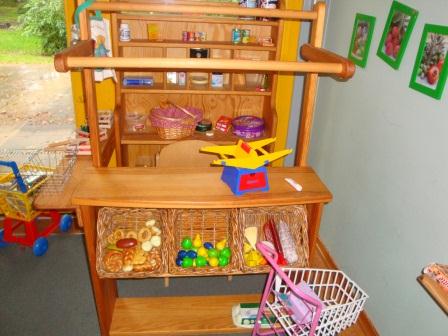
shopping room

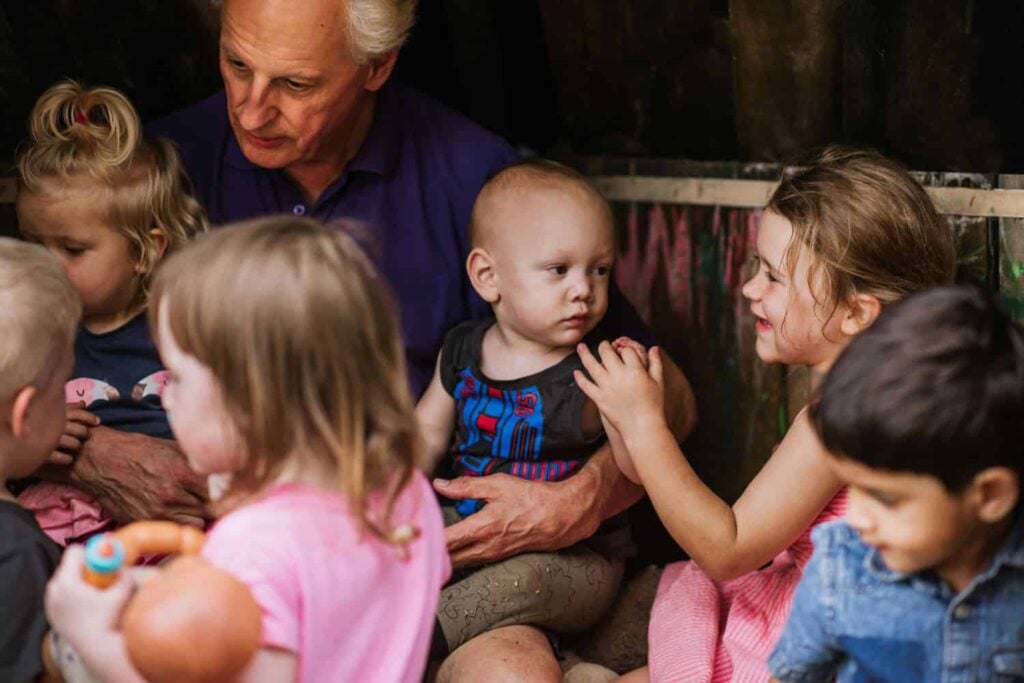
Financial Survival and Growth Tips for ECE Services

Strategies to help stabilise service finances, reduce pressure and make smarter operational decisions. Learn also about opportunities for growth to strengthen your service’s long‑term sustainability and continue delivering high‑quality care and education.

This is a member/subscriber only post. To access it, please see the message below for details on access and joining.
Read More »
NZIRECE Journal early childhood education research

Raising Healthy Kids: A Scoping Review for Feeding Practices in NZ Early Childhood Education Centres

FULL REFERENCE: Orr, G.  (2021). Raising healthy kids: A scoping review for feeding practices in NZ early childhood education centres.  NZ International Research in Early Childhood Education Journal, 23(2), 78 – 90.

Log-in to read the full research paper below. Or order a pdf copy of the article from the main NZIRECE Journal page.

ABSTRACT: ired from parents and caregivers during the early years of life are known to shape an individual’s relationship with food as they grow into adulthood. Many children in Aotearoa (New Zealand) spend a significant amount of time in early childhood education (ECE) programmes. This presents a strong rationale to provide guidance for teaching staff to support the eating behaviours of children in their care. The aim of this scoping review was to highlight key feeding practices applicable to ECE services food policy and guidelines and their inclusion in nutrition education programmes for teaching staff. Between December 2020 and June 2021, a literature search was conducted to identify peer-reviewed research related to feeding practices and eating behaviours of young children. This informed four key recommendations:

1. teaching staff allow children to decide how much to eat,

2. a meal routine is maintained,

3. Staff familiarise children with food in a pressure-free environment, and

4. staff role-model healthy eating behaviours.

For successful implementation and adherence to these feeding practices further mahi (work) must be conducted in collaboration with teaching staff and whānau to support sustainable systems change.  

Key words: Healthy eating, feeding practices, nutrition, food, meal routine.

This is a member/subscriber only post. To access it, please see the message below for details on access and joining.

Read More »
NZ International Research in Early Childhood Education journal

Developing Curriculum for the Early Years: A Perspective from Bangladesh

This paper gives a narrative of the emergence of early childhood education in Bangladesh, a country with 156.6 million people. Reference is made to the NZ Te Whāriki and Australia’s Early Years Learning Framework for Australia.

FULL REFERENCE: Parveen, R. & Bone, J. (2017). Developing curriculum for the early years: A perspective from Bangladesh. NZ International Research in Early Childhood Education Journal, 20(1), 34-45.

Log-in to read the full research paper below. Or order a pdf copy of the article from the main NZIRECE Journal page.

ABSTRACT: In Bangladesh significant progress has happened in the field of early year’s education through both government and private initiatives. Pre-school education occurs through informal classes in government primary schools, in English-medium kindergartens and in Non-Government Organisations (NGO). Bangladesh has developed its first pre-primary curriculum and the government of Bangladesh approved the curriculum document named ‘Pre-primary Curriculum’ in 2011. This article will present an overview of the early childhood curriculum developed in Bangladesh and discuss the influences at work during the curriculum development process from the perspective of one of the first authors – a Bangladeshi woman studying for a higher degree in Australia. The early childhood curriculum had to be acceptable for a large and diverse population. The narrative of the emergence of early childhood education in Bangladesh, a country with a population of 156.6 million, is presented, and reference is made to the New Zealand curriculum, Te Whāriki, and the Early Years Learning Framework for Australia, Being Belonging and Becoming. Finally the article presents insights about curriculum development in the Bangladeshi context.

Key words:  Curriculum; pre-primary education; early childhood; diversity.

INTRODUCTION

Bangladesh developed its first pre-primary curriculum in 2011 and the government of Bangladesh approved the curriculum document named the ‘Pre-primary Curriculum’ (National Curriculum and Textbook Board [NCTB], 2011). This article will firstly present an overview of the field of early childhood education developed in Bangladesh and the second section will discuss the influences at work during the curriculum development process for pre-primary education in Bangladesh. The article has a focus on education provision for children aged five years and under. In Bangladesh this is called pre-primary education. Significant progress has occurred in the last few years regarding early childhood services in Bangladesh. Pre-school education occurred through informal infant classes in government primary schools, in English-medium kindergartens and in Non-Government Organisation (NGO) run non-formal schools. The goal of curriculum development for young children reflects the growing importance of early childhood education in Bangladesh.

This is a member/subscriber only post. To access it, please see the message below for details on access and joining.

Read More »
Colours Happy Child

Seven Tips to Ease Back into Work After the Holidays

Going Back to Work.

Here are 7 of the best tips for easing back to work after a holiday or other break away – smoothing the transition for children and others around you.    

Tip 1: Don’t worry, be happy

Children need to see their teachers and carers relaxed, positive and cheerful at the start of a new day and especially at the star

This is a member/subscriber only post. To access it, please see the message below for details on access and joining.
Read More »
The Office of ECE

Share This Information

Table of Contents

Table of Contents

The Office of ECE Login

Take Action!

Help spread this vital ECE information, join our free social and email groups and become a member of OECE.

pay parity funding policy

1. Share This Information

2. Follow Our Social Pages

3. Get Regular Updates

Sign up to our free newsletters.

4. Become a Member