Casual, Fixed‑Term, or Permanent? What Early Childhood Teachers Need to Know

Search in Teacher
employment job benefits wages pay

It’s becoming common for early childhood services to place teaching staff on casual or fixed‑term contracts – when the role is ongoing and really should be permanent.

Since the government changed pay‑parity rules to exclude all non‑permanent teaching staff, we’re hearing from teachers that some employers are now using casual and fixed‑term contracts to avoid paying qualified and certificated teachers the pay‑parity rates they receive funding for. This can mean lost income, fewer rights, and less job protection for teachers who should legally be permanent.

It’s more important than ever to understand your rights and know what type of employment you actually have – not just what your contract says.

Log in with your member details to read the full guidance. If your membership has lapsed or you’d like to join, get in touch and we’ll help you get set up quickly.

If this is happening to you or to a colleague, it matters. You need to know your rights and be certain about the type of employment you actually have.

This is a member/subscriber only post. To access it, please see the message below for details on access and joining.
Already a Teacher Member?

Are you teaching and caring for children or studying for an ECE qualification?

If you are, that’s great!   Join us now, and become a teacher member.

Five Reasons to Join Us
1. Professional recognition

It is prestigious to belong to the OECE – you can skite about it! 

Ask us for an OECE Member Certificate, to include in your professional portfolio as proof you are engaged in reading and professional learning that advances your understanding of the relationship between practice and outcomes for children.

2. Extra benefits

No need to pay a subscription fee for access to NZ’s specialist ECE Newsroom – your member login will let you view everything in the ECE Newsroom. 

No need to pay to access the best NZ and international research – your member login gives you free access to the Research Library and support. 

3. Professional growth and no-judgement help

Teaching resources and advice on probably everything you can think of, including what to wear as a teacher, how to ask for a pay raise, identifying child behaviour causes and responding to needs, new play activity ideas, etc., etc.  all of this is at your finger-tips 24/7 whenever you need help or advice – login to view. 

4. Representation

Did you know that the OECE meets personally and regularly with the Ministry of Education national team, and the regulations committee and other forums? 

Political leaders and journalists are able to use the OECE to gain deeper knowledge on a topic or issue, and we provide a sounding board for ideas and feedback.

The OECE promotes safe working environments for teachers.  We also promote the absolute need for full pay parity with school teachers for all certificated teaching staff working in teacher-led centres and in home-based, and whether permanently or casually employed. 

5. Value for Money

We are committed to keeping membership prices affordable and providing value for money. 

Teacher membership is just $89 for a full year, or save by joining for 2 years.

Has this been useful?  Give us your feedback.

You are welcome to add a link to this page on your website. Copyright belongs to the OECE so please do not copy any content without our written permission.

Information provided is of a general nature. It is provided ‘as is’, and we accept no liability for its accuracy or completeness. See our Terms and Conditions.

Related Posts

Losing a Child or Preventing Children Escaping Policy

Prevent Child Escapes.

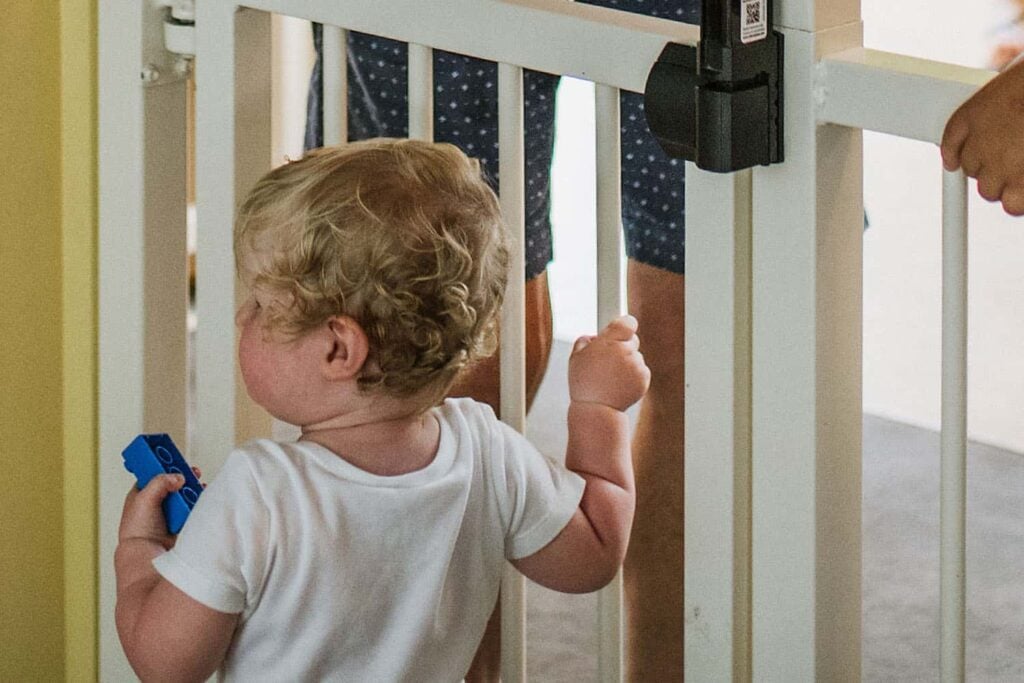
Having a child slip out of a gate un-noticed or being sent home with the wrong person is something that everyone would dread.

It is expected that children are safe in their ECE environment and cared for at all times.

So in terms of developing policy and involving parents and others to play their part in ensuring th

This is a member/subscriber only post. To access it, please see the message below for details on access and joining.

Read More »
early childhood research journal online

Contents – NZ Research in ECE Journal, 2015, Vol 18

This issue explores mentoring and leadership for beginning teachers, school‑based playgroup transitions, young children’s visual art experiences, reflective practice through practical philosophy, comprehensive assessment approaches, and the interplay between social context and neural development.

Read More »
Happy smiling child

Full Pay Parity Salary Scales at Last! How to Make the Funding Work for Your Centre

Making the Funding Work for Your Centre.

There are new pay scales for full pay parity. Services that opt into the kindergarten funding rate must attest to paying their teachers the full kindergarten pay scale!

Other funding options linked to no salary attestation requirement (base funding), and ersatz or fake pay parity (oddly given the names by the MoE of “parity” and “extended pay parity funding”) rates will continue to be offered.

Cabinet promised (Budget 2023 announcement) from 1 November 2023 the same funding that kindergartens are paid for full pay parity will also be paid to all centres that opt-in to pay their teachers on the full kindergarten scale.

Read More »
Lead advocate and advisor on why Pay Parity for all ECE teachers is vital (image: The petition presentation for the House of Representatives)

Data indicates pay parity is not causing education and care centres to close

After RNZ revealed last Friday that the Government intends to axe the pay parity scheme for education and care teachers, in part to give providers “greater autonomy… to negotiate” with teachers about pay, the Office of Early Childhood Education has been fact checking claims by ECE business lobbyists that pay parity has caused more services to close.

In our view, there is no evidence of this, based on the available statistics.

In a Cabinet paper from April, which was publicly released on July 17, the Ministry of Education wrote to associate minister of education David Seymour that: “The options in this paper begin the process of proactively moving away from the opt-in pay parity system and providing greater autonomy to providers to negotiate with teachers on matters of pay. The wider funding review you are seeking Cabinet approval for provides the opportunity to complete this process”.

This is a member/subscriber only post. To access it, please see the message below for details on access and joining.

Read More »
teddy teddies care love

Toddler Left in Car Seat Died

Unexplained absence.

A 16-month-old was found dead after his mum went to work, accidentally leaving him sleeping in his car seat in her car parked at work. She had not realised he was still in the car and had forgotten to drop him at the early childhood centre. Tragically the toddler died from heatstroke.  There can be other situations t

This is a member/subscriber only post. To access it, please see the message below for details on access and joining.

Read More »
NZ International Research in Early Childhood Education journal

Supporting Teaching Practices to Foster Toddlers’ Emotional Literacy

FULL REFERENCE: Clarke, L.R., McLaughlin, T. W., Aspden, K. & Riley, T.  (2021). Supporting teaching practices to foster toddlers’ emotional literacy.  NZ International Research in Early Childhood Education Journal, 23(1), 52-58

Log-in to read the full research paper below. Or order a pdf copy of the article from the main NZIRECE Journal page.

ABSTRACT: Most teachers of toddlers will be familiar with the challenges toddlers face as they negotiate the social and emotional landscape of an early childhood setting. Toddlers’ emotional literacy skills—including the abilities to recognise, understand, and appropriately express emotions—are just beginning to develop. To manage their emotional wellbeing, toddlers need support from their teachers, however, teachers may also need help to effectively foster toddlers’ wellbeing and their developing emotional literacy. In this research note, we describe a structured observation and feedback professional development project focused on teaching practices to foster toddlers’ emotional literacy. The approach to observation and feedback may be useful in helping teachers develop a repertoire of teaching practices to foster toddlers’ emotional learning.

Key words: Professional development, feedback, emotion, social-emotional learning, wellbeing.

This is a member/subscriber only post. To access it, please see the message below for details on access and joining.

Read More »

Share This Information

Table of Contents

Table of Contents

The Office of ECE Login

Take Action!

Help spread this vital ECE information, join our free social and email groups and become a member of OECE.

pay parity funding policy

1. Share This Information

2. Follow Our Social Pages

3. Get Regular Updates

Sign up to our free newsletters.

4. Become a Member