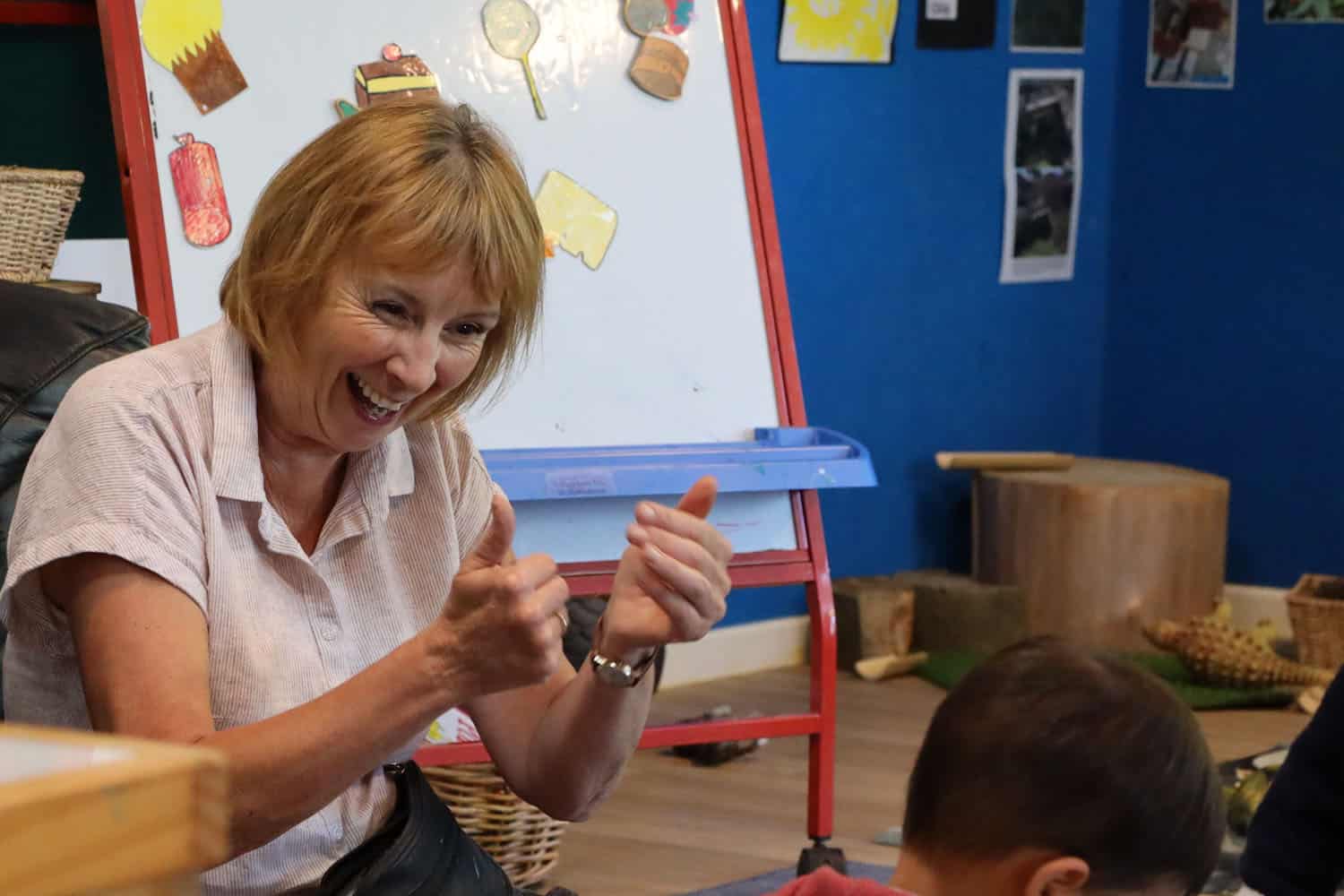
On a Joyful Note: The Practice of Attending to Joy for Educator Wellbeing

Search in Research
Experiencing joy as an early childhood teacher or educator

FULL REFERENCE: Karaolis, O. and Little, C. (2024). On a joyful note: The practice of attending to joy for educator wellbeing. NZ International Research in Early Childhood Education Journal, 26, pp. 84-88.

Log-in to read the full research paper below. Or order a pdf copy of the article from the main NZIRECE Journal page.

ABSTRACT: Do early childhood educators experience joy in their work with young children? Is early childhood education a joyful profession or is joy all but lost? These questions have guided a recent study by researchers from the University of Sydney, exploring the perception and concept of joy in early childhood education. Through a mixture of qualitative and quantitative methods, including in depth interviews and observations, educators shared with us the presence of joy in their work with children and with one another. The findings suggest that educator wellbeing may be enhanced through the practice of joy and has implications for teaching practices and policy.

KEY WORDS:  Early childhood educators, wellbeing, workplace, working conditions, emotion, professional learning, professional support.

INTRODUCTION

Early childhood education is often represented in the media as a sector in crisis, with many educators feeling overwhelmed, overworked, and unappreciated (Ng et al., 2023; Rogers et al., 2023). Studies in Australia, New Zealand, Europe and the United States have shown how a lack of professional recognition, reflected in both lower financial compensation and the perceived view of their qualifications as being less than other teachers have impacted educators’ wellbeing, their attitude toward the value of their role and contributed to the critical teacher shortage (Dean, 2022; McDonald et al., 2018; Ng et al., 2023; Office of Early Childhood Education, 2024; Pangalangan et al., 2025).

In the light of such reported global adversity, our study sought to hear first-hand of the perspectives of educators. We wanted to hear their view of the current crisis, the personal and professional challenges they faced in their work but also explore, more positive factors that both drew them to the field initially but also kept them showing up and engaging in their work each day.

This is a member/subscriber only post. To access it, please see the message below for details on access and joining.
Already a Research Subscriber?
Reasons to Subscribe
Tertiary education libraries and individuals.

Enjoy online access to full copies of the latest issues of the NZ-International Research in ECE journal and more than 25 years of past issues of peer-reviewed published articles.

You will also have access to the NZ Doctoral thesis (Ph.D, and Ed.D) and the NZ Master’s thesis directory of theses relevant to early childhood education and care.

For those who are new to doing research, thesis supervisors, and conference paper selectors, we have a range of articles to inform and support you.  These include a guide to ethics when doing, writing, and disseminating research; reviewing abstracts and conference submissions, and more.

Sign-up now

Are you a teacher educator or academic, a practitioner, or a policy advisor, who is keen to keep up with ECE research?

Maybe you are planning to do some research yourself? Or maybe you are advising and supervising students who are undertaking projects?

Enjoy unrestricted access to the hundreds of articles in the Research Area of our OECE website.

Choose your own username and password when you subscribe online. This will be your login for access.

Libraries can request IP address access for staff and students on the library site, instead of password access.  Please note that this is dependent on whether system settings at your end can support this.

Your investment

Personal research user membership – $79.00 for 12-months

Libraries and tertiary education institutions – $250.00 for 12-months

Please see and abide by the Terms & Conditions of membership.

Article copyright belongs to the OECE / ChildForum. You are welcome to add a link to this research article on your website.

Related Posts

teacher wages, pay scales, in childcare and early childhood education

What ECE Teachers and Workers Earn: Pay, Benefits and Conditions

Anyone thinking about getting a job in ECE working in ECE or thinking about moving to a different service will find clear, practical information in this article about pay rates, employment conditions, and what to expect in different roles. It explains everything from starting salaries and pay‑step calculations to workplace rights, benefits, and how to recognise a supportive, professional environment.

Read More »

Editorial: Child health and wellbeing are inextricably linked with early education – research from across the sector

FULL REFERENCE: Young, L.  and Gerritsen, S. (2021). Editorial. Child health and wellbeing are inextricably linked with early education: research from across the sector.  NZ International Research in Early Childhood Education Journal, 23(2), 1 – 3.

Log-in to read the full research paper below. Or order a pdf copy of the article from the main NZIRECE Journal page.

This special issue on Health and Wellbeing in the New Zealand Research in Early Childhood Education Journal has elicited papers on a range of topics, representing viewpoints from a mix of disciplines related to the health and wellbeing of our young children. The breadth of articles demonstrates that many factors contribute to child health and wellbeing, and how interwoven these are with early education. The research presented in this special issue highlights areas to strengthen the vital contribution early education environments make to the health and wellbeing of young children.

The series begins with a commentary paper from Lisa Baker, Lindsay Oades and Bridie Ravan, titled Well-being literacy and early education which provides an excellent introduction to the theme of this special issue by signaling the important role of high-quality early childhood education and care (ECEC) in laying strong foundations for learning and wellbeing throughout life. Since wellbeing has multiple facets, contexts, and framing depending on the discipline, the authors propose Wellbeing Literacy as a new way to conceptualise wellbeing within ECEC to develop wellbeing ‘capability’ in children.

This is a member/subscriber only post. To access it, please see the message below for details on access and joining.

Read More »
crying child upset abuse hurt

Responding to a Child’s Disclosure of Abuse

Getting Help for an Abused Child. By Eric Hollis.

When a child discloses sexual abuse, it will always be distressing. It is natural for adults to feel at a loss to know how best to respond.

The information provided here covers how to listen and respond to a child who tells you, or hints in even a vague way, that she/he or someone they know

This is a member/subscriber only post. To access it, please see the message below for details on access and joining.

Read More »
young toddler reading book at kitchen table while having a snack

Teaching Pre-Reading Skills

Teaching Pre-Reading Skills. By Barbara Morris.

Is it important for parents and early childhood educators to be involved in teaching pre-reading skills to children? Yes it is!

Parents play an important part in helping their children acquire pre-reading skills. There are many ways early childhood educators can support the acquisition o

This is a member/subscriber only post. To access it, please see the message below for details on access and joining.

Read More »
home visit visiting teacher

Parents as First Teachers (PAFT) – Reports

Parents as First Teachers delivered measurable benefits for families, and these reports document those impacts through survey data and parent/provider perspectives. They offer important lessons for policy‑makers considering how early‑years support is funded, delivered, and sustained.

Read More »

Are you teaching and caring for children or studying for an ECE qualification?

If you are, that’s great!   Join us now, and become a teacher member.

The Office of ECE

Share This Information

Notice for Students and Library Users
You are able to access all Journal Research articles under the library's subscription. But unless you hold a personal membership you are missing out on a whole lot of valuable teaching and policy articles and other important information. At home, or on your mobile device that is not linked to your institution or library's internet or subscription - click on the JOIN button below.

Table of Contents

Table of Contents

The Office of ECE Login

Take Action!

Help spread this vital ECE information, join our free social and email groups and become a member of OECE.

pay parity funding policy

1. Share This Information

2. Follow Our Social Pages

3. Get Regular Updates

Sign up to our free newsletters.

4. Become a Member