ECE Deserts: Limited Choice of Early Childhood Services for Families in Many Parts of Aotearoa
In some New Zealand towns families have just one option

In some New Zealand towns families have just one option

The experience of Australia is a timely reminder to us

Here, we sum up the major stories we’ve covered in

Who is Who and Does What in Relation to the
Home » Members Area » All Teacher Posts » Teaching and Putting Theory into Practice
You are not logged-in. Or, you don’t hold an active membership for this particular area.
Check if this membership is relevant to you.

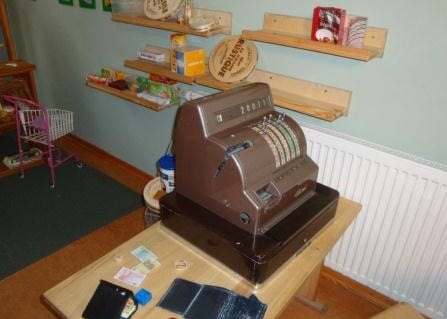
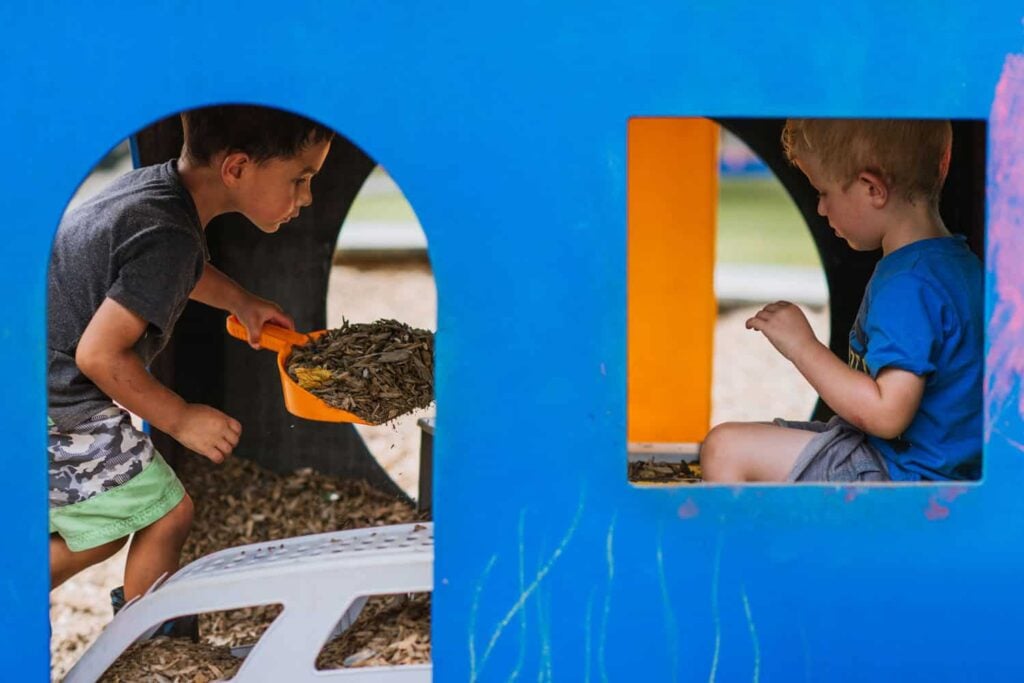
Teaching Children About Money
By Lucy Wood
Money. They say “it doesn’t grow on trees”, but also that “it makes the world go round”. They say “it doesn’t buy you happiness” although admittedly it’s very rare to see someone looking sad while on holiday in Paris! It’s a big topic and it affects life, and lifestyle, in lots of different ways.
In researching this article, I came upon a lot of advice saying that teaching our tamariki about money is important, and that we can’t start early enough. Even infants can begin to learn about the concept of delayed gratification, an important skill for managing finances later in life.
How can we as ECE kaiako help tamariki to develop positive attitudes about money, and to see themselves as capable and competent when it comes to things like saving? While conversations about money are something which likely will also be happening at home, in ECE spaces we can support this learning, in ways that are age appropriate, positive and empowering for our tamariki.

As a part of my journey I have focused on supporting my colleagues to learn and begin to understand some of the basic stuff that is important to Te Āo Māori. I understand and accept that if you don’t know, you don’t know, hence we should as teachers find ways to become aware. Along with this unknown factor I have experienced resistance. Resistance to acknowledging what it means to weave the principles of Te Tiriti o Waitangi, and therefore promote tikanga within our Centres.
For example, after partaking in these korero sessions and hearing Kaiako show enthusiasm for incorporating Tikanga in Practice, often those changes to practice that have been discussed, debated, worked out, and agreed upon as a collective don’t eventuate into practice.
It often feels like participants come to the workshops as a part of a box ticking exercise – they can put it in the appraisal system, but then don’t follow through with making actual changes to the practices.
For example, observing colleagues continue to sit on tables, place shoes or hair ties and hats on tables or benches where Kai is sometimes placed, using a chair to place food plates on, finding shoes in the hat basket, observing teachers straddle tamariki stretchers, or doing the laundry all in together.
When we have had discussions about how tikanga helps to make meeting regulations so easy, yet the changes are not forthcoming.

A close look at how well the theories of Pikler and Gerber can be merged with Te Whariki and the models of infant care and education in Aotearoa New Zealand.
Concepts such as ‘self-soothing’ (allowing babies to settle by themselves) and leaving babies to develop in their own time rather than pushing them to meet milestones cause much debate among parents and early childhood educators.
These debates include such things as whether babies should be allowed to cry it out and whether parents or educators should help children to achieve milestones such as sitting by propping them up.
One proponent of allowing a child to develop at their own pace is Emmi Pikler, a Hungarian paediatrician who worked with children aged from birth to six in her role as Director of the Loczy Orphanage from 1946 until her death in 1979.
Pikler believed that infants’ emotional well-being was paramount, and she restructured then entire staff to ensure that all those working at the orphanage not only met the children’s physical needs, but also would ‘love’ these unwanted children and attend to them with consistent and thoughtful care.

Supporting the Language of Aotearoa.
Let’s review current teaching practices and see where we go from here. Despite substantial work involving kaupapa Māori over the last two decades our early childhood sector has not been as active as it could have been in reinforcing the speaking of te reo Māori and bicultural practices.
Ngā Wero – The

It all Comes Out in the Wash! Teaching Style and Thinking About The Kind of Teacher You Are. By Joy Lubawy.
Have we moved forward with the times in educating young children?
Do you remember when your Mother used to boil the copper and stir the clothes in the boiling water with a wooden stick? Gosh the clothing must have been ha

Teaching Pre-Reading Skills. By Barbara Morris.
Is it important for parents and early childhood educators to be involved in teaching pre-reading skills to children? Yes it is!
Parents play an important part in helping their children acquire pre-reading skills. There are many ways early childhood educators can support the acquisition o

Self-Review. By Janet Moles.
As I quietly move close to the habitat of an early childhood centre, I observe that the group is in the midst of the strange ritual known as ‘The Staff Meeting’. In this gathering, the leader communicates to the group, the tasks to be achieved, assigns duties and informs them of new requirements, rules and exp
ICT in Early Childhood Education: Questions, Issues and Planning Considerations.
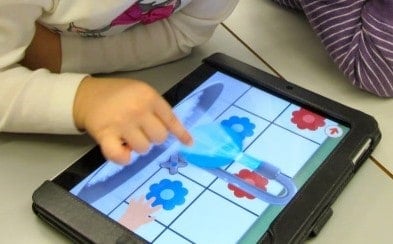
Technology is part of every child’s life and at some point, children are almost certain to want to use and may get hooked on technology – a phone, iPad, or digital camera.
While there are some that would say pre-school years are too early to be introd

NZ Sign Language in Early Childhood Education and in our Teaching.
By Rachel Pratt.
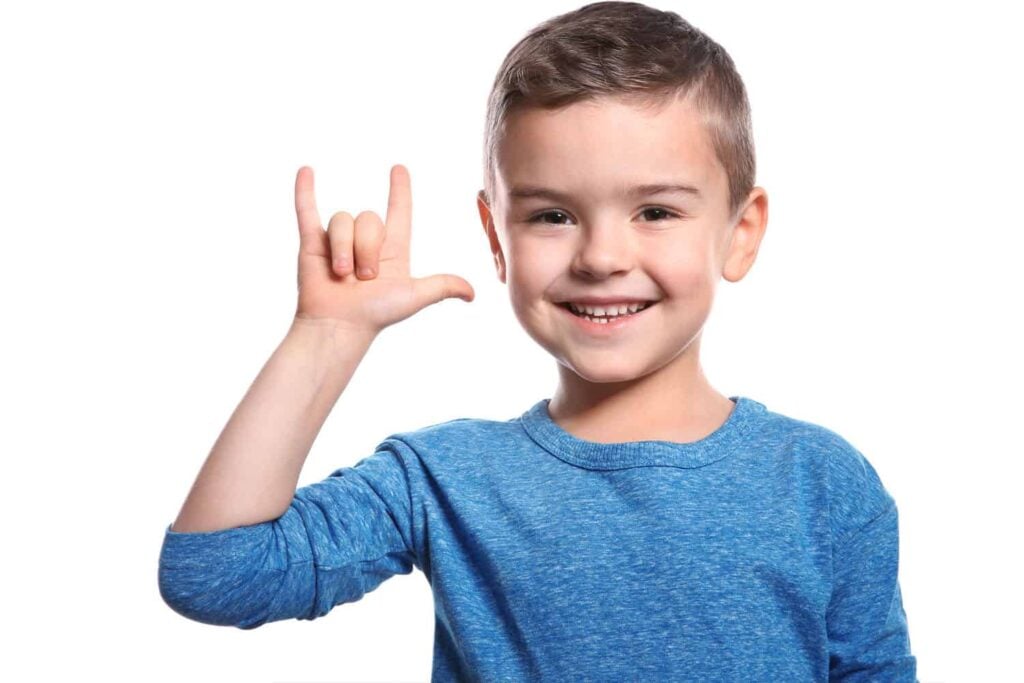
NZ Sign Language (NZSL) is one of the three official languages of NZ and all ECE services and teachers need a basic understanding of it. Hearing children can become more understanding of differences and Deaf children can experience an environment where they feel welcome and supported.
Why should I teach it when there are no children with hearing impairments?
Deaf children who require visual communication represent about 0.1 percent of the population of children who are involved in early childhood education. For this reason, early childhood teachers and educators may not encounter many Deaf children and question the importance of using NZSL in their service.

Do You Allow (Or Even Encourage) Gun Play? By Tim Kahn.
Tim Kahn writes his thoughts about the superhero and weapon’s play that is often indulged in relentlessly by a small group of boys – and less persistently by another group of boys and a few girls.
Starting with the child
Effective learning for young children starts from their i

Baby Signing.
What is baby (child) signing?History – how it developed and what the researchers discovered. Simple tips for getting started with baby signing. Examples of some baby signs that you can easily learn and teach to infants in your care.
Also see a related article on what a parent and ECE service says about this: Parents sig

The early childhood years are a busy, exciting time. New discoveries, skills and competencies are a regular part of life for a young child. Early childhood teachers have the opportunity to optimise these amazing and important years. In this article, I will discuss teaching strategies, such as co-construction, that can turn children’s possibilities into realities.
The practices that will be discussed involve expanding thinking, problem-solving and developing hypotheses. These teaching strategies can build on children’s learning dispositions and their strengths and interests to put the ‘wow factor’ into learning.
The ‘wow factor’
It is probably safe to say that most of us who choose to become teachers do so because we enjoy knowing that our work can make a meaningful contribution to children’s lives.
Most teachers I talk to are passionate about teaching and seeing young children learn.

Teaching Science and Children’s Scientific Learning. By Rachel Pratt.
How many times do you walk into a centre that has a table in the corner, which is beautifully set up with magnifying glasses, natural materials, and posters about a certain scientific process? And how often do you see children using it?
It’s great to have a science

Early Childhood Teaching Theories.
During teacher education programmes, lecturers introduce students to the joys of studying a range of theorists. But many teachers appear to put theoretical perspectives of practice behind them immediately the essay-writing is over.
The purpose of this article is to breathe life into the work of t

Guide to Teaching Literacy. By Dr Sarah Alexander.
From their earliest speech experiences through to contact with written language and technologies, what happens in children’s homes and communities shapes their early literacy learning. How, and whether this early learning is taken up and extended through early childhood educational practic

Books and Reading Fun. By Barb Morris.
We learn best when we are playing and having fun especially if we are rewarded with smiles, positive comments and cuddles. Children are no exception! So how do they learn? When it comes to reading it is mainly by copying and you, as educators are the most powerful role models that children copy.

Reflections on Wairua. By Ngaroma Williams and Michelle Anderson with peer-review by Dr Mere Skerrett.
We came to write this article through asking questions, seeking clarification, providing each other examples of our own experiences, and then highlighting what these experiences look like using teaching and learning narrative approaches

Tuakana – Teina Relationships. By Ngaroma Williams.
Within Aotearoa, New Zealand early childhood education pedagogy, the relationships of tuakana, teina are misunderstood, misinterpreted and/or misused. Ngaroma Williams explains how and calls for a Maori worldview to be expressed and better understood.
To understand Māori social str

The Play Based Approach – Helping young learners to flourish.
The one thing every parent, caregiver and educator wishes most for a young child is to have a happy and fulfilled childhood.
What is a Play Based Approach?
A play-based approach is a a child-centered approach. When learning and teaching is play-based it is about lea
Help spread this vital ECE information, join our free social and email groups and become a member of OECE.
Sign up to our free newsletters.