Dress guidelines for people working with children in ECE services (staff of all genders)

Search in Teacher
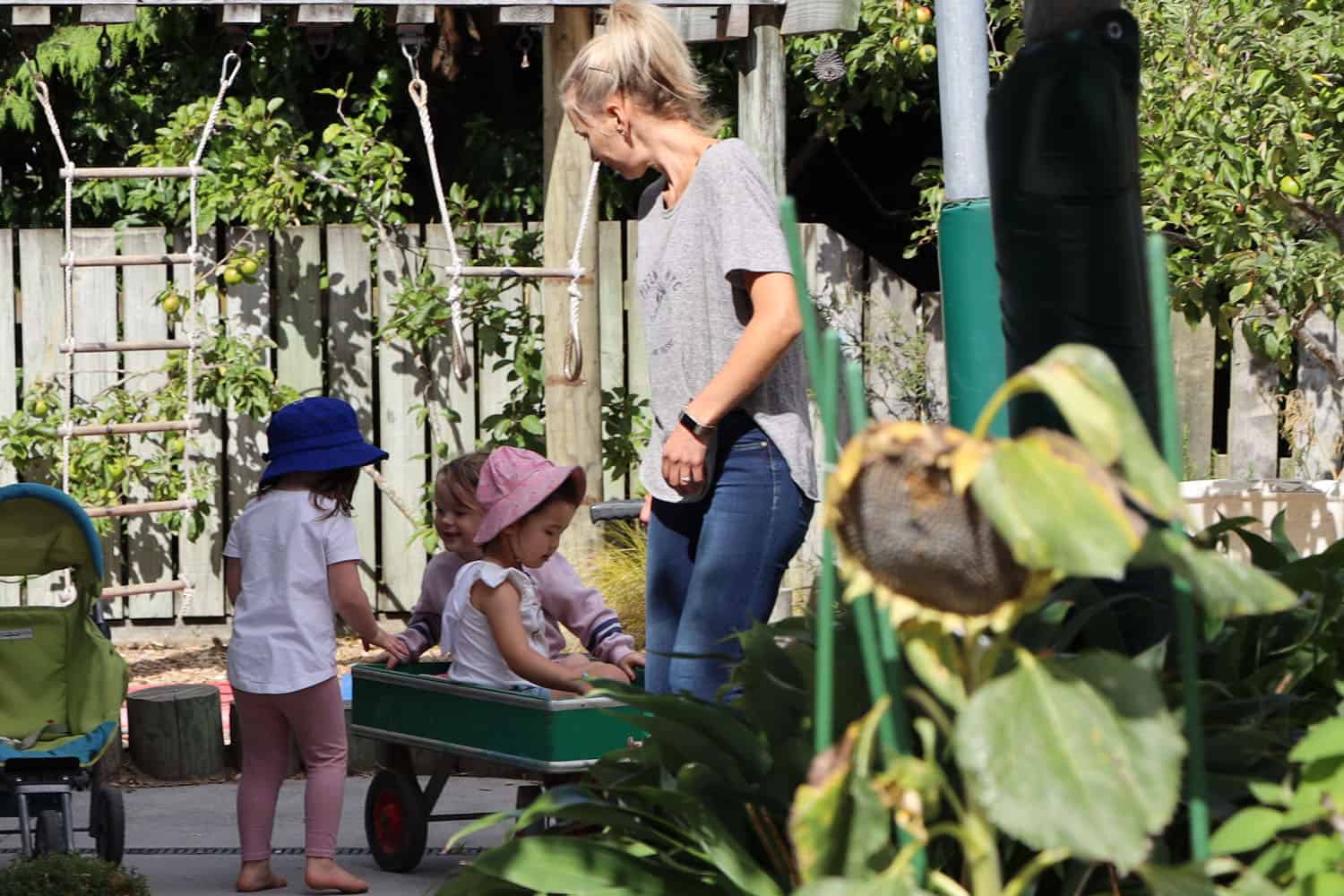
Teacher with happy children playing outside at early childhood centre on summer day.

Rarely do early childhood teacher education texts contain guidance on appropriate teacher dress and physical appearance. One exception is Maria Montessori who wrote that the teacher of young children: “must be attractive, pleasing in appearance, tidy and clean, calm and dignified.  These are ideals that each can realise in her own way. The

This is a member/subscriber only post. To access it, please see the message below for details on access and joining.
Already a Teacher Member?

Are you teaching and caring for children or studying for an ECE qualification?

If you are, that’s great!   Join us now, and become a teacher member.

Five Reasons to Join Us
1. Professional recognition

It is prestigious to belong to the OECE – you can skite about it! 

Ask us for an OECE Member Certificate, to include in your professional portfolio as proof you are engaged in reading and professional learning that advances your understanding of the relationship between practice and outcomes for children.

2. Extra benefits

No need to pay a subscription fee for access to NZ’s specialist ECE Newsroom – your member login will let you view everything in the ECE Newsroom. 

No need to pay to access the best NZ and international research – your member login gives you free access to the Research Library and support. 

3. Professional growth and no-judgement help

Teaching resources and advice on probably everything you can think of, including what to wear as a teacher, how to ask for a pay raise, identifying child behaviour causes and responding to needs, new play activity ideas, etc., etc.  all of this is at your finger-tips 24/7 whenever you need help or advice – login to view. 

4. Representation

Did you know that the OECE meets personally and regularly with the Ministry of Education national team, and the regulations committee and other forums? 

Political leaders and journalists are able to use the OECE to gain deeper knowledge on a topic or issue, and we provide a sounding board for ideas and feedback.

The OECE promotes safe working environments for teachers.  We also promote the absolute need for full pay parity with school teachers for all certificated teaching staff working in teacher-led centres and in home-based, and whether permanently or casually employed. 

5. Value for Money

We are committed to keeping membership prices affordable and providing value for money. 

Teacher membership is just $89 for a full year, or save by joining for 2 years.

Has this been useful?  Give us your feedback.

You are welcome to add a link to this page on your website. Copyright belongs to the OECE so please do not copy any content without our written permission.

Information provided is of a general nature. It is provided ‘as is’, and we accept no liability for its accuracy or completeness. See our Terms and Conditions.

Related Posts

question mark discussion

Can a Male Teacher Be Fired For Not Being ‘Man’ Enough?

“Our male teacher is not what we expected when we employed him. Can we fire him? 

“He provides nothing particularly male that is different to our female staff.  He’s not interested in doing carpentry and construction with the children. His interests are in music, creative play and cooking. He said he wasn’t interested in doing any main

This is a member/subscriber only post. To access it, please see the message below for details on access and joining.

Read More »
Early Childhood Education Press Releases NZ

FamilyBoost changes a boost for higher income families – but they fail to even out the playing field for all whānau, the OECE says

Tweaks to FamilyBoost that will put more money back into the pockets of families with infants and young children in early childhood education will certainly be good news for many parents amid the cost of living crisis.

But the changes to the scheme announced today fail to address some of the problems that have prevented uptake – such ECE service providers failing to provide parents with compliant invoices.

The changes also seem to favour higher income families, who can afford higher fee-charging services, the Office of Early Childhood Education’s chief advisor, Dr Sarah Alexander, says.

Read More »
Ministry of Education

ECAC: Ministry of Education to Publish Meeting Minutes, But Transparency Questions Remain

ANALYSIS/OPINION – July 3, 2012.

The Ministry of Education has operated an Early Childhood Advisory Committee (ECAC), with membership granted solely by invitation from the Ministry’s Chief Executive.

Until recently, ECAC meetings were held in a largely secretive manner—reporters and others from the early childhood sector were excluded, and minutes and reports were not publicly accessible.

Now, the Ministry has promised that starting with its June 2012 ECAC meeting, agendas, minutes, and papers will be made available online via its website.

This shift raises broader questions about the continued relevance of ECAC and the Ministry’s longstanding reliance on a handpicked group of people/organisations to represent the entire early childhood education (ECE) sector.

This is a member/subscriber only post. To access it, please see the message below for details on access and joining.

Read More »
Infant holds large ball at early childhood centre

Submission: Proposed transfer of ECE from the Ministry of Education to the Education Review Office

This submission responds to the Committee’s invitation to provide views on whether regulatory functions for early childhood education (ECE) should remain within the Ministry of Education or be transferred to a Director of Regulation located in the Education Review Office (ERO). It sets out the Office of Early Childhood Education’s (OECE) assessment of the proposal, the evidence base underpinning it, and the likely implications for the ECE system.

Read More »
early childhood research journal online

Parents’ Choices of Child Care in Australia

Parents’ Choices of Child Care in Australia.

Wendy Boyd. Southern Cross University, Australia.

Full Reference: Boyd, W. (2014).  Parents’ choices of child care in Australia.  NZ Research in Early Childhood Education Journal. Special Issue: Early Childhood Policy, 17, 51 – 70.

Original Policy Paper

Abstract

Little is k

This is a member/subscriber only post. To access it, please see the message below for details on access and joining.

Read More »

Share This Information

Table of Contents

Table of Contents

The Office of ECE Login

Take Action!

Help spread this vital ECE information, join our free social and email groups and become a member of OECE.

pay parity funding policy

1. Share This Information

2. Follow Our Social Pages

3. Get Regular Updates

Sign up to our free newsletters.

4. Become a Member