Vaccination and ECE Staff Immunisation

Search Entire Website
ECE Services staff immunisation and vaccination

Immunisation and Vaccination form for people who work in early childhood settings

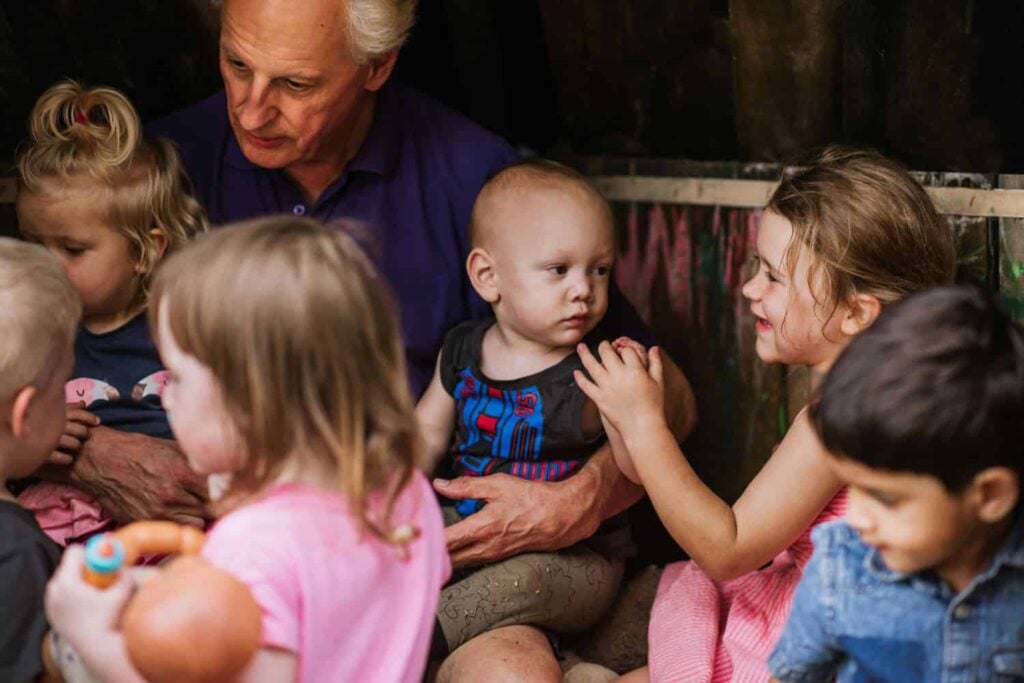
Working in early childhood education and care is a high risk occupation for communicable disease – for acquiring or transmitting vaccine-preventable diseases. Early childhood teachers and staff are falling through a vaccination policy gap according to a paper published in the NZ Medical Journal

The Office of Early Childhood Education (OECE) advises ECE services to develop an Immunisation and Infectious Diseases Policy that is understood by all staff (including relief teachers and student teachers) and communicated well to parents and caregivers.

ECE teachers, educators and managers are role models.  So, if you show parents that you personally take children’s health seriously, and let parents know what actions you have taken, this will help make a positive difference.

Print copies of the ECE workforce immunisation and vaccination form to give to everyone who works in your ECE service. The form is a gentle way to raise awareness and prompt workers to consider their vaccination status and become aware of the risks to themselves and children of preventable diseases such as whooping cough and measles. 

A 2022 study in the New Zealand Medical Journal showed out of 4000 surveyed ECE workers, only 48% reported being immunised against whooping cough, and 85% reported they were immunised against measles, mumps, and rubella, and believed they had immunity against chickenpox (82%).

It is necessary for all adults who work with children to be given the opportunity to consider their vaccination status and assist their ECE service to meet its health and safety obligations by showing that it has taken reasonable precautions to reduce risk.   

You can print a copy from the file below. Or scroll down to see the download button.

Caution

  • the privacy of personal information must be protected.
  • unlike for children, there is no legal requirement for staff to provide information on their vaccination status.

The form is designed for employers/services to give to staff to help staff to consider their vaccination status and raise awareness of the benefits of checking their protection. 
READ MORE: early-childhood-education-staff-are-falling-through-a-vaccination-policy-gap-in-new-zealand.pdf (nzmj.org.nz)

Has this been useful?  Give us your feedback.

You are welcome to add a link to this page on your website. Copyright belongs to the OECE so please do not copy any content without our written permission.

Information provided is of a general nature. It is provided ‘as is’, and we accept no liability for its accuracy or completeness. See our Terms and Conditions.

Related Posts

early childhood research journal online

Visible Difference: Photostory as Capacity Building, Research and Evaluation Method

This paper presents research on the use of visual documentation – photo stories – to support reflective teaching practice, disrupt traditional power relations between educators and families, and enable teacher and researcher co-construction of knowledge. Read the full paper below. Or to order a pdf copy of the article go to the main NZIRECE Journal page.

This is a member/subscriber only post. To access it, please see the message below for details on access and joining.

Read More »
boy girl blue pink gender

Pay equity and ECE: What teachers and employers need to know about the law change and how it will affect them

ANALYSIS. OECE, 13 May 2025.

The long-running pay equity claim for early childhood teachers – alongside their primary and secondary school colleagues – has been scrapped after Workplace Relations and Safety Minister Brooke van Velden last week announced changes to the Equal Pay Act.

But, that doesn’t necessarily mean that it’s the e

This is a member/subscriber only post. To access it, please see the message below for details on access and joining.

Read More »
the importance of touch as part of caregiving and teaching children

Children’s Developing Minds Revealed by Parent-led Research

A new book giving insight into children’s developing minds. What do children make of the stories we offer them? What do they think and feel as they listen to a parent read a picture-book? And what if a story confuses them. Read the full paper below. Or to order a pdf copy of the article go to the main NZIRECE Journal page.

This is a member/subscriber only post. To access it, please see the message below for details on access and joining.

Read More »
child head down and upset

Medication Issues and Behavioural Disorders

Medication Issues and Behavioural Disorders.

Back in the day, disruptive children who acted out or caused problems around the house were usually deemed to be badly behaved and would have been given a clip round the ear or told to get on with things.

In today’s society, however, things have changed.

When a child is badly behaved, of

This is a member/subscriber only post. To access it, please see the message below for details on access and joining.

Read More »
Early childhood teacher engagement with place-based education: Professional learning

Early childhood teacher engagement with place-based education

The study followed ECE teachers who were learning to use an outdoor centre – a nature-based education space. The experience, who their beliefs, values and understandings of the pedagogical approaches that underpin learning in nature and the importance of place-based learning for tamariki and kaiako alike were affirmed. Login to view the full article. Or you can order a pdf copy of the article, go to the main NZIRECE Journal page.

This is a member/subscriber only post. To access it, please see the message below for details on access and joining.

Read More »
The Office of ECE

Share This Information

Table of Contents

Table of Contents

The Office of ECE Login

Take Action!

Help spread this vital ECE information, join our free social and email groups and become a member of OECE.

pay parity funding policy

1. Share This Information

2. Follow Our Social Pages

3. Get Regular Updates

Sign up to our free newsletters.

4. Become a Member

Public Area Categories
Categories