2023 NZIRECE Journal (Vol. 25)

Search in Research

You are not logged-in.  Or, you don’t hold an active membership for this particular area.

Check if this membership is relevant to you.

This category can only be viewed by members.
the importance of touch as part of caregiving and teaching children

Self and Story in Early Childhood: Children’s Developing Minds Revealed by Parent-led Research

FULL REFERENCE: Boyd, W.  (2023).  Book Review: Self and story in early childhood: Children’s developing minds revealed by parent-led research.  NZ International Research in Early Childhood Education Journal, 25, pp. 71.

Log-in to read the full research paper below. Or order a pdf copy of the article from the main NZIRECE Journal page.

SELF AND STORY IN EARLY CHILDHOOD: CHILDREN’S DEVELOPING MINDS REVEALED BY PARENT-LED RESEARCH

by Hugh Crago
Reviewed by Wendy Boyd

Hugh Crago’s book provides thoughtful insight into children’s development and learning in respect to stories.

Using parent-led research Hugh leads the reader into considering what exactly are stories and how do they impact children’s learning and development. Early in the book Hugh describes how stories affect the two hemispheres of the brain explaining how each side of the brain has different functions and responses to the environment.

As Hugh asks in the book’s opening: What do children make of the stories we offer them? What do they think and feel as they listen to a parent read a picture-book? And what if a story confuses them or upsets them?

Read More »
Structural indicators of quality ECE and thinking

Revisiting Rhizomatic Connections and Relationships in Young Children’s Thinking and Meaning-Making

FULL REFERENCE: Cliffe, J. (2023).  Revisiting rhizomatic connections and relationships in young children’s thinking and meaning-making. NZ International Research in Early Childhood Education Journal, 25, pp. 57 – 70. 

Log-in to read the full research paper below. Or order a pdf copy of the article from the main NZIRECE Journal page.

ABSTRACT: The purpose of this article is to (re)explore possibilities within children’s thinking, connecting and meaning-making. Connections and relationships play a significant role in how children develop their thinking and draw sense and meaning from the world around them. Yet, too often they are overlooked in favour of more traditional approaches to knowledge production and pre-determined curricula priorities. These more traditional and predetermined approaches, not only risk marginalising children’s learning but may lead to early childhood practitioners (ECPs) missing or (mis)construing the potential and possibilities within encounters. This article critically (re)examines a vignette of practice in a pre-school setting in the South West of England, between a group of 4-year-old children, an early years researcher, an ECP and a bean. Through a Deleuzoguattarian (1987) lens concepts of rhizomes, assemblage and nomad, will be employed to problematise the vignette and reflect on/with multiple lines of flight, to accommodate alternative understandings of the encounter. Drawing on current social and relational pedagogic literature, the paper will consider the importance of connections and relationships in children’s meaning-making processes. A deeper exploration of the complex nature of children’s thinking, will support ECPs in understanding how children understand and make sense of their world.

KEY WORDS:  Relationships and connections, rhizomatic thinking, early childhood education, Deleuze, Guattari.

INTRODUCTION…MAPPING A CONTEXT…

This article seeks to (re)examine an episode of practice to (re)consider alternative interpretations that may open-up the potential and possibilities within children’s thinking, connecting and meaning-making. The vignette in this article, was collated from an observation and field notes drawn from previous research (Cliffe, 2017). Within the original project, data was collected via observations, field notes, practitioner interviews, children’s drawings and craft work. Children’s thoughts and views were gathered through shoulder-to-shoulder interviews. Drawing on a Deleuzoguattarian (1987) rhizomatic lens, the original data was iteratively analysed to uncover many possible pathways to sense and meaning in children’s thinking and connecting. The initial research was presented as fulfilment for an MA dissertation (Cliffe, 2017) and further interpretations were published in subsequent work (Cliffe & Solvason, 2019).

This is a member/subscriber only post. To access it, please see the message below for details on access and joining.

Read More »
Two children playing with Duplo blocks at early childhood centre.

Children Learning about Same-Sex Families

FULL REFERENCE: Liang, X., Waniganayake, M., & Hadley, F. (2023). Children learning about same-sex families: Perspectives of Chinese parents living in Australia.  NZ International Research in Early Childhood Education Journal, 25, pp. 44-56.

Log-in to read the full research paper below. Or order a pdf copy of the article from the main NZIRECE Journal page.

ABSTRACT: Every child should feel valued and have a sense of belonging in the early childhood (EC) setting they attend regardless of their family composition. A comprehensive literature review undertaken has revealed that a key source of EC practitioners’ reluctance to include same-sex families in their programmes has been their perceived opposition of parents. To better understand parents’ perspectives on the inclusion of same-sex families in EC settings, this study captured the views of parents of Chinese heritage living in Australia. It explored parents’ perceptions about their own children’s understanding of same-sex families. Analysis of the online survey (43 mothers and 11 fathers) and follow-up interviews (four mothers and one father) indicated parents’ reluctance towards engaging children in learning about same-sex families. Underpinning this reluctance were themes about: 1) the relevance of information that parents perceived their children have access to about same-sex families; and 2) challenges they identified about children’s conceptual capabilities and developmental outcomes. The findings suggest that parents require evidence-based information to alleviate potential concerns and practitioners require dedicated professional training to gain confidence in including same-sex families.  

KEY WORDS: Early childhood education, same-sex families, diversity, inclusion, parents, training.

INTRODUCTION

Children from birth to five years are described as competent and capable in Australia’s Early Years Learning Framework V2.0 (EYLF 2.0) (Australian Government Department of Education [AGDE], 2009).  Children’s ability to understand topics such as same-sex families should not be underestimated. In revising the original EYLF, gender and family diversity, two aspects of a child’s identity, were being updated in the Learning Outcomes when the study reported in this paper was conducted (Hadley et al., 2021). Learning about including same-sex families in early childhood (EC) settings is integral to upholding children’s rights to quality education without discrimination, as required by the Convention on the Rights of the Child (The CRC; Office of the United Nations High Commissioner for Human Rights [OHCHR], 1989). It aligns with the EYLF V2.0 in recognising that inclusion requires anyone who works directly with children in EC settings to consider children’s gender, sexual identity, and family circumstances in their curriculum decision-making practices (AGDE, 2009). It also supports the core objective stated in the Alice Springs (Mparntme) Education Declaration (The Declaration) to ensure children’s access to a comprehensive education during early childhood that enables “all young Australians to become active and informed members of the community” (Department of Education, Skills and Employment, 2019, p. 6).

Read More »
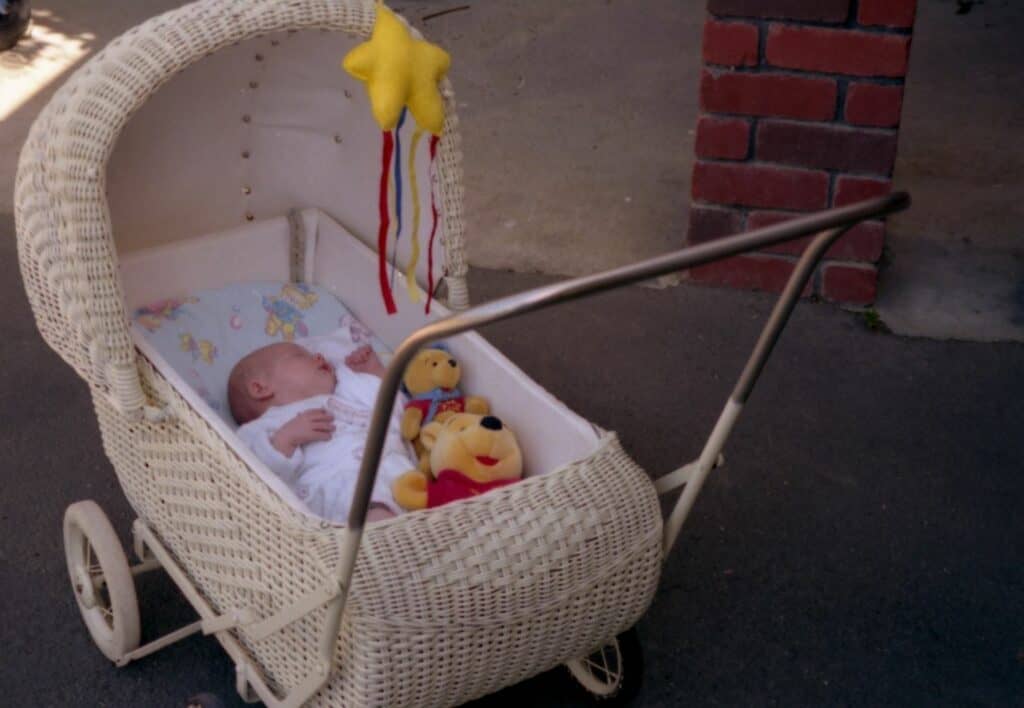
Baby pram history childcare NZ

Female Social Justice Leaders in the Early Childhood Profession

FULL REFERENCE: Summers, T. & Kamp, A.  (2023).  Female social justice leaders in the early childhood profession: A narrative inquiry on the origins of leadership.  NZ International Research in Early Childhood Education Journal, 25, pp.  29 – 43.

Log-in to read the full research paper below. Or order a pdf copy of the article from the main NZIRECE Journal page.

ABSTRACT: Sonja Davies, Kai Tahu, 1923-2005, was dedicated to social justice in Aotearoa New Zealand (Aotearoa) across various arenas, including early childhood education. She received the Queen’s Service award in 1987 and was a member of Parliament from 1987 to 1993. This article, drawn from kaupapa Māori, narrative research, investigates Sonja’s life with a focus on her upbringing, family, and contributions to early childhood. Sonja’s story, compiled from autobiographies, interview and document sources, was analysed thematically to explore the origins of her leadership. The analysis revealed that the origins of Sonja’s leadership are found in role models, personal struggles, mana wahine and social norms. Her leadership had a cost and was influenced by gender and generational contexts. Sonja’s leadership skills, combined with the social, economic, and cultural context that existed for her generation, enabled her to address inequities and to achieve change in the social justice sphere. Sonja’s story is important due to its place in time and history and because female leaders are underrepresented in the leadership literature. Drawing on Sonja’s story and the literature this article argues that the origins of Sonja’s leadership offer insights for the development of current and future leaders in early childhood education and beyond.

KEY WORDS:  Sonja Davies, early childhood leadership, social justice, politics of childcare.

INTRODUCTION

Lyman et al (2012) states that “there is no universal understanding of social justice leadership amongst scholars” (p.4). Despite this lack of common understanding, the importance of leadership is acknowledged in the early childhood education sector in Aotearoa. Scholars also recognise that historical narratives of early childhood leaders have the potential to make an important contribution to leadership and practice (May et al., 2021). Sonja Davies has influenced early childhood education from a historical perspective in Aotearoa, New Zealand. When Sonja learned about her Māori ancestry and discovered her whakapapa (see Glossary for Māori terms) later in life she learnt the importance of identity for supporting her leadership. Given Sonja’s identity as a Māori woman the research reported on in this article draws on Māori leadership literature and reflects a kaupapa Māori perspective. The focus on Te ao Māori in this article also reflects the context of Aotearoa as a bicultural nation and the researcher’s identity as a wahine Māori.

This is a member/subscriber only post. To access it, please see the message below for details on access and joining.
Read More »
job interview questions

Cultural Components of Early Childhood Teacher Education in Aotearoa New Zealand

FULL REFERENCE: Afrin, T. (2023).  Cultural components of early childhood teacher education in Aotearoa New Zealand.  NZ International Research in Early Childhood Education Journal, 25, pp. 1 – 16.

Log-in to read the full research paper below. Or order a pdf copy of the article from the main NZIRECE Journal page.

ABSTRACT: A number of Tertiary Education Organisations (TEOs) deliver early childhood teacher education programmes, where teaching and learning takes place between student-teachers and lecturers. Although several research reports aim to explore cultural diversity and inclusive practice with young children, very few do so from the perspective of teacher education. It is important that the tertiary sector is studied so that the student-teachers’ classroom encounter aligns with the placement experience. This study aims to address this gap. Within a socio-cultural framework, the research objectives were to ascertain the cultural components of early childhood teacher education programmes and to explore how the identified components impact on teaching and learning. Twelve lecturers from three TEOs and three cohorts of student-teachers participated via interviews and focus group discussions. Using manual thematic coding, nine broad areas of emerged. These are bicultural contexts of Aotearoa, multi-culturalism, individual identities, cross-cultural interactions, comfort zone, female majority, socio-economic struggles, spirituality, and technology. Student-teachers reported feeling empowered when they shared components from their culture. Lecturers acknowledged these components and affirmed that they contributed to their own emotional and professional growth. The findings led to the development of a reusable reflection framework for the lecturers of early childhood teacher education programmes to promote cultural competence.

KEY WORDS: Culture, teacher education, early childhood, reflection, teaching as inquiry.

INTRODUCTION

If we believe in the quote “We teach who we are” (Palmer, 1998, p. 1), curiosity about cultural components arises. Our own cultural contexts influence us as individuals and as educators. As an immigrant early childhood teacher educator from Bangladesh, working in Aotearoa New Zealand for the last twelve years, my curiosity led me to explore how lecturers relate to the student-teachers within the diverse cultural context. This query led to a Master of Philosophy study where I aimed to understand the cultural components of early childhood teacher education classrooms and the possible impact they may have on lecturers and student-teachers. In this study, I have condensed the infinite components of culture present in early childhood teacher education classrooms. Culture itself is polysemous. This is because culture is influenced by multiple variables such social and political contexts, as well as individual aspects such as, age, gender, and ethnicities (Eberly, Joshi, & Konzal, 2007). Anthropologically, people may denote artefacts from many different identities even within the same individual. For the study, I have narrowed down the investigation to the following subjects:

This is a member/subscriber only post. To access it, please see the message below for details on access and joining.
Read More »
Teacher carrying a child, opens child-proof gate for protecting children in the early childhood centre.

Working Towards Culturally Safe and Inclusive Early Childhood Work Environments

FULL REFERENCE: Griffiths, V., Hall, E., Hartley, D., Hohaia-Rollinson, F., Malcolm J., Purdue, K. and Tate, A.  (2023). Working towards culturally safe and inclusive early childhood work environments.  NZ International Research in Early Childhood Education Journal, 25, pp. 17 – 28.

Log-in to read the full research paper below. Or order a pdf copy of the article from the main NZIRECE Journal page.

ABSTRACT: Priority 1 of the National Education and Learning Priorities (NELP) requires early childhood education (ECE) services to ensure their educational environments are “safe, inclusive and free from racism, discrimination and bullying” (New Zealand Government, 2019, p. 2). However, recent media reports and research indicate that ECE teachers/kaiako do not experience safe, inclusive workplaces. This research supports a key action identified in the NELP namely to “ask…staff about their experience of racism, discrimination and bullying, and use that information to reduce these behaviours” (New Zealand Government, 2019, p. 2). We used a survey containing open-ended questions administered through Survey Monkey to gather information on diverse ECE teacher experiences in their work environments. The 233 respondents reported a range of positive and negative attitudes and behaviours to their differences, examples of which appear in this article. The study suggests that work is still needed to ensure early childhood workplaces are inclusive of culture and diversity. Our recommendations call on adults working in New Zealand early childhood services to help counter such experiences by honouring the Treaty of Waitangi/Te Tiriti o Waitangi, engaging in critical self and team reflection, increasing cultural and diversity capability through professional learning and development, and practicing continuous improvement.

Key words:  Policy, discrimination, inclusion, early childhood workplaces.

INTRODUCTION

This is a member/subscriber only post. To access it, please see the message below for details on access and joining.
Read More »
The Office of ECE
Research Categories

The Office of ECE Login

Take Action!

Help spread this vital ECE information, join our free social and email groups and become a member of OECE.

pay parity funding policy

1. Share This Information

2. Follow Our Social Pages

3. Get Regular Updates

Sign up to our free newsletters.

4. Become a Member

Member Categories
Research