Early Reading Together: A Practical, Proven Literacy Programme for ECE Services

Search in Teacher
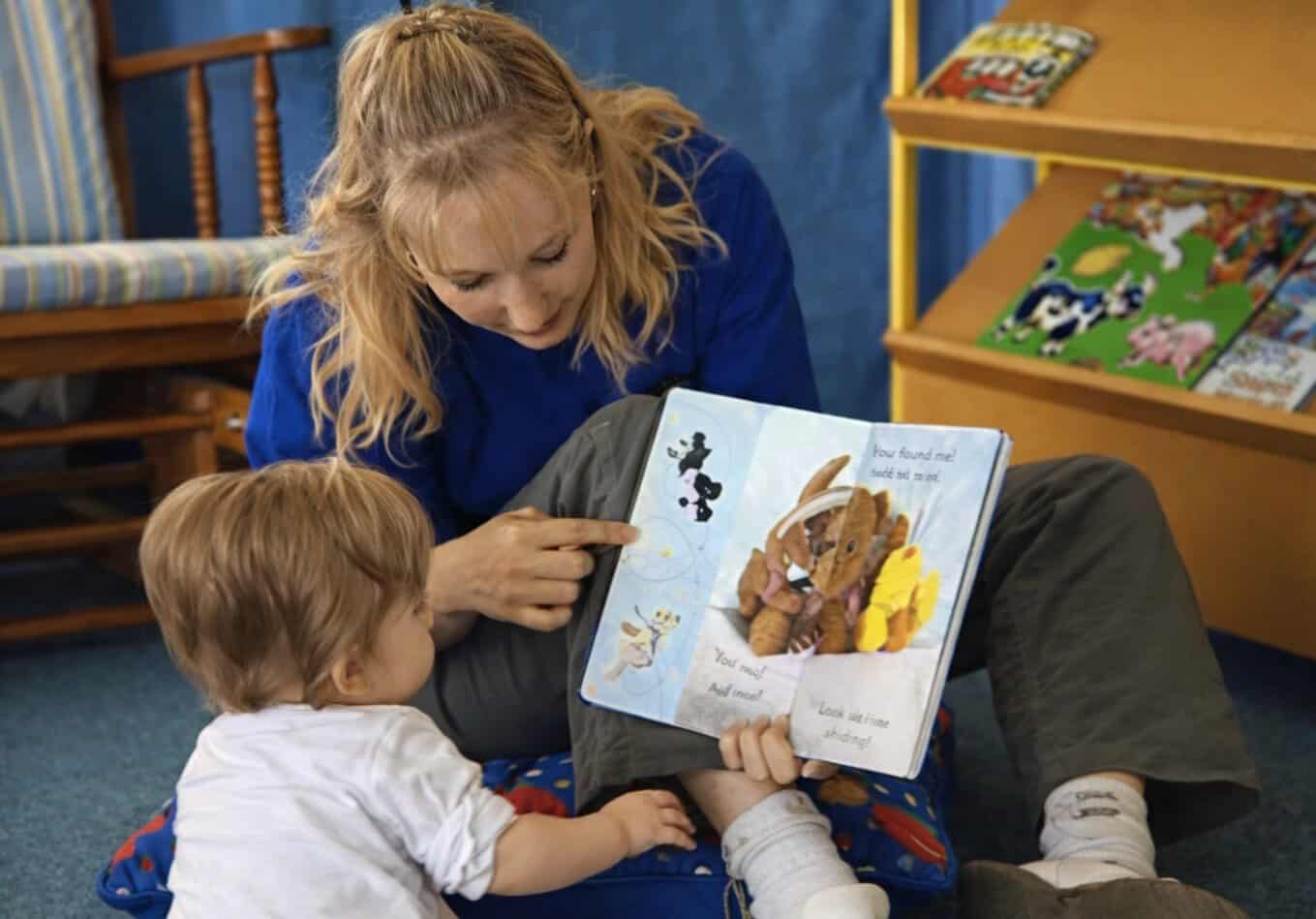
early childhood education qualified teacher reading a book with a child. Illustrating the importance of ECE teacher qualifications.

Early Reading Together® is a research‑based, workshop‑style programme that gives ECE teachers and service providers a practical way to strengthen early language and literacy alongside families.

Developed in New Zealand and used both nationally and internationally, it has a long track record of helping adults support young children’s communication, confidence, and love of reading.

Why ECE Services Choose Early Reading Together®

Centres and home‑based services offer Early Reading Together® because it works. The programme is practical, enjoyable, and easy to run, making it manageable for teachers and welcoming for parents, caregivers, and children. Its hands‑on approach helps families feel confident and supported, while giving teachers a structured, evidence‑informed framework to guide early literacy learning.
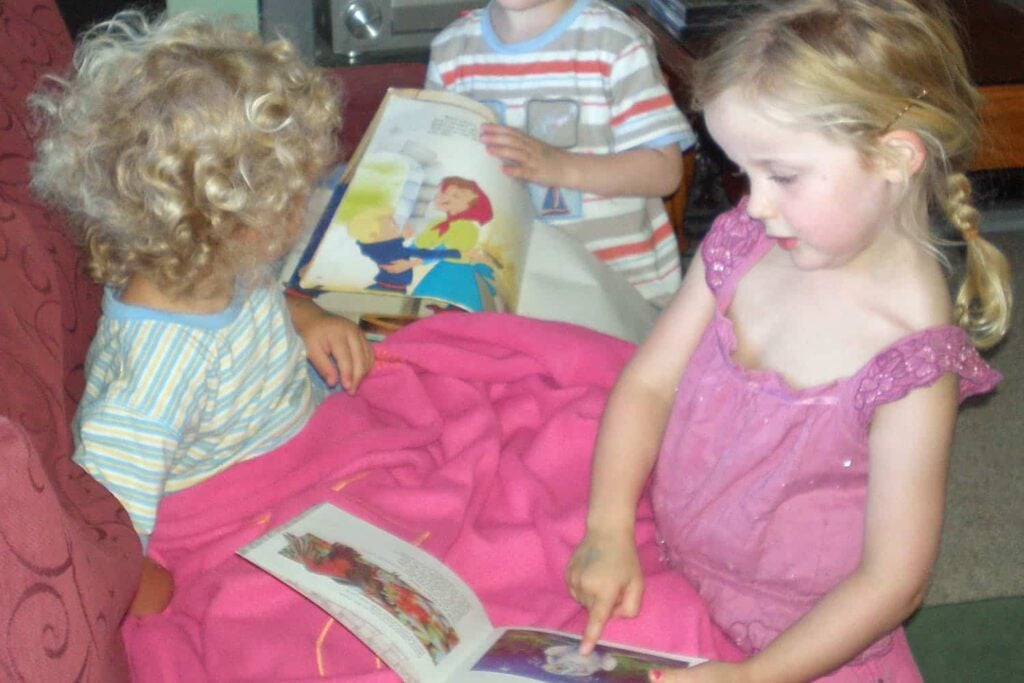
books children reading to each other

What the Programme Aims to Achieve

The heart of Early Reading Together® is simple: to help children develop a lifelong love of language and reading, and the literacy abilities they need to participate confidently in their communities and wider society.

To achieve this, the programme supports the adults in children’s lives (ECE staff, parents, and whānau) to:

  • Understand how talking and reading with babies and young children builds strong foundations for language and literacy.
  • Explore practical ways to support early reading, including using stories, rhymes, songs, and everyday conversations.
  • Learn which books, songs, and rhymes are most suitable and enjoyable for young children at different ages and stages.

Why It Matters

When ECE services run Early Reading Together®, they strengthen the partnership between home and centre, empower families with simple strategies that make a real difference, and help children build the early literacy skills that shape later learning success. It’s a programme that is easy to deliver and powerful in its impact.

Workshops

The Early Reading Together® workshops are designed to strengthen the support parents and whānau give to their children’s language and literacy at home. The programme provides guidance for running three short workshops over three weeks, with each session lasting no more than 1 hour and 15 minutes.

Workshop Overview

  • Workshop 1: Getting Started: Helping young children with language and reading at home.
  • Workshop 2: Building on Early Skills: More ideas and ways to support children’s language and reading as they grow.
  • Workshop 3: Sharing and Exploring Resources: Sharing ideas, giving feedback, and (where possible) visiting the community library to discover more resources.

Many services also choose to invite junior school teachers or local librarians to enrich the workshops and strengthen community connections.

Early Reading Together®: Workshop Leader’s Handbook

The programme includes a Workshop Leader’s Handbook which is a practical guide for ECE teachers and leaders. It provides step‑by‑step support for running the workshops and engaging groups of parents in meaningful, enjoyable learning.

Rhymes and Songs

Each programme set includes six sheets of rhymes and songs. Parents receive two sheets at each workshop and are encouraged to enjoy them with their children at home.

Services can also purchase additional sets (minimum order of 10) for teachers, parents, or playgroups who want their own copies.
ERTSuggestionsBookletv4 10

Booklet of Suggestions for Parents

This booklet is for parents and contains suggestions for enhancing children’s language and literacy learning at home.   

Boz: A ‘reading book’ for adults

This is one of the activities within the workshop programme.

Boz has a special alphabet which has been invented to help adults gain some understanding of what children experience as they are learning to read.
ERT BozBookletv6 10

Learn more about Early Reading Together – the resources and programme

Already a Teacher Member?

Are you teaching and caring for children or studying for an ECE qualification?

If you are, that’s great!   Join us now, and become a teacher member.

Five Reasons to Join Us
1. Professional recognition

It is prestigious to belong to the OECE – you can skite about it! 

Ask us for an OECE Member Certificate, to include in your professional portfolio as proof you are engaged in reading and professional learning that advances your understanding of the relationship between practice and outcomes for children.

2. Extra benefits

No need to pay a subscription fee for access to NZ’s specialist ECE Newsroom – your member login will let you view everything in the ECE Newsroom. 

No need to pay to access the best NZ and international research – your member login gives you free access to the Research Library and support. 

3. Professional growth and no-judgement help

Teaching resources and advice on probably everything you can think of, including what to wear as a teacher, how to ask for a pay raise, identifying child behaviour causes and responding to needs, new play activity ideas, etc., etc.  all of this is at your finger-tips 24/7 whenever you need help or advice – login to view. 

4. Representation

Did you know that the OECE meets personally and regularly with the Ministry of Education national team, and the regulations committee and other forums? 

Political leaders and journalists are able to use the OECE to gain deeper knowledge on a topic or issue, and we provide a sounding board for ideas and feedback.

The OECE promotes safe working environments for teachers.  We also promote the absolute need for full pay parity with school teachers for all certificated teaching staff working in teacher-led centres and in home-based, and whether permanently or casually employed. 

5. Value for Money

We are committed to keeping membership prices affordable and providing value for money. 

Teacher membership is just $89 for a full year, or save by joining for 2 years.

Has this been useful?  Give us your feedback.

You are welcome to add a link to this page on your website. Copyright belongs to the OECE so please do not copy any content without our written permission.

Information provided is of a general nature. It is provided ‘as is’, and we accept no liability for its accuracy or completeness. See our Terms and Conditions.

Related Posts

Good financial early childhood education business management

$20m Blunder: ECE Services Paid Funding Twice Can Keep Money

Senior public servants overlooked a duplicated 4 percent funding increase to about 2000 early childhood centres, resulting in more than $20 million in over‑payments. The article outlines how this error went undetected for over a year and the impact of the Ministry of Education’s funding oversight on the sector.

Read More »
Two children playing with Duplo blocks at early childhood centre.

90-day Trial Period

All employers in New Zealand, no matter their size, are able to use 90-day trial periods. 90-day trials will not affect other aspects of employment relations, such as the requirement to act in good faith. It can be used for any staff – including and not limited to teachers, cleaners, cooks, administrators). 

If you wish to put a new staff me

This is a member/subscriber only post. To access it, please see the message below for details on access and joining.

Read More »
Children with steering wheel and fire engine in the early childhood centre playground.

Making Signs as Part of Play

Making signs enriches play and learning.

All around us are signs – what ones can you see?

Signs can be used to tell us what to do like “stop” and “give way” on the road.

They can be used to let us know about dangers (e.g. “wet floor”) and to make announcements (e.g. “cooking at 2pm today”).

Signs can also be used to labe

This is a member/subscriber only post. To access it, please see the message below for details on access and joining.

Read More »
children's wooden block tower

The Risks of Implicitly Endorsing Third Party Schemes to Parents

Endorsing Third Party Schemes and Products.

What happens when parents see flyers / pamphlets and posters displayed in the entrance way of ECE services or when advertising material is sent home in children’s bags?  

These might be from the Ministry of Education to promote the choices that it wants parents to make, or a new government scheme

This is a member/subscriber only post. To access it, please see the message below for details on access and joining.

Read More »
boy beating drum as part of story session led by teacher NZ

Giving Children Choices – Strategies for the Best Outcomes

Giving young children choices and empowering them to make their own decisions will help prepare them for life. 

The early years are the best time for children to begin to learn about making choices and consequences.

The ability to choose is the essence of being human. 

Consider how many choices you make each year, month, week, da

This is a member/subscriber only post. To access it, please see the message below for details on access and joining.

Read More »

Share This Information

Table of Contents

Table of Contents

The Office of ECE Login

Take Action!

Help spread this vital ECE information, join our free social and email groups and become a member of OECE.

pay parity funding policy

1. Share This Information

2. Follow Our Social Pages

3. Get Regular Updates

Sign up to our free newsletters.

4. Become a Member