Chloe Davidson – Hospital Play Specialist
Chloe started her career as an Early Childhood Teacher in 2011, working in a range of different settings and completing a Bachelor of Education and Post Graduate Diploma of Education. For the past six years, she has worked at Starship Hospital as a Hospital Play Specialist.
What is a Hospital Play Specialist?
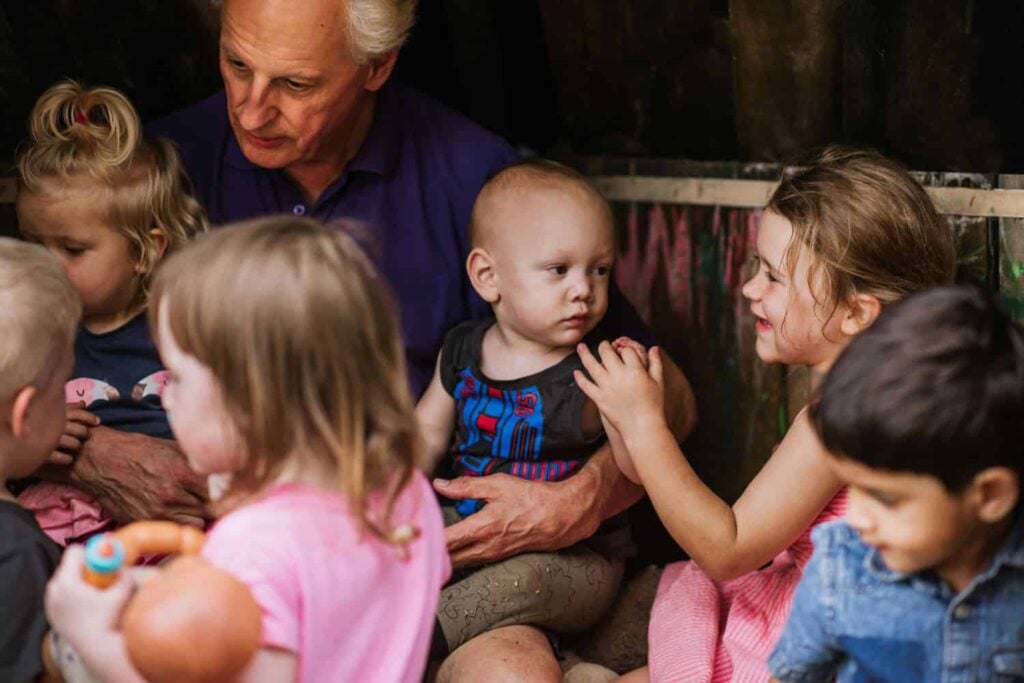
Hospital Play specialists are registered teachers who work in health care spaces. They care for aspects of children’s education and support tamariki and whānau to work through any stress and anxiety associated with being in hospital. Using play as a tool, Hospital Play Specialists help tamariki to learn coping strategies so, for example, they can feel empowered and prepared for interventions and procedures.
Hospital Play Specialists work in a multidisciplinary team which includes nursing and medical staff as well as other educators and specialists. They have a lot of knowledge around children’s development, and strategies to support tamariki and whānau while they navigate times of stress. They also support nursing and medical staff with different interventions and procedures, and advocate for parents and whānau too.
Hospital Play Specialist is a role which requires a unique set of skills. These kaiako provide an integral role as a conduit between tamariki, parents and whānau and other hospital staff. In their role they support children and their families at a time where stress levels can be high, and understanding interventions is key to best outcomes for tamariki.
Please tell us a little bit about yourself and your mahi as a Hospital Play Specialist
Kia ora tātou
Ko Chloe toku ingoa
Nō Hāmoa ahau
Kei Starship ahau e mahi ana
Tēnā koutou katoa
After eight years in the community and studying I was ready for a change and applied for a job as a hospital play specialist. I heard about the position from a teacher at the Kindergarten where I worked, and I thought it sounded like an interesting opportunity. I applied for the role at Starship and was lucky to be successful.
I have been working as a Hospital Play Specialist for the past six years and loving it. It’s a unique role and you need specialised skills. As a Hospital Play Specialist, you spend two years doing on-the-job training, completing modules, and compiling a portfolio of learning.
After completing 3000 hours of working and your professional portfolio of professional development, case studies and procedural accompaniments you can submit your portfolio to our Registration Council, who are an independent body. They assess your work and if you meet the criteria you are granted Registration. I am very proud to be a Registered Hospital Play Specialist and a Registered Teacher. I work hard to meet the criteria to maintain both of these.
Can you share a little more about where your role and career has taken you?
I am currently a Senior Hospital Play Specialist at Starship supporting other early childhood educators as they transition into this field. I provide professional supervision as well as education and facilitation of modules for those newer in our field.
I am also privileged to be on our executive board for Aotearoa “Hospital Play Specialists’ Association Aotearoa New Zealand” where I have been supporting our wider profession for the past five years. I have this year moved into the role of President of our association. It’s a huge honour to continue the work of those who have developed our profession and shaped it into what it is today.
Are there any other initiatives or study you’re involved with?
Over my time at Starship I have been very fortunate to work alongside amazing tamariki, rangatahi and whānau as well as health professionals. I have been involved in initiatives to support Pasifika aiga and been successful in securing funding to create new projects and initiatives to bridge the gap for Pasifika mokopuna which is something I am very passionate about.
I have also been involved in research and I am currently completing my Masters in Education through the University of Auckland and writing my thesis which I am excited to finish this year. Starship has provided me so many opportunities and I feel it is the right profession for me to advocate for tamariki, rangatahi and whānau empowering them to be active participants in their healthcare journey.
What was your early childhood like? What are your strongest and fondest memories?
My early childhood was great. I attended our local kindergarten with my cousins, and we all enjoyed being outdoors together. The open environment allowed for a lot of exploration. We went on trips too which were always memorable as a parent would come with us.
How did you come to be in the role you’re in today?
I was influenced by my eldest daughter’s early childhood teachers who told me I was great with children and encouraged me to consider ECE as a career. I was working in a corporate environment prior to this. My daughter’s centre supported me through my training and I worked as a teacher at their centre. I learnt so much from them all.
Then I heard about Hospital Play specialists and was curious about that too, as working in the medical field was always my interest in high school.
What is the most interesting aspect about what you currently do for mahi?
I love that I get to meet pēpi, tamariki, rangatahi and whānau from all over Aotearoa and the Pacific Islands and that I am trusted to support them through some of their hardest moments and see them grow their coping strategies, resilience and have some fun in a setting like the hospital that is not always thought of as a fun space.
If you think about being proud, or feeling proud, is there something or someone that comes to mind?
I am so proud of the mokopuna I work with. I am only able to do my job as the mokopuna allow me to spend time with them, they talk to me and share parts of their home life to help me support them by relying on these skills and building on them.
If you could go back and start your career path again, is there anything you’d do differently?
No, I believe things happen the way they are meant to, and I am open to growth and opportunities and giving things a try. Even though change and taking risks can be scary it can also be so rewarding. I wouldn’t be working in what I call my dream job today if I didn’t take risks to try something different.
What’s a piece of advice you’d offer to someone thinking about entering the early childhood field?
It is something a special kind of person does as there are no off days. Mokopuna need to be nurtured and as educators you need to put your whole heart into what you do as we are supporting the growth of our future in Aotearoa so do it with all your heart.
As a society what are we doing well for children in early childhood education and care? And, does anything come to your mind that you feel we could do better?
We need to remember why we are doing what we are doing and that children deserve opportunities to grow, and flourish and mokopuna must be at the heart of all the decisions we make to ensure our future is bright and Aotearoa continue to grow and be innovative embracing our cultural heritage and honoring Te tiriti o Waitangi.
Finally, if you could have any superhero power Chloe, what would it be and why?
I grew up on Power Rangers and Captain Planet as a child and the messages I took from those shows is the value of teamwork and supporting each other. I could have a superpower; it would be bringing people together through acts of service (Tautua), love (alofa), respect (Fa’aaloaalo), and family (aiga).
We can not be early childhood professionals without a strong moral compass and for me this is through my Samoan culture (fa’asamoa)
Chloe, ngā mihi nui. Thank you for your time and for sharing your insights, which will be invaluable to our readers-not only those who are curious about the mahi that Hospital Play Specialists do, but also as a reminder to all of us that we need to keep learning, to follow our interests and passions as we encourage tamariki to do, and of the value of taking risks.
See more best career stories in early childhood education
Go to Career Stories