Creating the Best Early Foundations for Children’s Learning and Achievement
Contents
- Appropriate vs Inappropriate Teaching in Early Childhood
- Quality Teaching – Early Foundations: Report Findings
- Further readings and information on Te Whāriki and ECE pedagogy
1. Appropriate vs Inappropriate Teaching in Early Childhood
Appropriate teaching in early childhood is grounded in play, exploration, conversation, relationships, and hands‑on experiences. Inappropriate teaching occurs when expectations mirror those of formal schooling: worksheets, rote drills, or pressure to master and perform skills at an early age before children are developmentally prepared.
Below is a video, shared by New Zealand Education Minister Erica Stanford on 11 August 2026, which provides a good starting point for discussion on quality teaching – early foundations.
Miseducation refers to the harmful practice of pushing formal, school‑age academic curricula down into early childhood education.
The term “miseducation” was popularised by psychologist David Elkind in his 1987 book Miseducation: Preschoolers at Risk. Elkind argued that when young children are required to engage in rigid, highly structured, and developmentally inappropriate instruction before they are ready, the result is not accelerated learning but long‑term harm to motivation and wellbeing.
2. Quality Teaching – Early Foundations: Report Findings
Dr Sarah Alexander
Ministry of Education, 2003
This report is one of the first in a series of best evidence syntheses commissioned by the Ministry of Education. It is part of a commitment to strengthen the evidence base that informs education policy and practice in New Zealand. It aims to contribute to an ongoing evidence-based discourse amongst policy makers, educators and researchers.
This synthesis addresses the question of:
“What works in early childhood teaching for maximising children’s learning outcomes and reducing disparities amongst diverse children?”
In New Zealand, early childhood is defined as the period of education from birth to approximately five or six years of age. Research evidence on children’s learning points to early childhood as the foundation years for later learning and development. The evidence indicates that children’s experiences during early childhood are critical. Quality teaching is identified as the key lever for improving outcomes for diverse children. This synthesis outlines what teachers can do, based on the combined best research evidence, to provide diverse children with a strong foundation for future learning.
Quality teaching from birth lays a foundation for children’s later educational achievement. Quality teaching during the early years before formal schooling can effectively reduce educational disparities for Māori and Pacific Nations children and children from families with traditional risk factors such as low household income. The benefits of quality teaching during the early childhood years carry through into schooling.
A wide review of the research on teaching and learning linked to child outcomes has produced seven characteristics of quality early foundations teaching. Certain research-based features were found to underpin the characteristics of quality teaching. These features are outlined and supported by examples and illustrations from research, and by theory also where relevant. The characteristics of quality teaching linked to child outcomes and the research-based features of these characteristics are summarised below:
The seven characteristics of quality teaching
The characteristics of quality teaching and research-based features are as follows.
1. Effective teaching involves working with children as learners
- Teaching is focussed on children’s learning.
- It facilitates children’s talk and conversation about their learning, supports their cooperative and independent work, encourages children’s motivation and dispositions toward learning, and provides the conditions to give children opportunities to participate in learning activities.
- Teaching approaches children’s social and emotional development as linked to and important for children’s intellectual development.
- Goals for children’s learning that include knowledge, skills, dispositions and attitudes and feelings best serve children’s development in the long-term.
2. Teaching is informed by contextual knowledge of children’s learning
- Ongoing systematic observation of children and discussions with children about their learning can assist adults to develop their knowledge of children’s learning.
- Children’s learning in different contexts such as with their family, in their church, and in their community is recognised and built-upon by the teacher(s).
- Quality teaching involves building strong partnerships with children’s family and whanau.
3. Effective teachers (includes parents and other caregivers) use content knowledge confidently to support and extend children’s learning
- Teachers draw on and use content knowledge (e.g. what is needed to help a plant grow or the names of planets).
- They have confidence in their personal ability to talk about and demonstrate their knowledge.
- When teachers can not adequately answer children’s questions or provide sufficient knowledge they access the information they need e.g. books, the internet, etc.
- If teachers are not sure of the accuracy of their knowledge they research further into it.
4. Teaching scaffolds, co-constructs, promotes metacognitive strategies and also facilitates children’s learning
- Teachers are actively involved in planning, structuring and informing children’s activities and learning experiences.
- Teachers scaffold children’s learning – building and extending on what children already know and can do.
- Teaching supports children to draw on their viewed experiences and activities.
- Teaching promotes a co-construction model of learning, where learning is actively constructed by both the child and the adult and both are learners.
- Teaching promotes children’s metacognitive development and strategy use, e.g. children’s control of their learning.
- Teaching provides children with opportunities to observe and participate in everyday adult tasks.
- Teachers reflect on their own thinking and engage in planning with colleagues and/or parents to improve teaching.
5. The social setting is organised in ways that support learning and maximises children’s learning outcomes
- Many opportunities are provided for learning with others.
- Teachers take account of their role as models.
- Children are supported to be the “teacher” sometimes.
- Interactions with different peers facilitate children’s learning.
6. The physical setting is organised in ways that support learning and maximises children’s learning outcomes
- Optimal organisation of space, density, and activities.
- Location of activity areas is planned to enhance learning.
- Children’s playground and physical play for learning is valued.
- Teachers regulate access to some materials and equipment.
7. Teaching is responsive to children’s physical and emotional wellbeing
- Prevention of communicable diseases and health promotion strategies that involve families.
- Teachers act on any risks to children’s health and safety e.g. noise levels, nutrition, etc.
- Teachers create a positive, happy and warm climate.
Key Messages on Quality Teaching in Early Childhood Education
1. Recognise that learning starts early
Young children are learners. Learning starts well before children start school. Professional teachers, parents and others who share responsibility for children need to recognise children as emergent and powerful learners. This includes setting goals and holding expectations for learning.
2. Ensure teachers “know” children
To teach effectively professional teachers need an in-depth knowledge and understanding of each child. All teachers (including parents and professional teachers) need to build links between the different socialisation settings for children. It is important to know about children’s experiences and learning in their different socialisation settings and to establish shared goals and cultural match.
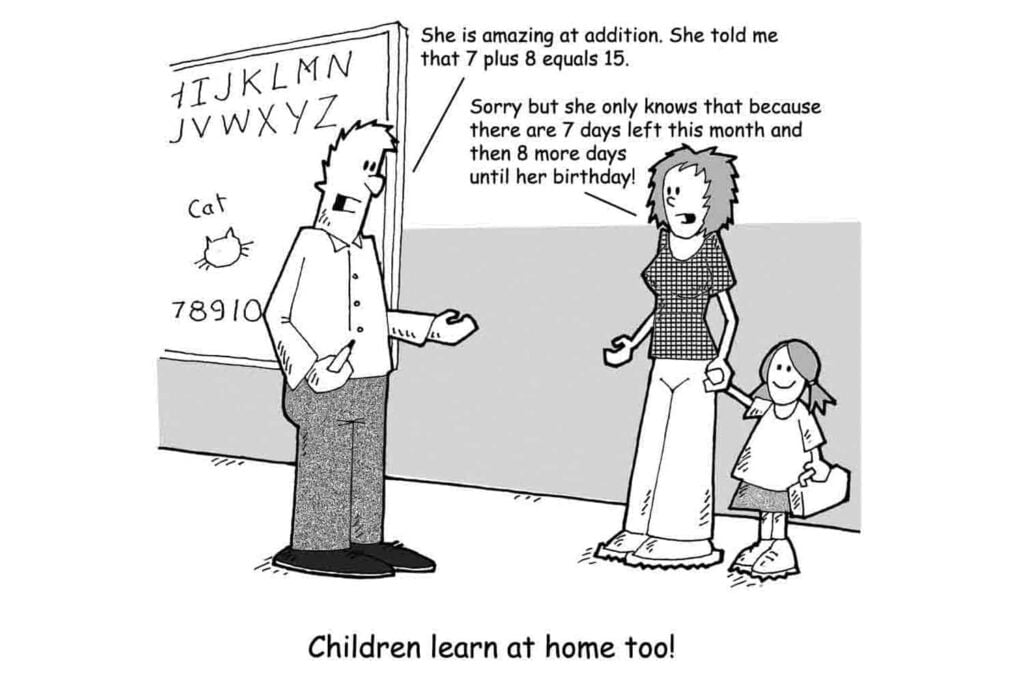
Quality teaching is also about getting to know children very well through systematic observation and involving children as informants about themselves.
3. Value and ensure teachers bring general and subject-based knowledge to their work with children
General and subject-based knowledge must be held by teachers and communicated appropriately. Teachers need to cultivate and feel confident about using subject-based knowledge and general knowledge to build on children’s existing understanding and to foster new learning.
4. Teachers thinking critically about their teaching and attending to “how” children learn
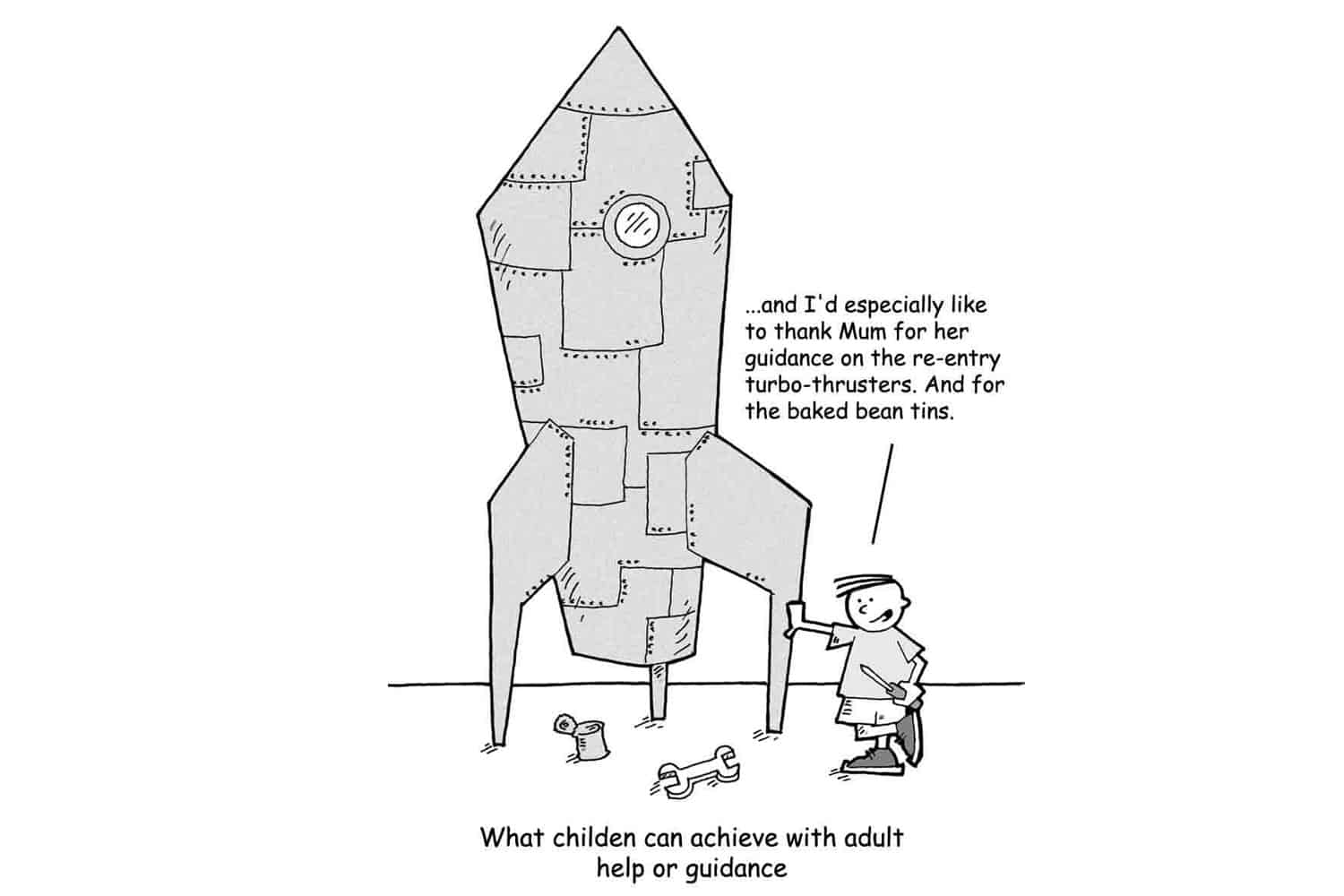
Teachers must attend to “how” children learn best and critically examine their own thinking.
The evidence shows that teachers should play an active part in planning, participating, scaffolding (providing support to overcome greater levels of difficulty), and being a partner in children’s learning processes (co-construction). Opportunities for children to observe and participate in every-day activities and tasks, such as cooking and shopping make learning meaningful and provide rich contexts for dialogue between adults and children. Teachers should support children to become self-regulated learners through promoting awareness of what they know and control of their thinking and learning processes.
To teach well teachers must think about what they do and work to close the gaps between what they know to be best for children’s learning and what actually happens for individual children. Some possible strategies include the use of video and audio recordings to support teacher analysis of their own thinking and children’s experiences, the provision of opportunities for teachers to meet with other teachers for professional development, and the use of an outside observer/researcher to record practices and provide feedback to teachers.
5. Ensuring the social setting supports learning
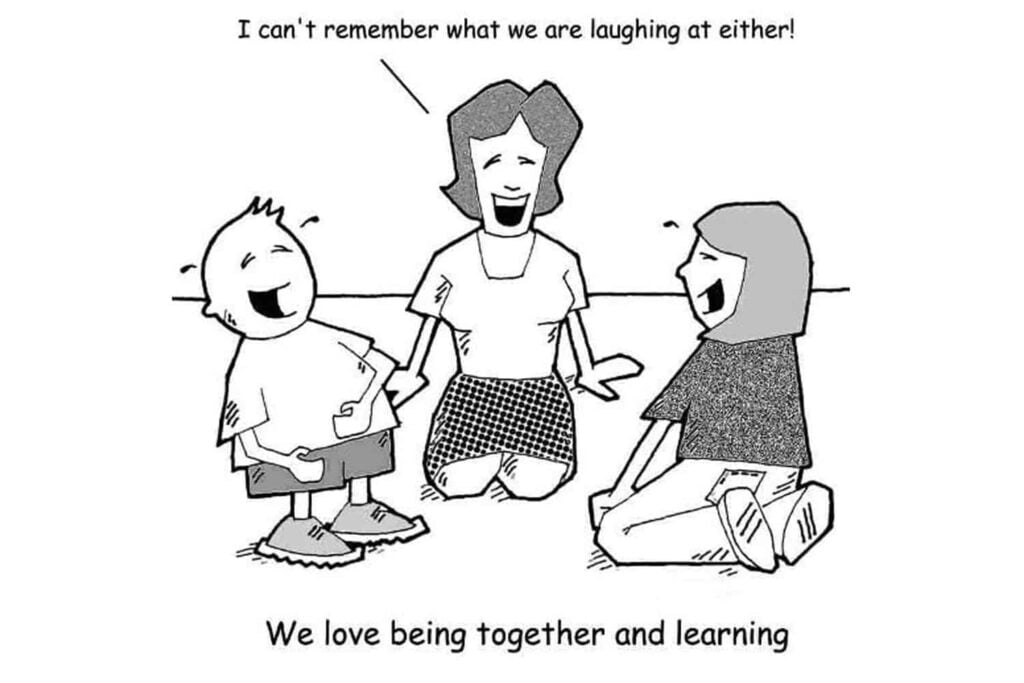
The social setting should be organised in ways that support learning.
The social setting impacts on children’s outcomes. Peers can influence outcomes as can adults. The evidence points to the importance of establishing a ‘community of learning’ approach where many varied opportunities for collaboration and social learning occur.
Heterogeneity rather than homogeneity in the peer group can help to facilitate better cognitive and social outcomes for young children; providing that difference is valued by teachers and within the setting.
6. Ensuring the physical environment supports learning
The physical environment should be organised in ways that support learning.
The physical setting, including the amount and arrangement of space, and nature and availability of equipment and materials impacts on children’s behaviour and outcomes. It is important for teachers to recognise how the physical setting can provide a vehicle for promoting children’s learning. For example, regulating access to some materials can facilitate children’s use of language to request what they require.
7. Recognising and enhancing children’s physical and emotional well-being
Children’s physical and emotional well-being are key considerations for enabling and enhancing children’s learning. Teaching must be responsive to children’s physical and emotional well-being. Disease prevention and health promotion strategies are important, along with promoting child safety and good nutrition, and reducing hazards in the environment such as potentially physically harmful noise levels. The emotional climate must be conducive to learning though children experiencing nurturing relationships with their teachers and through children’s teachers (including both professional teachers and parents/caregivers) maintaining balanced and supportive relationships.
Background to the Best Evidence Synthesis Report: Early Foundations
This report shows that the quality of teaching by parents, professional teachers and others who share a responsibility for children matters when it comes to improving the outcomes of diverse children. Simply focusing on getting more children into early childhood programmes and on whether the programmes are high quality ones does not guarantee that outcomes will be optimised for every child. Quality teaching makes a difference.
The characteristics of quality teaching apply across different types of early childhood programmes and settings, and to all of children’s various teachers (including, parents and other family members, professional teachers and other caregivers).
The Early Foundations BES should be read and discussed in conjunction with the Quality Teaching for Diverse Students in Schooling BES. This is especially important when reviewing the evidence and discussing the implications for learning and teaching during the year prior to and the year after children’s entry to school. Some of the evidence presented in the Schooling BES is of relevance to learning and teaching in the early childhood years, and vice versa.
The Family and Communities BES complements the Early Foundations BES in looking specifically at the impacts of family and community on children’s outcomes.
The Early Foundations BES is intended to encourage dialogue on what works for children and how best to optimise outcomes. It is a formative document that represents the best evidence that could be accessed within the time frame of the project.
Reflective questions arising from the review’s findings
- What steps need to be taken to ensure that strong attention is also given to the outcomes for diverse children of early childhood education?
- How well do professional teachers really know the children in their care?
- How can linkages between home and early childhood service settings be maximised to promote better outcomes for children (for example, through home-visiting by professional teachers, enabling mothers to continue to breastfeed their infants in full and part-day services, involving families in the early childhood curriculum through project work at home, and the co-construction of goals for children and a joint ECE service and family approach to teaching)?
- How can communication among teachers of the various early childhood services a child participates in, and between early childhood and school teachers and parents/caregivers be strengthened to reduce disruption in children’s learning and optimise learning outcomes?
- How well are early childhood services set up to provide the kinds of interactive situations that may occur naturally within home settings?
- What can professional teachers do to support quality teaching in the home setting?
- What training and support is provided to parents, whanau members and others who share responsibility for children?
- How can professional early childhood teachers be encouraged to use content knowledge, feel more confident in using, and be more knowledgeable of strategies to check the accuracy of their knowledge in their teaching and dialogues with children?
- What can providers of initial teacher education and professional development providers do to facilitate greater professional teacher awareness of children’s metacognitive strategies and abilities, and to help professionals develop their ability to teach metacognitively?
- Are professional teachers supported to identify changes in their behaviours and interactions that influence children’s behaviour and interactions?
- How well is child diversity accepted and supported within group early childhood settings?
- What skills and understandings do teachers (including professional teachers and parents) need to have (for example nurturing children’s friendships and helping behaviours) to be able to effectively shape the social environment and capitalise on opportunities presented within the social setting that will help to maximise children’s learning outcomes?
- What processes are needed for more carefully determining whether the space available and the density of space in early childhood settings is optimal for children of different ages and for the number of children (and adults) within settings?
- Do early childhood professionals need to re-visit what activities and materials are provided for children, and where and when within the early childhood setting?
- How can teachers be encouraged to capitalise more regularly on the potential of the outdoors and outdoor equipment for promoting children’s thought and learning?
- What emphasis is placed on the role of the professional early childhood educator in promoting children’s physical well-being (e.g. health promotion and accident prevention)?
- While society accepts that parents and other family members can have emotional involvement, it is less acceptable for professional teachers to have emotional involvement with children. How can emotionally positive teacher involvement with children be encouraged and supported in early childhood services?
Hard copies of the report are available from the Ministry of Education