Should Children Be Part of Election Campaign Backdrops?
NEWS/OPINION EDITORIAL – 6 October 2026
With New Zealand’s general election just weeks away, politicians will be looking for opportunities to connect with voters and generate positive media coverage.
Early childhood services could find themselves in the middle of that activity, whether through requests for campaign-related visits, policy announcements, media events, or participation in rallies and advocacy campaigns approved by their service’s management or organised by sector groups such as NZEI Te Riu Roa
Some will be seeking genuine opportunities to learn about the realities of early childhood education. Others may be looking for something every election campaign needs: compelling images and public visibility.
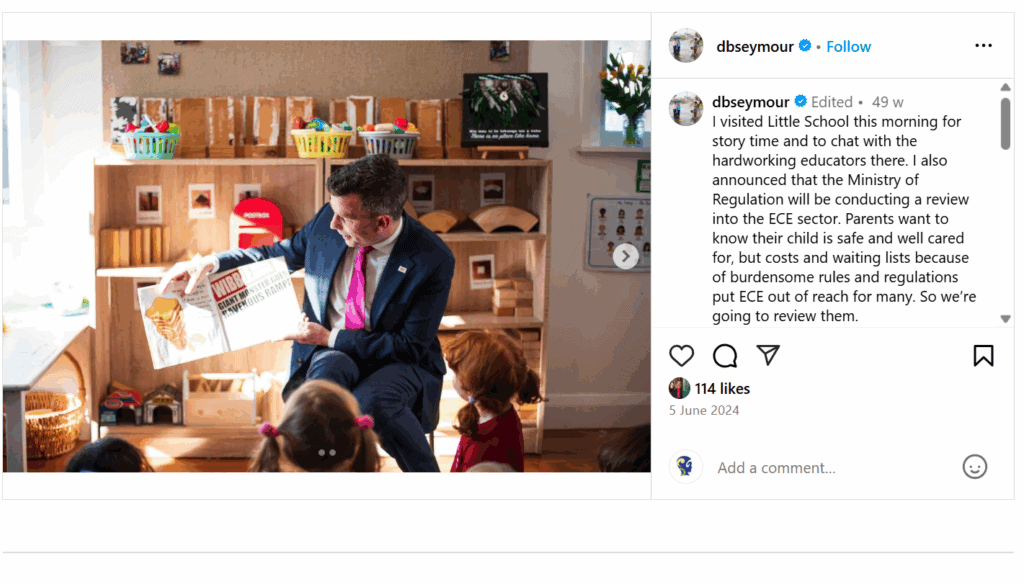
The familiar scene has played out many times. Politicians arrive at an ECE service flanked by media advisers, photographers, videographers and journalists. Children sit quietly, do what they are told, and smile for the cameras. Teachers step aside. A policy announcement is made. The news websites, media advisers, and broadcasters get their visuals.
But who benefits? Certainly not the children whose play has been interrupted for strangers.
Not the teachers who suddenly find themselves trying to keep large groups of excited children quiet while microphones are switched on and cameras start rolling.
And not the families who may feel uncomfortable seeing their child used for political campaigning.
Children attend ECE services to learn, play, explore and build relationships. They are not props. They are not campaign material. They are not there to enhance a politician’s image or lend emotional appeal to a policy announcement.
Yet election-year photo opportunities can effectively turn children into unpaid participants in political theatre.
There’s a Difference Between Visiting and Campaigning
This is not an argument against politicians visiting ECE services.
In fact, politicians should spend more time in early childhood settings.
If MPs, Ministers and political leaders want to better understand the sector, they should be welcomed into services. They should sit and walk around with teachers, observe programmes, talk with families and experience first-hand the challenges and realities of providing quality early childhood education.
But they should do it without the cameras. A genuine visit is about listening and learning. A media event is about publicity. The two should not be confused.
Similarly, inviting a local MP, Minister or community leader to attend the opening of a new service as a guest is a different matter entirely. Such occasions are community events and can be appropriate opportunities for public representatives to participate.
The more difficult question arises when a politician asks to use an ECE service as the venue for a press conference, policy launch or campaign event.
Should services agree?
Questions Every Service Should Consider
Before saying yes, service leaders may wish to pause and think about the implications.
What Do Children Think?
Children have rights, interests and views of their own.
How many children would freely choose to be part of a political media event or choose to have politicians in suits and surrounded with cameras talk to them?
How meaningful is consent when the people making decisions are adults and the children may not fully understand how their image will be used?
What Happens to the Curriculum?
When politicians are accompanied by cameras and reporters this changes the atmosphere of the day. Activities may need to be relocated. Spaces may be rearranged. Teachers may spend time managing visitors rather than engaging with children. What learning opportunities are lost when the focus shifts from children’s interests to adult priorities?
Is This Quality Education?
Services regularly emphasise the importance of responsive, child-centred practice. If routines are disrupted and children are expected to behave in ways that suit a press event rather than their needs, does this align with quality early childhood education?
Who Is Paying for Political Activity?
ECE services receive public funding to provide education and care for children. Parents also pay fees, often amounting to hundreds of dollars each week. Families enrol their children expecting that funded teacher time, learning environments and service resources will be used to support children’s education and wellbeing.
This raises an important question: if children are taken away from their normal programme to attend a rally, political event or visit to Parliament, or if their day is disrupted by a politician using the service as a venue for a media announcement, who is benefiting from that time?
Some may argue that such activities can help advocate for improvements in early childhood education and ultimately benefit children. Others may question whether publicly funded services should be involved in political campaigning or publicity activities during operational hours at all.
If political parties, lobby groups, unions or advocacy organisations wish to hold campaign events, rallies or media opportunities, should these occur outside of children’s funded education hours? And if programme time is redirected for political purposes, should families have a greater say in whether their children participate?
The debate is not simply about politics. It is about accountability, consent and ensuring that children’s interests remain the primary focus of every decision made during the day.
What Message Does It Send to Families?
Families hold a wide range of political views. When an ECE service becomes associated with one political party, political leader, campaign, rally or advocacy cause, some families may perceive the service as endorsing that position, whether intentionally or not. Parents who are effectively helping fund the service through fees may reasonably expect political neutrality during the hours their children are enrolled. Is that a risk worth taking?
What About Future Reputation?
Political promises do not always deliver the outcomes that were hoped for. Policies can prove unpopular, ineffective or even harmful. Years later, photographs may still exist showing a service prominently linked to a policy announcement or political campaign. Could that association affect how the service is viewed in the future?
The Child at the Centre
Our early childhood sector talks about putting the child at the centre of decisions. Perhaps the same principle should apply here.
The key question is not whether a politician will gain valuable publicity. The key question is whether the visit will benefit the children.
If the primary purpose is a photo opportunity, a policy launch or a campaign message, ECE services may need to ask themselves whether they are serving children’s interests or someone else’s.
As election campaigning intensifies, more services could face this decision.
The answer may be simpler than it first appears. If the cameras are essential, perhaps the visit is not really about the children at all.
https://www.facebook.com/OECE.nz
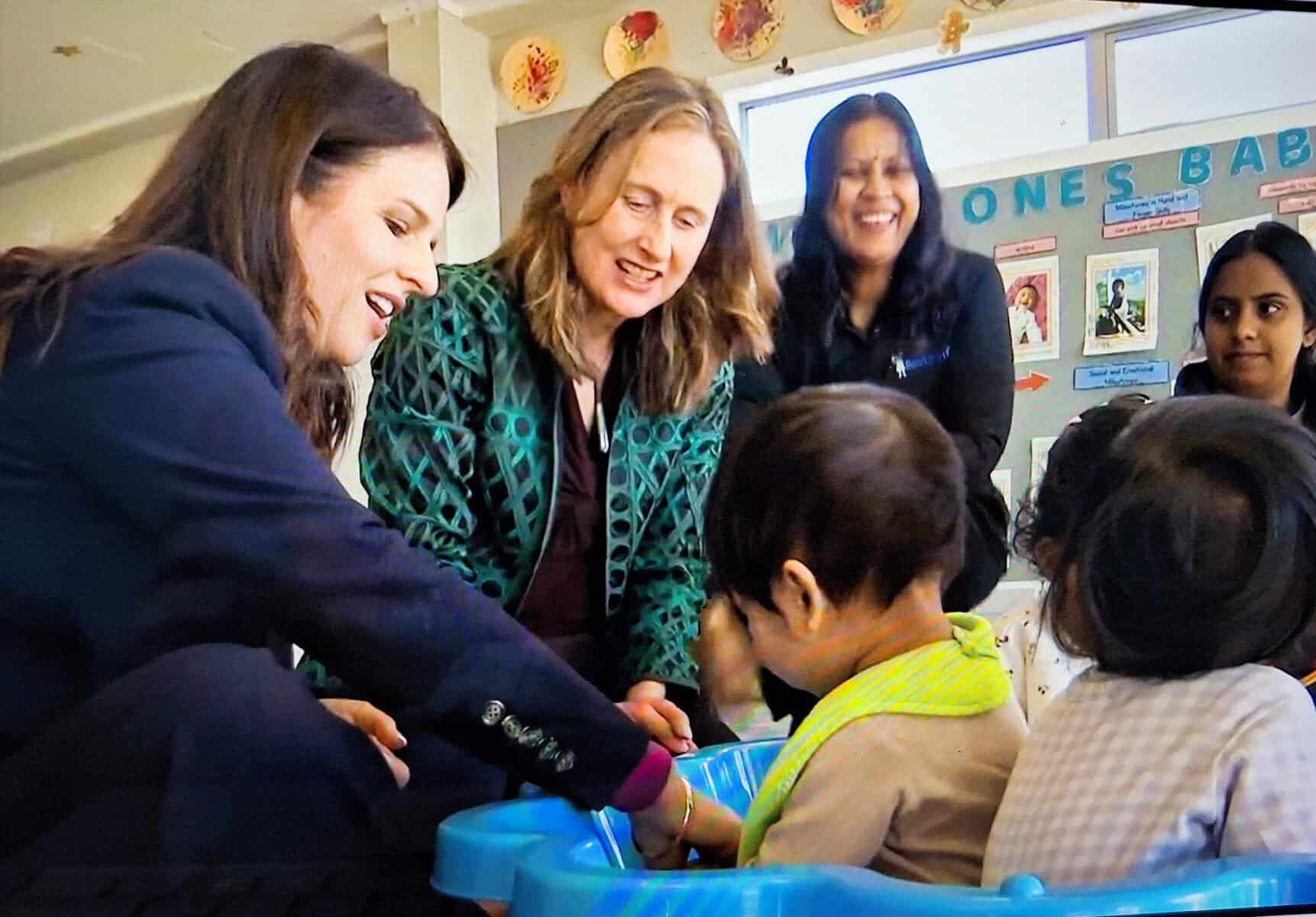
A full entourage of radio, TV, and newspaper reporters gathered at the BestStart East Tamaki centre on July 2, 2026, for Education Minister Erica Stanford’s announcement of the expansion of the ENRICH oral language programme.

KIA ORA EVERYBODY. IT IS FANTASTIC TO BE HERE.
THIS IS MY SECOND ECE VISIT THIS MORNING. I HAD TO DROP MY OWN KIDS AT DAY-CARE ON THE WAY ...
– May 12, 2021, Minister Hipkins presents a pre-Budget announcement to reporters at a Wellington ECE centre.
– Children were required to sit, stay quiet, and had nothing else to do for at least 20 minutes.