Are Marbles Really Allowed in ECE Centres and Homebased?

Search in Teacher
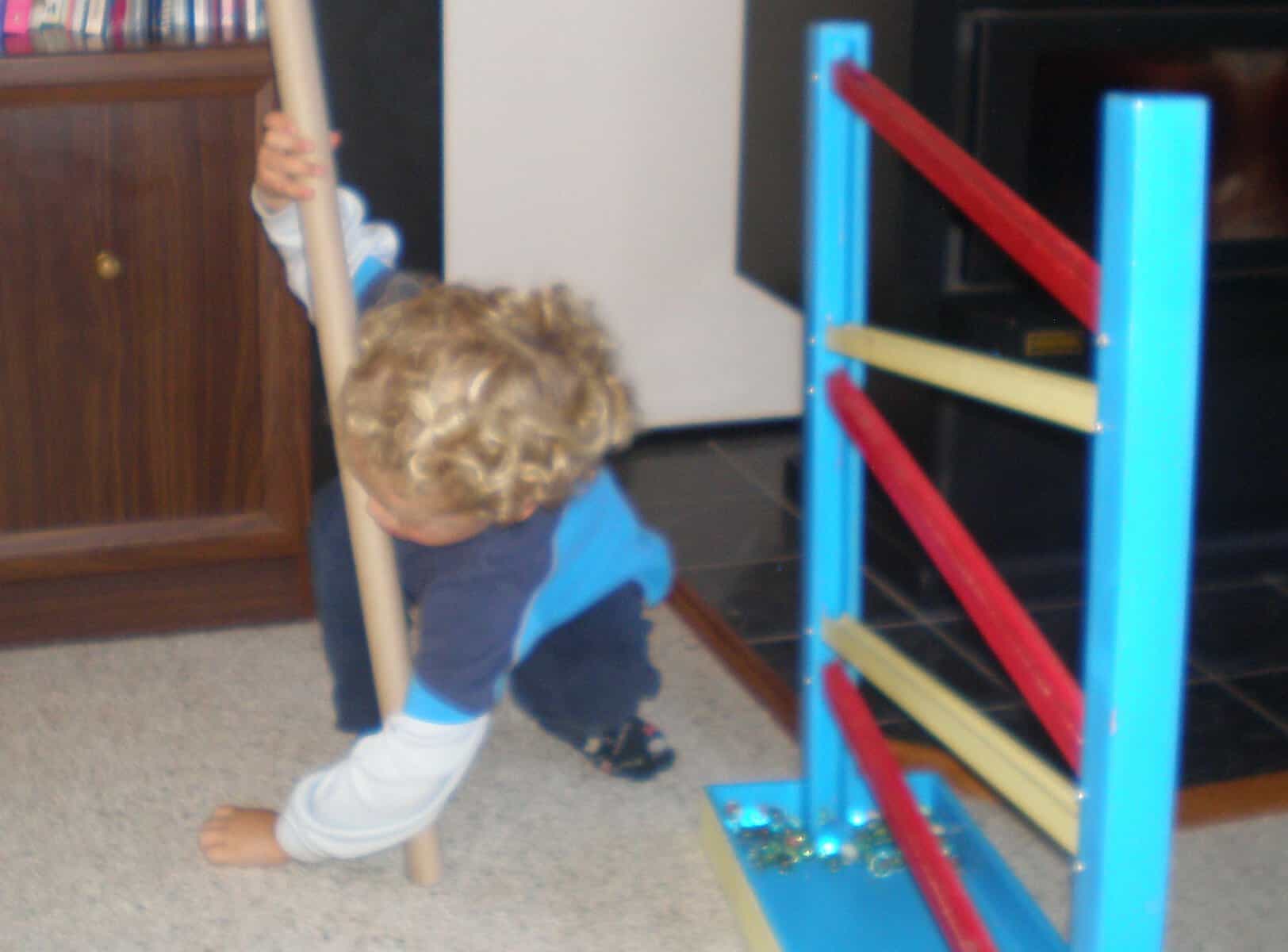
the safety of infants and toddlers playing with marbles

Marbles and other small objects might seem harmless, but in ECE settings they can quickly become a serious choking hazard. We explain what the regulations actually require and give you clear indicators to help you manage these risks confidently and keep children safe.

This is a member/subscriber only post. To access it, please see the message below for details on access and joining.
Already a Teacher Member?

Are you teaching and caring for children or studying for an ECE qualification?

If you are, that’s great!   Join us now, and become a teacher member.

Five Reasons to Join Us
1. Professional recognition

It is prestigious to belong to the OECE – you can skite about it! 

Ask us for an OECE Member Certificate, to include in your professional portfolio as proof you are engaged in reading and professional learning that advances your understanding of the relationship between practice and outcomes for children.

2. Extra benefits

No need to pay a subscription fee for access to NZ’s specialist ECE Newsroom – your member login will let you view everything in the ECE Newsroom. 

No need to pay to access the best NZ and international research – your member login gives you free access to the Research Library and support. 

3. Professional growth and no-judgement help

Teaching resources and advice on probably everything you can think of, including what to wear as a teacher, how to ask for a pay raise, identifying child behaviour causes and responding to needs, new play activity ideas, etc., etc.  all of this is at your finger-tips 24/7 whenever you need help or advice – login to view. 

4. Representation

Did you know that the OECE meets personally and regularly with the Ministry of Education national team, and the regulations committee and other forums? 

Political leaders and journalists are able to use the OECE to gain deeper knowledge on a topic or issue, and we provide a sounding board for ideas and feedback.

The OECE promotes safe working environments for teachers.  We also promote the absolute need for full pay parity with school teachers for all certificated teaching staff working in teacher-led centres and in home-based, and whether permanently or casually employed. 

5. Value for Money

We are committed to keeping membership prices affordable and providing value for money. 

Teacher membership is just $89 for a full year, or save by joining for 2 years.

Has this been useful?  Give us your feedback.

You are welcome to add a link to this page on your website. Copyright belongs to the OECE so please do not copy any content without our written permission.

Information provided is of a general nature. It is provided ‘as is’, and we accept no liability for its accuracy or completeness. See our Terms and Conditions.

Related Posts
early childhood research journal online

Shared Decision-Making as a Component of Partnership in New Zealand Early Childhood Education Centres

Research looking into the difficulty early childhood education practitioners have in establishing a genuine partnership with parents. It details tensions in shared decision-making and highlights what enables and hinders partnership in decision-making.

FULL REFERENCE: Zhang, Q. (2016). Whose decision is it? Unpacking shared decision-making as a component of partnership in New Zealand early childhood education centres. NZ Research in Early Childhood Education Journal, Special Issue: Equality and Diversity, 19, 78 – 89.

Log-in to read the full research paper below. Or order a pdf copy of the article from the main NZIRECE Journal page.

ABSTRACT: Despite the partnership rhetoric, early childhood education practitioners have found it difficult to establish a genuine partnership with parents, and this is in part due to the tensions in shared decision-making – one component of partnership. The aim of this study is to investigate approaches to mediating such tensions by teachers and parents. The study is a two-stage design. The pilot stage involved semi-structured interviews with teachers and parents from one kindergarten on their experiences with shared decision-making, which captured typical dilemmatic situations of shared decision-making. The main stage explored a sum total of the approaches to resolving the three dilemmatic situations captured in the pilot stage based on interviews with teachers and parents from two kindergartens and eight childcare centres. Data analysis generated three themes each of which form a continuum of mediatory dimension, and the three interrelated continua form a conceptual model that helps the practitioners to intentionalise and theorise their practice of shared decision-making in local contexts.

Key words: Shared decision-making; partnership; relationships; early childhood.

Introduction 

Researchers have highlighted the importance of teacher-parent partnership (e.g., Epstein, 2001; Stonehouse & Gonzalez-Mena, 2004) which has been considered to be good practice (Blue-Banning, Summers, Frankland, Nelson, & Beegle, 2004). The importance of partnership is also evident in educational policies and legislations (Osher & Osher, 2002; Department of Education, Employment and Workplace Relations [DEEWR], 2009). However, a genuine partnership is difficult to establish (Murray, Curran, & Zellers, 2008). As a crucial component of partnership (Stonehouse & Gonzalez-Mena, 2004; McGrath, 2007; DEEWR, 2009), shared decision-making has been under-researched, especially in early childhood education (ECE) contexts.

This is a member/subscriber only post. To access it, please see the message below for details on access and joining.

Read More »
Structural indicators of quality ECE and thinking

Contents – NZ International Research in ECE Journal, 2024, Vol 26

This issue brings together research on food‑safety practices, visual arts pedagogy, disability inclusion, Indigenous perspectives, autism support, place‑based learning, and educator wellbeing. Across these diverse studies, authors offer fresh insights that deepen our understanding of early childhood education and the conditions that shape equitable, meaningful learning for all children.

Read More »
early childhood education staff interviews

Self Review: Working Smarter, Not Harder for Best Practice

Self-Review. By Janet Moles.

As I quietly move close to the habitat of an early childhood centre, I observe that the group is in the midst of the strange ritual known as ‘The Staff Meeting’. In this gathering, the leader communicates to the group, the tasks to be achieved, assigns duties and informs them of new requirements, rules and exp

This is a member/subscriber only post. To access it, please see the message below for details on access and joining.

Read More »
pet rock 1

Making Pet Rocks

Making Pet Rocks.

This is a fun activity for ages 2 – 102 – so its highly suitable to involve parents and grandparents in doing too alongside their children.

This can be done inside or at an outside table. , to produce something that reflects the personal style of the creator.

Brilliant for building imagination and creativity, leading

This is a member/subscriber only post. To access it, please see the message below for details on access and joining.

Read More »
Two children playing with Duplo blocks at early childhood centre.

Children Learning about Same-Sex Families

FULL REFERENCE: Liang, X., Waniganayake, M., & Hadley, F. (2023). Children learning about same-sex families: Perspectives of Chinese parents living in Australia.  NZ International Research in Early Childhood Education Journal, 25, pp. 44-56.

Log-in to read the full research paper below. Or order a pdf copy of the article from the main NZIRECE Journal page.

ABSTRACT: Every child should feel valued and have a sense of belonging in the early childhood (EC) setting they attend regardless of their family composition. A comprehensive literature review undertaken has revealed that a key source of EC practitioners’ reluctance to include same-sex families in their programmes has been their perceived opposition of parents. To better understand parents’ perspectives on the inclusion of same-sex families in EC settings, this study captured the views of parents of Chinese heritage living in Australia. It explored parents’ perceptions about their own children’s understanding of same-sex families. Analysis of the online survey (43 mothers and 11 fathers) and follow-up interviews (four mothers and one father) indicated parents’ reluctance towards engaging children in learning about same-sex families. Underpinning this reluctance were themes about: 1) the relevance of information that parents perceived their children have access to about same-sex families; and 2) challenges they identified about children’s conceptual capabilities and developmental outcomes. The findings suggest that parents require evidence-based information to alleviate potential concerns and practitioners require dedicated professional training to gain confidence in including same-sex families.  

KEY WORDS: Early childhood education, same-sex families, diversity, inclusion, parents, training.

INTRODUCTION

Children from birth to five years are described as competent and capable in Australia’s Early Years Learning Framework V2.0 (EYLF 2.0) (Australian Government Department of Education [AGDE], 2009).  Children’s ability to understand topics such as same-sex families should not be underestimated. In revising the original EYLF, gender and family diversity, two aspects of a child’s identity, were being updated in the Learning Outcomes when the study reported in this paper was conducted (Hadley et al., 2021). Learning about including same-sex families in early childhood (EC) settings is integral to upholding children’s rights to quality education without discrimination, as required by the Convention on the Rights of the Child (The CRC; Office of the United Nations High Commissioner for Human Rights [OHCHR], 1989). It aligns with the EYLF V2.0 in recognising that inclusion requires anyone who works directly with children in EC settings to consider children’s gender, sexual identity, and family circumstances in their curriculum decision-making practices (AGDE, 2009). It also supports the core objective stated in the Alice Springs (Mparntme) Education Declaration (The Declaration) to ensure children’s access to a comprehensive education during early childhood that enables “all young Australians to become active and informed members of the community” (Department of Education, Skills and Employment, 2019, p. 6).

Read More »

Share This Information

Table of Contents

Table of Contents

The Office of ECE Login

Take Action!

Help spread this vital ECE information, join our free social and email groups and become a member of OECE.

pay parity funding policy

1. Share This Information

2. Follow Our Social Pages

3. Get Regular Updates

Sign up to our free newsletters.

4. Become a Member