Two Curriculum Paths -Te Ara Whānui and Te Ara Māori

Search in Teacher
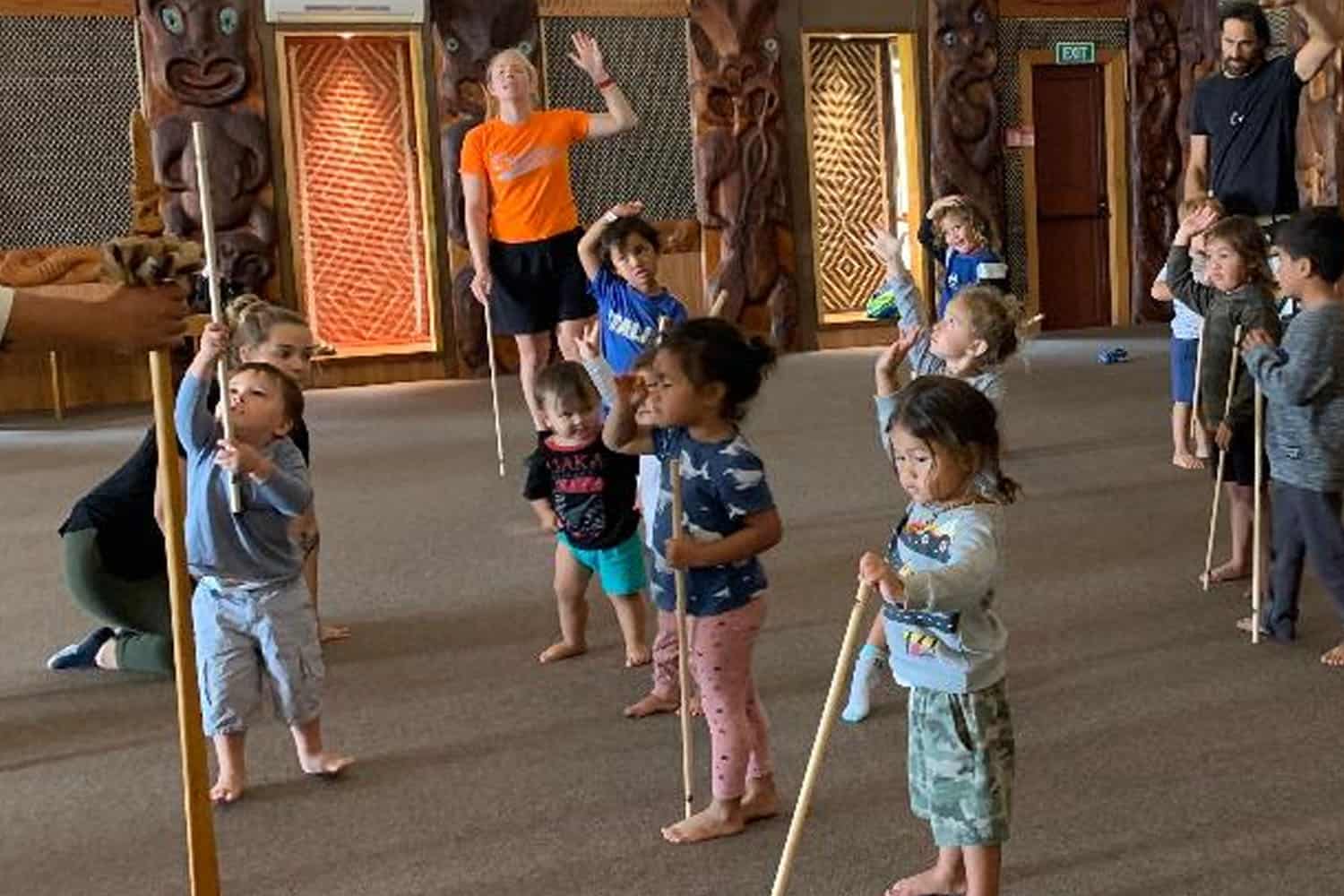
young children at marae - Maori performance

Regardless of what your service chooses to implement, as a teacher its very useful for you to know and have an understanding of the differences in Part A and Part B of the Curriculum Framework. Te Ara Māori or Te Ara Whānui. 

This is a member/subscriber only post. To access it, please see the message below for details on access and joining.
Already a Teacher Member?

Are you teaching and caring for children or studying for an ECE qualification?

If you are, that’s great!   Join us now, and become a teacher member.

Five Reasons to Join Us
1. Professional recognition

It is prestigious to belong to the OECE – you can skite about it! 

Ask us for an OECE Member Certificate, to include in your professional portfolio as proof you are engaged in reading and professional learning that advances your understanding of the relationship between practice and outcomes for children.

2. Extra benefits

No need to pay a subscription fee for access to NZ’s specialist ECE Newsroom – your member login will let you view everything in the ECE Newsroom. 

No need to pay to access the best NZ and international research – your member login gives you free access to the Research Library and support. 

3. Professional growth and no-judgement help

Teaching resources and advice on probably everything you can think of, including what to wear as a teacher, how to ask for a pay raise, identifying child behaviour causes and responding to needs, new play activity ideas, etc., etc.  all of this is at your finger-tips 24/7 whenever you need help or advice – login to view. 

4. Representation

Did you know that the OECE meets personally and regularly with the Ministry of Education national team, and the regulations committee and other forums? 

Political leaders and journalists are able to use the OECE to gain deeper knowledge on a topic or issue, and we provide a sounding board for ideas and feedback.

The OECE promotes safe working environments for teachers.  We also promote the absolute need for full pay parity with school teachers for all certificated teaching staff working in teacher-led centres and in home-based, and whether permanently or casually employed. 

5. Value for Money

We are committed to keeping membership prices affordable and providing value for money. 

Teacher membership is just $89 for a full year, or save by joining for 2 years.

Has this been useful?  Give us your feedback.

You are welcome to add a link to this page on your website. Copyright belongs to the OECE so please do not copy any content without our written permission.

Information provided is of a general nature. It is provided ‘as is’, and we accept no liability for its accuracy or completeness. See our Terms and Conditions.

Related Posts

NZ International Research in Early Childhood Education journal

Early Childhood Educators’ Workplace Well-being

FULL REFERENCE: Jones, C., Hadley, F., Waniganayake, M. & Johnstone, M. (2019). Early childhood educators’ workplace well-being: A case for using self-determination theory to understand and support workplace well-being in early childhood services.  NZ International Research in Early Childhood Education Journal. 22(2), pp. 9 – 17.

Log-in to read the full research paper below. Or order a pdf copy of the article from the main NZIRECE Journal page.

ABSTRACT: Current conceptualisations of Early Childhood (EC) educator workplace well-being are problematic due to large gaps in the workplace well-being literature. Gaps include a dearth of research examining healthy well-being, limited qualitative studies to understand the complexity of workplace well-being and a focus on hedonic well-being (happiness at work) without the inclusion of eudaimonic well-being (meaningful work). Moreover, attention in the literature is mainly given to external conditions influencing well-being such as poor pay and working conditions. This article begins with a critique of EC workplace well-being literature and then provides an argument that asserts Self-Determination Theory (SDT) has the potential to provide a more suitable conceptualisation of EC educator well-being. Key principles of both SDT and Early Childhood Education and Care (ECEC) are provided to highlight the suitability of using SDT to understand and also support the healthy well-being of those working in prior to school settings in the Australian ECEC context.

KEY WORDS: Self-determination theory, well-being, work-place stress, job satisfaction.

INTRODUCTION: Defining early childhood workplace well-being

Defining Early Childhood (EC) Educator workplace well-being is problematic. Well-being is a broad and complex concept and hence difficult to define.  The need for a clearer definition of well-being and a greater understanding of how stressors emerge and why certain conditions act as buffers to poor well-being is needed (Corr, Davis, LaMontagne, Waters, & Steele, 2014; Cumming, 2017; Hall-Kenyon, Bullough, MacKay, & Marshall, 2014) to support EC educator wellbeing.

The majority of studies on EC educator well-being have focused on a deficit model of physical and psychological health that has concentrated predominantly on stress and burnout (Cumming, 2017; Hall-Kenyon et.al., 2014). However, there is evidence in the EC well-being literature of the potential benefits of a more positive focus on well-being (through the lens of positive psychology theorists) in terms of understanding and supporting workplace well-being (Hur & Buettner, 2016; Nislin et al., 2015; Nislin et al., 2016).

This is a member/subscriber only post. To access it, please see the message below for details on access and joining.

Read More »
Parent Professional Guidance category

Sick Leave: ECE Employer Guide to Legal Duties, Proof, and Best Practices

ECE employers – managing sick leave is becoming increasingly complex, and getting it wrong can put pressure on ratios, disrupt staffing, and create legal and health‑and‑safety risks.

This guidance covers exactly what you must provide, how to support staff appropriately, and how to protect your service when absences occur.

Running an early childhood service means constantly balancing legal obligations, maintaining safe staffing levels, and finding cover at short notice.

Log in with your member details to read the full guidance. If your service’s membership has lapsed or you’d like to join, get in touch and we’ll help you get set up quickly.

Sick leave is one of the hardest parts of that balancing act – especially when absences create strain or when you’re unsure how to respond in a way that is both fair and compliant.

Read More »
NZ Infrastructure early childhood education and childcare

Getting Smarter on ECE in NZ’s National Infrastructure Plan

Getting Smarter on Early Childhood Education in NZ’s National Infrastructure Plan

Statement from the Office of ECE. Submitted to the Hon Chris Bishop and the NZ Infrastructure Commission, Te Waihanga. July 16, 2025.

Released August 6, 2025.

The draft National Infrastructure Plan notes that NZ has a formidable number of infrastructure

This is a member/subscriber only post. To access it, please see the message below for details on access and joining.
Read More »
the importance of touch as part of caregiving and teaching children

Teaching Literacy – An Early Childhood Educator’s Guide

Guide to Teaching Literacy. By Dr Sarah Alexander.

From their earliest speech experiences through to contact with written language and technologies, what happens in children’s homes and communities shapes their early literacy learning.  How, and whether this early learning is taken up and extended through early childhood educational practic

This is a member/subscriber only post. To access it, please see the message below for details on access and joining.

Read More »

Share This Information

Table of Contents

Table of Contents

The Office of ECE Login

Take Action!

Help spread this vital ECE information, join our free social and email groups and become a member of OECE.

pay parity funding policy

1. Share This Information

2. Follow Our Social Pages

3. Get Regular Updates

Sign up to our free newsletters.

4. Become a Member