

Omicron Outbreak – The Most Important Safety Issues for Children in ECE Centres

Search Newsroom Posts
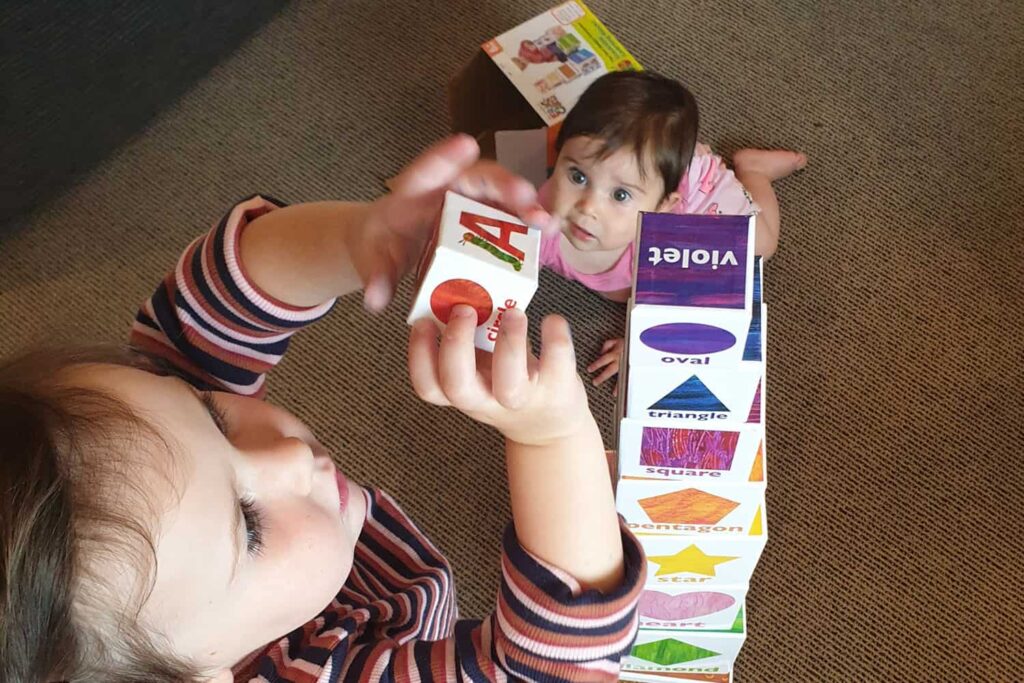
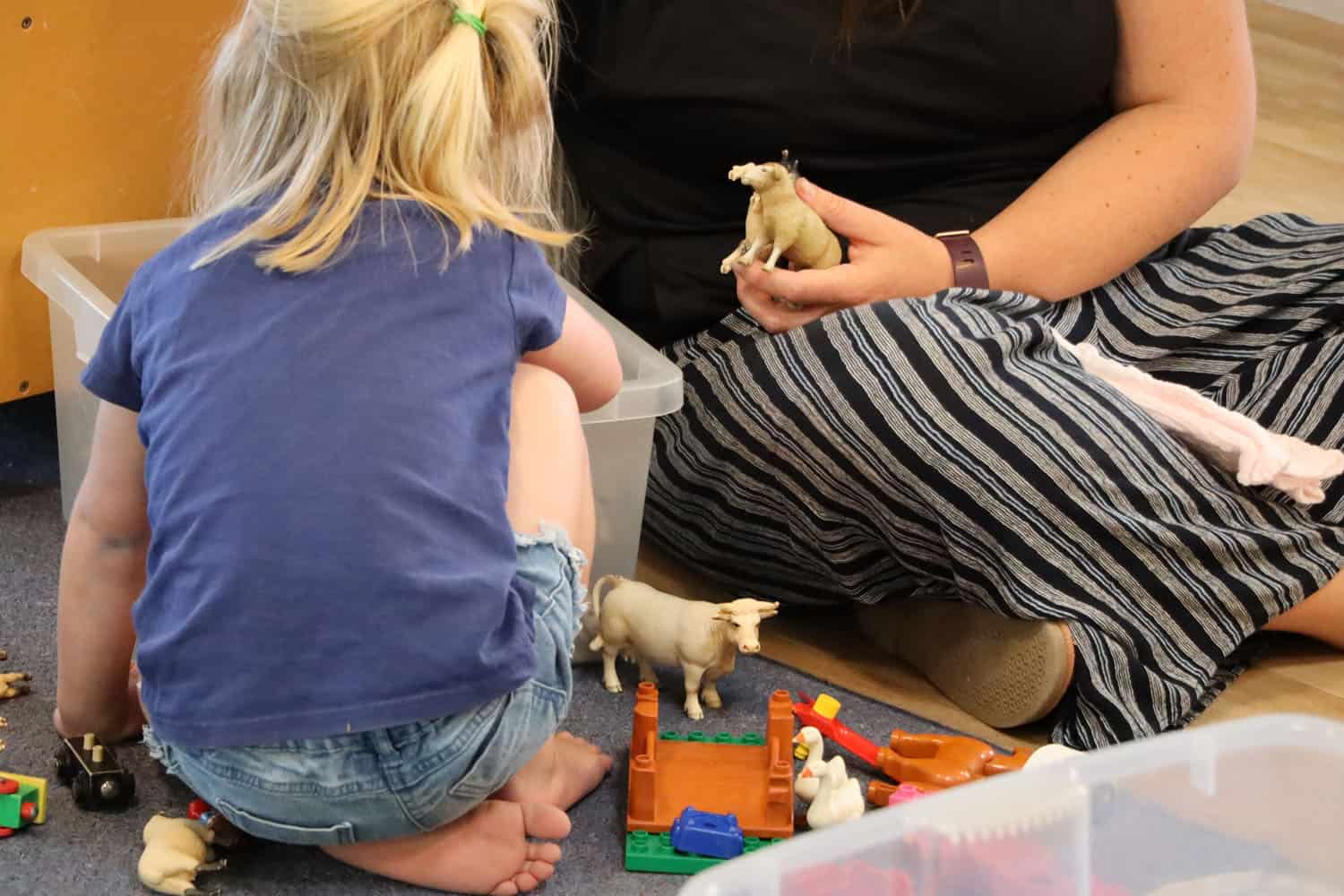
Child and teacher playing with toy farm animal block set.

February 27, 2022.

The Early Childhood Council, representing a group of childcare owners has repeated its call for improved access to Rapid Antigen Tests (RATs) for surveillance testing of staff.

It is fine to focus on RATs if you are only looking at ECE from a business point of view, says the Office of ECE.

But ultimately, ECE centres must serve the interests of children. Focusing on quick tests that have limited sensitivity – particularly if people are in the early stages of the virus – misses important areas for child (and adult) safety.

Chief Advisor of the OECE, Dr Sarah Alexander, says that two key problems are poor indoor ventilation, and too many children cared for in too little space.

“Addressing these two problems now will not only assist with limiting the spread of Covid-19 but will also bring benefits in the longer term.”

The ECC’s Simon Laube said his group’s call for improved access to RATs by centres is backed by leading public health and community paediatric experts.

However, in the report cited by Laube, RATs was not included in the recommendations for strengthening Omicron mitigation approaches in ECE settings. The experts recommended: improving ventilation, reducing capacity (the number of children), increasing outdoor activities, and wearing masks.

RATs can provide quick results, but these tests are not as accurate as PCR tests. RATs have limited sensitivity – particularly if people are in the early stages of the virus.

Good ventilation has been widely reported as a key part of making indoor spaces safer during Covid-19. Importantly, good airflow removes exhaled air from a room, replacing it with fresh air from outside so children (and adults) will be less likely to breathe in any virus-carrying particles.

The OECE has received feedback from centres across the country on serious ventilation issues, including nappy change areas and sleep rooms with windows that don’t open or can’t be opened, internal playrooms and children’s bag / locker areas with no fresh airflow.

The Ministry of Education has acknowledged that some ECE centres have fixed or painted their windows shut.

The OECE would welcome greater support from the Ministry of Education to help early childhood centres ensure their teachers and children remain healthy.

The OECE recommends that the Ministry immediately check all centres, and especially review ventilation.

Where needed, the Ministry should provide free access to technology for air purification and air monitoring. It also needs to re-implement a limit of 20 children per group in centres, with no mixing of children between groups as was the policy under Alert Level 3 during the Delta outbreak. 

Leave a Reply

Already subscribed?
ECE Newsroom

NZ’s own specialist ECE newsroom. 
Access national and local stories, in-depth analysis, & original commentaries.  

Membership Support for Teachers & Educators

(Comes with free Newsroom and Research access)

Membership Support for ECE Service Owners, Managers, & Community Organisations

(Comes with free Newsroom and Research access)

Researchers & Tertiary Education Libraries

Full access to over 25 years of ECE academic research articles – NZIRECE Journal.
Plus, guidance and resources on doing and publishing research

Has this been useful?  Give us your feedback.

You are welcome to add a link to this page on your website. Copyright belongs to the OECE so please do not copy any content without our written permission.

Information provided is of a general nature. It is provided ‘as is’, and we accept no liability for its accuracy or completeness. See our Terms and Conditions.

Related Posts

teacher wages, pay scales, in childcare and early childhood education

What ECE Teachers and Workers Earn: Pay, Benefits and Conditions

Anyone thinking about getting a job in ECE working in ECE or thinking about moving to a different service will find clear, practical information in this article about pay rates, employment conditions, and what to expect in different roles. It explains everything from starting salaries and pay‑step calculations to workplace rights, benefits, and how to recognise a supportive, professional environment.

Read More »
NZ International Research in Early Childhood Education journal

Screens or No Screens: Understanding Young Children’s Use of Digital Technologies

Maya Robinson-Kennedy.

Full reference: Robinson-Kennedy, M. (2019). Screens or no screens: Understanding young children’s use of digital technologies.  NZ International Research in Early Childhood Education Journal. Special issue presenting early childhood position papers, 22(2), pp. 18 – 25. 

Page 18

Original Posit

This is a member/subscriber only post. To access it, please see the message below for details on access and joining.

Read More »
early childhood education in NZ Aotearoa

An Example of a ‘Teaching Story’

In this article, I take a critical, but slightly light-hearted gaze at the professional learning benefits of developing a teaching story.

I recommend that by thinking critically about their role in developing learning situations for young children, teachers can create more critical and robust documentation of children’s learning and their o

This is a member/subscriber only post. To access it, please see the message below for details on access and joining.

Read More »
The Office of ECE

Share This Information

Table of Contents

Table of Contents

The Office of ECE Login

Take Action!

Help spread this vital ECE information, join our free social and email groups and become a member of OECE.

pay parity funding policy

1. Share This Information

2. Follow Our Social Pages

3. Get Regular Updates

Sign up to our free newsletters.

4. Become a Member