More Locks, Higher Fences, Better Supervision? What 53 Incidents of Children Escaping from ECE Reveal

Search Newsroom Posts

More Locks, Higher Fences, Better Supervision? What 53 Incidents of Children Escaping from ECE Reveal

NEWS/ANALYSIS – 8 October 2026

More than 50 incidents of children leaving early childhood education (ECE) services without adult knowledge were recorded in 2025, but the true extent of the problem may never be known.

Information released under the Official Information Act shows 53 incidents in which children either escaped from, or left, licensed ECE services without an authorised adult between 1 January and 31 December 2025. The data was obtained by the Office of Early Childhood Education (OECE) from the Education Review Office (ERO), which inherited responsibility for ECE regulation from the Ministry of Education on 1 September 2026.

While the figures provide a rare glimpse into a largely hidden area of ECE safety, they come with a significant caveat: services were not required to report these incidents to the Ministry during 2025.

As a result, the data likely captures only a portion of the incidents that occurred, with some cases coming to the Ministry’s attention only after concerns were raised by parents, schools, or members of the public.

ERO declined to comment on whether it could be confident the reported incidents represented all child escapes from licensed services, or whether under-reporting may have occurred.

From climbed fences to children returned by the public

The incidents range from relatively minor events to situations with potentially serious consequences. Among the recorded cases:

  • Children climbed over fences to retrieve toys or shoes before returning to the service.
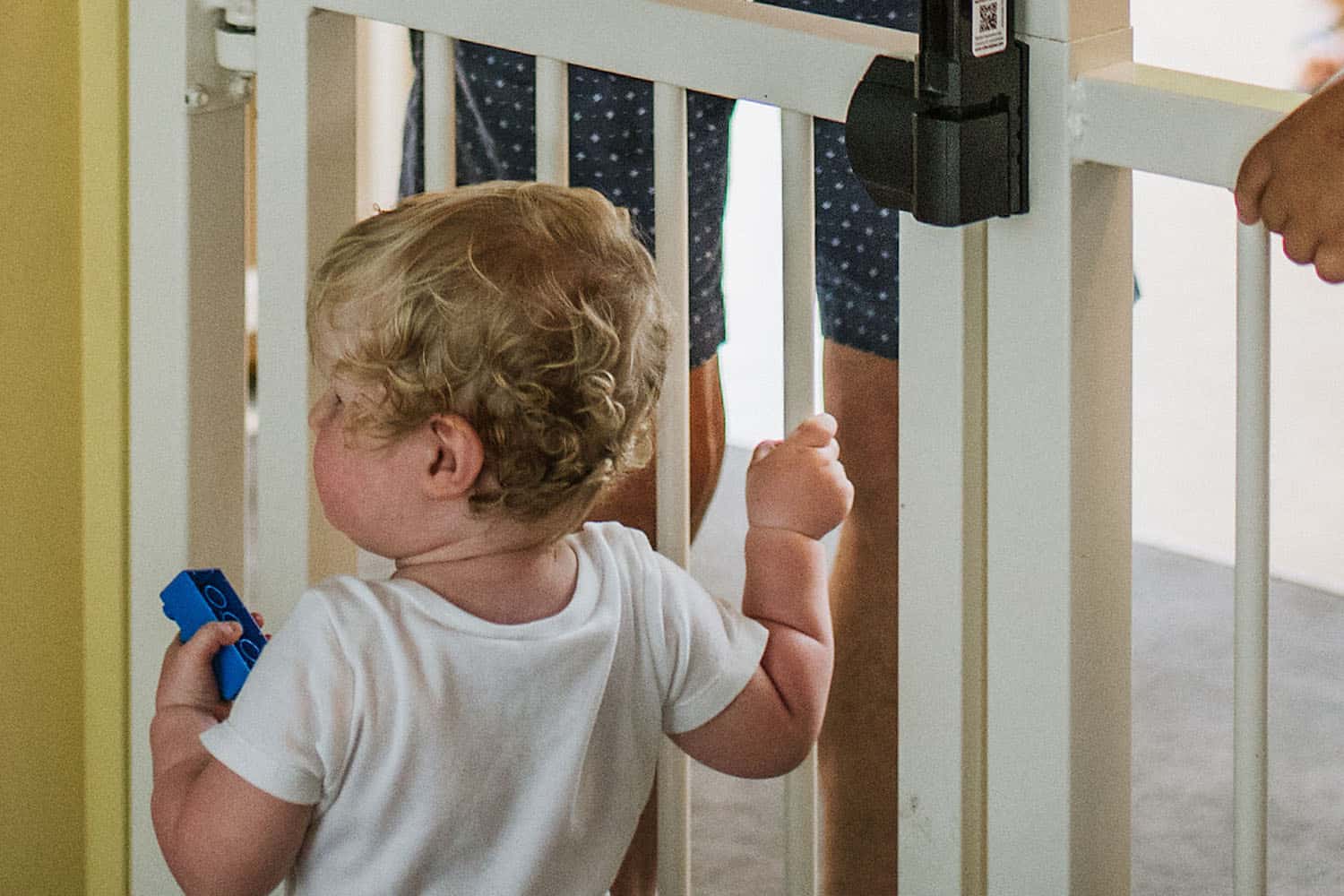
  • Children followed parents out of gates.
  • Children wandered alone or with peers onto roads, into carparks and neighbouring properties.

In only one case did a service call the police after staff discovered a child had left the premises. Members of the public returned children to services on multiple occasions.

Several incidents involved more than one child leaving at the same time. In one case, four children left the service unnoticed.  In another case, two children moved tyres to help themselves climb over a fence. In another, children went under temporary fencing.

The descriptions also reveal recurring themes: unlatched gates, broken gates, climbable fences, and children slipping through gates (including double gates), front entrances, back doors, and windows, and staff unaware a child had left the premises.

Which services were involved?

Of the 53 incidents recorded:

  • 31 occurred at education and care centres, including bilingual and puna reo centres.
  • 19 occurred at free kindergartens.
  • Two occurred within home-based networks.
  • One occurred at a kōhanga reo.

Notably, no escapes or incidents were recorded at Playcentres and only one at a kōhanga reo.

Repeat incidents

Four services appear twice in the released data: Te Kōpae Reo o Tupoho, Discovery Junction Styx Mill Ltd, Parnell Kindergarten, and Westown Kindergarten.  However, the entries for Te Kōpae Reo o Tupoho and Discovery Junction Styx Mill were recorded within days of each other and describe very similar circumstances, raising questions about whether they represent separate incidents or the same incident reported through different channels and recorded twice by the Ministry.

Parnell Kindergarten and Westown Kindergarten each recorded two incidents more than two or three months apart.

In all four cases, the Ministry concluded that the services had reviewed or strengthened their policies and practices, and took no action against them.

Regulatory action rare

Perhaps the most striking finding is how infrequently the Ministry took formal regulatory action. All but two incidents resulted in no licensing action. Only two services had their licences downgraded to provisional status.

In one instance, a child escaped from a centre twice without supervision. Despite finding three regulatory breaches and seven non-compliances, the Ministry permitted the service to remain open while it fixed the issues and built a higher fence. No enforcement action was taken for the initial failures that compromised child safety.

Questions beyond the incident itself

The data also raises wider questions about how regulators respond to safety concerns when they emerge.

One case attracting attention is Kindercare Woolston in Christchurch. The centre notified the Ministry that a child had left the premises without supervision on 27 November 2025. Just a week later, emergency services responded after children and adults suffered chemical burns when industrial sanitiser was mistakenly used instead of detergent on a makeshift waterslide. An OECE OIA request later revealed the waterslide had been set up on grass outside the licensed premises and that the area was regularly used for activities. The incidents are unrelated, but the sequence raises questions about whether earlier regulatory scrutiny might have identified broader safety risks.

Another case involved New Shoots Children’s Centre Papamoa, where a child left the premises on 13 February 2025 through a gate that was subsequently repaired and the service is recorded as having improved its practices after the incident.  Historical Ministry records from 2018 show separate child escape incidents occurred on the same day at New Shoots centres in Papamoa and Tauranga, with internal commentary reportedly noting failures in supervision and management systems.

Is the answer prison-level security or relationships and belonging?

For some in the sector, the conversation should not focus solely on higher fences and more security to prevent escapes.

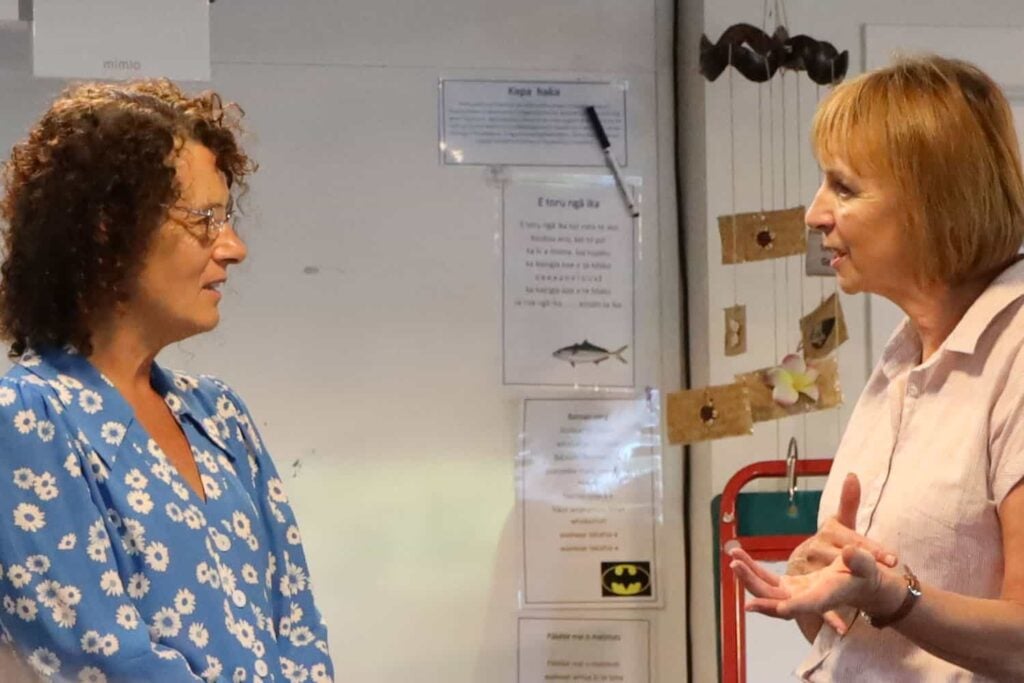
Office of Early Childhood Education Chief Advisor Dr Sarah Alexander argues attention needs to be placed on ensuring early childhood services are places that children want to be.

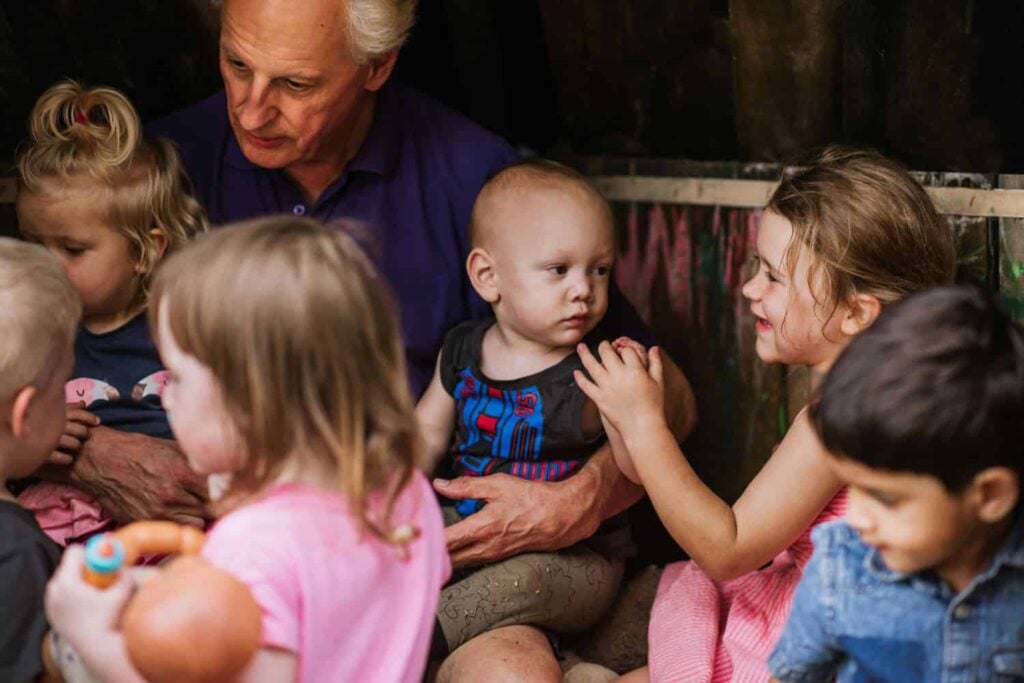
“We could switch this around and focus on reducing group sizes, improving ratios, and making sure ECEs are children’s second homes, places they want to be.”

“If children are busy and happy then they won’t look for ways to leave or seize an opportunity to get away by slipping through a door or gate,” she said.

In future, new reporting rules may reveal a clearer picture

From 20 April 2026, ECE services became subject to new mandatory notification requirements. Services must now inform authorities as soon as possible when:

  • A child leaves (escapes) the premises without an adult’s knowledge, regardless of duration.
  • A child is locked inside after operating hours.
  • A child is taken by someone not authorised to do so.
  • A child is left behind or goes missing during an excursion.

The rule change, if it is strongly and evenly enforced by ERO and the Director of Regulation, means future data could provide a more comprehensive picture of how often children leave services without an authorised person and unnoticed.

Leave a Reply

Already subscribed?
ECE Newsroom

NZ’s own specialist ECE newsroom. 
Access national and local stories, in-depth analysis, & original commentaries.  

Membership Support for Teachers & Educators

(Comes with free Newsroom and Research access)

Membership Support for ECE Service Owners, Managers, & Community Organisations

(Comes with free Newsroom and Research access)

Researchers & Tertiary Education Libraries

Full access to over 25 years of ECE academic research articles – NZIRECE Journal.
Plus, guidance and resources on doing and publishing research

Has this been useful?  Give us your feedback.

You are welcome to add a link to this page on your website. Copyright belongs to the OECE so please do not copy any content without our written permission.

Information provided is of a general nature. It is provided ‘as is’, and we accept no liability for its accuracy or completeness. See our Terms and Conditions.

Related Posts

teacher wages, pay scales, in childcare and early childhood education

What ECE Teachers and Workers Earn: Pay, Benefits and Conditions

Anyone thinking about getting a job in ECE working in ECE or thinking about moving to a different service will find clear, practical information in this article about pay rates, employment conditions, and what to expect in different roles. It explains everything from starting salaries and pay‑step calculations to workplace rights, benefits, and how to recognise a supportive, professional environment.

Read More »
colourful preschool blocks

NZK, Kelly Seaburg, Barnardos, and Te Rito Maioha Submission to the Ministry for Regulation on Licensing Criteria and the Regulatory System

“Shaping our Future”: The submission to the Ministry for Regulation of a grouping of service providers and their representatives.

A group of service providers and lobby groups want ECE services to be left to run themselves as they see fit.

They made a submission, titled “Shaping our Future” to the Ministry for Regulation calling for a self-regulation and monitoring scheme – the object of which would be to ensure that regulatory responsibility is not concentrated in the hands of the Ministry of Education (or any other government agency).

They include NZ Kindergartens Inc, Te Rito Maioha, Barnardos, a Home Base Childcare Association, and a group led by Kelly Seaburg (New Shoots) which has some of NZ’s biggest private operators like Busy Bees, Kindercare, and Evolve Education.

Read More »
nappy cloth baby

Men Should Change Nappies

Men Change Nappies – Men Who Change Nappies, Change the World. By Bryan G. Nelson.

Changing the nappies of other people’s children is something that few people, men or women, usually rush to do. And nappy changing is commonly viewed as a woman’s task anyway so we shouldn’t worry if men do it or not. Or should we? 

I remember wor

This is a member/subscriber only post. To access it, please see the message below for details on access and joining.

Read More »
dance movement ribbons happiness and joy

The Act and Art of Noticing, Wondering, Searching for Meaning, And Remaining Open to Beauty

FULL REFERENCE: Füss, M. (2026).  The act and art of noticing, wondering, searching for meaning, and remaining open to beauty.  NZ International Research in Early Childhood Education Journal, 28(1), 1-5.

ABSTRACT: This commentary explores aesthetic education as a way of being within contemporary early childhood education. Drawing on Maxine Greene’s philosophy of aesthetic education and reflections from Priscilla, an experienced artist-educator, it considers how attentiveness, curiosity, imagination, and creative expression might sustain educators within professional contexts increasingly shaped by standards, accountability, and measurement. Priscilla’s stories illuminate aesthetics not simply as engagement with the Arts, but as an ongoing openness to experience, possibility, relationship, and becoming. The commentary argues that aesthetic education begins with educators themselves: with cultivating the capacity to notice, wonder, search for meaning, and remain open to beauty within everyday life. Rather than calling for dramatic transformation, it invites educators to attend to what may have grown quiet within their own lives and practices.

In doing so, aesthetic education offers a way of reconnecting with the curiosity, expression, and sense of possibility that educators seek to nurture in children.

Log-in to read the full research paper below. Or order a pdf copy of the article from the main NZIRECE Journal page.

KEY WORDS: Arts, aesthetic education, teaching practice, creativity.

INTRODUCTION:
When was the last time you danced? Not for an audience or an event, but simply because the pulsating rhythms welled up within you and compelled you to move. Perhaps it was yesterday. Perhaps you have not truly let loose on a dance floor in years.

Early childhood educators are known for their pedagogical skills in nurturing children’s creativity, imagination, and capacity for expression within their early childhood programmes (Giamminuti, 2013; Karaolis & Little). Through carefully chosen phrases, glances, and expressions, educators can encourage the children in their care to dance as if no one is watching. Yet I wonder, as you read these words, whether you genuinely consider the place of such experiences or expressions in your daily life as professional practice?

Read More »
Adults talking about early childhood education and childcare.

Employment References

Have you been asked by a colleague, student, or employee for an employment reference?

Here we explain your obligations, what to write, and ways to provide a job reference.

If you are asked by an employer to provide a reference for a person who has not asked you to be a referee, do not provide a reference without first checking and obtaining

This is a member/subscriber only post. To access it, please see the message below for details on access and joining.

Read More »

Creating Financial Reserves

ECE Service Financial Reserves.

The Ministry of Education does not mind if a service builds up financial reserves. It will not affect funding.  Non-profit services can however face a dilemma – should they be spend the money earnt or build up wealth? But note that community-based services are in a less strong position compared with compa

This is a member/subscriber only post. To access it, please see the message below for details on access and joining.

Read More »
The Office of ECE

Share This Information

Table of Contents

Table of Contents

The Office of ECE Login

Take Action!

Help spread this vital ECE information, join our free social and email groups and become a member of OECE.

pay parity funding policy

1. Share This Information

2. Follow Our Social Pages

3. Get Regular Updates

Sign up to our free newsletters.

4. Become a Member