Early Childhood Advisory Committee (ECAC) in Urgent Need of Complete Overhaul
Below are eye-opening details about the Ministry of Education’s operation of its Early Childhood Advisory Committee (ECAC), raising serious concerns about the Ministry’s impartiality and the quality and integrity of its advice to government ministers.
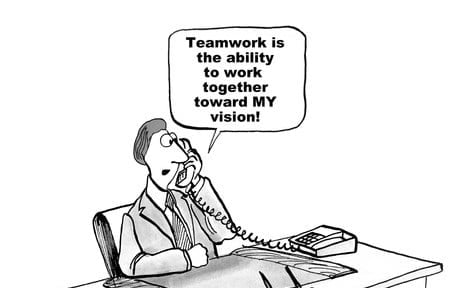
For years, ECAC has operated outside its own Terms of Reference. The Ministry has shown clear favouritism toward large, for-profit childcare providers and paid representatives who serve their interests while side-lining other voices. ECAC is not representative of the early childhood education (ECE) sector. It has low teacher representation and excludes several key stakeholders.
It is time for the Ministry of Education to act in the best interests of children, families and the wider sector. This means:
1. Starting afresh by appointing new ECAC members based on transparent, well-considered criteria for selection and representation
2.Ensuring ECAC serves the sector as a whole, rather than prioritising the self-interests of particular service providers or lobby groups.
3. Upholding children’s rights in all advice and feedback, in line with the UN Convention on the Rights of the Child and the Code of Children’s Rights in ECE.
4. Ending the use of ECAC as an insider network to select representatives for other Ministry advisory and reference groups.
5. Modernising information-sharing processes so that ECAC membership does not confer privileged access to knowledge or opportunities unavailable to the wider sector.
Despite repeated concerns raised by Dr Sarah Alexander, the Ministry has yet to address these issues.
OPINION – 4 March 2025
Sarah Alexander*
Initially, I set out to write a straightforward description of the Early Childhood Advisory Committee (ECAC). I reviewed newsletters, clippings, quotes, and documents relating to ECAC since its inception in 2009. The topic has often come up in conversations with colleagues, including those who have served on the committee. I also examined Ministry of Education responses to Official Information Act requests: September 2024 (OIA 1335686) and October 2020 (OIA 1243402).
As I began compiling the information, it became clear that ECAC is far more complex than it first appears.
I uncovered details that many in the early childhood education (ECE) sector likely do not know – risks that may even be unknown to some government ministers.
Importantly, ECAC members are under no obligation to look beyond the interests of their own businesses or service types. There is no requirement to consider the broader needs of the sector or the rights and interests of children.
The Ministry of Education has also confirmed that it does not know which licensed services are represented on ECAC, nor how many are excluded. It has stated that it does not hold this information.
There are no criteria and there is no selection process for members of the ECAC. The MoE says information on criteria, or on the selection process does not exist.
The MoE’s thinking is “stormed and normed” through the ECAC (Nancy Bell, MoE, 2020). So, there is an issue of whether the MoE really can provide full and accurate advice on ECE policies to government ministers.
The ECAC Terms of Reference (ToR) dated July 2009 is to be reviewed annually in July. However, a review was not initiated until 2019. The revision was never finalised and approved.
Since then the MoE has instituted fortnightly secret meetings and dramatically changed the way it manages the ECAC and what the ECAC does, far and beyond the functions set out in the ToR (2009).
It has also expanded the number of members to give greater representation on the ECAC of mega private ECE centre operators.
The Ministy may not be complying with its obligations to be fair, impartial, responsible and trustworthy as required Public Services Commissioner. Neither does the Ministry seem to be putting integrity at the core of how it operates, as required by the Controller and Auditor General.
At its December 2024 ECAC meeting, the Ministry of Education asked members for feedback on a proposed refresh of the Terms of Reference (ToR) it had drafted – a move that appears less about genuine improvement and more about covering its tracks and entrenching questionable practices. This concern may be linked to a September 2024 Official Information Act (OIA) request, which posed direct questions about the Ministry’s management of ECAC.
The issues surrounding ECAC are systemic. They affect not only service providers, but also children, families, and the integrity of early childhood education policy. This is a matter of serious concern.
Here’s how we can help challenge the status quo
The Ministry of Education must be held accountable for enabling service owners and their paid representatives to advise it on both policy and the operation of all ECE services. Isn’t it the Ministry’s role to lead policy and operational decisions? Why is it consulting primarily with and involving only a small, select group within the sector?
We should question why the MoE appears to advantage certain service owners and their representatives by giving them advance notice of policy changes and access to insider information (privileges not extended to the wider sector).
We can ask: what is the Ministry afraid of when it comes to making ECAC meetings open and transparent? Where is the accountability?
Individual service providers with ECAC representation should ask themselves: whose interests is their representative truly serving especially when they are also representing competitors?
We must also ask whether ECAC is even necessary in its current form. With today’s digital tools, the Ministry has the ability to communicate directly with all stakeholders and gather broad-based feedback. Yet, according to internal notes from the MoE’s Cross Function Board meeting in 2020, ECAC is seen as “a convenient way to share information” and receive feedback “without going out to service providers.” Why not go out to everyone? The current approach seems very exclusionary and unfair.
How the ECAC works
The MoE established its ECAC in 2009. Initially the ECAC was to meet for a full day five times a year at the MoE’s head office in Wellington. Around a year later the frequency of meetings was reduced to four a year. Karen Sewell the Ministry’s chief executive said “sector groups could instead meet in their own time if they wished instead of using the Ministry’s time and resources“.
According to the ToR the purpose of the ECAC is to provide a forum for information sharing and discussion of policy. FYI – here is a copy of the Terms of Reference.
But in recent years the MoE has extended ECAC way beyond being a forum for information sharing and discussion of policy.
The MoE has had its ECAC advising on policy as well as on the operation of ECE at a national level (MoE briefing provided to Hon Chris Hipkins, Dec 2022).
It also holds fortnightly secret meetings with its ECAC members. Details of these are not made publicly available, so anyone who is not on the ECAC will be none-the-wiser as to what was discussed and what decisions were made.
The MoE’s director of early learning Nancy Bell[1] who is responsible for and chairs the ECAC said: “I think that ‘ECAC is a community that has ‘stormed and normed’ and generally has a high trust relationship with the Ministry. I find ECAC a pretty safe way to test and socialise our thinking.” (9/03/2020). Research and the views of experts and stakeholders such as parents do not come into this – which is a serious omission on the MoE’s part.
An example of the use of the ECAC by the MoE to achieve its own goal is advice dated 27 March 2024 provided by the MoE to Minister Seymour on ECE regulatory changes. The policy changes were to (a) repeal network approval to allow new ECEs to open anywhere in the country regardless of community need, and (b) remove a new requirement that the person responsible for supervising children and adults in a centre hold a practising certificate as a qualified teacher.
The MoE advised Minister Seymour to tell Cabinet that the proposals he was presenting “have been put forward by the Early Childhood Advisory Committee (ECAC) and the Early Childhood Council (ECC) as “quick win” policy changes they believe will support the sector.”
This is hardly justification for the proposed changes and is not a good standard of analysis and advice from a government department. The MoE should have told Minister Seymour if the proposed policy changes were a crazy idea. The rationale for the proposals should ultimately come down to whether the proposals are good ones, informed by research, data, and explaining how the changes would uphold children’s rights and improve the quality of ECE provision.
On what basis did the MoE believe that the proposals were (a) put forward by, and (b) unanimously supported by all members of its ECAC? And why did the MoE name the ECC specifically to validate the proposals?
It could be reasonably expected that the published minutes of an ECAC meeting would mention that these ‘quick win’ ideas were proposed by members and agreed on by members, but there is no indication of this in the minutes of ECAC meetings in 2023–24.
Meeting minutes, which are published weeks and sometimes even months later, are bare bones and do not reflect discussion or dissent. From its June 2012 ECAC meeting the MoE agreed to make the agenda, minutes and papers of all ECAC meetings available online on its website. But, today, only the minutes are placed on its website – so there’s less transparency today than there was before. All meetings are held behind closed doors, are not open to observers, and are not recorded via live feed or video.
The issue of closed meetings leads to a second issue of favouritism. The influence that some members are enabled by the MoE to exert is extraordinary, even to the point of dictating the conditions of their participation as the following example shows.
Early Childhood Council business lobby group chief executive Simon Laube:
Email to the Ministry of Education 1/03/2024 10.00am: “I’m unsure whether ECAC on 6 March remains a good use of my time. Is there anything that can be done to adjust things (the agenda) so either the Minister or Associate Minister can attend?”
Email to Minister Seymour’s office 1/03/2024 10.31am: “FYI Anya – it seems no Ministers can attend ECAC. Not sure there’s any benefit for sector leaders to meet with the Ministry (for the quarterly ECAC meeting). I’m considering cancelling ECC’s attendance.”
Simon said. Therefore, Minister Seymour was at the March 6th meeting.
Membership – Who is on the ECAC, Processes for Appointment, and Benefits
Two questions to ask about the ECAC’s membership are:
- Is the membership representative of the range of stakeholders? The answer is no since many stakeholders in ECE have no voice on the ECAC.
- Do the members have the necessary expertise to provide well-informed and wise advice? The answer is no since the members are not appointed based on their expertise.
The ECAC membership requirements as outlined in the ToR dated July 2009 was:
“ECAC members broadly represent stakeholders from licensed and or chartered services; teacher-led, parent-led, sessional, all day, homebased, hospital, and special education (ECE) services.”
But there has never been a person who specifically speaks for sessional services on the ECAC. (No wonder, then, that sessional ECE has almost disappeared as an option for parents and children today.)
In Dec 2019 the MoE proposed to change the stated membership requirement to:
“ECAC members broadly represent stakeholders from licensed early learning services.”
However, as mentioned above the draft revised Terms of Reference remained a draft – it was not finalised and approved.
NZEI mostly represents teachers employed in kindergarten associations that are part of the education service and teachers who work in services with collective employment agreements – therefore the MoE has left thousands of teachers in other services without representation on its ECAC. The Hospital Play Specialists Association represents employees who work in licensed hospital-based services, and not the employers or the users.
The MoE has no written criteria and selection process for membership of the ECAC. But those who are on the ECAC must be representative organisations for their members, according to the MoE’s deputy secretary Katrina Casey (2020 comment).
Around 3 years after the MoE established its ECAC, the MoE’s group manager for ECE Karl Le Quesne said that “several large providers of ECE have sought membership based on their size. These requests have been declined in the interests of keeping the group manageable.”
In 2022, Nancy Bell (as chair of the ECAC) acknowledged that the ECAC did not provide an opportunity for the MoE to hear from experts and directly from teachers. She commented that if teachers were on the ECAC, then what the MoE would “hear from them would be drowned out in any case by the many service provider representatives.”
Her comment is actually an argument for rationalising service provider representatives. But in recent years the MoE has done the opposite.
Katrina Casey said the total 2019/2020 Budget for the ECAC was $16,000, of which the MoE spent only $8,999.46 as there were no costs for one of the four meetings that was not held in person. But Nancy Bell said in 2024 that the MoE does not have a specific budget or fixed limit on spending on travel and accommodation and food for ECAC members anymore. In the 2023/24 financial year, costs for member travel and catering totalled $44,408.45.
In 2021 the MoE wrote to Beststart (an individual service provider and not a representative organisation for members) and offered it a seat on the ECAC until 2023:
“BestStart is committed to high quality ECE. We appreciate the ongoing discussions we have with you and the BestStart Leadership team and see real value in these engagements. For this reason, I am pleased to extend an invitation to BestStart to join ECAC, initially for the period 2021 – 2023“. (MoE 16/08/2021 letter to BestStart’s chief executive Tony Ryall)
Also, it invited a group of other mega for-profit centre providers that included the owners or directors of New Shoots centres (Michelle Pratt), Kindercare (a founder of the Early Childhood Council), Provincial Education (now under the Busy Bees brand), Evolve Education, and Educare which is also a nationwide chain. The cluster of providers go by the name of Advocates for Early Learning Excellence (A4E). The MoE’s letter of 16/08/2021 to Michelle Pratt read:
Thank you for writing to seek membership of ECAC. I have noted that (you) represent privately owned education and care providers who are committed to high quality ECE and who seek direct engagement with the Ministry. We have appreciated the recent productive discussions with (you) and value the opportunity to discuss policy and implementation matters relating to the early learning context. For this reason, I am pleased to extend an invitation to join ECAC, initially for the period 2021-2023.
The MoE described A4E on its website in very different terms to the basis on which it gave A4E a seat on the ECAC:
Advocates for Early Learning Excellence: An online social media forum for teachers and other learning professionals to discuss various early childhood education topics. (Reference: MoE website page Our Work: “Member organisations we work with through ECAC” retrieved 8/09/2024).
The A4E did not hide the fact from the MoE that they were “just an employer group, not an organisation” (Michelle Pratt, 2021).
ECAC’s chairperson, Nancy Bell acknowledged with members of her MoE team that the A4E already had representation on the ECAC.
“… a new organisation formed covering same type of services already represented e.g. recent request from ‘Advocates for Excellence. We may see more of this in future” (9/3/2020).
Kelly Seaburg and Michelle Pratt formed A4E in June 2019. Their Facebook page advised visitors to follow “Peter and team at the Early Childhood Council for regular updates.”
I talked with Simon Laube who replaced Peter Reynolds in 2021 as CEO of the ECC, and asked Simon how he felt about the A4E given that A4E comprised ECC’s largest paying members. He did not indicate that New Shoots or the ECC’s large providers had resigned from the ECC because they were now represented by A4E. But I can recall him telling me that it was useful to have “a friend” at the ECAC – which I took to mean another lobbying partner or seat at the table.
Seaburg’s and Pratt’s New Shoots centres is also a long-term member of Te Rito Maioha (formerly the NZ Childcare Assn). Te Rito Maioha with New Shoots has advocated for the business interests of service owners.
It is now 2025, and both Beststart and A4E who were given seats on the ECAC for the period 2021-2023 are understood to be still attending and advising the MoE as part of the ECAC. But as at November 2024 there is no recorded evidence of their membership having been reviewed or formally extended.
In the House, Minister Seymour described the Ministry for Regulation’s review of ECE regulations as a “fantastic piece of work that the sector’s long been calling for” and that the feedback had been positive.
Minister Seymour quoted Kelly Seaburg, whom he called the “Director” of A4E: “For once the sector feels like we are working with the various ministries to create meaningful change recommendations of the Ministry for Regulation.” (Oral Question No. 11, 18/12/2024).
Clearly, being in the MoE’s ‘inner sanctum’ through having a seat on the ECAC is recognised as giving benefits which include having a direct influence on decision-making and getting early knowledge of MoE and ministerial plans before anyone else in the sector.
When the MoE was asked what its real reason was for agreeing to give A4E a seat on the ECAC, Nancy Bell replied that this question is “seeking justification and it would be necessary for the Ministry to create new information in order to respond, which it does not have to under the OIA Act.”
The MoE has refused requests from groups such as OMEP Aotearoa New Zealand and the Teachers’ Advocacy Group for seats on the ECAC.
The users of ECE and groups that can represent children and parents who are not service providers such as the ECE Parents’ Council Aotearoa and Plunket, are not included.
Also, there is no representative specifically to promote the interests and views of individual community-based education and care centres run as incorporated societies or community trusts, which is needed given the otherwise dominance of big business at the ECAC table.
Today, the Service Owners and Lobby Groups with a seat on the ECAC are:
- BestStart
- Advocates for Early Learning Excellence (New Shoots, Evolve, Busy Bees, Kindercare)
- Early Childhood Council (Its largest members include New Shoots, Kindercare, Evolve, and Busy Bees)
- Te Rito Maioha (also representing New Shoots? Today Te Rito Maioha is a provider of primary teacher training)
- Barnardos New Zealand (also represented by Te Rito Maioha)
- Montessori Aotearoa New Zealand (historically seen by the ECC as a lobbying partner)
- Auckland Kindergarten Association (AKA)
- Early Childhood Leadership Group (representing kindergarten associations)
- New Zealand Kindergartens Inc
- New Zealand Home-based Early Childhood Education Association
- Home Early Learning Organisation (formed in 2013 by Jenny Yule the owner of PORSE, to politically oppose a review of the Home-based sector which the NZ Home-Based ECE Assn supported. HELO represented PORSE, PAUA, Au Pair Link and Home Grown Kids. PORSE no longer exists. The Owner of PAUA is the current president of the NZ Home-Based ECE Assn).
- Christian Early Childhood Education Association of Aotearoa
- Early Intervention Association of Aotearoa New Zealand
- The Federation of Rudolf Steiner Waldorf Schools in New Zealand
- Ngā Puna Reo o Aotearoa
- Pasifika Advisory Group
- Playcentre Aotearoa
- Te Kōhanga Reo National Trust
- The Correspondence School (But this is not a licensed ECE service nor representative of such)
As mentioned earlier, NZEI has two representatives and Hospital Play Specialists has one representative.
How does the Ministry pick who it wants to be on the ECAC? It would seem that what counts is:
- money – if the member is a large private ECE provider or represents large private providers, and
- history – the MoE does not remove members even when two members represent the same or similar services or set of interests.
The Education Review Office and the Teaching Council has been placed on the ECAC membership list on the MoE’s website but the Terms of Reference has not been updated to include government agencies as members.
ECAC Rules and Expectations
The rules are specific that if a member cannot attend a meeting, they can nominate a person from their organisation to attend on their behalf. But the rules are not enforced. For example, at the table for the Sept 2020 ECAC meeting the MoE supported two people to represent the Early Childhood Council lobby group.
ECAC’s chair (Nancy Bell) has invited non-members to attend the ECAC. For example, a service provider Erin Maloney attended the June 2024 ECAC meeting and fully participated in it although not a member. The MoE covered her travel and other expenses – $358.65 in total.
When giving advice or putting forward proposals and comments ECAC members are not asked to declare personal or professional/business conflicts of interest.
Highly confidential information can be shared with ECAC members but the MoE does not require members to sign a privacy or confidentiality agreement. Nancy Bell said that the ECAC operates in a ‘high trust’ environment.
The Ministry says that it cannot stop any member from sharing confidential information with others in their group or organisation. There is no form to sign or written statement asking members to agree to rules concerning recording on phone, camera, or other devices any part or whole of the meetings.
There are no specific or written procedures or processes around managing ECAC member influence and relationships with MoE staff or officials.
When asked whether any member of the ECAC has compromised their relationship with the MoE at any time from January 2021, which member and how, Nancy Bell replied that the MoE does not track such occurrences. It permits any member who is threatening to or taking legal proceedings against the MoE or the government, such as suing the ministry over pay parity funding or over a licensing decision to cancel an ECE service’s licence for serious non-compliance, to continue to be on the ECAC with all the rights and access to confidential information that this gives.
Terms of Reference Review
The ToR were promulgated in July 2009, and were required to be reviewed annually. But, the MoE has confirmed that a search of its records across different platforms indicates that there have been no reviews of the ToR in July annually, and that no formal reviews have occurred outside of the annual review process.
At the Sept 2019 ECAC meeting, members were told the ToR were to be reviewed and they were asked to provide comments for discussion at the next meeting in December. The agenda item was subsequently shifted to the March 2020 meeting.
Outside of the ECAC, on 29 Jan 2020 I (Sarah Alexander) wrote to the MoE critical that only ECAC members were asked to review the ToR and membership, and that feedback had not been invited from the wider sector. I said that I thought it was wrong to ask current members to review who should be members and that the MoE should make the review an open process and inform the sector so anyone could contribute their comments. In regard to revision of the ToR I suggested that:
- Member numbers be pruned by removing those who had multiple representation or were subsidies of other members on ECAC.
- The membership be supplemented by adding any new members necessary to ensure adequate and fair representation.
- All information shared with the ECAC members also be shared directly with all services via email.
- Details of any “difficulties and opportunities” and “strategic challenges” discussed by ECAC members be circulated at the same time to all services.
- The minutes of ECAC meetings minute the discussions so everyone in the sector could be informed of the discussions.
I also questioned the need for the structure of ECAC meetings since most people had computers and email now days, and suggested that given the advances of modern communication and feedback technologies the Secretary for Education would be wise to investigate more effective ways of consulting and getting information out to the sector. Perhaps my unsolicited communication about the ECAC created a bit of a panic in the MoE because on 17 Feb 2020 Katrina Casey said in an email at 8.51am to her MoE staff “I haven’t received any advice re what we should happen to the terms of reference – so what is our collective position on the terms of reference across the Ministry as well as members? If the advice hasn’t been done, please take this item off the (March) agenda and we put it on June’s agenda”. A senior advisor replied at 11.31am: “We will have our proposed Ministry position on the ECAC ToR review to you by COB Friday 21 February 2020.” To which Katrina Casey replied at 1.45pm: “Thanks but I have no ideas what we are proposing so I don’t know if its anything we should put to the committee or if it has even been discussed with any members – plese take it off the agenda and schedule it for June.” It never was placed on the agenda for the June meeting.
In December 2020 Katrina Casey wrote “I have since confirmed there will be no change to the current arrangement. Early next year recommendations will be developed on how to establish thematically based forum with a wider invitation list rather than extending the existing ECAC memberships.” No such recommendations were developed.
Then, in Sept 2024 I put a series of questions to the MoE concerning many of the ad hoc changes it had made to the ECAC that were at odds with the ToR. The MoE replied to my questions in Nov 2024 and I heard from some ECAC members that they had been told by the MoE that the ToR would be refreshed. At the Dec 2024 ECAC meeting the MoE asked members for their comments on a proposed revision.
As with its 2020 attempted review of the ToR, I believe the MoE has made an error of judgement in keeping this in-house and not seeking feedback from the wider ECE sector.
Concluding comments
It is clear that the continued operation of ECAC, particularly in its current form and with its existing processes, undermines the Ministry of Education’s ability to provide impartial, comprehensive, and objective advice to the Minister for Education, the Minister for Regulation, and other government officials.
Moreover, there is a real risk that ECAC membership and processes are being used to facilitate the growth of market share for certain provider groups, diminishing the influence and viability of others. This trend runs counter to the principles upheld by the Commerce Commission. (See: “The top funded ECE services – What this says about the funding system and supporting parent choice”)
To ensure sound advice and analysis, the Ministry must honestly and transparently address the following:
- How is representation on ECAC determined?
- Who is excluded from membership, and why?
- Whose voices are missing?
- Whose voices are being crowded out by dominant representatives?
- What safeguards exist to control for bias?
- Is ECAC’s current operating model outdated and inefficient?
Modern technologies now offer more inclusive, transparent, and cost-effective ways to share information and gather feedback from all stakeholders. The Ministry must evolve its approach to reflect these possibilities and uphold the integrity of its advisory processes.
FOOTNOTES
[1] Nancy Bell is the immediate past chief executive of Te Rito Maioha
* This is an opinion paper. The views and interpretations expressed in this paper are entirely my own, and are not necessarily that of the OECE or any other ECE groups or stakeholders. No harm to any person or group is intended. The paper is written in the spirit of dialogue on the MoE’s ECAC and to encourage further discussion.