Tikanga in Practice

Search in Teacher
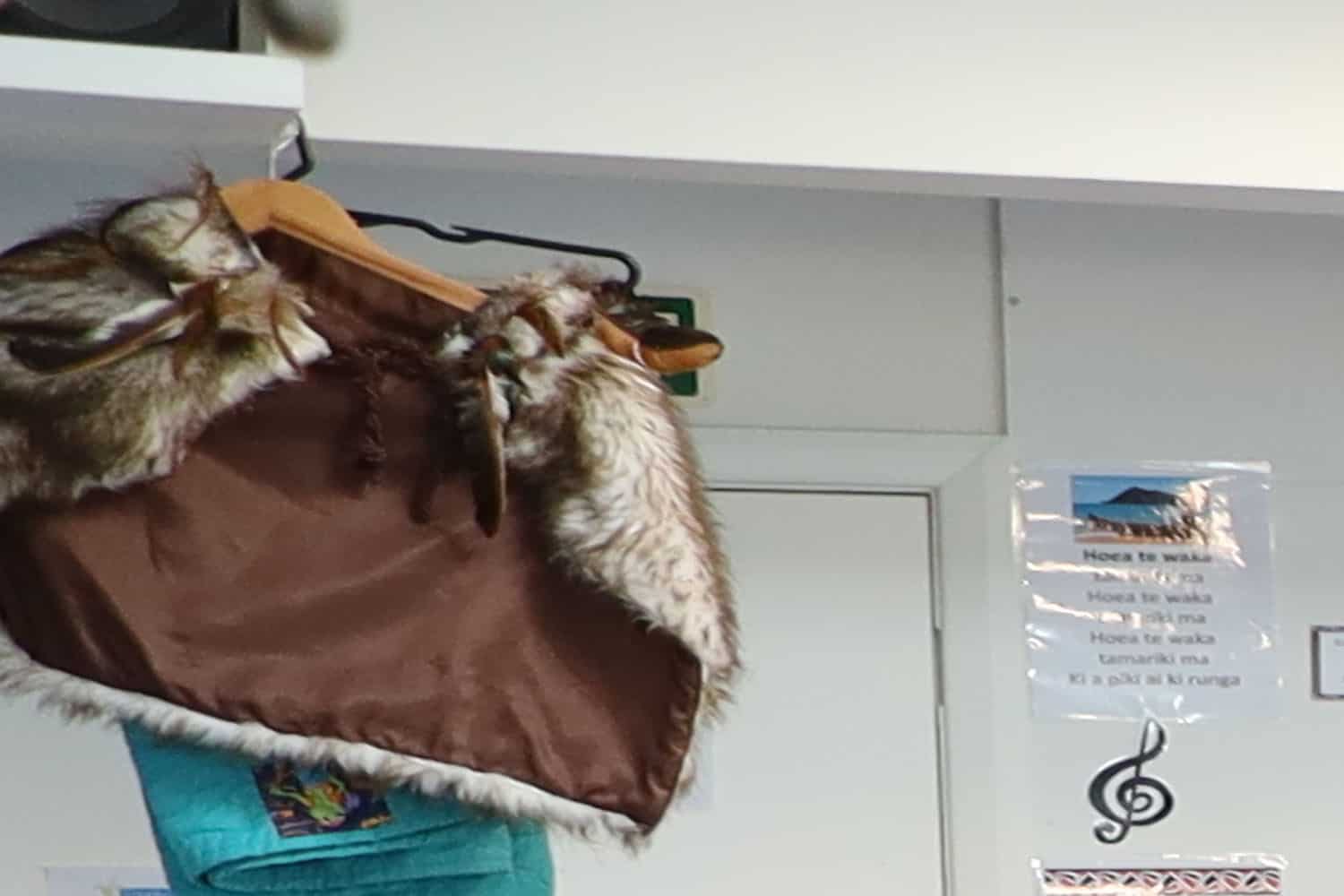
Child's Maori cape hanging at preschool

As a part of my journey I have focused on supporting my colleagues to learn and begin to understand some of the basic stuff that is important to Te Āo Māori. I understand and accept that if you don’t know, you don’t know, hence we should as teachers find ways to become aware. Along with this unknown factor I have experienced resistance. Resistance to acknowledging what it means to weave the principles of Te Tiriti o Waitangi, and therefore promote tikanga within our Centres. 

For example, after partaking in these korero sessions and hearing Kaiako show enthusiasm for incorporating Tikanga in Practice, often those changes to practice that have been discussed, debated, worked out, and agreed upon as a collective don’t eventuate into practice.

It often feels like participants come to the workshops as a part of a box ticking exercise – they can put it in the appraisal system, but then don’t follow through with making actual changes to the practices.

For example, observing colleagues continue to sit on tables, place shoes or hair ties and hats on tables or benches where Kai is sometimes placed, using a chair to place food plates on, finding shoes in the hat basket, observing teachers straddle tamariki stretchers, or doing the laundry all in together. 

When we have had discussions about how tikanga helps to make meeting regulations so easy, yet the changes are not forthcoming. 
This is a member/subscriber only post. To access it, please see the message below for details on access and joining.
Already a Teacher Member?

Are you teaching and caring for children or studying for an ECE qualification?

If you are, that’s great!   Join us now, and become a teacher member.

Five Reasons to Join Us
1. Professional recognition

It is prestigious to belong to the OECE – you can skite about it! 

Ask us for an OECE Member Certificate, to include in your professional portfolio as proof you are engaged in reading and professional learning that advances your understanding of the relationship between practice and outcomes for children.

2. Extra benefits

No need to pay a subscription fee for access to NZ’s specialist ECE Newsroom – your member login will let you view everything in the ECE Newsroom. 

No need to pay to access the best NZ and international research – your member login gives you free access to the Research Library and support. 

3. Professional growth and no-judgement help

Teaching resources and advice on probably everything you can think of, including what to wear as a teacher, how to ask for a pay raise, identifying child behaviour causes and responding to needs, new play activity ideas, etc., etc.  all of this is at your finger-tips 24/7 whenever you need help or advice – login to view. 

4. Representation

Did you know that the OECE meets personally and regularly with the Ministry of Education national team, and the regulations committee and other forums? 

Political leaders and journalists are able to use the OECE to gain deeper knowledge on a topic or issue, and we provide a sounding board for ideas and feedback.

The OECE promotes safe working environments for teachers.  We also promote the absolute need for full pay parity with school teachers for all certificated teaching staff working in teacher-led centres and in home-based, and whether permanently or casually employed. 

5. Value for Money

We are committed to keeping membership prices affordable and providing value for money. 

Teacher membership is just $89 for a full year, or save by joining for 2 years.

Has this been useful?  Give us your feedback.

You are welcome to add a link to this page on your website. Copyright belongs to the OECE so please do not copy any content without our written permission.

Information provided is of a general nature. It is provided ‘as is’, and we accept no liability for its accuracy or completeness. See our Terms and Conditions.

Related Posts

early childhood education staff interviews

Self Review: Working Smarter, Not Harder for Best Practice

Self-Review. By Janet Moles.

As I quietly move close to the habitat of an early childhood centre, I observe that the group is in the midst of the strange ritual known as ‘The Staff Meeting’. In this gathering, the leader communicates to the group, the tasks to be achieved, assigns duties and informs them of new requirements, rules and exp

This is a member/subscriber only post. To access it, please see the message below for details on access and joining.

Read More »
NZIRECE Journal early childhood education research

Index for the NZ Research in ECE Journal, 2006, Vol 9

The titles, authors and abstracts for papers published in the NZ Research in Early Childhood Education Journal, Volume 9, 2006 are shown below.

To view any paper, scroll to the end of this page for copies.

Too Much, Too Soon?  The Multiple Roles and Identities of Newly Qualified Early Childhood Teachers

Helen Aitken

This is a member/subscriber only post. To access it, please see the message below for details on access and joining.

Read More »
child hands puzzle piece to adult

Learning from Sure Start: Working with Young Children & their Families

Learning from Sure Start: Working with Young Children & their Families by Jo Weinberger et al (Eds).

Here is an extraordinary text.  It is a critical and insightful examination by insiders and outsiders from an inter-disciplinary perspective of one early childhood programme – Foxhill and Parson Cross Sure Start.  It has se

This is a member/subscriber only post. To access it, please see the message below for details on access and joining.

Read More »

Share This Information

Table of Contents

Table of Contents

The Office of ECE Login

Take Action!

Help spread this vital ECE information, join our free social and email groups and become a member of OECE.

pay parity funding policy

1. Share This Information

2. Follow Our Social Pages

3. Get Regular Updates

Sign up to our free newsletters.

4. Become a Member