Ministry of Education and ERO Fail to Stop Services Breaking Regulations

Search Newsroom Posts
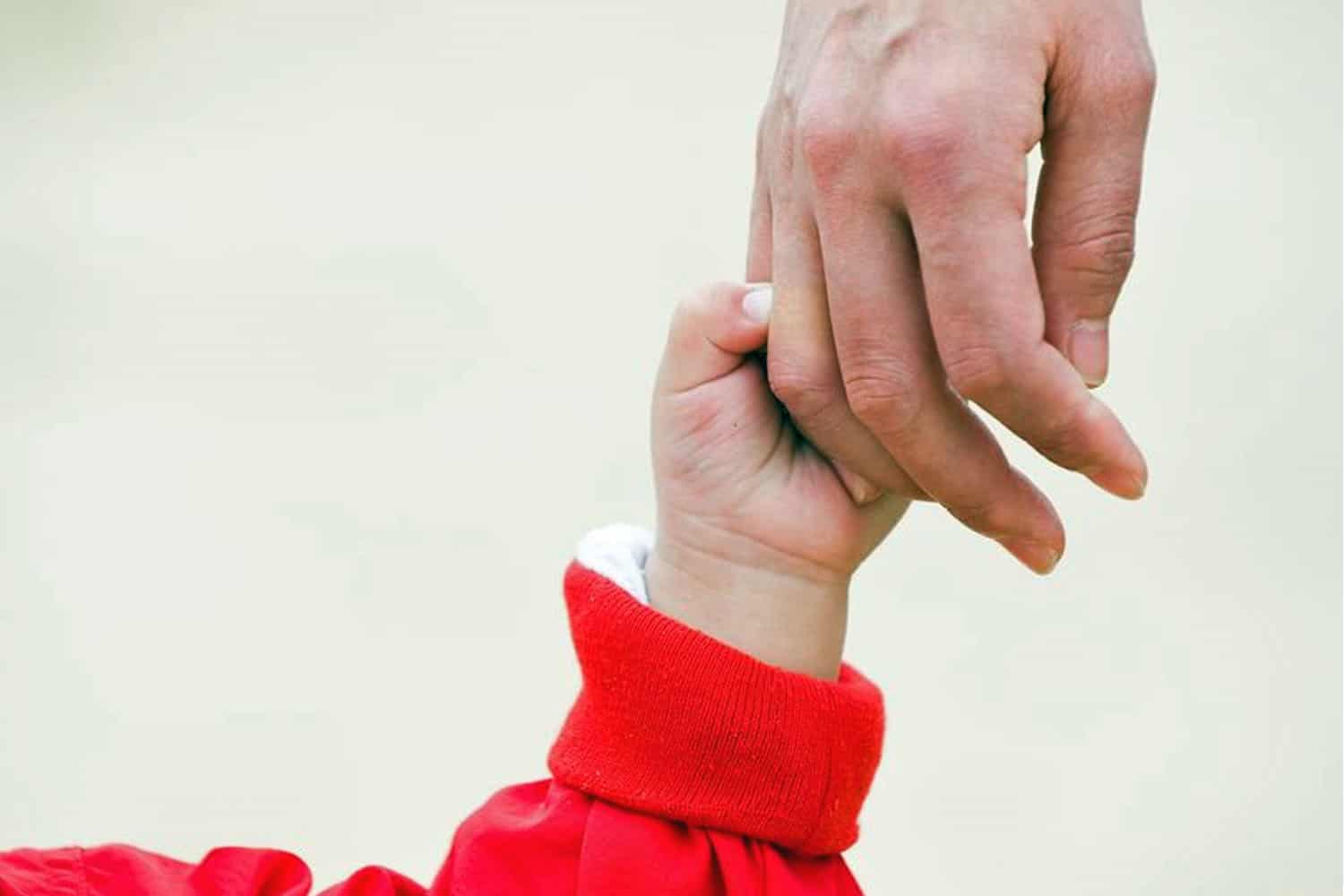
child holding adult's hand

Opinion article.
Dr Sarah Alexander.
March 15, 2019.

Many of us are surprised when an early childhood service we thought to be good because it holds an ERO positive report is in the news for mistreating and abusing  children or is put on notice by the Ministry of Education for breaching minimum standards.

But unfortunately this happens all too often (see a 2017 article for earlier discussion).

When I analysed the list of ECE Services that were placed on notice or closed by the Ministry of Education in 2018 one of the first things I noticed was that the Education Review Office had not picked up on around one hundred of these services (109 of these services held an ERO positive report).

ERO may or may not argue with this. And may try to claim that it has no responsibility because breaches can happen between review times, however it can still be recommending a service to parents as well placed or very well placed. The fact that ERO only visits a service every 3 to 4 years on a normal reporting cycle is part of the problem also.

In 2016 Sealey Street childcare was given an ERO positive report – a clean bill of health. Yet there had been some comment of the possibility that children may have been experiencing abuse or mistreatment anytime since the centre opened in 2012. Following complaints and an investigation, the ministry closed the centre in 2018. One of the latest is Hutt Hospital Childcare, closed by the Ministry in 2019 for mistreatment of children which does not appear to be a surprise to many past users of the service commenting about this on social media, but the centre still shows a positive review by ERO and thereby endorsement of the centre to parents as a centre well-placed to care for children (confirmed report dated 20/01/2017).  Centre shut down following reports of horrific abuse

From mid-March 2019 ERO has promised it will introduce changes to its assurance reviews including assessing whether regulated minimum standards are being met to ensure children’s health, safety and wellbeing. We can take this as public acknowledgement by ERO that between it and the ministry it accepts that the current processes for identification are not adequate. 

The numbers

The list shows that last year the ministry reclassified the licences of 117 services to provisional. The licences of 45 services were suspended and licences were withdrawn for 9 services.

The number of services placed on a provisional licence went down last year from 154 in 2017 to only 117 services. This seems like good news, but the number in 2018 is still higher than in 2016 when 75 services had their licence downgraded to provisional. 

ECE service providers who are doing a good job may question whether the Ministry should get tougher on those in the ‘industry’ or sector that can take a different view perhaps of seeing what they might get away with and hoping not to get caught again.

It may be argued that this number is small and represents only a small proportion of the total number of ECE services in NZ and it is certainly correct to say this. There are more than 4,000 licensed services. But even one ECE service is one too many because services are caring for young children who do not have a voice and are highly vulnerable. 

It must be remembered that the licensing requirements and regulations set out the minimum that is acceptable for the safe operation of a service for children – this is not quality – so to fall below the minimum threshold is serious.

In any one year the number of services that the ministry decides to place on a provisional licence, versus giving a verbal warning to or only funding professional support for, may be affected by anything from policy priorities (in 2017 the Ministry focused a lot on home-based with a big policy review pending) to Ministry of Education resourcing/staffing decisions. 

Ministry and ERO response matching  

When ERO identifies that a service has licence breaches it usually recommends either that the service consult the ministry for support to improve or it recommends that the ministry reassess the licence.  Out of the 16 services ERO recommended the ministry reassess the licence of that the Ministry took action on, the ministry withdrew the licence of just 3, suspended the licence of another 3, and placed the remaining 10 services on a provisional licence allowing them to continue to care for children.  This suggests that the ministry took a softer view than ERO on the majority of these 16 services.

It can sometimes take months for the ministry to take action to downgrade a service’s licence or close it following ERO publishing a confirmed report showing the presence of significant non-compliance. (e.g. Early Learning @ Home Childcare, ERO report dated 11/04/2018 and the Ministry did not check it and suspend its licence until 3/07/2018).  Meanwhile a service can continue to care for children and receive public funding.

Unfortunately, there is also often a gap of several months (usually around 3 months) between the date that ERO visits a service and when the report for the service is confirmed and made available.

There are serious issues raised here in this information, showing that both the Ministry of Education and the Education Review Office can do better for New Zealand’s children.

Improvements are needed to ensure all early childhood services are at least meeting the minimum standards for providing early childhood education and care all of the time.

Please note that:

1. The list of early childhood services reported to have breached minimum operating standards represents only those that are known. The monitoring system between the ministry and ERO is such that there could be other services that are non-compliant that do not come to the attention of the ministry unless, for example, there is a tragedy.

2. Non-compliance typically comes to the ministry’s attention through ERO reports, following a complaint made to it by a parent or member of the public against a service, and when a service is sold and a licensing check needs to be undertaken for a change of service provider. No annual ‘warrant of fitness’ check is carried out by officials of early childhood services.

3. It is law that services must prominently display the licence it currently holds and a copy of the regulations with the licensing criteria for all parents and visitors to see. However, there is no legal requirement that a service must explain to parents about its licence, leaving parents to either go through official channels and make a request to the Ministry of Education or to check what My ECE might have online about their service.


Already subscribed?
ECE Newsroom

NZ’s own specialist ECE newsroom. 
Access national and local stories, in-depth analysis, & original commentaries.  

Membership Support for Teachers & Educators

(Comes with free Newsroom and Research access)

Membership Support for ECE Service Owners, Managers, & Community Organisations

(Comes with free Newsroom and Research access)

Researchers & Tertiary Education Libraries

Full access to over 25 years of ECE academic research articles – NZIRECE Journal.
Plus, guidance and resources on doing and publishing research

Has this been useful?  Give us your feedback.

You are welcome to add a link to this page on your website. Copyright belongs to the OECE so please do not copy any content without our written permission.

Information provided is of a general nature. It is provided ‘as is’, and we accept no liability for its accuracy or completeness. See our Terms and Conditions.

Related Posts

teacher wages, pay scales, in childcare and early childhood education

What ECE Teachers and Workers Earn: Pay, Benefits and Conditions

Anyone thinking about getting a job in ECE working in ECE or thinking about moving to a different service will find clear, practical information in this article about pay rates, employment conditions, and what to expect in different roles. It explains everything from starting salaries and pay‑step calculations to workplace rights, benefits, and how to recognise a supportive, professional environment.

Read More »

Impact of food-related choking prevention guidance in ECE

FULL REFERENCE: Young, L., Agar, S., Chiwawa, B., and Gerritsen, S. (2024).  Impact of food-related choking prevention guidance on the food environment in early childhood education.  NZ International Research in Early Childhood Education Journal, 26, pp.  1-13.

ABSTRACT: Young children are at risk of choking on food. In 2020, the New Zealand Ministry of Education mandated food-related choking guidance for licensed early childhood education (ECE) services. Prior to implementation there was concern about the guidelines from some parts of the ECE sector. A survey was conducted to assess the impact on food access and nutrition practices in centres. Survey data was collected from centre managers using an online questionnaire in four regions across New Zealand. Responses are presented using descriptive statistics and thematic analysis of open-ended questions. Survey responses were received from centre managers of 179 centres (17%). The survey showed that changes were made in response to the new guidance to food provision, staff duties and supervision of children, and to the centre’s connection with whānau (family) through events and celebrations. The guidelines raised awareness of choking prevention and resulted in changes aligned with the recommended actions. However, some changes adversely impacted the food environment e.g., less access to onsite vegetable gardens, removal of fresh fruit and vegetables from menus, and learning opportunities about food. There is a need for education on how to adopt food safety practices within the context of growing food onsite and continuing family/cultural celebrations. The guidelines need to be clear and practical for ECE services to implement.  

KEY WORDS:  Food-related choking prevention; early childhood education; food environment, young children; food policy, food, kaupapa-policy; whānau-family group; kai-food; māra kai-gardening for food; tikanga-practices; tamariki-children; kanohi ki te kanohi-face to face.

Log-in to read the full research paper below. Or order a pdf copy of the article from the main NZIRECE Journal page.

INTRODUCTION

Young children (0-5 years), especially children under one year of age, are at higher risk of choking on food due to their body’s immature physiology (narrow airways), chewing, swallowing and coughing ability (Sidell et al., 2013). In New Zealand (NZ) choking on food was responsible for eight deaths (4.9%) during the period 2006-2010 and was the leading cause of hospitalisations within the category of injury from unintentional suffocation, strangulation and choking in children aged 0-14 years from 2008 to 2012 (N=134, 45%) (Safekids Aotearoa, 2015). Foods associated with child deaths from choking in NZ were meat/sausage, peanuts, apple, and grapes (Ministry of Health, 2012). Furthermore, non-fatal choking can result in acute and chronic health issues including hypoxic brain damage (Ministry of Health, 2012).

This is a member/subscriber only post. To access it, please see the message below for details on access and joining.

Read More »
NZ International Research in Early Childhood Education journal

Supporting Participation of Indigenous Families in Early Childhood Education

FULL REFERENCE: Corridore, E. (2014). Supporting participation of indigenous families in early childhood education. NZ Research in Early Childhood Education Journal.  Special Issue: Early Childhood Policy,17, 147-160.

Log-in to read the full research paper below. Or order a pdf copy of the article from the main NZIRECE Journal page.

ABSTRACT: This paper examines specific discrepancies between Australian Indigenous communities’ values, beliefs and approaches to education and those of mainstream Australian communities. It includes an analysis of relevant impacts of this mismatch on successful participation by Indigenous children in early childhood education settings. Cultural competency, as described in the Early Years Learning Framework (EYLF) and expanded upon by current thinking and learning, predominates as a professional skill required in educating young Indigenous children and communities. The confronting issue of colonisation has impacted on the participation levels of Indigenous families and is deserving of significant space and time for reflection around Western education institutions and what they represent and value.

KEY WORDS:

Indigenous; Australia; values; indigenous; culture; communities; participation; policy, curriculum, Early Years Learning Framework.

This is a member/subscriber only post. To access it, please see the message below for details on access and joining.

Read More »
the safety of infants and toddlers playing with marbles

Are Marbles Really Allowed in ECE Centres and Homebased?

Marbles and other small objects might seem harmless, but in ECE settings they can quickly become a serious choking hazard. We explain what the regulations actually require and give you clear indicators to help you manage these risks confidently and keep children safe.

This is a member/subscriber only post. To access it, please see the message below for details on access and joining.

Read More »
The Office of ECE

Share This Information

Table of Contents

Table of Contents

The Office of ECE Login

Take Action!

Help spread this vital ECE information, join our free social and email groups and become a member of OECE.

pay parity funding policy

1. Share This Information

2. Follow Our Social Pages

3. Get Regular Updates

Sign up to our free newsletters.

4. Become a Member