Te Whāriki and How it Compares to the Australian Early Years Framework

Search Newsroom Posts
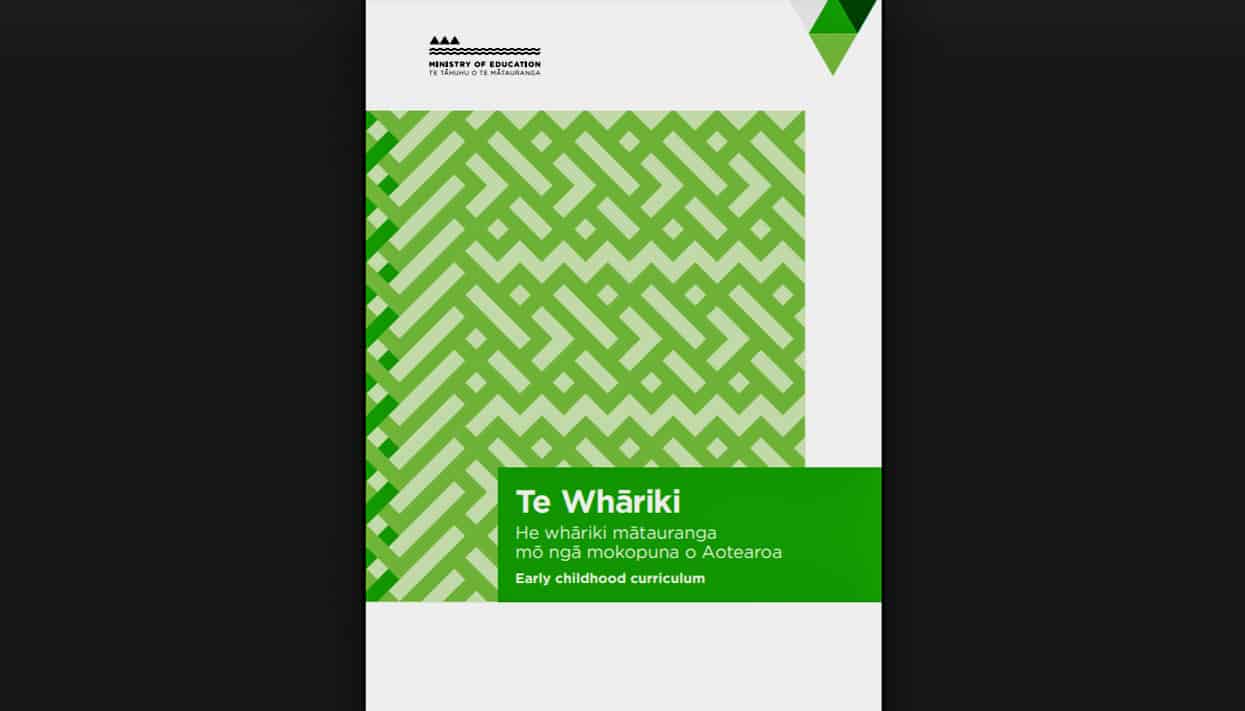
Te Whāriki
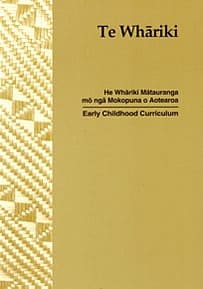
Te Whariki original first document

Te Whāriki and EYF.
May 20, 2013.

This article puts Te Whāriki and EYF (the Early Years Framework) side by side to see what the differences are. This is a useful exercise to do because Te Whāriki was drafted in 1993 and the final version published in 1996.  Some argue that it is now outdated and we need to be looking at improving it and referring to curricula overseas.

The Early Years Learning Framework for Australia titled “Belonging, Being and Becoming” was published in 2009.  

Concepts in Te Whāriki and EYF are very similar. Australian early childhood professional guru, Joy Lubawy explains the wording is similar in lots of places, but with a little twist here and there, mostly saying the same things due to being grounded in the same sources and pedagogies.  

Both documents go into detail about how the curriculum in practice will look and what we will see children doing when they are achieving outcomes or goals.  Joy Lubawy notes that the USA curriculum “Standards” are also similar yet slightly different.

Below is an outline which makes the similarities and differences between the NZ and Australian curriculum documents clearer.

Joy Lubawy’s chart of showing similarities and differences

Te Whāriki – NZ

EYLF for Australia- Belonging, Being and Becoming

Principles:

  • Empowerment
  • Holistic development
  • Family and Community
  • Relationships 

Principles:

  • Secure, respectful and reciprocal relationships
  • Partnerships with families and EC educators
  • High expectations and equity
  • Respect for diversity
  • Ongoing learning and reflective practice

Strands and Goals:

1. Well-being
  • Health promoted
  • Emotional well-being nurtured
  • Kept safe

2. Belonging

  • Links with family and wider world affirmed/extended
  • Knowledge of place
  • Comfortable with routines, customs and regular events
  • Know limits and boundaries

3. Contribution

  • Equitable opportunities
  • Affirmation of individuals
  • Encouragement to learn alongside others

4. Communication

  • Development non-verbal skills
  • Development verbal skills
  • Experience stories and symbols
  • Discover and develop different ways to be creative and expressive

5. Exploration

  • Play valued and meaningful
  • Confidence and control of bodies
  • Active exploration, thinking and reasoning
  • Develop working theories to make sense of world. 

Practices:

  • Holistic approaches
  • Responsiveness to children
  • Learning through play
  • Intentional Teaching
  • Learning Environments
  • Cultural Competence
  • Continuity of learning and transitions
  • Assessment for learning

Learning Outcomes:

1. Children have a strong sense of identity
  • Safe, secure and supported
  • Emerging autonomy, sense agency
  • Knowledgeable and confident self identity
  • Interact with care, empathy, respect

2. Children are connected with and contribute to their world

  • Sense of belonging to group
  • Diversity with respect
  • Being fair
  • Socially responsible

3. Children have a strong sense of well-being

  • Socially and emotionally strong
  • Take responsibility for self

4. Children are confident and involved learners

  • Dispositions for learning
  • Range of skills for problem solving, enquiry etc.
  • Transfer and adapt learning
  • Resource own learning

5. Children are effective communicators

  • Interact verbally/nonverbally
  • Engage range of texts
  • Express ideas
  • Understand symbols/patterns
  • Investigate ideas. 
Already subscribed?
ECE Newsroom

NZ’s own specialist ECE newsroom. 
Access national and local stories, in-depth analysis, & original commentaries.  

Membership Support for Teachers & Educators

(Comes with free Newsroom and Research access)

Membership Support for ECE Service Owners, Managers, & Community Organisations

(Comes with free Newsroom and Research access)

Researchers & Tertiary Education Libraries

Full access to over 25 years of ECE academic research articles – NZIRECE Journal.
Plus, guidance and resources on doing and publishing research

Has this been useful?  Give us your feedback.

You are welcome to add a link to this page on your website. Copyright belongs to the OECE so please do not copy any content without our written permission.

Information provided is of a general nature. It is provided ‘as is’, and we accept no liability for its accuracy or completeness. See our Terms and Conditions.

Related Posts

children writing drawing homebased

‘Learning Notes’ – An Alternative to Doing Learning Stories

Learning Notes.

In most early childhood education (ECE) settings children’s learning is assessed using the Learning Story technique. 

Dr Ken Blaiklock

However there has been criticism of this form of assessment with some people arguing it does not give an adequate picture of a child’s development.

In contrast to Learning Stor

This is a member/subscriber only post. To access it, please see the message below for details on access and joining.

Read More »
crying child upset abuse hurt

Responding to a Child’s Disclosure of Abuse

Getting Help for an Abused Child. By Eric Hollis.

When a child discloses sexual abuse, it will always be distressing. It is natural for adults to feel at a loss to know how best to respond.

The information provided here covers how to listen and respond to a child who tells you, or hints in even a vague way, that she/he or someone they know

This is a member/subscriber only post. To access it, please see the message below for details on access and joining.

Read More »
The Office of ECE

Share This Information

Table of Contents

Table of Contents

The Office of ECE Login

Take Action!

Help spread this vital ECE information, join our free social and email groups and become a member of OECE.

pay parity funding policy

1. Share This Information

2. Follow Our Social Pages

3. Get Regular Updates

Sign up to our free newsletters.

4. Become a Member