Kids are reportedly starting school without being toilet trained. So why is the government introducing policies that will make the problem worse?

Search Newsroom Posts

Kids are reportedly starting school without being toilet trained. The education minister says she’s concerned, so why is her government introducing policies that will make the problem worse?

OPINION –8 Aug 2025

Education minister Erica Stanford is apparently concerned that children are starting school without being toilet trained.

The Press reported this week that Stanford spoke to primary school principals about the problem at a meeting in Southland in July.

It is “not safe, or hygienic or OK to be changing nappies at a school, which I know happens in some instances,” she is quoted in the story as saying.

The Office of Early Childhood Education agrees that it’s worrying that children are reportedly starting school lacking basic life skills.

However, in our view, policy changes recently introduced by the Government that Stanford represents will only exacerbate the issue.

Last week, Stanford’s colleague, associate minister for education David Seymour, announced the introduction of the Education and Training Amendment Bill, which will specifically state that the role of ECE is to support parents to participate in the labour market.

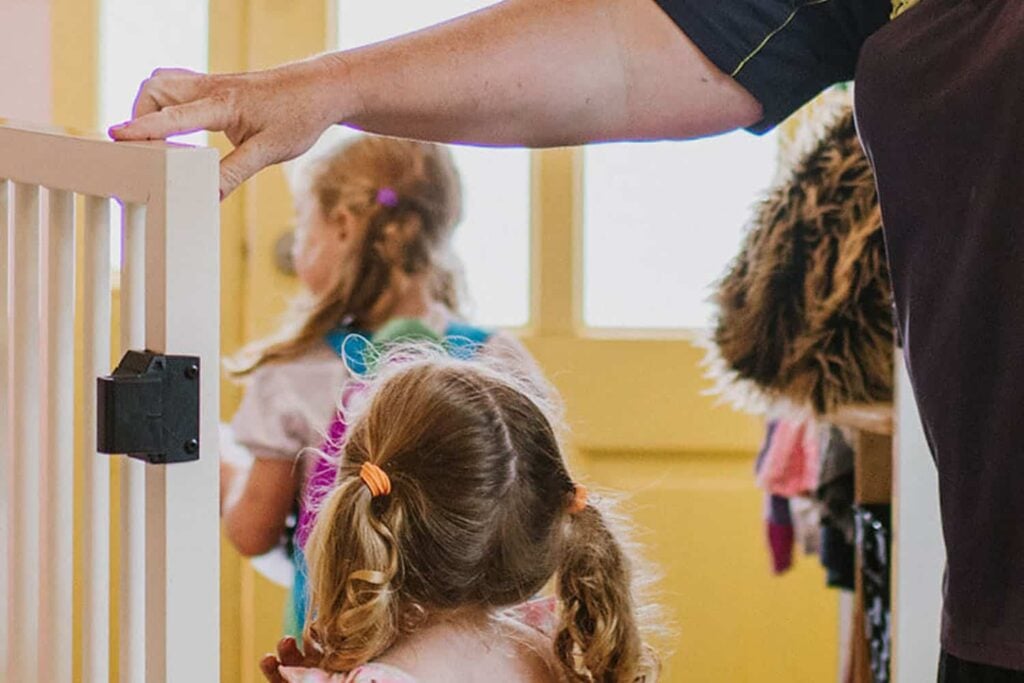
The ECE regulation review, also led by Seymour, has meanwhile not recommended tightening requirements for toilet privacy. Instead, centres (including those licensed for up to 150 children) are allowed to provide children with only one toilet that gives ‘them a sense’ of privacy but may still mean they are fully visible to adults.

We believe that stipulating that the main purpose of ECE is to provide parents with childcare so that they can work, as the Government has done in the new Bill, is not in the best interest of tamariki or whānau.

Children’s development of skills, such as using the potty and toilet, is best supported by parents and teachers working in partnership.  This partnership is undermined when parents are valued only in terms of their contribution to the labour force – and ECE is considered to be no more than a babysitting service.

We routinely hear from parents whose 3- or 4-year-old child has been using the toilet independently, but starts wetting themselves after starting in long-day care. We’ve also been told of instances of children in long-day care reverting back to having wetting and faecal accidents because of  stress within the centre environment, or being told that they have to wait to use the toilet or must ask permission first.

Our position on the current licensing requirement for toilet privacy is that it does not protect children’s wellbeing or dignity.

In the OECE’s submission to the Ministry of Education on the proposed changes to ECE licensing criteria, we wrote: 

“It should not be possible for any adult who is standing outside or in a centre building to see children taking down their pants and using a toilet, but it is….  Teachers have reported to us the difficulties of caring for children when they have refused to use the toilets at the ECE service, and that children will hold on until they get home, or will soil their pants. 

“We were told about one child who found a creative solution of peeing discreetly down his trouser leg into one of his gumboots to avoid using the toilet.”

The OECE would like to see the regulatory requirement updated so that centres are required to ensure all toilets provide children with privacy when using them.

In our view, if Stanford really cares about children starting school lacking basic life skills, such as the ability to use the toilet, she should stand against the harmful regulatory and policy changes her Government is proposing and advocate for better practice.

To do this, the education minister would need to take charge of the ECE portfolio, which Seymour is currently responsible for. 

Afterall, actions speak louder than words.
Leave a Reply

Already subscribed?
ECE Newsroom

NZ’s own specialist ECE newsroom. 
Access national and local stories, in-depth analysis, & original commentaries.  

Membership Support for Teachers & Educators

(Comes with free Newsroom and Research access)

Membership Support for ECE Service Owners, Managers, & Community Organisations

(Comes with free Newsroom and Research access)

Researchers & Tertiary Education Libraries

Full access to over 25 years of ECE academic research articles – NZIRECE Journal.
Plus, guidance and resources on doing and publishing research

Has this been useful?  Give us your feedback.

You are welcome to add a link to this page on your website. Copyright belongs to the OECE so please do not copy any content without our written permission.

Information provided is of a general nature. It is provided ‘as is’, and we accept no liability for its accuracy or completeness. See our Terms and Conditions.

Related Posts

child climbs fruit tree

Beyond Quality in Early Childhood Education & Care Postmodern Perspectives

Beyond Quality in Early Childhood Education & Care Postmodern Perspectives by Gunilla Dahlberg, Peter Moss & Alan Pence. This review was first published in the NZJES journal, 34(2), 1999,  pp. 368 – 369. Reviewed by Dr Sarah Alexander. 

Beyond Quality challenges the discourse of early childhood education and over two decade

This is a member/subscriber only post. To access it, please see the message below for details on access and joining.

Read More »
birthday cake 4 years old

Birthday Cakes – Yes or No? The Options

Birthday cakes.

Birthdays are a very exciting time for children in early childhood and it is important that children can celebrate these special occasions with their peers to acknowledge and appreciate this day with them. We can probably all remember the excitement of a birthday cake and waiting with anticipation to eat this tasty treat.

In e

This is a member/subscriber only post. To access it, please see the message below for details on access and joining.

Read More »
early childhood research journal online

Breach of Trust – Getting it Right for Children in Early Childhood Care and Education in Ireland

Breach of Trust – Getting it Right for Children in Early Childhood Care and Education in Ireland.

Mary Moloney. Mary Immaculate College, Ireland.

Full Reference: Moloney, M. (2014). Breach of trust – Getting it right for children in early childhood care and education in Ireland. NZ Research in Early Childhood Education Journal. Special

This is a member/subscriber only post. To access it, please see the message below for details on access and joining.

Read More »
Children with steering wheel and fire engine in the early childhood centre playground.

Ministry of Education does not know how many ECE centres are on public land

The Ministry of Education does not hold records of the early childhood centres on public land.

This means that there is no way of tracking which ECE centres could be at risk of eviction or closure if the school or council they are renting the land from decides not to renew their lease.

The problem was exposed recently when Longbeach Playcentre, near Ashburton, was informed by its landlord Longbeach School that from the end of the year it would not be able to continue operating in the building it has been based in for 20 years.

After news of the situation broke, the Office of Early Childhood Education asked the Ministry for the names of ECE services located on public land, including hospitals, tertiary institutes and public reserves, as well as schools.

This is a member/subscriber only post. To access it, please see the message below for details on access and joining.

Read More »
Why a toilet suitable for adults to use is necessary in early childhood centre

Adult Toilet and Staff Bathroom

OECE staff writer

There are many good reasons for having a toilet specifically for adults that is suitable for adults to use.

Sometimes staff need to use the toilet within a confined space of time, for example, while on a ten minute break or a parent needs to rush in and use the toilet when dropping off or picking-up their child. 

There may be lots of toilets but most may be more suitable for children’s use – smaller, lower to the ground and often in stalls of small size, for safety purposes. Small toilets in small spaces cannot accommodate the much larger size of adults.

This is a member/subscriber only post. To access it, please see the message below for details on access and joining.

Read More »
The Office of ECE

Share This Information

Table of Contents

Table of Contents

The Office of ECE Login

Take Action!

Help spread this vital ECE information, join our free social and email groups and become a member of OECE.

pay parity funding policy

1. Share This Information

2. Follow Our Social Pages

3. Get Regular Updates

Sign up to our free newsletters.

4. Become a Member