Compulsory Vaccinations for Children?
March 14, 2017.
By Dr Sarah Alexander.
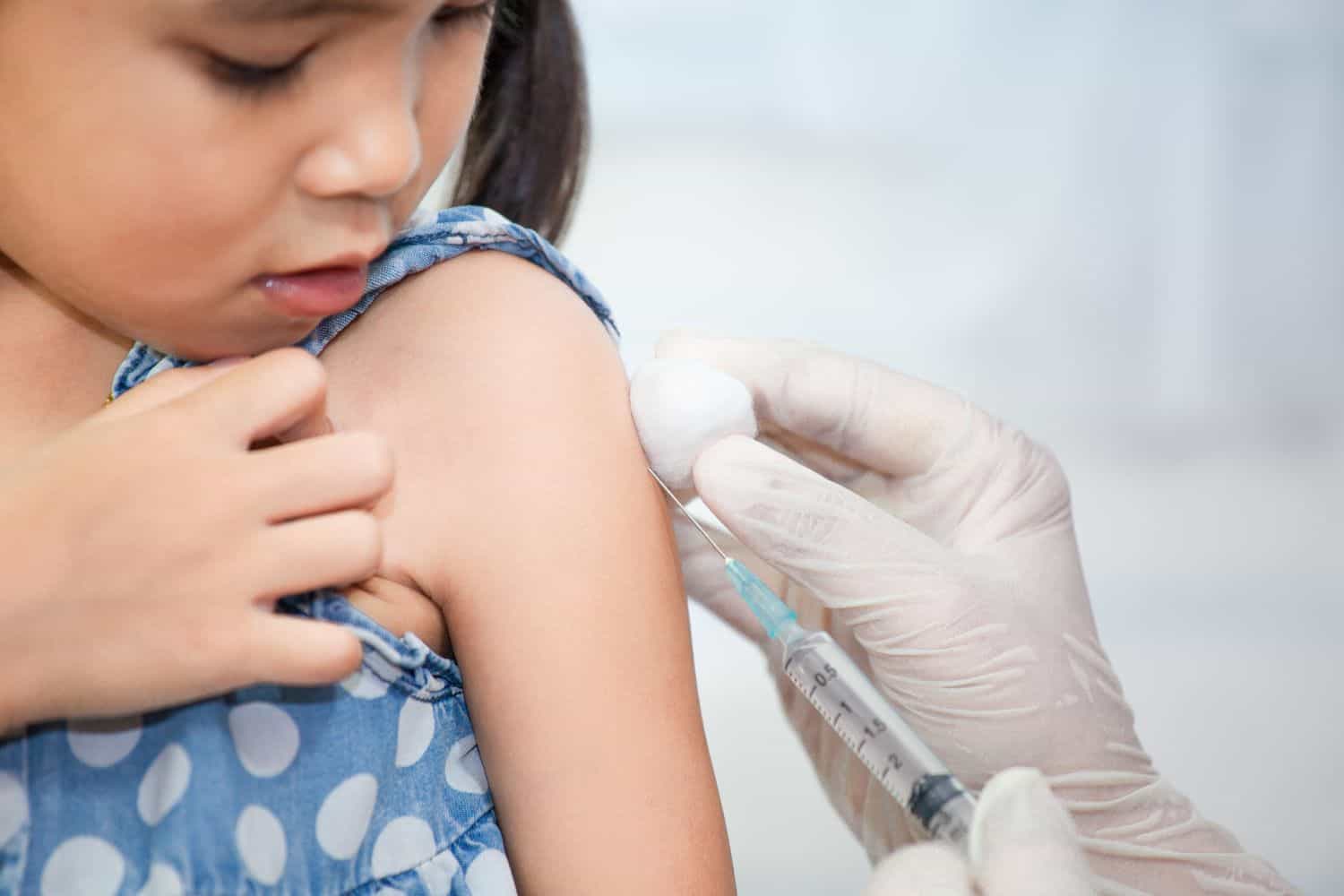
Children who are not immunised are to be banned from attending early childhood education in all states of Australia if Prime Minister Malcolm Turnbull has his way.
In New Zealand, when asked by Newstalk ZB yesterday (Monday 13th March) if this was an issue in NZ and would NZ be looking at doing the same, Dr Sarah Alexander replied no and joked that it would only become a story here for the media to pick up on if a NZ politician wanted to get their name in the news headlines being election year.
This morning, Labour leader Andrew Little, did just that. Mr Little said it “was worth looking at”.
Why did he not say that Labour does not believe in using early childhood education to punish parents and deny children access? He might have said that responsibility for immunisation lies with the health sector and not with the early childhood education sector but that his party would be talking with early childhood education experts to see if there needed to be a greater emphasis on health promoting practices in ECE such as hand-washing and hygiene, and education for teachers on supporting parents breastfeeding.
Media across the country picked up on Andrew Little’s interest in Malcolm Turnbull’s stance and National’s Health Minister, Jonathan Coleman responded. Coleman said that the Government has no plans to change its policy on vaccinations.
“We’ve got very high vaccination rates, I mean they’re approaching 95% and in the end there’s always going to be a certain proportion of people who resist getting their kids vaccinated.”
What many people may have forgotten was that in 2012 the Minister for Social Development was keen to make it compulsory for beneficiaries to have their children immunised, and this was part of the confidence and supply agreement the National Party had with the Act Party.
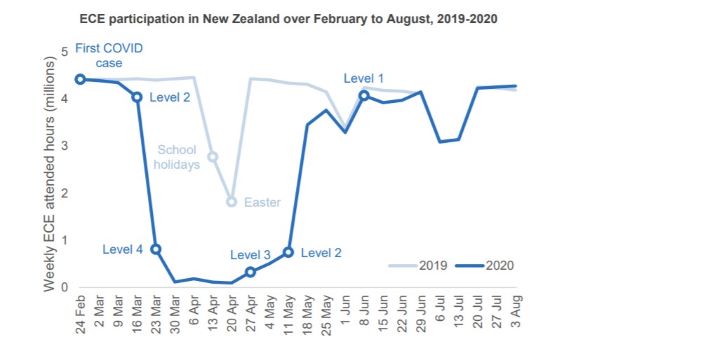
It decided not to make this a social obligation and instead made it compulsory for the children of beneficiaries to attend childcare/ECE; perhaps hoping to bolster its success with its increasing participation in ECE policy. The deadline for achieving its target of 98% participation in ECE in 2016 has passed, with the participation rate sitting at 96%. Government effectively does not have policy for early childhood education now. There is no reason why it might not go back to considering making child immunisation compulsory if it wins another term in office – and as Labour did not come out and say that denying access to early childhood education should not be used as a punishment, it would find it hard to oppose any move that National may make in the future to make vaccination compulsory for ECE attendance.
Audio of a Newstalk ZB interview Sarah gave on Tuesday
Would banning children who are not vaccinated make attending ECE safer for all children as claimed by Malcolm Turnbull?
To date education has been the preferred approach in NZ, with parents having responsibility to face the decision to vaccinate.
It is recognised that parents have a right to make an educated decision.
Vaccinating children is a highly emotive public issue. Among parents there can also be big variation in support for various vaccines.
Vaccination does not imply full immunity. Moreover, many children in ECE are just too young to be well-protected by vaccines and are still at risk. Even if it were possible for all children attending to be well-protected it is likely that at least some of the adults caring for them are not – for example, it is not compulsory for teachers to have had a DTaP pertussis vaccine for whooping cough.
Immunisation coverage for New Zealand children at eight months of age is 93.3 percent. At 2 years 93.1 percent of children are fully immunised (data for the three month period ending December 2016).
Immunisation expert Dr Nikki Turner said in 2015 that New Zealand currently had very good vaccination rates among young children. She added that the anti-vaccine movement was not widespread enough in New Zealand to have a major impact on child safety. When children got measles, for example, this could be due to NZ’s historically low immunisation rates meaning that many adults are not immunised.
Teachers and the early childhood education sector in general value inclusion and would not value policy to exclude children.
It would be discrimination to not allow children to attend who have a medical condition for whom having a vaccine would be unsafe.
A policy that made it compulsory for all children except those with a medical condition would not work because the question can then be asked as to why ban at all? It could also place children who are unimmunised due to a medical condition at risk of being isolated and identified as not safe for other children to be around – which would be very harmful to these children and to our society.
In short then, it would seem that in NZ implementation of a ban similar to what is being argued for by Malcolm Turnbull in Australia would achieve little.
It would be seen to be coercive. It would also be seen to not be necessary.
At most it might save a little money in the health budget (perhaps this would then be put toward something else other than public education and advertising as immunisation would be compulsory in any case for the 96% or so of children currently attending ECE and those who are enrolled in the future).
The current system of early childhood services citing children’s immunisation certificates and keeping an immunisation register, seems to be working. When there is an identified risk for children of a contagious disease outbreak, services are able to identify children who are vaccinated and who are not, and inform parents of unvaccinated children to not attend until the risk has passed.
But …
The health of children attending early childhood education in large group situations is at greater risk than in small group situations such as family daycare and small centres and at home.
It is at greater risk not just from diseases that immunisations are routinely given for, but those that a child would be less likely to get if not in a large group situation.
For example, in 2013 at a Kindercare private chain centre in Christchurch 156 vaccinations were provided to children and staff after a child was diagnosed with Hepatitis A. “Preschools can be a high risk environment for the spread of Hepatitis A, particularly where there is nappy changing”, the Canterbury Medical Officer of Health said.