The Role of Santa in ECE

Search Newsroom Posts
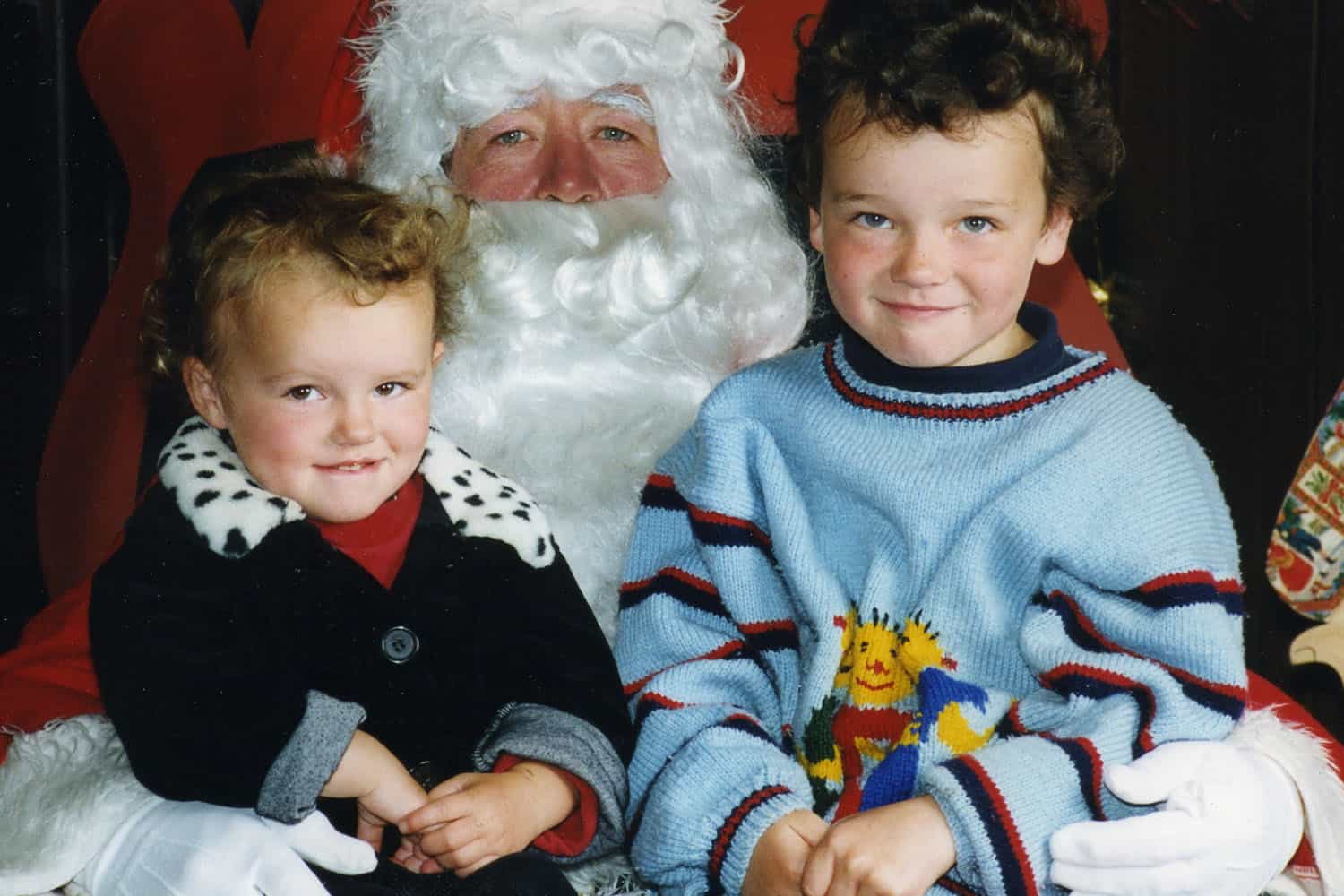
Children sitting on Father Christmas' knee.

The role of Santa in ECE – Some things you might want to consider before inviting the “big man in red” to visit your service

OPINION – November 17, 2025.

It’s beginning to look a lot like Christmas everywhere you go.

Lights are being strung up in front gardens. Shop window displays are adorned in tinsel and red and green ribbon. Christmas mince pies and new potatoes will soon start flying off supermarket shelves.

In ECE services you’re probably starting to hear children talk about what gifts they’re hoping to get from Santa this year. They might suggest writing a letter or sending a picture and wish list to the big man in red.

The festive season is full of wonder and excitement for young children. Keen to bring the “magic” into your place you might be planning on including some Christmas-themed crafts, baking, and music and songs

However, before you take things one step further and invite Santa to your service for a visit you might want to consider some of the implications of doing this.

As Aotearoa becomes an increasingly multicultural society, many children attending ECE come from non-Christian and non-Western backgrounds that may not celebrate Christmas.

So parents may be opposed to their children learning about Christmas and Santa in ECE. That’s why consulting with parents and caregivers when planning Christmas activities is probably a good idea.

Then there’s children’s safety to reflect on. The revelation by Stuff’s #MeTooNZ project that a grandfather who had been jailed for sex offences played Santa at an Auckland ECE centre’s Christmas parties in 2017 and 2018 shows that it’s important to remain vigilant about who is coming into contact with the tamariki in your care over the fun season. 

Children reportedly sat in the man’s lap for photos after he was acceped by the centre to play Santa without undergoing a police check.

Be mindful, also, of children’s development and general wellbeing.

While the concept of Santa bringing presents in a sleigh pulled by reindeer may be thrilling to a 5-year-old, to a 2- or 3-year-old the idea of sitting in the lap of a stranger whose face is obscured by a big white bread and hat might be terrifying!

Whatever decisions you make around what Christmas traditions to follow at your ECE service, make sure you have yourself a merry little Christmas. Let your heart be light.

Find more, go to:

Write to Santa and receive a reply
Here’s everything you need to know to support children in ECE to get their letters and pictures ready and share with Santa

Christmas Activities, Games, and Presents Children Can Make
Top tips and resources for ECE services

Recognising and responding to diverse families, and diversity in cultural and religious beliefs
Leave a Reply

Already subscribed?
ECE Newsroom

NZ’s own specialist ECE newsroom. 
Access national and local stories, in-depth analysis, & original commentaries.  

Membership Support for Teachers & Educators

(Comes with free Newsroom and Research access)

Membership Support for ECE Service Owners, Managers, & Community Organisations

(Comes with free Newsroom and Research access)

Researchers & Tertiary Education Libraries

Full access to over 25 years of ECE academic research articles – NZIRECE Journal.
Plus, guidance and resources on doing and publishing research

Has this been useful?  Give us your feedback.

You are welcome to add a link to this page on your website. Copyright belongs to the OECE so please do not copy any content without our written permission.

Information provided is of a general nature. It is provided ‘as is’, and we accept no liability for its accuracy or completeness. See our Terms and Conditions.

Related Posts

early childhood research journal online

Embedding Literacy in an Early Childhood Education Programme: A Look into Montessori

Children begin school with a range of pre-literacy skills that serve as the foundation for later reading achievement. These skills include phonological awareness, alphabet knowledge and vocabulary. The New Zealand early childhood curriculum Te Whāriki is non-prescriptive in terms of literacy and allows for early childhood centres to develop their

This is a member/subscriber only post. To access it, please see the message below for details on access and joining.

Read More »
boys play friends achievement

Providing for Boys’ Interests

Enter any early childhood setting and there is a good chance you will see some gendered play and behaviour.

Our profession is female dominated and early childhood settings can be feminised environments.

Equitable play and learning opportunities for girls is important. It is also important to be aware of and not miss the mark when it comes to boys’ particular needs.

This article discusses ways to achieve a balance of recognition and extension of boys’ gender identity, while ensuring that boys are exposed to a wide range of curriculum areas and skills to provide them with a strong foundation for their future education.

Ideas for activities and learning extensions are provided in this article for teachers who are working with boys aged 3- 5 years.

This is a member/subscriber only post. To access it, please see the message below for details on access and joining.

Read More »
child climbs tree with teacher at early childhood centre

Playground Risk Assessment

When the Health and Safety at Work Act was brought in concerns were expressed by the education sector. For example, does the Act mean children can’t climb trees in ECE anymore?

Then there’s NZS 5828: Playground Equipment and Surfacing to think about.

Well the good news is that it’s pretty much all good news.

In this article we’ll look at how risk assessment, the HSW Act and NZS 5828 can combine to develop safety approaches that recognise the goal of Te Whariki: To grow up as competent, confident learners and communicators, healthy in mind, body and spirit.

This is a member/subscriber only post. To access it, please see the message below for details on access and joining.

Read More »
teacher exploitation stress sad bullied work related injuries

Sick Leave Entitlement and Staff Faking Sickness or Taking Unscheduled Time Off

A minimum of 10 days per year for employers with an employer for 6 months or more is claimable. Employers may offer more than 10 days and many in the early childhood sector do. Employees can carry over 10 days of unused sick leave into the new year, and employers can choose to let employees carry over more.

But, how should you respond and wha

This is a member/subscriber only post. To access it, please see the message below for details on access and joining.

Read More »
NZ International Research in Early Childhood Education journal

Early Childhood Educators’ Workplace Well-being

Catherine Jones, Fay Hadley, Manjula Waniganayake and Melissa Johnstone. Macquarie University, New South Wales.

Full reference:Jones, C., Hadley, F., Waniganayake, M. & Johnstone, M. (2019). Early childhood educators’ workplace well-being: A case for using self-determination theory to understand and support workplace well-being in earl

This is a member/subscriber only post. To access it, please see the message below for details on access and joining.

Read More »
The Office of ECE

Share This Information

Table of Contents

Table of Contents

The Office of ECE Login

Take Action!

Help spread this vital ECE information, join our free social and email groups and become a member of OECE.

pay parity funding policy

1. Share This Information

2. Follow Our Social Pages

3. Get Regular Updates

Sign up to our free newsletters.

4. Become a Member