ECE centre where Minister announced regulation review had previously breached regulations

Search Newsroom Posts
Little School Maria Johnson and David Seymour - Regulation Review

Minister Announced Regulations Review at Little School in Khandallah Centre

NEWS/OPINION – June 13, 2025

The Wellington early childhood education centre from which David Seymour announced the ECE sector would be his new Ministry for Regulation’s first target had itself breached regulations 18 months earlier, the Office of Early Childhood Education has discovered. The Ministry of Education spent more than $35,000 supporting the service operator to address problems identified in the breaches, Ministry documents obtained by the OECE under the Official Information Act showed.

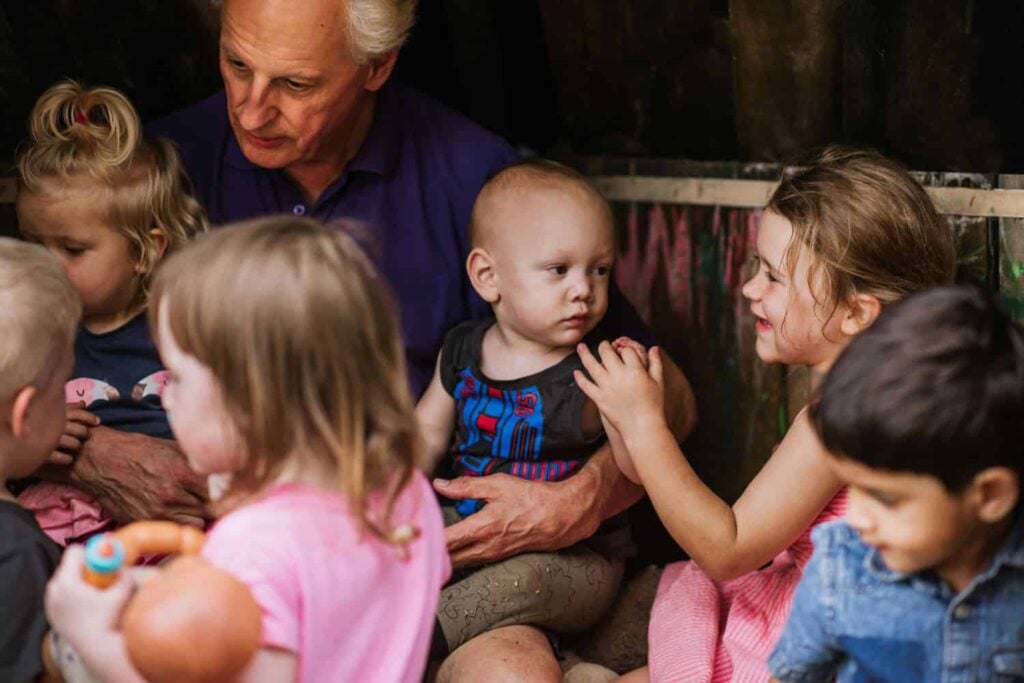
On June 5, 2024, Seymour posed for media photos with children at the Baroda Street Little School in Khandallah. That same morning he also held a press conference at the preschool, announcing a review into regulations governing the sector.

In a post on his Instagram page, alongside a photo of him reading tamariki a story, he wrote: “Parents want to know their child is safe and well cared for, but costs and waiting lists because of burdensome rules and regulations put ECE out of reach for many. So we’re going to review them.”

What he didn’t say was that in November 2022, the Ministry of Education had downgraded Baroda Street Little School (also known as Khandallah Little School 2), to a provisional licence for breaches of licensing criteria. 

Four other centres with the same owner were also put on provisional licences between September 2022 and April 2023.

The Minister’s choice of where to announce the review of ECE regulations is telling, because he’s repeatedly expressed his opinion that regulations obstruct ECE business.

In September 2022, nearby Khandallah Little School and Khandallah Nursery School had also been put on provisional licenses for respectively breaching 23 and 20 licensing conditions.

Churton Park Little School & Nursery also had its license downgraded to provisional for non-compliance in November 2022.

Then, St Heliers Little School’s license was updated from full to provisional after the Ministry identified non-compliance in April 2023.

Maria Johnson owns the Little School group. She is a qualified teacher, a former chair of the owner’s lobby group the Early Childhood Council and also runs an ECE consultancy business.

Peter Reynolds, the immediate past chief executive of the ECC, also has a connection to Little Schools.  In Ministry records, Reynolds is listed as a contact for: Khandallah Nursery School, Khandallah Little School 2, Khandallah Little School, and Churton Park Little School & Nursery.   

The ECC has been a vocal critic of the amount of regulation in the sector.

According to Ministry of Education documents, Johnson, management and staff of the Wellington Little School centres (the three Khandallah services and Churton Park Little School) completed Strengthening Early Learning Opportunities (SELO) programmes so that the ECE services could regain their full licenses.

These programmes cost the Ministry a total of $35,340. The Ministry could not split the cost down by each of the four individual services.

An education consultant, Judith Price, ran the programmes. 

In an email to the Ministry’s senior education advisor for ECE, Amy Pirie, on July 4, 2023, Price wrote that she was “starting to get real traction with Little Schools”.

In her final report on the Little Schools “cluster”, Price said: “This contract has ended on a high note… Some exciting mahi has happened; enjoyed the collaboration and on what we want to do rather than what we need to do”.

“We acknowledge the professionalism and dedication of the teams involved to engage in PL and attend PLD evening hui, zoom sessions, in centre and one on one dialogue to grow their teaching/professional practices.”

She told the Ministry, the professional development had focussed on:

  • Delivering Te Whāriki whilst valuing the cultural knowledge each whānau and ākonga bring to their education. 
  • Governance and management. 
  • Building leadership capability.
  • Building capability in te reo Māori and tikanga Māori practices and integrating this into curriculum delivery.

The Little Schools had turned its structured programme into a play-based curriculum, Price said.

A change in leadership structure at Little Schools part way through the SELO contract, and Johnson being overseas, had an impact on the progression of review and evaluation, the report noted: “Ongoing sickness and maintaining full staffing have been an ongoing dilemma, with new teachers coming in from overseas, without knowledge of Te Whāriki. This will make it challenging moving forward”.

All ECE services that are part of the Little School group have since regained their full licences. Khandallah Little School and Khandallah Nursery School did so on November 17, 2022. Khandallah Little School 2 and Churton Park Little School & Nursery followed suit on February 19, 2023, as did St Heliers Little School on February 20, 2024.

Along with the licensing records, the OECE asked the Ministry of Education for details of any complaints it had received about Khandallah Little School, Khandallah Little School 2 and Khandallah Nursery School since 2021.

The first of three complaints alleged that a child at Khandallah Nursery School was accidentally given breastmilk intended for another child. That was resolved in May 2021.

A separate allegation was made that Khandallah Little School withheld a child’s attendance records from a parent during an ongoing custody dispute being addressed in family court. That was resolved in May 2022.

A parent of children at Khandallah Little School 2 told the Ministry she had not received updates about her children’s learning and development and that injuries to them were not being recorded. She also alleged Khandallah Little School 2 used unpaid fees as a reason for terminating her children’s enrolment. That complaint was resolved in May 2023.

The OECE asked Little School group Maria Johnson and Seymour’s office detailed questions for this report. Neither of them responded to our request for comment.

Already subscribed?
ECE Newsroom

NZ’s own specialist ECE newsroom. 
Access national and local stories, in-depth analysis, & original commentaries.  

Membership Support for Teachers & Educators

(Comes with free Newsroom and Research access)

Membership Support for ECE Service Owners, Managers, & Community Organisations

(Comes with free Newsroom and Research access)

Researchers & Tertiary Education Libraries

Full access to over 25 years of ECE academic research articles – NZIRECE Journal.
Plus, guidance and resources on doing and publishing research

Has this been useful?  Give us your feedback.

You are welcome to add a link to this page on your website. Copyright belongs to the OECE so please do not copy any content without our written permission.

Information provided is of a general nature. It is provided ‘as is’, and we accept no liability for its accuracy or completeness. See our Terms and Conditions.

Related Posts

teacher wages, pay scales, in childcare and early childhood education

What ECE Teachers and Workers Earn: Pay, Benefits and Conditions

Anyone thinking about getting a job in ECE working in ECE or thinking about moving to a different service will find clear, practical information in this article about pay rates, employment conditions, and what to expect in different roles. It explains everything from starting salaries and pay‑step calculations to workplace rights, benefits, and how to recognise a supportive, professional environment.

Read More »
job description for early childhood teacher educator manager staff

Job Description for a Head Teacher, Room Leader, or Home-based Visiting Teacher

Job Description for a Head Teacher, Room Leader, or Home-based Visiting Teacher.

Here is a template to help guide you in preparing a job description that matches your service’s philosophy and reflects the position. This person will have additional responsibilities compared with other qualified and unqualified staff and educators.

If you wou

This is a member/subscriber only post. To access it, please see the message below for details on access and joining.

Read More »
NZ International Research in Early Childhood Education journal

Effective Transition to School: Integrating Philosophy, Pedagogy and Curriculum

Research on how primary school classrooms can support children’s transition from early childhood education to the school setting.

FULL REFERENCE: Postlewaight, G. (2018). Effective transition to school: Integrating philosophy, pedagogy and curriculum. NZ International Research in Early Childhood Education Journal, 21(1), 62 – 75.  

Log-in to read the full research paper below. Or order a pdf copy of the article from the main NZIRECE Journal page.

ABSTRACT: Successful transition from early childhood settings to primary school involves a triadic process between children and their families and whānau, the early childhood setting and the school. This case study examines the self-review and subsequent commitment to philosophical and pedagogical changes within one primary school’s transition classrooms, undertaken to ensure the most effective outcomes for children at the school during their time of change and uncertainty. It offers an overview of the metamorphosis from reflecting on transition to a wider vision for growth and development. A focus on learning through play and discovery as a key value led the school to envisage a framework of possibilities for future school-wide reflection and self-review. Research of family and whānau experiences of transition to the school and/ or teacher reflections on their learning and transformation would offer relevant feedback to the self-review.

KEY WORDS: Transition, relationships, learning through play, continuity, communities of learning.

BACKGROUND:

Nelson Park School is a primary school catering for years 1 – 6 (5 to 11 years old) children. The school is situated in Napier, Hawke’s Bay, Aotearoa New Zealand. The Nelson Park School Curriculum [NPSC] (2011) identifies ongoing reflection on pedagogical practice and the implementation of child-centred learning as being key aspects that enhance effective transitions for children. The school promotes continuous learning beginning with a strong focus on successful transition to school from early childhood education settings. The values and beliefs that underpin the culture of learning and teaching at the school encompass a holistic, inclusive approach that enables children to contribute as members of the learning community (NPSC, 2011).

This is a member/subscriber only post. To access it, please see the message below for details on access and joining.

Read More »
early childhood research journal online

“It is a Risk, But it is a Risk Worth Taking”: Early Childhood Teachers’ Reflections on Review of Practice Using an Approach of Practical Philosophy

FULL REFERENCE: Grey, A. (2015). “It is a risk, but it is a risk worth taking”: Early childhood teachers’ reflections on review of practice using an approach of practical philosophy. NZ Research in Early Childhood Education Journal, 18, 52 – 66.

Log-in to read the full research paper below. Or order a pdf copy of the article from the main NZIRECE Journal page.

ABSTRACT: This article discusses an approach to self-review where an early childhood teaching team reviewed the values that underpin teaching practice, rather than the behaviour demonstrated in teaching practice. This approach takes the form of practical philosophy or inquiry with others in order to critically examine teaching practice (Dahlberg, Moss & Pence, 2007). A small qualitative study was undertaken by one teaching team to reflect on their personal philosophy of teaching, and to negotiate, as a team, the values they wanted to underpin their teaching.  

The teachers valued participating in reflection and personal dialogue, but experienced some challenges. It was found that this approach can be a valuable method of self-review to heighten teachers’ individual self-awareness, to promote professional dialogue and greater understanding amongst the teaching team and to provoke teachers to reflect more critically on their teaching.

Key words: Self-review; practical philosophy; reflection; teaching inquiry. 

Introduction

Self-review is a common expectation within the early childhood education sector.  This expectation is outlined in the Registered Teacher Criteria 12 (New Zealand Teachers Council, 2010) that states: “teachers use critical inquiry to reflect on and refine values and practice, and respond to feedback from their colleagues”. Early childhood education documents have been published by the Ministry of Education that support the implementation of self-review, namely The quality journey: He Haerenga whai hua (Ministry of Education, 1999) and Nga Arohaehae whai hua: Self-review guidelines for early childhood education (Ministry of Education, 2006). This article takes the view that although these documents are useful as guidelines, alternative approaches to self-review and critical inquiry should also be instigated and trialled. It is argued that practical philosophy is one such approach to self-review and evaluation of teaching practice for early childhood education in Aotearoa New Zealand, and elsewhere.

This is a member/subscriber only post. To access it, please see the message below for details on access and joining.

Read More »
The Office of ECE

Share This Information

Table of Contents

Table of Contents

The Office of ECE Login

Take Action!

Help spread this vital ECE information, join our free social and email groups and become a member of OECE.

pay parity funding policy

1. Share This Information

2. Follow Our Social Pages

3. Get Regular Updates

Sign up to our free newsletters.

4. Become a Member