Playground Risk Assessment

Search in Service Provider
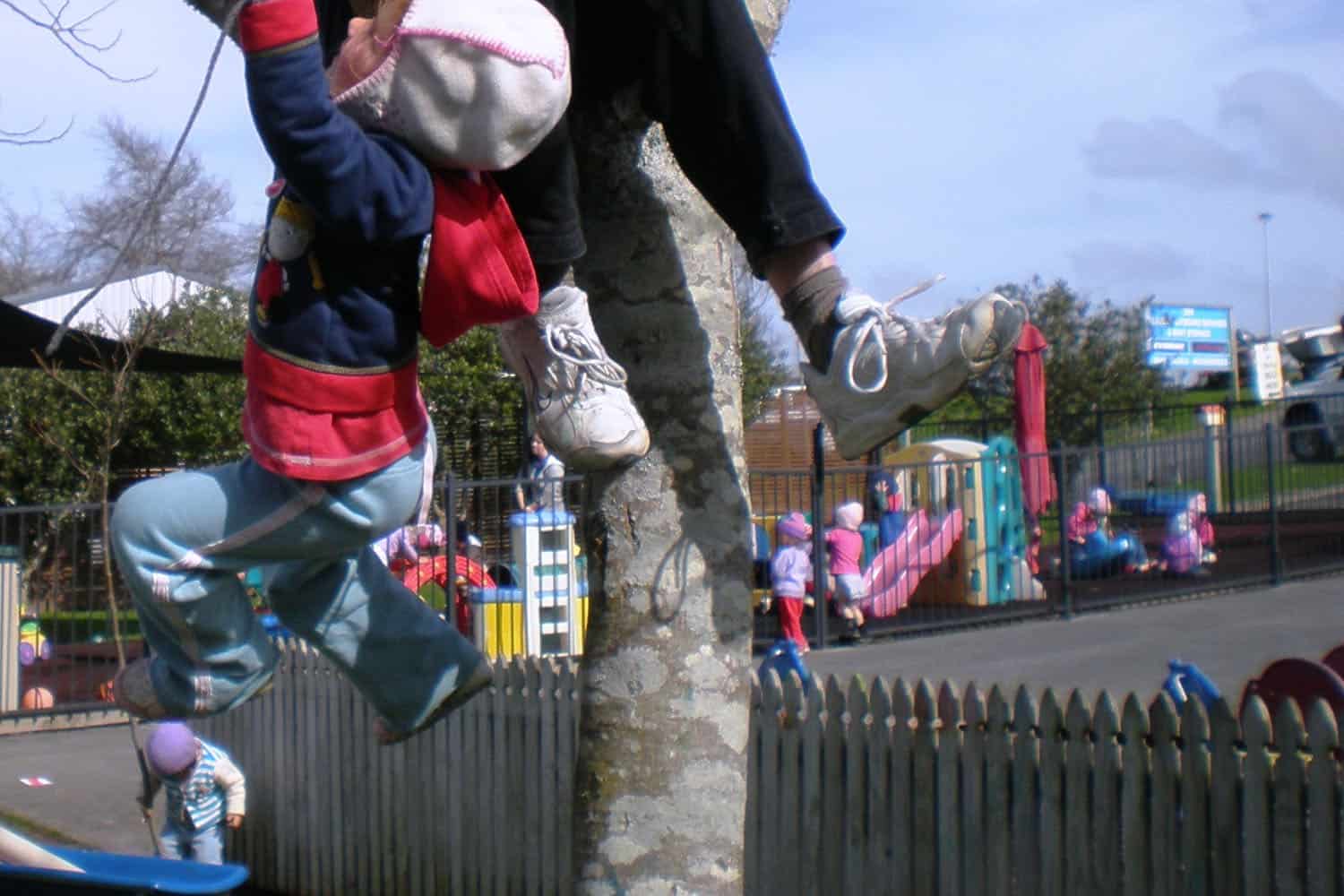
child climbs tree with teacher at early childhood centre

When the Health and Safety at Work Act was brought in concerns were expressed by the education sector. For example, does the Act mean children can’t climb trees in ECE anymore?

Then there’s NZS 5828: Playground Equipment and Surfacing to think about.

Well the good news is that it’s pretty much all good news.

In this article we’ll look at how risk assessment, the HSW Act and NZS 5828 can combine to develop safety approaches that recognise the goal of Te Whariki: To grow up as competent, confident learners and communicators, healthy in mind, body and spirit.

This is a member/subscriber only post. To access it, please see the message below for details on access and joining.
Already a Service Provider Member?

Not a member?  Service owners, managers, and community organisations may apply to join as a service provider.  

Five Reasons to Join Us
1. Marketing

It is prestigious to belong to the OECE. Membership is usually by invitation.  Online applications can be made if you think your service meets the criteria. To be a member a service must have as its first priority a focus on being high-quality for children and families.  It must also agree to follow the standards in the Code of Conduct for ECE Services.

Running a parent survey when you want to do one is simple – we handle it for you and provide you with a confidential copy of the results. We will also cover the cost of the survey.

Promoting your service online to parents is taken care of.  The OECE has partnered with the My ECE website and the ECE Parents’ Council Aotearoa to give members free advertising for their service.  For details directly contact My ECE

2. Professional

Free subscription access to the ECE Newsroom – your service provider member login will let you view everything in the ECE Newsroom

Complimentary access to over 25 years of published NZ and international research – your service provider member login gives you free access to the Research Library and support

3. Management

Management and ECE employment resources and advice will be at your finger-tips 24/7. We have so much available in the service provider area of our website – ranging from templates for policies, guidance on managing cashflow and debtors, staff drug use, negotiating pay with staff, and through to topics such as best sandpit design. 

We will make running a staff survey simple for you.  You can use our specially designed survey.  We collect the results and will provide you with a confidential report of the findings. (50% discount available to service provider members).

4. Representation

Did you know that the OECE meets personally and regularly with the Ministry of Education national team, and the regulations committee and other forums? 

Political leaders and journalists are able to use the OECE to gain deeper knowledge on a topic or issue, and we provide a sounding board for ideas and feedback.

Members have a direct line of communication with Dr Sarah Alexander, to bring to Sarah’s attention and discuss what’s affecting your service and community of children, families, and staff.

5. Value for Money

We are committed to keeping membership prices affordable and providing value for money. 

Membership rates start at just $250 for 12-months. Or join for 2 years for only $350.  For providers with multiple licensed services, the rates reduce per service the more licensed services you operate.  

Has this been useful?  Give us your feedback.

You are welcome to add a link to this page on your website. Copyright belongs to the OECE so please do not copy any content without our written permission.

Information provided is of a general nature. It is provided ‘as is’, and we accept no liability for its accuracy or completeness. See our Terms and Conditions.

Related Posts

teacher wages, pay scales, in childcare and early childhood education

What ECE Teachers and Workers Earn: Pay, Benefits and Conditions

Anyone thinking about getting a job in ECE working in ECE or thinking about moving to a different service will find clear, practical information in this article about pay rates, employment conditions, and what to expect in different roles. It explains everything from starting salaries and pay‑step calculations to workplace rights, benefits, and how to recognise a supportive, professional environment.

Read More »
early childhood research journal online

Three-year-old Children’s Visual Art Experiences

Three-year-old Children’s Visual Art Experiences.  

Julie Plows. University of Auckland, NZ.   

Full reference: Plows, J  (2015). Three-year-old children’s visual art experiences. NZ Research in Early Childhood Education Journal, 18, 37 – 51.

Original Research

Abstract

This art-based study investigated the verbal and

This is a member/subscriber only post. To access it, please see the message below for details on access and joining.


Read More »
child climbing ladder of fort in ECE playground

Designing An Early Childhood Study and Starting It!

Designing Your Study and How to Get Started

Here are articles we think will help advise you best on designing early childhood research and support you with helpful tips through any tough times.

Start by checking out all the published articles in the NZ-International Research in Early Childhood Education Journal on this website (over 25 years

This is a member/subscriber only post. To access it, please see the message below for details on access and joining.

Read More »
early childhood research journal online

Contents – NZ Research in ECE Journal, 2016, Vol. 19

This special issue examines equality and diversity in early childhood education, spanning inclusive science exploration, evolving coaching roles in early intervention, whole‑school language development, socio‑economic barriers to participation, whiteness scholarship, shared decision‑making, and photostory as a tool for capacity building.

Read More »
website ribbons

Rhythm Ribbons and Physical Movement

Rhythm Ribbons and Physical Movement. By Bronwyn Norman.

Bursting out in the beautiful sunny Autumn/Ngahuru afternoon our tamariki were ready to embrace their environment and interact with each other by choosing materials and playing games.

Fuelled by eating a healthy afternoon tea their bodies were ready to move. Tamariki were walking, ru

This is a member/subscriber only post. To access it, please see the message below for details on access and joining.
Read More »
iPad technology

Exploring Educator and Parent Perceptions of the Impact of Digital Technologies on Young Children’s Physical Literacies

Full reference: Davis, T. (2025). Exploring educator and parent perceptions of the impact of digital technologies on young children’s physical literacies. NZ International Research in Early Childhood Education Journal, 27, pp. 31-42.

Login to read the full research paper below. Or order a pdf copy of the article from the main NZIRECE Journal page.

ABSTRACT:
Digital technologies are increasingly present in early childhood settings, raising questions about their effects on young children’s physical literacy development. Physical literacy – encompassing physical competence, confidence, motivation, and understanding to engage in physical activity – is crucially developed in the early years. This article reports on a doctoral research project exploring how educators and parents perceive the impact of digital technology use on the physical literacies of children from birth to five years. A literature review highlights international and Australasian perspectives on digital technology integration in early childhood education and the concept of physical literacy in the early years, revealing a gap in research on stakeholder perceptions at this intersection. Bronfenbrenner’s Ecological Systems Theory and Vygotsky’s Sociocultural Theory provide the theoretical framework, situating children’s technology experiences within layered environmental contexts and sociocultural interactions. A qualitative, interpretive case study with a phenomenological lens is proposed, using semi-structured interviews with educators and parents in an Australian kindergarten and a long day care centre. The article argues that understanding adult perceptions can support more intentional, balanced integration of digital technologies.

Key words:  Digital technologies; physical literacy; teacher perceptions; parent perceptions.

Read More »
The Office of ECE

Share This Information

Table of Contents

Table of Contents

The Office of ECE Login

Take Action!

Help spread this vital ECE information, join our free social and email groups and become a member of OECE.

pay parity funding policy

1. Share This Information

2. Follow Our Social Pages

3. Get Regular Updates

Sign up to our free newsletters.

4. Become a Member