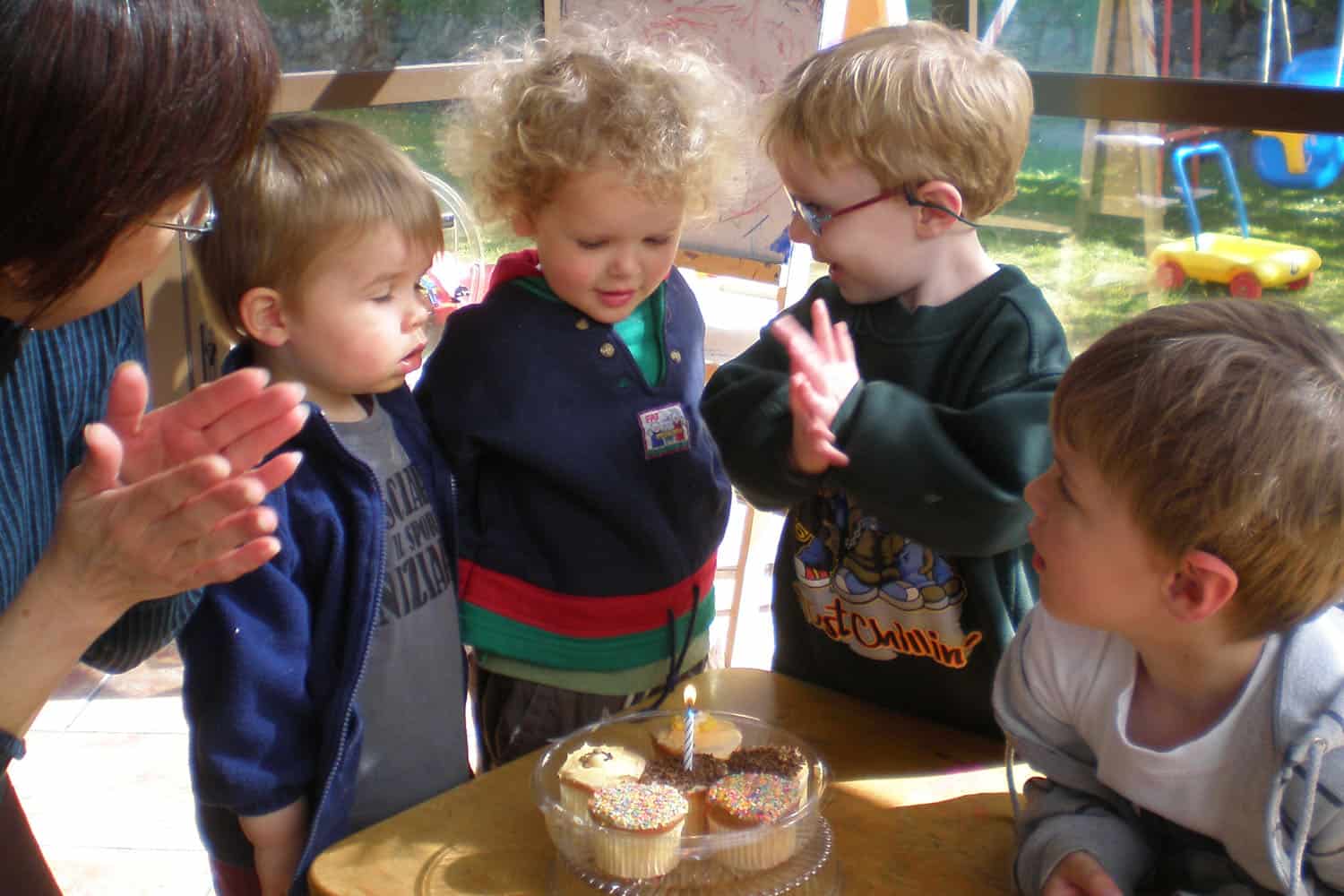
Nuances and Perceptions of Home-based Early Childhood Education

Search in Research
cake birthday celebration homebased

FULL REFERENCE: Davitt, G., Chellapan, L., & Keighron, C. (2025).  Nuances and perceptions of home-based early childhood education in Aotearoa New Zealand.  NZ International Research in Early Childhood Education Journal, 27, pp. 56-68.

ABSTRACT: Home-based early childhood education (HBECE) describes a type of early childhood education and care (ECE) that encompasses several widely recognised philosophies and pedagogical practices. Among psychologists, counsellors, therapists, and education professionals, there has been an increasing interest in researching HBECE. The aim of this research was to gain a broader view of the specific context, nuances, and perceptions of HBECE in Aotearoa New Zealand. Four focus group online interviews, with eighteen participants in total were held. The participants were service providers, visiting teachers, educators, and parents. From the interviews we identified benefits, challenges, and the overall perception of HBECE. Benefits focused on the family type environment, relationships, continuity of care, and small group size. Participants spoke of licensing and funding changes, namely: regulatory compliance, funding, and documentation. They perceived HBECE to be undervalued within the wider ECE sector and the community at large.

KEY WORDS:  Group size, continuity of care, home-based ECE, personalised learning, flexible childcare.

Log-in to read the full research paper below. Or order a pdf copy of the article from the main NZIRECE Journal page.

INTRODUCTION

Home-based early childhood education (HBECE) is distinct from centre-based early childhood education (ECE). The term “home-based education and care” was first developed in the 1970s to reflect the provision of education and care experiences for children in a familiar home environment. In Aotearoa NZ, HBECE is provided by an educator in their private home for one to four children. According to the Education Research Office (ERO) (2018), a key factor in the success of HBECE is the personalised service it provides.

This is a member/subscriber only post. To access it, please see the message below for details on access and joining.
Already a Research Subscriber?
Reasons to Subscribe
Tertiary education libraries and individuals.

Enjoy online access to full copies of the latest issues of the NZ-International Research in ECE journal and more than 25 years of past issues of peer-reviewed published articles.

You will also have access to the NZ Doctoral thesis (Ph.D, and Ed.D) and the NZ Master’s thesis directory of theses relevant to early childhood education and care.

For those who are new to doing research, thesis supervisors, and conference paper selectors, we have a range of articles to inform and support you.  These include a guide to ethics when doing, writing, and disseminating research; reviewing abstracts and conference submissions, and more.

Sign-up now

Are you a teacher educator or academic, a practitioner, or a policy advisor, who is keen to keep up with ECE research?

Maybe you are planning to do some research yourself? Or maybe you are advising and supervising students who are undertaking projects?

Enjoy unrestricted access to the hundreds of articles in the Research Area of our OECE website.

Choose your own username and password when you subscribe online. This will be your login for access.

Libraries can request IP address access for staff and students on the library site, instead of password access.  Please note that this is dependent on whether system settings at your end can support this.

Your investment

Personal research user membership – $79.00 for 12-months

Libraries and tertiary education institutions – $250.00 for 12-months

Please see and abide by the Terms & Conditions of membership.

Article copyright belongs to the OECE / ChildForum. You are welcome to add a link to this research article on your website.

Related Posts

teacher wages, pay scales, in childcare and early childhood education

What ECE Teachers and Workers Earn: Pay, Benefits and Conditions

Anyone thinking about getting a job in ECE working in ECE or thinking about moving to a different service will find clear, practical information in this article about pay rates, employment conditions, and what to expect in different roles. It explains everything from starting salaries and pay‑step calculations to workplace rights, benefits, and how to recognise a supportive, professional environment.

Read More »
NZIRECE Journal early childhood education research

Through the Eyes of the Puppet: Using Puppetry to Foster Children’s Sense of Wellbeing and Belonging

FULL REFERENCE: Karaolis, O. and Little, C. (2021). Through the eyes of the puppet: Using puppetry to foster children’s sense of wellbeing and belonging.  NZ International Research in Early Childhood Education Journal, 23(2), 52 – 62.

Log-in to read the full research paper below. Or order a pdf copy of the article from the main NZIRECE Journal page.

ABSTRACT: In studies of health, wellbeing and children with diverse abilities, the UN Convention on the Rights of the Child is often referenced due to its emphasis on the entitlement of all children to receipt of a “full and decent life” (United Nations, 1989, p. 7). The Convention argues that all children have the right to an education that celebrates their culture and identity, maximises individual ability and which recognises the rights of children as autonomous participants in decisions about their lives. Early childhood programmes serve a pivotal role in establishing a child’s sense of wellbeing, supporting a sense of belonging by communicating the message that all children and their families are valued members of the learning community. This article tells the research story of how puppetry was used as a tool to support educators in facilitating the engagement of children in their early childhood classrooms. It illustrates, how puppetry can actively support young children’s wellbeing by encouraging positive interactions, facilitating friendships, and providing opportunities for educators to express the value of every child.

Key words: Puppetry, puppets, wellbeing, belonging, inclusion, professional learning.

This is a member/subscriber only post. To access it, please see the message below for details on access and joining.

Read More »
money coins child

The ECE Fundraising Guide

Fundraising Guide.

Hi, can you please help me and my kohanga. I don’t know how or where to get funding for an outside playground!!!! This is my first time trying to get a grant…….I’m really on the fundraising committee but I just found out there is no funding committee so I’m giving it a go         

Morning teas, cake raffl

This is a member/subscriber only post. To access it, please see the message below for details on access and joining.

Read More »
parent drop off child at preschool or kindy

Charging Parents for Late Pick-ups and Early Drop-offs

Late Fee.

Should you charge a late fee for late collection of children?  Or charge the parents of children who arrive early?

Some early childhood services ‘fine’ parents to try to deter them from leaving their child outside of hours that are booked. Other services charge late and early drop-off fees to generate  extra reven

This is a member/subscriber only post. To access it, please see the message below for details on access and joining.

Read More »

Are you teaching and caring for children or studying for an ECE qualification?

If you are, that’s great!   Join us now, and become a teacher member.

The Office of ECE

Share This Information

Notice for Students and Library Users
You are able to access all Journal Research articles under the library's subscription. But unless you hold a personal membership you are missing out on a whole lot of valuable teaching and policy articles and other important information. At home, or on your mobile device that is not linked to your institution or library's internet or subscription - click on the JOIN button below.

Table of Contents

Table of Contents

The Office of ECE Login

Take Action!

Help spread this vital ECE information, join our free social and email groups and become a member of OECE.

pay parity funding policy

1. Share This Information

2. Follow Our Social Pages

3. Get Regular Updates

Sign up to our free newsletters.

4. Become a Member