The Education of Young Gifted Children and Resource Issues

Search in Teacher
Structural indicators of quality ECE and thinking

Gifted Children Identification and Resource Issues. Research Report by Valerie Margrain & Sarah Alexander.

An online survey was conducted on the education of young gifted children. The purpose of the survey was to gather information and sector views to help inform policy and practices for young gifted children and those who work with them.

This is a member/subscriber only post. To access it, please see the message below for details on access and joining.
Already a Teacher Member?

Are you teaching and caring for children or studying for an ECE qualification?

If you are, that’s great!   Join us now, and become a teacher member.

Five Reasons to Join Us
1. Professional recognition

It is prestigious to belong to the OECE – you can skite about it! 

Ask us for an OECE Member Certificate, to include in your professional portfolio as proof you are engaged in reading and professional learning that advances your understanding of the relationship between practice and outcomes for children.

2. Extra benefits

No need to pay a subscription fee for access to NZ’s specialist ECE Newsroom – your member login will let you view everything in the ECE Newsroom. 

No need to pay to access the best NZ and international research – your member login gives you free access to the Research Library and support. 

3. Professional growth and no-judgement help

Teaching resources and advice on probably everything you can think of, including what to wear as a teacher, how to ask for a pay raise, identifying child behaviour causes and responding to needs, new play activity ideas, etc., etc.  all of this is at your finger-tips 24/7 whenever you need help or advice – login to view. 

4. Representation

Did you know that the OECE meets personally and regularly with the Ministry of Education national team, and the regulations committee and other forums? 

Political leaders and journalists are able to use the OECE to gain deeper knowledge on a topic or issue, and we provide a sounding board for ideas and feedback.

The OECE promotes safe working environments for teachers.  We also promote the absolute need for full pay parity with school teachers for all certificated teaching staff working in teacher-led centres and in home-based, and whether permanently or casually employed. 

5. Value for Money

We are committed to keeping membership prices affordable and providing value for money. 

Teacher membership is just $89 for a full year, or save by joining for 2 years.

Has this been useful?  Give us your feedback.

You are welcome to add a link to this page on your website. Copyright belongs to the OECE so please do not copy any content without our written permission.

Information provided is of a general nature. It is provided ‘as is’, and we accept no liability for its accuracy or completeness. See our Terms and Conditions.

Related Posts

Structural indicators of quality ECE and thinking

Revisiting Rhizomatic Connections and Relationships in Young Children’s Thinking and Meaning-Making

FULL REFERENCE: Cliffe, J. (2023).  Revisiting rhizomatic connections and relationships in young children’s thinking and meaning-making. NZ International Research in Early Childhood Education Journal, 25, pp. 57 – 70. 

Log-in to read the full research paper below. Or order a pdf copy of the article from the main NZIRECE Journal page.

ABSTRACT: The purpose of this article is to (re)explore possibilities within children’s thinking, connecting and meaning-making. Connections and relationships play a significant role in how children develop their thinking and draw sense and meaning from the world around them. Yet, too often they are overlooked in favour of more traditional approaches to knowledge production and pre-determined curricula priorities. These more traditional and predetermined approaches, not only risk marginalising children’s learning but may lead to early childhood practitioners (ECPs) missing or (mis)construing the potential and possibilities within encounters. This article critically (re)examines a vignette of practice in a pre-school setting in the South West of England, between a group of 4-year-old children, an early years researcher, an ECP and a bean. Through a Deleuzoguattarian (1987) lens concepts of rhizomes, assemblage and nomad, will be employed to problematise the vignette and reflect on/with multiple lines of flight, to accommodate alternative understandings of the encounter. Drawing on current social and relational pedagogic literature, the paper will consider the importance of connections and relationships in children’s meaning-making processes. A deeper exploration of the complex nature of children’s thinking, will support ECPs in understanding how children understand and make sense of their world.

KEY WORDS:  Relationships and connections, rhizomatic thinking, early childhood education, Deleuze, Guattari.

INTRODUCTION…MAPPING A CONTEXT…

This article seeks to (re)examine an episode of practice to (re)consider alternative interpretations that may open-up the potential and possibilities within children’s thinking, connecting and meaning-making. The vignette in this article, was collated from an observation and field notes drawn from previous research (Cliffe, 2017). Within the original project, data was collected via observations, field notes, practitioner interviews, children’s drawings and craft work. Children’s thoughts and views were gathered through shoulder-to-shoulder interviews. Drawing on a Deleuzoguattarian (1987) rhizomatic lens, the original data was iteratively analysed to uncover many possible pathways to sense and meaning in children’s thinking and connecting. The initial research was presented as fulfilment for an MA dissertation (Cliffe, 2017) and further interpretations were published in subsequent work (Cliffe & Solvason, 2019).

This is a member/subscriber only post. To access it, please see the message below for details on access and joining.

Read More »
NZ International Research in Early Childhood Education journal

Prioritising the Development of Spirituality in Early Childhood Education and Care

FULL REFERENCE: Lees, N. M. (2019). Prioritising the development of spirituality in early childhood education and care.  NZ International Research in Early Childhood Education Journal. Special issue presenting position papers, 22(2), pp. 35 -42.

Log-in to read the full research paper below. Or order a pdf copy of the article from the main NZIRECE Journal page.

ABSTRACT: Increasingly the inclusion of spiritual learning in early childhood pedagogy is being examined and discussed by many professionals in the field. It presents with a range of definitions and is frequently linked with religion. When applying it to early childhood education and care it can be summarised as experiences and explorations that come from the individual being which embrace connections and relationships. Spirituality encompasses beliefs and endeavours of creativity and curiosity. Studies in spirituality have made links with spiritual connections and learning, and a stronger sense of wellbeing. Those linked with spiritual practices and behaviours showed greater resilience and a greater quality of life.  When considering the increasing incidences of poor mental health for young people in a rapidly changing society, spirituality can be viewed as an opportunity to decrease the occurrence of these disorders. Connections between religion and spirituality have created a barrier for its application in a range of services despite its ability to be applied without these inferences. Societies’ interpretations of spirituality are likely to be influenced by these perceived links and until a clearer distinction is made, its inclusion in early childhood education will continue to be superficial. To provide better outcomes for individuals in the future, we need to prioritise and promote the importance of spirituality in early childhood education and care.

Key words: Spirituality, wellbeing, resilience, pedagogy.

Introduction

One of the issues affecting early childhood education and care globally, which is currently receiving increased attention, is the inclusion and significance of spirituality in learning programs (Watson, De Souza, & Trousdal, 2014). Spirituality is cited in the Australian Early Years Learning Framework as a component of holistic learning and as a part of wellbeing and identity learning outcomes (Department of Education, Employment and Workplace Relations [DEEWR], 2009). The Early Years Learning Framework defines spirituality as “a range of human experiences including a sense of awe and wonder, and an exploration of being and knowing” (DEEWR, 2009, p. 46). There is strong support through research and literature for the positive and long-lasting impact that spiritual learning has on individuals and the greater society (Baumann et al., 2014; Blatt, Butler, Kogan, & Puchalski, 2014; Lin, 2014; Lockwood & Thomas, 2009). This paper makes a case for educators to take responsibility to prioritise spirituality in early childhood education and care.

This is a member/subscriber only post. To access it, please see the message below for details on access and joining.
Read More »
asthma spacer

Asthma

Asthma is quite common among children but many of them will grow out of it as they get older. Around one in four New Zealand children show signs of asthma at some time.

This article tells you about the known causes of asthma, treatments, when a child may or may not have asthma, and practical ways of improving the home and early childhood centre

This is a member/subscriber only post. To access it, please see the message below for details on access and joining.
Read More »
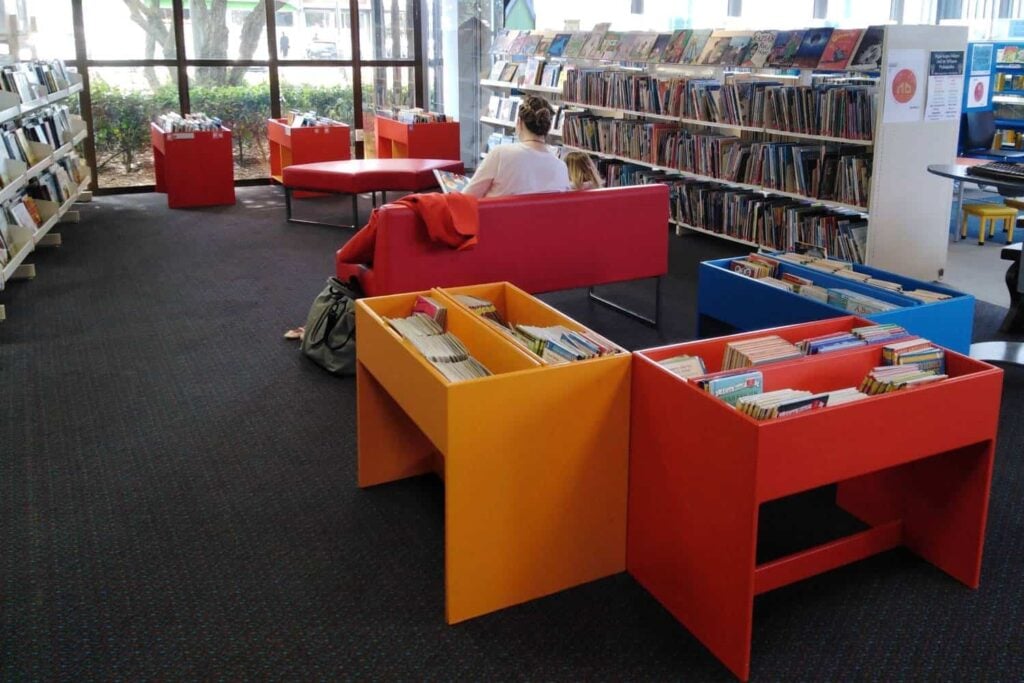
take children to visit the library

Library Trip

Library Trip with Children.

Going to the library is a great activity to do either on your own with a child or small group of children, or as a group visit with your early childhood service.

Maybe you will walk there. Or take the bus? It might be something that you do weekly or monthly to take out and return books.

The most obvious thing y

This is a member/subscriber only post. To access it, please see the message below for details on access and joining.

Read More »
men in childcare

Getting Men to Apply for Your Staff Vacancy

Male job applicants.

We are advertising for a teacher and have received some quality applications so far, but no applications from males. We would love to have a male applicant or two – any ideas of how we could achieve this?Service provider

Dr Alexander replies:  

Finding male staff can be difficult because there are disproportionat

This is a member/subscriber only post. To access it, please see the message below for details on access and joining.
Read More »

Share This Information

Table of Contents

Table of Contents

The Office of ECE Login

Take Action!

Help spread this vital ECE information, join our free social and email groups and become a member of OECE.

pay parity funding policy

1. Share This Information

2. Follow Our Social Pages

3. Get Regular Updates

Sign up to our free newsletters.

4. Become a Member