How the Ministry of Education Failed ECE During the Auckland Floods

Search Newsroom Posts
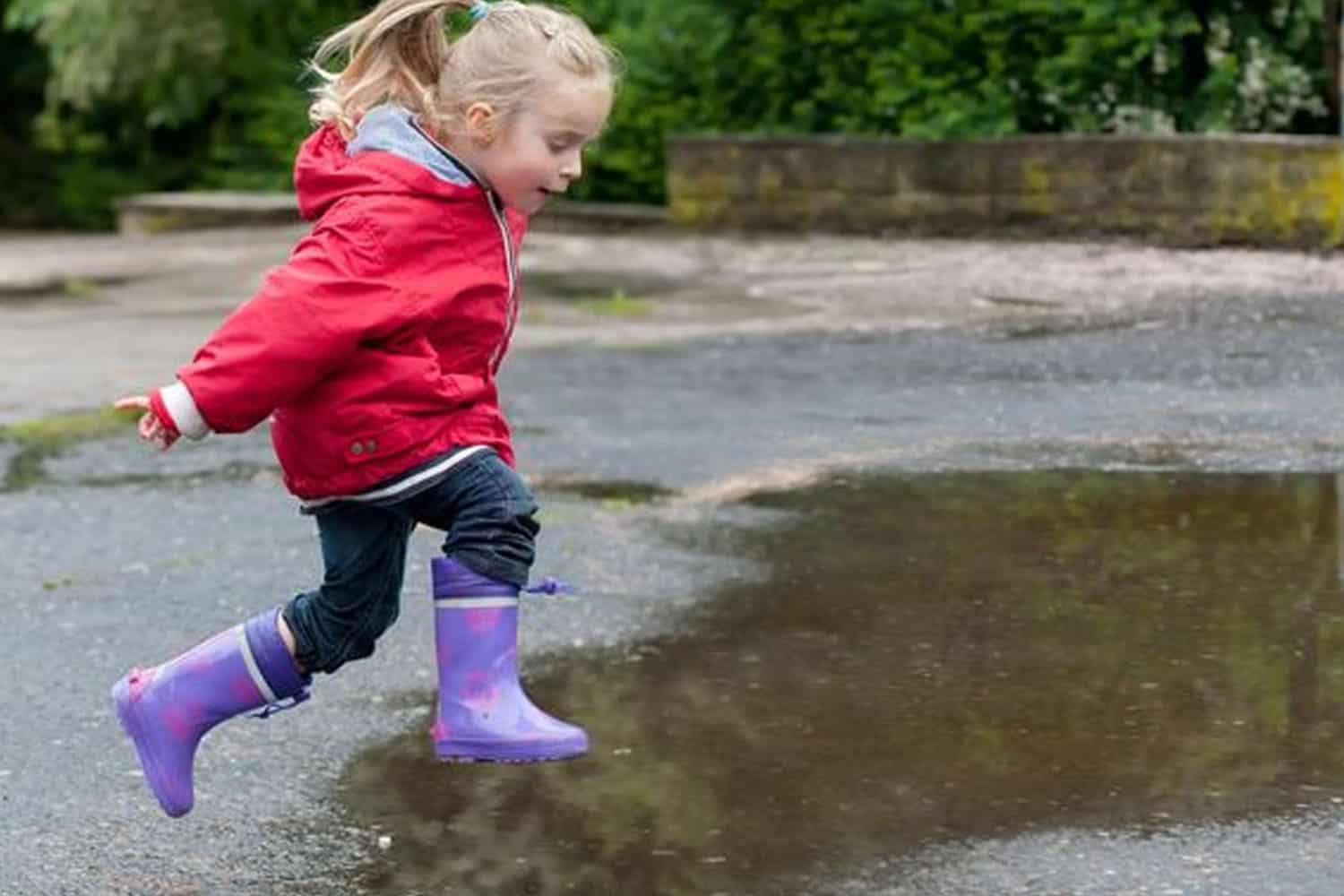
Puddle jumping after the rain

March 26, 2023.
Dr Sarah Alexander

OPINION: The Ministry of Education appears to have done a better job with communications of the potential impact of Cyclone Gabrielle compared with the Auckland region flooding event on Jan 27.  

Having said that it does not change the fact that the Ministry’s performance in the handling of a sudden event (i.e., the Auckland flooding event) was inadequate. Cyclone Gabrielle was very well predicted. Everyone had advance warning to get ready as it was about to hit the upper North Island. 

A Stuff review of official documents relating to schools revealed how poor communication by the Ministry of Education during the Auckland floods hurt schools. The order to shut schools was messy: “the original announcement said schools would be closed until that Friday, but neglected to say that decision would be reviewed daily.” “The ministry said it was “asked to take action” by the National Emergency Management Agency (NEMA). However, the documents revealed NEMA did not ask the ministry to take action but “merely provided information on which the direction [to close schools] was based”.

ECE Services also experienced poor communication from the Ministry of Education as well as being at the receiving end of Ministry bias against the ECE sector, with the Ministry treating ECE as child-minding/ early learning.

Problems included that the Ministry did not:

  1. Give ECE services and teachers a heads-up that they were considering announcing a closure of education services and suggest what they needed to start thinking about and doing to prepare should such an announcement be made.
  2. Show the ECE sector the same respect as schools. 
  3. Stick at least to the period it said the closure would apply – instead it subsequently announced it would be doing daily reviews.
  4. Make sure the instructions it provided were:
    • relevant to the event and not to COVID-19,
    • given with the directive and not days after the fact, and
    • comprehensive in covering what services, teaching staff, and families needed to know and do.

This article isn’t about putting the foot into the Ministry on what it didn’t do right at the time, but an examination of where improvement still needs to be made. 

That the Ministry of Education had issued a directive for all schools and ECEs in the Auckland region to close for one week was something that most ECE services, teaching staff and families, first learnt of from the media in the evening news on Jan 30. It left ECE service providers scrambling to make sense of the directive and trying to contact all teaching staff and families before the morning.

It would have been better had the Ministry pre-warned services earlier in the day that it was waiting on further advice and direction (such as from Emergency Management) and that a decision would be announced soon.  Along with warning services about a possible eminent announcement, it could have given advice on preparations that services could put into place.

The Ministry’s second blunder was that when it directed all education entities in the Auckland region to close it added that “early learning services may allow the physical attendance of any child whose parent needs them to do so.” It showed it subscribed to an old stereotype of ECEs as places where children are babysat for parents who need them, and not as places for children’s education like schools. 

Early learning’ is code for ‘childminding’.  In using the moniker ‘early learning’ the Ministry communicates that ECEs are not of equal status to schools in our education system.  This is shameful coming from the Ministry today, because as long ago as 1986 childcare was transferred to the Department of Education and the sector become professionalised.  Early childhood services today provide a national education curriculum and have early childhood trained teachers who are professionally recognised.

The Ministry’s third error was causing stress to services that had informed parents and put staffing plans in place to be closed until Feb 7 because on Feb 1 it then went and lifted the directive and told services they could only continue to claim emergency funding for remaining closed until Feb 7 if they had flood damage or if their local community had been seriously affected by flooding (Ministry special bulletin, 1 Feb 2023). 

There were early childhood centres that did not suffer flood damage and their local community was not seriously affected, but they had staff from outside of the local area who could not get to work and staff who had school-aged children to care for at home. There were home-based educators who were able to be ‘open’ as they had no damage but couldn’t do so because other members of their immediate and extended families were home and therefore group size was too large.

The fourth error was not properly outlining expectations and requirements relevant to the emergency at the same time as issuing the directive to close, covering such things as not asking staff to take unpaid leave or use their paid leave, managing parent fees, and school-aged children attending with parents. Instead, the Ministry told ECE services to stay open for the children of essential workers, as under COVID-19 (Ministry special bulletin, 30 January 2023) even though the reason for closure was very different to the COVID-19 Alert Level setting requirements. The language of COVID-19 and “essential workers” was not relevant.  On Feb 3 two days after lifting the directive, the Ministry detailed its expectations for staff pay that covered just two circumstances: when the service was closed, or if the service was open but staff could not get into work.

The measure of a government department perhaps is not that they don’t do things right the first time round, but that they perform vastly better after the first time. 

The question remains how well will the Ministry perform next time a sudden event occurs rather than a well-foreshadowed disturbance? 

We invited the Ministry to reply.

Ministry of Education Reply

Thanks for providing the opportunity to reply.

In particularly challenging events, like the recent storms, we know that education leaders want definite messages. The delivery of our initial communication about school and ECE closures during the Auckland storm was not as good as we expected of ourselves.

In emergency situations, coordinated decisions responding to immediate and developing risks need to be made in real time and communicated promptly and effectively, based on the best available information.

Concise and regularly updated communications is important to all our ECE services and schools/kura.

Ngā mihi nui
Karen Walfisch
(General Manager Design, Ministry of Education)

Already subscribed?
ECE Newsroom

NZ’s own specialist ECE newsroom. 
Access national and local stories, in-depth analysis, & original commentaries.  

Membership Support for Teachers & Educators

(Comes with free Newsroom and Research access)

Membership Support for ECE Service Owners, Managers, & Community Organisations

(Comes with free Newsroom and Research access)

Researchers & Tertiary Education Libraries

Full access to over 25 years of ECE academic research articles – NZIRECE Journal.
Plus, guidance and resources on doing and publishing research

Has this been useful?  Give us your feedback.

You are welcome to add a link to this page on your website. Copyright belongs to the OECE so please do not copy any content without our written permission.

Information provided is of a general nature. It is provided ‘as is’, and we accept no liability for its accuracy or completeness. See our Terms and Conditions.

Related Posts

teacher wages, pay scales, in childcare and early childhood education

What ECE Teachers and Workers Earn: Pay, Benefits and Conditions

Anyone thinking about getting a job in ECE working in ECE or thinking about moving to a different service will find clear, practical information in this article about pay rates, employment conditions, and what to expect in different roles. It explains everything from starting salaries and pay‑step calculations to workplace rights, benefits, and how to recognise a supportive, professional environment.

Read More »
toddler chalk drawing on ground

Nearly 500 complaints about ECE services made to Ministry, but we don’t really know what they were about

The Ministry of Education received 481 complaints about ECE services in 2024, but the content of the complaints has not been made public.

The Office of Early Childhood Education has been trying to obtain detailed information about complaints against ECE services from the Ministry of Education and encourage transparency in its response to complaints for many years.

This year, the Ministry finally agreed to provide broad data, which the OECE has analysed.

Comment on the value of complaints and the Ministry of Education’s management of complaints and transparency is provided.

This is a member/subscriber only post. To access it, please see the message below for details on access and joining.

Read More »
learning stories children looking at their photos

Curriculum Policy

Use and adapt the following curriculum policy to suit your service and meet regulatory requirements.

Your curriculum policy must be consistent with the curriculum framework and be informed by assessment, planning, and evaluation (documented and undocumented) that demonstrates an understanding of children’s learning, their interests, whānau, and life contexts.

As well as providing a curriculum policy template for you, we’ve included the questions the Ministry of Education commonly asks and focuses on when it is checking an ECE service’s curriculum policy and implementation.

RATIONALE:
To ensure the process of planning, evaluating and delivering a localised curriculum is consistent with

This is a member/subscriber only post. To access it, please see the message below for details on access and joining.

Read More »
running, rugby, soccer and football games with young children

Soccer World Cup / FIFA 11 June – 19 July 2026

This article is written to cover teaching and learning on rugby or soccer during either the rugby or the soccer world cup times.

When NZ has success in international soccer or rugby it captures our whole nation’s interest. We celebrate the All Whites, Football Ferns, All Backs and Black Ferns.

The way the world affects New Zealand has been a

This is a member/subscriber only post. To access it, please see the message below for details on access and joining.

Read More »
NZ International Research in Early Childhood Education journal

Delineating and Reconciling Perspectives on Quality in NZ Early Childhood Services

Research on differences in perspectives on quality and evaluation held by managers, teachers and parents at early childhood centres.

FULL REFERENCE: Zhang, Q. (2018). Delineating and reconciling various perspectives on quality in New Zealand early childhood services. NZ International Research in Early Childhood Education Journal, 21(1), 76 – 87.  

ABSTRACT: In the context of evaluation of the quality of an early childhood service, tension can be created when internal stakeholders (e.g., manager, teachers, and parents) have a different perspective on what constitutes quality compared to an external evaluation authority. This study aims to delineate such perspectival differences and explore approaches to mediating the tensions. Data is comprised of individual interviews with 27 participants from nine early childhood services (one manager, one teacher, and one parent from each service) in a North Island city of New Zealand as well as the relevant Education Review Office documents. A combination of theoretical thematic analysis and deductive qualitative analysis captures three areas of difference in perspective between the sampled early childhood services and Education Review Office documents: level of compliance, appropriateness of practice, and robustness of evaluation. In an attempt to exemplify a multiple-lens approach to addressing the three areas of difference, three theoretical lenses are considered: the self-review framework, practical hermeneutics, and critical pragmatism.

Key words: Early childhood, quality, evaluation, multiple perspectives.

INTRODUCTION

Quality early childhood education has become a priority policy area for many jurisdictions in the world (Fenech, 2011; Jackson, 2015; Logan, Press, & Sumsion, 2012). Although quality of an early childhood service is traditionally viewed to be measurable against a set of universally applicable standards (e.g., Harms, Clifford, & Cryer, 2005), more recent literature highlights its value-laden and contextual nature (Dahlberg, Moss, & Pence, 2007; Dalli, et al., 2011). Researchers recognise that different stakeholders may have different perspectives on quality of early childhood services, as vividly expressed in the parody ‘quality is in the eye of the beholder’ (Farquhar, 1993; Pence & Moss, 1994). In the context of quality evaluation of early childhood services, this can create tensions for both teaching practice and quality evaluation, particularly when a consensus cannot be reached. The present study explores ways to ‘deal with’ the tensions.

Quality and quality evaluation of early childhood services in international contexts

This is a member/subscriber only post. To access it, please see the message below for details on access and joining.

Read More »
The Office of ECE

Share This Information

Table of Contents

Table of Contents

The Office of ECE Login

Take Action!

Help spread this vital ECE information, join our free social and email groups and become a member of OECE.

pay parity funding policy

1. Share This Information

2. Follow Our Social Pages

3. Get Regular Updates

Sign up to our free newsletters.

4. Become a Member