Group Size and ECE Quality: How Poor Regulation Fails Children
Dr Sarah Alexander
May 11, 2011
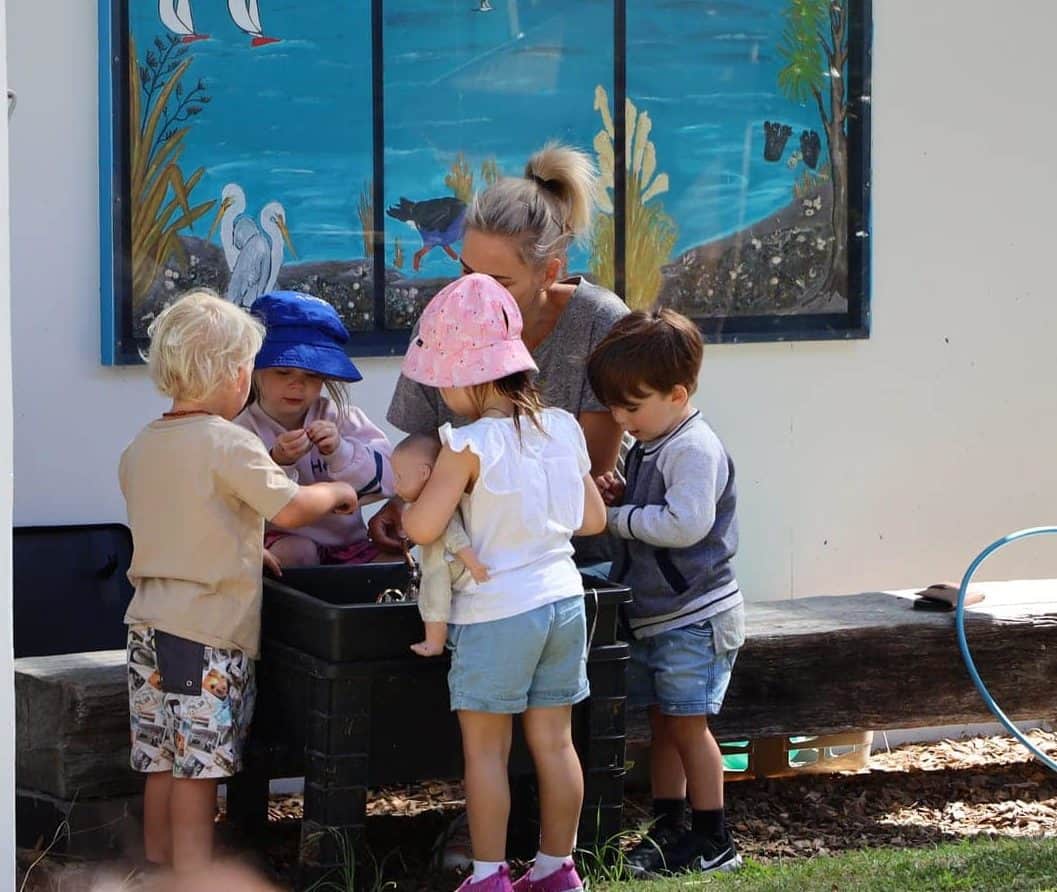
Group size refers to the number of children who interact together with the same teachers in a defined space, and research consistently shows that small groups are essential for responsive relationships, healthy development, and high‑quality ECE. New Zealand’s regulations allow the total licence size to function as the de facto group size, a practice that runs counter to international evidence and undermines efforts to ensure quality early childhood education for children.
Definitions
Licence size refers to the total number of children a centre is legally permitted to have on its premises for education and care, as specified on its Ministry of Education licence.
Group size refers to the number of children who are cared for together within a centre, interacting with the same teachers in their own designated space or classroom.
Licence Size as a Substitute for Group Size Regulation
In New Zealand, licence size has effectively acted as a stand‑in for group size regulation. Unlike many other countries, New Zealand does not regulate group sizes within early childhood centres. As a result, the maximum number of children allowed on a licence often becomes the maximum number who may be grouped together in practice.
How Group Size Affects Teaching and Learning
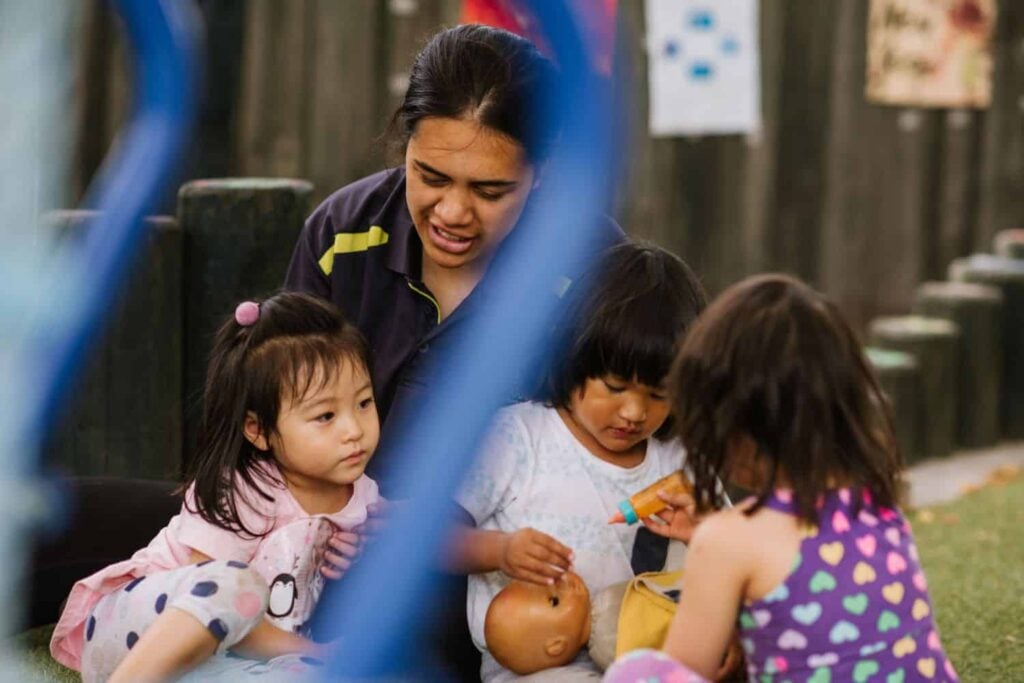
Research shows that group size has a significant impact on both children and teachers. In one study comparing kindergarten groups of 45 children with groups of 30, teachers reported clear negative effects in the larger groups. Children were more easily overwhelmed, had to compete for space, equipment, and teacher attention, and struggled to engage meaningfully in activities.
Teachers found it harder to work with individuals or small groups, and their interactions with children became less positive. Head teachers described their role as shifting toward crowd management, and they felt they had lost the quality of interaction they previously enjoyed. Although the adult‑child ratio remained the same at one to fifteen, the larger group size still had a marked impact on what teachers could offer and how children experienced the environment (Renwick and McCauley, 1995).
A Controversial Regulation Change
From 1 July 2011, early childhood centres and hospital‑based programmes may be licensed for up to 150 children aged from birth to six, or up to 75 infants and toddlers under two years. This change has generated considerable controversy.
Reasons for Concern
- A licence for 150 children or 75 infants effectively becomes the new maximum group size, since group sizes are not separately regulated.
- Within the early childhood profession, these numbers are widely regarded as far too large to support quality practice.
- The change conflicts with a substantial body of research showing that small group sizes are essential for responsive interactions, children’s health, positive learning outcomes, and secure attachment for infants.
- Previous Ministry of Education consultations in 2004 and 2008 did not show support for increasing licence size. The 2011 announcement came as a surprise to most of the sector, apart from one political lobby group representing mainly commercial childcare interests.
Political Rationale
The decision to increase licence size, without introducing group size regulations to offset potential negative effects, appears to have been driven by two goals:
- Reducing compliance and staffing costs for operators with multiple licences on the same site, thereby limiting criticism of the Government’s funding freeze.
- Encouraging providers to expand capacity and create more childcare places to support participation targets.
The former Minister of Education has outlined this rationale in the video below, explaining the decision to change licence size and, by extension, increase group size in early childhood centres.
(Click on the arrow play button to listen)
The Minister explains the regulation change for centre licence size as a practical benefit for centre owners who currently hold multiple licences on the same physical site. Moving to a single licence will reduce paperwork and lower administrative costs. What is not acknowledged, however, is that there are no rules limiting the size of groups within the new licence number, and that services with more than 150 children on one site will still need to apply for additional licences.
The increase from 50 to 150 children, and from 25 to 75 infants and toddlers, represents a very large jump in child numbers. It also means that each child will need to become familiar with many more adults as part of being in a much larger group. For as long as childcare and daycare regulations have existed in New Zealand, the maximum licence size has been set at 50 children aged from birth to six, and up to 25 infants and toddlers. Even these limits have long been considered high. For example, kindergartens, which primarily cater for preschoolers, have historically limited their group sizes to between 30 and 45 children.
Staff child ratio and group size indicators are two of the best indicators for determining the quality of a child care program. These two indicators significantly effect many other health and safety issues, such as the transmission of disease being greater when there are more children and adults present. These two indicators improve the caregiving behaviors of staff and the safety of children. And on the mental health and school readiness side, more secure attachments occur with higher staff child ratios and smaller group sizes.
(Fiene, 2002)
Previous Ministry of Education Consultation Indicated Larger Numbers Were Not Wanted
During the Early Childhood Education Regulatory Review in 2004, the Ministry of Education proposed separating licence size from group size. The Ministry suggested moving away from treating the two as identical and instead introducing specific regulations to ensure small group sizes within centres, regardless of the overall licence number.
As part of this proposal, the Ministry pointed to Te Whariki , New Zealand’s early childhood curriculum, as evidence supporting the need for separate group‑size regulation. Te Whāriki emphasises relationships, responsive interactions, and environments where children are known well by adults all of which are more difficult to achieve in very large groups.
Infants should not be exposed to too many new faces or situations. (Te Whariki)
Feedback was asked on the following proposal to introduce new regulation for group size:
- 12 would be the maximum number of children under 1 year of age
- 20 would be the maximum number of children aged between 1 and 2 years
- 30 would be the maximum number of children aged 3 years and older
Of the submissions received by the Ministry from the sector and other interested parties, the spilt between those who agreed (34%) and those who disagreed (38%) was quite close. This was a difficult question, or perhaps even a poorly worded question, to ask. The question combined two issues: group size and the introduction of a new age band for 1 to 2 year olds (there are only 2 age bands in NZ early childhood education regulation one for under 2s and one for over 2s).
At the time of the 2008 ECE Regulations Review in answer to a question of whether government should regulate for maximum centre licence size, the Ministry received 275 responses in support of regulating maximum centre size and 78 responses against. Thus the majority wanted regulatory limits on the number of children. In relation to feedback received from parents consultation meetings support for the idea of bigger being better was not found.
What parents wanted was for early childhood services to be places where everyone knew their child’s name.
“Overall parents felt there should be regulations for maximum centre size and that the maximum centre size should ideally be between 30 and 50 children at any one time. Despite adult-child ratios, parents felt that in smaller centres all staff would be familiar with their child and more able to offer one-on-one attention. Parents expressed concern about the potential of ‘battery processing’ in larger centres” (ECE 2008 regulations review summary report).
Parents said that multi-site licences should not be provided and that while some of the licensing requirements are transferable (e.g. enrolment policies) and could be used for multi-site providers during the licensing process, each physical site should be licensed individually to ensure that it meets requirements.
Survey Results on Centre Licence Size
An independent online survey of 450 people showed strong opposition to increasing centre licence size. Notably, most respondents involved in services with more than one licence (services that could financially or administratively benefit from the change) were also opposed. Their main concern was that the regulation did not appear to support the best interests of children or staff.
The Minister of Education’s office initially appeared unaware that, while the change might reduce bureaucracy and lower costs for larger services, it also carried significant risks. These included potential negative effects on children’s health, learning outcomes, and relationships, as well as possible financial pressure on smaller, locally owned centres.
The Minister received a summary of the survey findings and the key issues raised. A reply was provided, which the Minister is comfortable being shared publicly – read the Minister’s response. In this response, the Minister acknowledged the need to address potential problems arising from the regulation change and stated that ministry officials have been directed to provide strengthened guidance to support high quality in larger centres, including information on group size.
There is plenty of guidance available for ministry officials in the international literature on the vital necessity of limiting group sizes within the larger centre population and on the optimal sizes, physical space for, and staffing arrangements for groups.
See the article by journalist Rachel Grunwell in the NZ Herald newspaper, click here …
Regulations for Group-Size
Standards for group size, staff training and qualifications, and adult‑child ratios are the three core pillars of early childhood regulation in many countries. New Zealand currently regulates staff qualifications and adult‑child ratios, but it does not regulate smaller group sizes within the overall centre population.
Below are two examples of group size requirements used in Australia.
New South Wales – regulations for group size in early childhood centres
- if the children are under 2 years of age, in groups of not more than 12,
- if the children are 2 or more years of age but under 3 years of age, in groups of not more than 16,
- if the children are 3 or more years of age but under 6 years of age and do not ordinarily attend school, in groups of not more than 20.
Australian Capital Territory (ACT) Children’s Services Standard – the maximum allowable size of groups in early childhood centres:
- 15 children for children aged birth to two years;
- 20 children for children aged between two to three
- years;
- 33 children for children aged three to five years; and
- For mixed age groups or family grouping, the maximum group size for the youngest child must be adhered to unless otherwise approved in writing by the licensing authority.
New Zealand early childhood regulation:
- 150 children aged birth to six years; and
- 75 children aged birth to two years.
The Office of the Children’s Commissioner in an inquiry into the non-parental education and care of infants and toddlers has recommended that the Minister of Education direct her officials to provide advice on:
Making a regulation that limits group size to no more than 8 under two-year-olds for purposes of supporting responsive and stimulating interactions. (p. 13 summary report “Through their Lens”, 2011)
Comments from members about Licence and Group Size in Early Childhood Centres
I think that there definitely needs to be regulation around a group size. To give the “information” to a centre is all well and good… but, unless every teacher in a centre is very uninformed in ece matters, they will already know that smaller groups are better! For example, I know that under-2’s should be in a group size of less than 10, yet I supervised a centre that had 13 under-2’s. Why? Because management (who also knew about small group sizes and who were committed to quality ece) claimed we HAD to have that many in order to break even. Giving more information about quality ece wouldn’t have influenced their decision on that group size… but having regulations around it would have influenced it!
There must be regulation around group size. From an acoustic point of view alone, the more children in a learning space the higher potential for excessive noise and harmful levels of nose to develop. Apart from the potential damage to the aural health of children (and of course staff) excessive noise which degrades speech and oral communication presents serious educational concerns for children at a time when speech and oral communication development is critical and risks are highest from middle ear infections. Furthermore it will be to the serious detriment of autistic children who are mainstreamed in early childhood centres if forced into large noisy learning spaces. They struggle enough as it is and to place them in large noisy overstimulating environments is debilitating, cruel and a degradation of their rights to an education. We as parents may have no choice but to keep them at home.
Isn’t it a shame that the government will be putting OUR future generation of children through an institution at such a precious and young age. I am lucky to work in the public sector where our centre wouldn’t consider having more than 10 under twos. On the other hand the poor children who are unfortunate enough to have to attend a centre that does, will be exposed to these ridiculous group sizes. It is evident through research that optimal learning happens for children in an environment where they have quality relationships with their peers and teachers, and they are planned for in partnership with families… HOW can teachers HONESTLY know all of the children, where they are at, and where they need to go to next? And, how can they begin to know the families personalities, cultures, values and beliefs???
Absolutely disgraceful that so called ‘educated’ people can make this decision. Seems like the education of our next generation is as simple as running a farm!!
These are our babies that deserve better than this.
Surely staff ratios are more important than group sizes.
I agree with Gavin – staff ratios are more important. Otherwise it would be logical to assume that the smallest Universities create better educational outcomes than the largest. How can that be so?
How can you possibly compare early childhood centre sizes with University classes???
The Children’s Commissioner has recommended that group size for infants not exceed 8!! I would like to see this around 9 so that the ratios of teachers to infants could be 1:3.
That number is impossible for teachers to cope with especially babies under two, we’re talking about 3 month olds. I don’t think the government in this country is promoting quality ECE.
I think child numbers need to be capped and the numbers suggested for both under 2s and overs are laughable. I think Big business is playing a part in this push, making profits out of families and children yet again. Staff ratios need to be in line with research. Serious consideration for the damage to hearing for both children and staff in such large noisy environments has not even been mentioned. In my experience smaller is better for children. I have been lucky to experience both a small and large group settings, and I surmise children in larger groups tend to have more behavioral problems due to noise, space, lack of teacher contact, and teacher stress.