Insights from the Playgroup Movement: Equality and Autonomy in a Voluntary Organisation

Search in Research
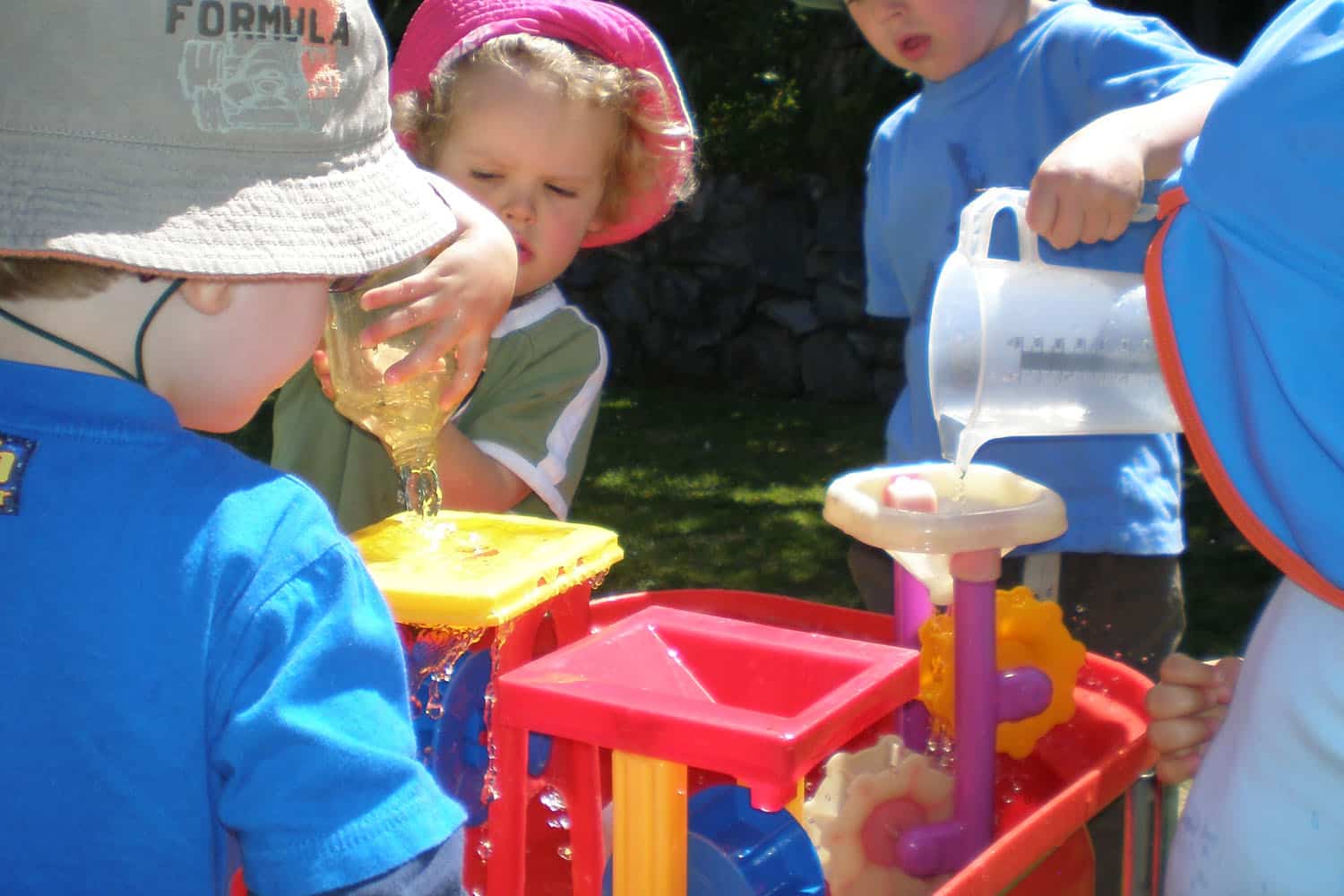
sun protection and children with sunhats engaged in waterplay in home-based ECE
book review 3

Insights from the Playgroup Movement: Equality and Autonomy in a Voluntary Organisation by Ann Henderson (Editor).

The past histories of early childhood services are often written up in a way that make for good bed time reading if you want to go to sleep quickly. 

This book on the British playgroup movement is something different and to be treasured. 

It’s not boring, it’s not just a collection of facts and recollections and it’s not a book that can be easily forgotten once read. 

As the reader turns each page a message unfolds that if we are to make any real progress today for children and the society we live in we really need to be open to learning about and taking lessons from the experiences and values of the past.

The Pre-school Playgroups Association which founded the playgroup movement survived in its original form for 30 years and then it changed and became the Pre-school Learning Alliance in 1995.   In “Insights from the Playgroup Movement” we are taken back in time to discover the principles upon which the playgroup movement was founded and how it operated in the days when the organisation was one of volunteers as opposed to being one that uses volunteers.

Those were the days when decisions about educational provision could be made with the child in mind, and not on adult needs, government votes or economic imperatives.

Lots of people contributed to the book and the writing was done by a team of writers most of whom had been involved in a playgroup in their personal lives or had professional associations with it.  Each writer took a different issue or aspect of the movement to produce the book which is strongly coherent due probably in no small part to the skill of Editor Ann Henderson.  The writers include Mary Bruce, Linnet McMahon, Sue Griffin, Meg Burford, Sheila Shinman, Charlotte Williamson, Jill Faux, along with Dame Gillian Pugh who contributed the Forward.

There are many ideas, tips and arguments to reflect on in the book – too many to mention here.   But among these are thoughts that are very topical issues in today’s context of early childhood education provision about:

  • Who manages and management style.  The members themselves were the people with the information, the power and the opportunity to make happen what they wanted.  There was no hierarchy.  There were no bosses.  And the principle of ‘moving on’ ensured that no one held too much power for too long and gave new playgroup parents opportunities for learning and satisfaction that earlier playgroup parents experienced.
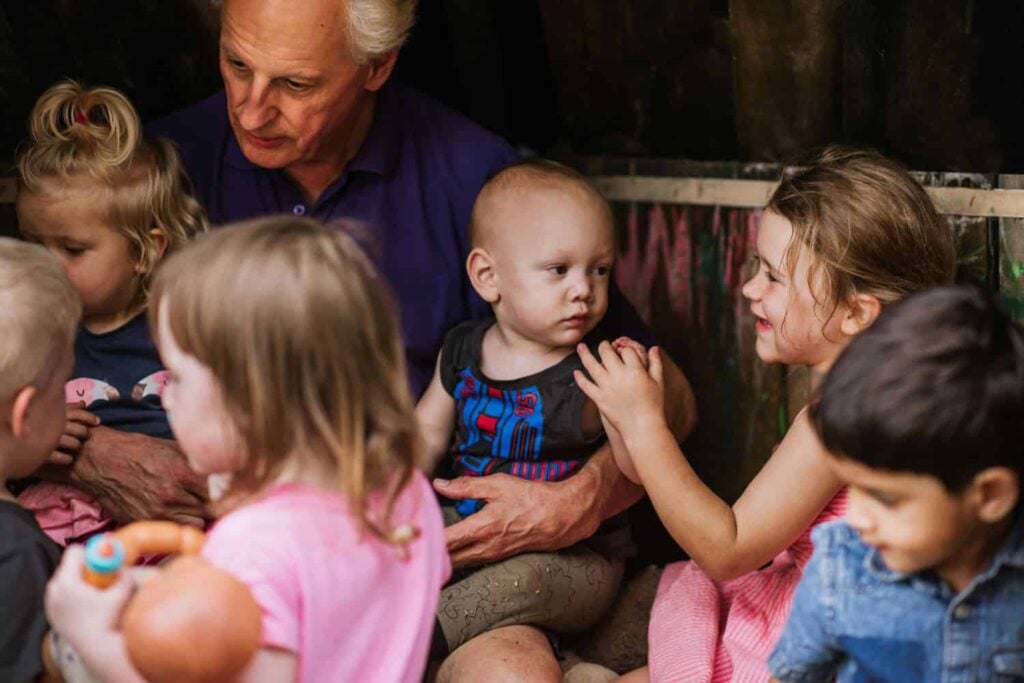
  • Locking children out or involving them in the world of adult work.  The parents ran the playgroups with their children alongside them.  Children were given knowledge of adults’ work which has become rare today as parents drop off their children at the start of the day and come back from work later in the day.
  • Creating community support.  Playgroups can be a means of re-creating a community for families and children to be part of and to belong to, and for parents and children community and not isolation is important for health and happiness.
  • What makes for school success?  Parents who develop responsibility for their child’s education and realise they have an essential role to play in it have children who are more likely to do well at school and beyond. Early childhood education intervention is only effective in the long-term in as much as it leads to children going back to better parents and better home-life and this is something that the playgroup model seemed to achieve very successfully.
  • Courses for learning or qualifications for credentials.  Today’s focus in early childhood education is on professionalism and qualification.  In the early playgroup movement days the focus was on what the course members’ needed to learn about it. Course content and teaching was arranged so as to build on course members’ experience and knowledge rather than about judging abilities and progress.

“Insights from the Playgroup Movement” is a book that will be of particular interest to people who are involved in adult learning, early childhood education, community development, social development and early childhood policy advice and planning.

ISBN 978-1-85856-503
Published in 2011 by Trentham Books
Email: [email protected]

Leave a Reply

Already a Research Subscriber?
Reasons to Subscribe
Tertiary education libraries and individuals.

Enjoy online access to full copies of the latest issues of the NZ-International Research in ECE journal and more than 25 years of past issues of peer-reviewed published articles.

You will also have access to the NZ Doctoral thesis (Ph.D, and Ed.D) and the NZ Master’s thesis directory of theses relevant to early childhood education and care.

For those who are new to doing research, thesis supervisors, and conference paper selectors, we have a range of articles to inform and support you.  These include a guide to ethics when doing, writing, and disseminating research; reviewing abstracts and conference submissions, and more.

Sign-up now

Are you a teacher educator or academic, a practitioner, or a policy advisor, who is keen to keep up with ECE research?

Maybe you are planning to do some research yourself? Or maybe you are advising and supervising students who are undertaking projects?

Enjoy unrestricted access to the hundreds of articles in the Research Area of our OECE website.

Choose your own username and password when you subscribe online. This will be your login for access.

Libraries can request IP address access for staff and students on the library site, instead of password access.  Please note that this is dependent on whether system settings at your end can support this.

Your investment

Personal research user membership – $79.00 for 12-months

Libraries and tertiary education institutions – $250.00 for 12-months

Please see and abide by the Terms & Conditions of membership.

Article copyright belongs to the OECE / ChildForum. You are welcome to add a link to this research article on your website.

Related Posts

teacher wages, pay scales, in childcare and early childhood education

What ECE Teachers and Workers Earn: Pay, Benefits and Conditions

Anyone thinking about getting a job in ECE working in ECE or thinking about moving to a different service will find clear, practical information in this article about pay rates, employment conditions, and what to expect in different roles. It explains everything from starting salaries and pay‑step calculations to workplace rights, benefits, and how to recognise a supportive, professional environment.

Read More »
blanket tent inside play winter

Freezing Cold Centre

Low Indoor Room Temperature. Opinion article. By an early childhood teacher (name withheld). As a teacher I never thought I would find myself having to

Read More »
boys play friends achievement

Boys Educational Underachievement

This article looks at arguments around boys and educational underachievement and proposes that early childhood teachers should take education to where the boys are at. UK education expert Tim Kahn, gives an example of how an early childhood teacher put aside her initial feeling to forbid boys from following their play interest and en

This is a member/subscriber only post. To access it, please see the message below for details on access and joining.

Read More »
boys play friends achievement

Starting School – What Helps According to Parents

Parents On Children Starting School.

Starting school is a major milestone in any child’s life but it can be stressful, and the success or otherwise of the transition period between childcare or preschool can set the tone for a child’s academic career.

However while the focus is often on getting the child ready to start school, it can al

This is a member/subscriber only post. To access it, please see the message below for details on access and joining.

Read More »
child head down and upset

Medication Issues and Behavioural Disorders

Medication Issues and Behavioural Disorders.

Back in the day, disruptive children who acted out or caused problems around the house were usually deemed to be badly behaved and would have been given a clip round the ear or told to get on with things.

In today’s society, however, things have changed.

When a child is badly behaved, of

This is a member/subscriber only post. To access it, please see the message below for details on access and joining.

Read More »

Are you teaching and caring for children or studying for an ECE qualification?

If you are, that’s great!   Join us now, and become a teacher member.

The Office of ECE

Share This Information

Notice for Students and Library Users
You are able to access all Journal Research articles under the library's subscription. But unless you hold a personal membership you are missing out on a whole lot of valuable teaching and policy articles and other important information. At home, or on your mobile device that is not linked to your institution or library's internet or subscription - click on the JOIN button below.

Table of Contents

Table of Contents

The Office of ECE Login

Take Action!

Help spread this vital ECE information, join our free social and email groups and become a member of OECE.

pay parity funding policy

1. Share This Information

2. Follow Our Social Pages

3. Get Regular Updates

Sign up to our free newsletters.

4. Become a Member