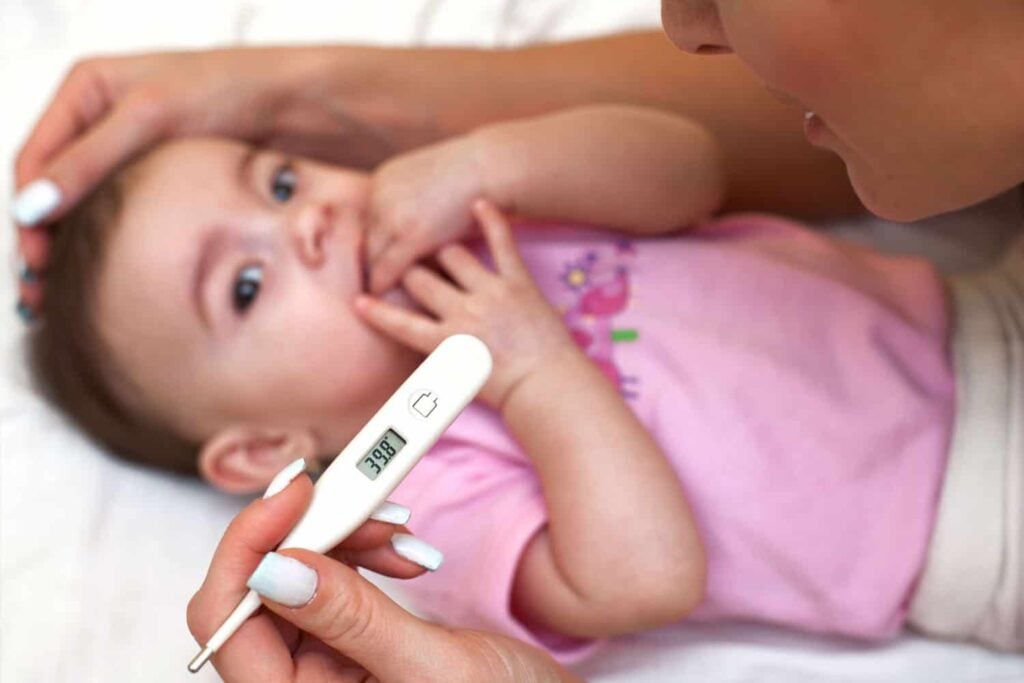
Bullying by Children as Young as 2 Years

Search in Teacher
behavioural disorders

Bullying by Children as Young as Two.

Children bullying another child is not uncommon, and it happens in early childhood centres and homes. Around one in ten children experience being bullied or picked on as a consistent experience from age two years, according to findings of a longitudinal study.

Here we will look at: Should a child be called a bully? What is bullying? Examples of bullying. What’s normal and how adults can stop bullying from developing in the first place

This is a member/subscriber only post. To access it, please see the message below for details on access and joining.
Already a Teacher Member?

Are you teaching and caring for children or studying for an ECE qualification?

If you are, that’s great!   Join us now, and become a teacher member.

Five Reasons to Join Us
1. Professional recognition

It is prestigious to belong to the OECE – you can skite about it! 

Ask us for an OECE Member Certificate, to include in your professional portfolio as proof you are engaged in reading and professional learning that advances your understanding of the relationship between practice and outcomes for children.

2. Extra benefits

No need to pay a subscription fee for access to NZ’s specialist ECE Newsroom – your member login will let you view everything in the ECE Newsroom. 

No need to pay to access the best NZ and international research – your member login gives you free access to the Research Library and support. 

3. Professional growth and no-judgement help

Teaching resources and advice on probably everything you can think of, including what to wear as a teacher, how to ask for a pay raise, identifying child behaviour causes and responding to needs, new play activity ideas, etc., etc.  all of this is at your finger-tips 24/7 whenever you need help or advice – login to view. 

4. Representation

Did you know that the OECE meets personally and regularly with the Ministry of Education national team, and the regulations committee and other forums? 

Political leaders and journalists are able to use the OECE to gain deeper knowledge on a topic or issue, and we provide a sounding board for ideas and feedback.

The OECE promotes safe working environments for teachers.  We also promote the absolute need for full pay parity with school teachers for all certificated teaching staff working in teacher-led centres and in home-based, and whether permanently or casually employed. 

5. Value for Money

We are committed to keeping membership prices affordable and providing value for money. 

Teacher membership is just $89 for a full year, or save by joining for 2 years.

Has this been useful?  Give us your feedback.

You are welcome to add a link to this page on your website. Copyright belongs to the OECE so please do not copy any content without our written permission.

Information provided is of a general nature. It is provided ‘as is’, and we accept no liability for its accuracy or completeness. See our Terms and Conditions.

Related Posts

Children supported in their Maori cultural development - learning a haka.

Noho Marae – What’s involved and making the most out of your overnight stay at a marae

If you’ve attended noho marae before, you will likely have some knowledge of the pōwhiri or mihi whakatau process, and of the specific tikanga of the marae.

If it’s your first time, you may feel nervous and keen to ensure you know what to do, to show respect to the haukainga. 

Noho marae are a unique and powerful experience of learning and connectedness. 

Many ECE teams attend noho marae. This may be for professional development, team building, wānanga, connecting with tangata whenua or all of these reasons! Noho marae are also usually included in initial Teacher Education programmes. 

Pōwhiri Process

Pōwhiri are important welcoming ceremony which welcome manuhihi onto a marae.

This is a member/subscriber only post. To access it, please see the message below for details on access and joining.

Read More »
bus trip outing

Research as a Journey: The New Researcher as a First-Time Traveller

Research as a Learning Journey. By Michael Gaffney. Published in NZ Research in Early Childhood Education Journal, 2002, Vol. 5, pp. 1-11 

Beginning the Journey

This paper uses journey as a metaphor, and to a lesser extent problem solving, to provide a framework for understanding the activity that more early childhood practitioners are

This is a member/subscriber only post. To access it, please see the message below for details on access and joining.
Read More »
FamilyBoost childcare tax rebate helping families with ECE costs

Ko Tau Rourou Ko Taku Rourou ā Kua Mārama Shared Understandings and Reflection on Wairua

Reflections on Wairua. By Ngaroma Williams and Michelle Anderson with peer-review by Dr Mere Skerrett.

We came to write this article through asking questions, seeking clarification, providing each other examples of our own experiences, and then highlighting what these experiences look like using teaching and learning narrative approaches

This is a member/subscriber only post. To access it, please see the message below for details on access and joining.
Read More »
Early Childhood Council ECC and David Seymour relationship

Lobbying in ECE – Who has the Minister’s, and the Ministry of Education’s ear?

Since becoming associate education minister and taking over the ECE portfolio after the 2023 general election, David Seymour has met with ECE sector groups and representatives about 30 times (that equates to more than once a month, on average).

While on the surface that figure might make it seem like he’s engaging with the key stakeholders of the sector regularly, when you comb through his ministerial diaries more thoroughly you’ll see the same names pop up again and again.

Read More »
early childhood research journal online

“It is a Risk, But it is a Risk Worth Taking”: Early Childhood Teachers’ Reflections on Review of Practice Using an Approach of Practical Philosophy

“It is a risk, but it is a risk worth taking”: Early childhood teachers’ reflections on review of practice using an approach of practical philosophy.

Anne Grey. AUT University, NZ.

Full reference: Grey, A. (2015). “It is a risk, but it is a risk worth taking”: Early childhood teachers’ reflections on review of practice usin

This is a member/subscriber only post. To access it, please see the message below for details on access and joining.
Read More »

Share This Information

Table of Contents

Table of Contents

The Office of ECE Login

Take Action!

Help spread this vital ECE information, join our free social and email groups and become a member of OECE.

pay parity funding policy

1. Share This Information

2. Follow Our Social Pages

3. Get Regular Updates

Sign up to our free newsletters.

4. Become a Member