Regulation review recommendations contravene children’s rights, says international ECE regulation expert

Search Newsroom Posts
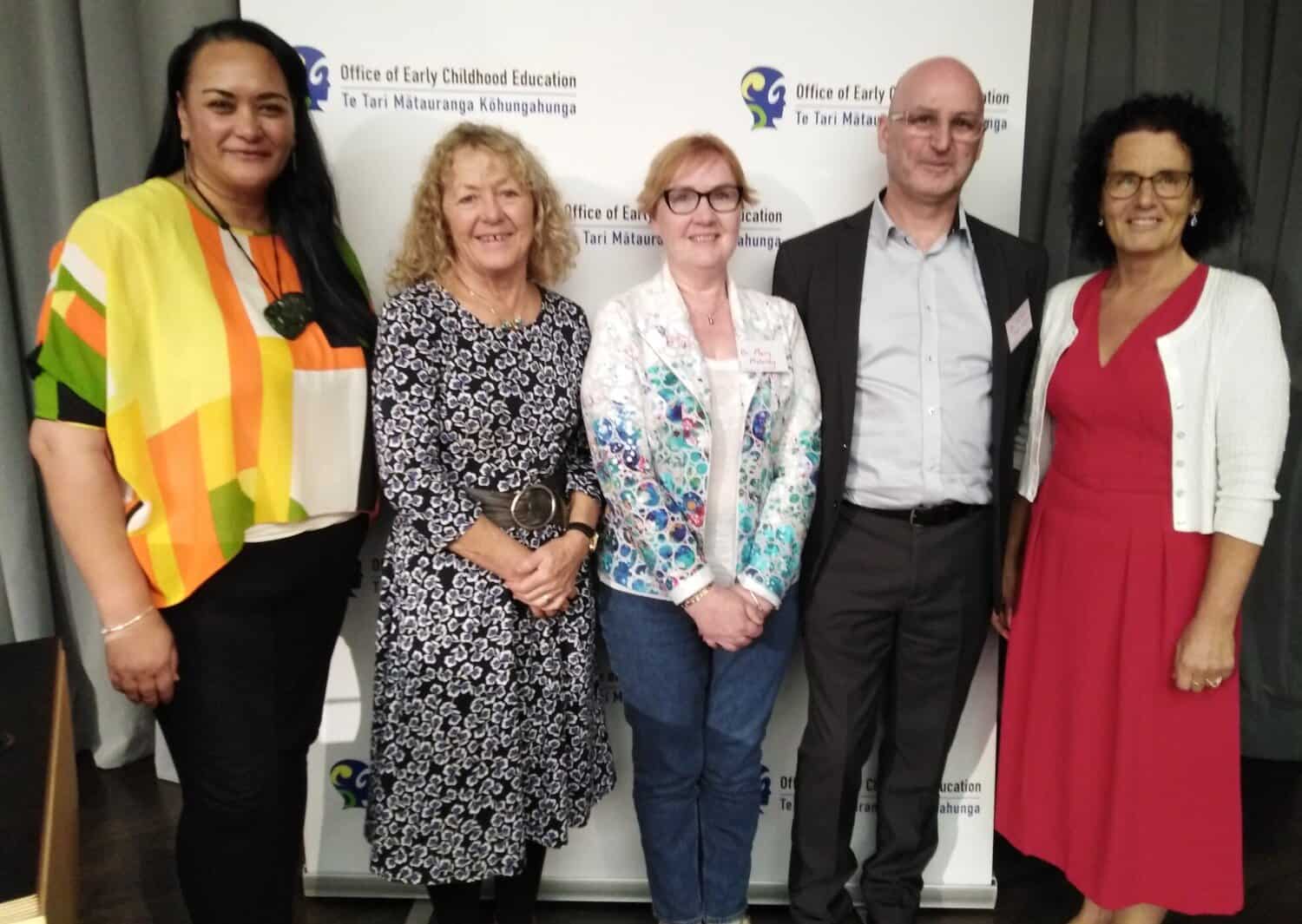
Bonnie Henare, Wendy Boyd, Mary Maloney, Martyn Mills-Bayne, Sarah Alexander

Regulation review recommendations contravene children’s rights, says international ECE regulation expert

NEWS/OPINION  – 30 September 2025.

An international expert in ECE governance says the recommendations put forward by the Ministry of Regulation for scaling back licensing criteria in ECE overlook the rights of children and could put tamariki at undue risk.

Dr Mary Moloney is an associate professor in reflective pedagogy and early childhood studies at Mary Immaculate College in Limerick, Ireland.

In June 2024, while speaking at the Office of Early Childhood Education’s Summit, she had a dire warning for the Government ahead of the regulation review.

At the time, Moloney implored associate education minister David Seymour to ensure the review would not be about “cheap childcare”.

A year later, in an interview with the OECE, she said the regulatory review had prioritised financial interests over children’s best interests.

“The review overlooks the rights of children themselves, throughout the entire document. Rather, the focus is firmly placed on issues of accessibility and affordability for parents, as well as reducing the regulatory burden for providers.”

She said although streamlining licensing requirements made sense because burdensome paperwork took away from the important mahi teachers did supporting young children’s development, the regulatory review placed too much emphasis on “market challenges”.

Moloney is the second researcher in recent months to tell the OECE she believes children’s rights are at risk amid the regulatory review.

In August Dr Sarah Te One, independent researcher and member of the Children’s Rights Alliance Aotearoa New Zealand (CRAANZ) Steering Committee, said the New Zealand public had been “sold a dud that somehow regulations inhibit the offering of good services [when] in fact we know that that is not the case”.

Moloney pointed to the move to make qualification requirements more “flexible” for ECE services as an example of how the regulatory requirements could impact children’s rights.

“Rowing back on qualification requirements dilutes quality, undermining the critical importance of early childhood… Employing an unqualified teacher over a qualified teacher is a cost saving measure, aimed at redressing labour shortages and improving accessibility to ECE services. It is a cheap fix solution that undermines a child’s right to quality ECE, and crucially, it is not in the best interests of the child.”

She also found the proposals to remove requirements for the minimum indoor temperature to be maintained at 18C, and increasing the amount of time required between checks on sleeping infants from 10 minutes to 15 minutes, “astonishing”.

“Both proposals place children at inordinate risk… Any diminution of either requirement creates an unacceptable risk for children. It is not in the best interests of the child.”

Moloney added: “Quality, children’s well-being and safety will be weakened under current proposals. How can parents trust a system that does not protect their child/ren. How can early child teachers be expected to work in a sector premised on competition and cost cutting?”


Leave a Reply

Already subscribed?
ECE Newsroom

NZ’s own specialist ECE newsroom. 
Access national and local stories, in-depth analysis, & original commentaries.  

Membership Support for Teachers & Educators

(Comes with free Newsroom and Research access)

Membership Support for ECE Service Owners, Managers, & Community Organisations

(Comes with free Newsroom and Research access)

Researchers & Tertiary Education Libraries

Full access to over 25 years of ECE academic research articles – NZIRECE Journal.
Plus, guidance and resources on doing and publishing research

Has this been useful?  Give us your feedback.

You are welcome to add a link to this page on your website. Copyright belongs to the OECE so please do not copy any content without our written permission.

Information provided is of a general nature. It is provided ‘as is’, and we accept no liability for its accuracy or completeness. See our Terms and Conditions.

Related Posts

Pay parity for early childhood teachers and Minister Seymour's view

David Seymour responds to our concerns about pay parity myth and its influence on decisions not to support ECE teacher pay parity

Associate education minister David Seymour has responded to concerns from the Office of Early Childhood Education about claims circulating in the sector that the pay parity scheme is causing more education and care centres to close.

In August, we fact checked claims by some ECE business lobbyists that the initiative was “directly contributing to the decline in service numbers”. We analysed data on openings and closures of services from 2022 to 2024 and found no evidence this was happening.

We also looked at what else was happening at the time such as the Covid pandemic (vaccination requirements for most businesses weren’t removed until 4/4/2022). We noted the rise in qualified teachers – in 2021, 65.5% of staff at these services were qualified teachers, compared to 67% in 2024. In 2025 more than 90% of eligible centres have opted-in to some form of pay parity.

Despite this, in a Cabinet paper from April, the Ministry of Education wrote to Seymour that “Sector representatives such as the Early Childhood Council have indicated that pay parity arrangements are creating funding shortfalls for centres, increasing rates of closure”.

Worried about how this myth was being perpetuated, the OECE wrote to Seymour and the Ministry to let them know about our findings.

This is a member/subscriber only post. To access it, please see the message below for details on access and joining.

Read More »
young toddler reading book at kitchen table while having a snack

Gifted in Reading

While most children who are turning five years of age may at most recognise their name and perhaps a few other words, a gifted child at the same age may already be capable of reading books at Year 2 primary school level and above. 

Identifying a Child Who is Gifted in Reading

A child who is gifted in reading has most or all of the following characteristics:

This is a member/subscriber only post. To access it, please see the message below for details on access and joining.

Read More »
NZ International Research in Early Childhood Education journal

Advancing Early Childhood Educators’ Access to Professional Learning in Gifted and Talented Education

An investigation into what specialists in gifted and talented education can provide to early childhood educators in professional learning and support and ECE teacher preferences and needs. Read the full paper below. Or to order a pdf copy of the article go to the main NZIRECE Journal page.

This is a member/subscriber only post. To access it, please see the message below for details on access and joining.

Read More »
The Office of ECE

Share This Information

Table of Contents

Table of Contents

The Office of ECE Login

Take Action!

Help spread this vital ECE information, join our free social and email groups and become a member of OECE.

pay parity funding policy

1. Share This Information

2. Follow Our Social Pages

3. Get Regular Updates

Sign up to our free newsletters.

4. Become a Member