Changing Roles and Responsibilities: The Development of Coaching in Early Intervention

Search in Research
early childhood research journal online

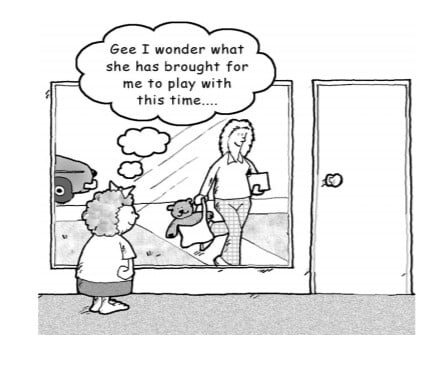
This paper examines if coaching has a potential role in helping authentic collaborative partnerships between early intervention teachers and early childhood educators and families.
Coaching is a process that can empower. It can also help ECE teachers to examine their own perceptions about the knowledge they hold. Read the full paper below. Or to order a pdf copy of the article go to the main NZIRECE Journal page.

This is a member/subscriber only post. To access it, please see the message below for details on access and joining.

Already a Research Subscriber?
Reasons to Subscribe
Tertiary education libraries and individuals.

Enjoy online access to full copies of the latest issues of the NZ-International Research in ECE journal and more than 25 years of past issues of peer-reviewed published articles.

You will also have access to the NZ Doctoral thesis (Ph.D, and Ed.D) and the NZ Master’s thesis directory of theses relevant to early childhood education and care.

For those who are new to doing research, thesis supervisors, and conference paper selectors, we have a range of articles to inform and support you.  These include a guide to ethics when doing, writing, and disseminating research; reviewing abstracts and conference submissions, and more.

Sign-up now

Are you a teacher educator or academic, a practitioner, or a policy advisor, who is keen to keep up with ECE research?

Maybe you are planning to do some research yourself? Or maybe you are advising and supervising students who are undertaking projects?

Enjoy unrestricted access to the hundreds of articles in the Research Area of our OECE website.

Choose your own username and password when you subscribe online. This will be your login for access.

Libraries can request IP address access for staff and students on the library site, instead of password access.  Please note that this is dependent on whether system settings at your end can support this.

Your investment

Personal research user membership – $79.00 for 12-months

Libraries and tertiary education institutions – $250.00 for 12-months

Please see and abide by the Terms & Conditions of membership.

Article copyright belongs to the OECE / ChildForum. You are welcome to add a link to this research article on your website.

Related Posts

teacher wages, pay scales, in childcare and early childhood education

What ECE Teachers and Workers Earn: Pay, Benefits and Conditions

Anyone thinking about getting a job in ECE working in ECE or thinking about moving to a different service will find clear, practical information in this article about pay rates, employment conditions, and what to expect in different roles. It explains everything from starting salaries and pay‑step calculations to workplace rights, benefits, and how to recognise a supportive, professional environment.

Read More »
Educator membership qualified teachers

Group Size in Early Childhood Centres

Group size refers to the number of children who interact together with the same teachers in a defined space, and research shows that small groups are essential for responsive relationships, healthy development, and high‑quality ECE. NZ’s regulations allow the total licence size to act as the group size, a practice that conflicts with international evidence and undermines efforts to ensure quality ECE.

Read More »
Social play among girls playing with a baby buggy and cart at early childhood centre.

Minimum Qualification: Why Degree‑Level ECE Teacher Training Is Essential

Degree‑level ECE training is shown to be the minimum qualification needed for teachers to deliver the intentional pedagogy and long‑term learning gains children deserve, with research demonstrating that anything less produces outcomes no better than having no qualified teacher at all. These studies make it clear that only fully trained ECE teachers are truly qualified to support children’s development in ways that last well into the school years.

Read More »
NZ International Research in Early Childhood Education journal

Screens or No Screens: Understanding Young Children’s Use of Digital Technologies

Maya Robinson-Kennedy.

Full reference: Robinson-Kennedy, M. (2019). Screens or no screens: Understanding young children’s use of digital technologies.  NZ International Research in Early Childhood Education Journal. Special issue presenting early childhood position papers, 22(2), pp. 18 – 25. 

Page 18

Original Posit

This is a member/subscriber only post. To access it, please see the message below for details on access and joining.


Read More »

Picky Eaters and Managing Children’s Eating Habits

Picky eaters? Some children may display anxiety and unhealthy eating habits when they begin early childhood education, others may display behaviours at different times that you are wondering if these are normal, and what to say, do and change.  

This article covers:

The adult’s role in providing for children’s food preferences and eating b

This is a member/subscriber only post. To access it, please see the message below for details on access and joining.

Read More »

Are you teaching and caring for children or studying for an ECE qualification?

If you are, that’s great!   Join us now, and become a teacher member.

The Office of ECE

Share This Information

Notice for Students and Library Users
You are able to access all Journal Research articles under the library's subscription. But unless you hold a personal membership you are missing out on a whole lot of valuable teaching and policy articles and other important information. At home, or on your mobile device that is not linked to your institution or library's internet or subscription - click on the JOIN button below.

Table of Contents

Table of Contents

The Office of ECE Login

Take Action!

Help spread this vital ECE information, join our free social and email groups and become a member of OECE.

pay parity funding policy

1. Share This Information

2. Follow Our Social Pages

3. Get Regular Updates

Sign up to our free newsletters.

4. Become a Member