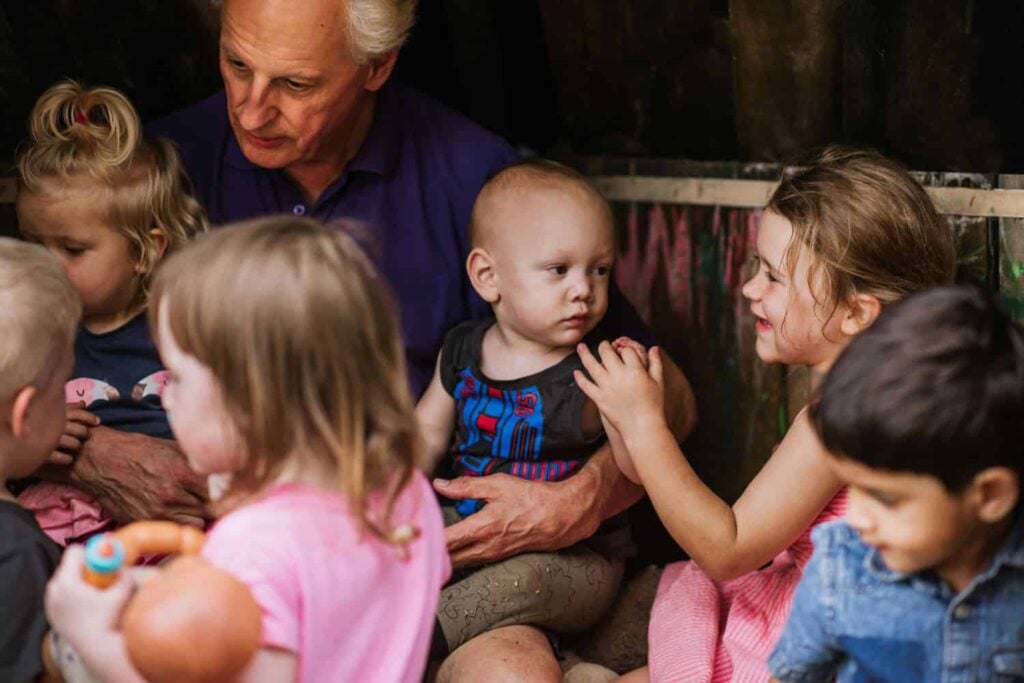
Mandatory vaccination and prohibition of unvaccinated workers from early childhood centres and those aged 12 yrs and older in homebased ECE.
By getting vaccinated, teachers and all those who have contact with children will provide a role model for others in the community. They will be helping to protect children by creating herd immunity. Additionally, they will also be protecting themselves because children can carry the virus.
Important dates:
- First dose by 15 November 2021 to be on site.
- Must be fully vaccinated by 1 January 2022 to be on site when children are present.
- In Auckland and other Alert Level 3 areas, those who have returned to work will be required to return a negative COVID-19 result by 26 October, or return a negative COVID-19 result before physically returning to work, regardless of vaccination status. Those who are not fully vaccinated in the period leading up to 1 January 2022, will be required to undergo weekly COVID-19 testing.
Workers who refused vaccination could be classed as unable to fulfil the requirements of their employment, according to one lawyer. Employers must explore redeployment options before initiating redundancy processes or seeking to dismiss. However, note also that after 15th November 2021 the obligation sits with the employee not to turn up to work if they do not meet the vaccination requirement. The breach sits with the employee if they do turn up to work.
During the week of the announcement that vaccination was mandatory for the ECE workforce, a survey showed a low rate of vaccination uptake. The Government has already highlighted that there are groups in NZ society where extra special effort is needed to attain vaccination targets. The ECE workforce may be one of them. But, in the end it may be just a matter of time – or timing. As one respondent for example said: “I have 2 people left to be vaccinated due to their religious belief, but will now be doing their first dose soon.” The next few months will tell.
Barring the unvaccinated in schools and ECE services
This is what the Ministry of Education said yesterday
“Staff members who refuse to meet vaccination requirements cannot return to work onsite from 16 November and they will be committing an infringement offence if they do so.”
This is what the health order says
The breach is with the staff member or unvaccinated volunteer and not with the service provider/ PCBU. ECE services that allow unvaccinated staff to work on or after 15th November will not be committing an offence – even though the staff member or volunteer will be. For early childhood services 2nd January 2022 is the enforcement date (the exemption can be found in Schedule 1, Part 3, Clause 8 of the Order)
Public Health Response (Vaccinations) Order 2021
Clarification
If an unvaccinated staff member or volunteer arrives at the centre door to work from 15 November and before 2nd January 2022 without providing evidence of being vaccinated (at least the first dose), the MoE has suggested that this would be an employment or workplace issue. For homebased educators this becomes a contractual issue with the service provider.
Prior to 15 November all ECE services should:
- Advise every staff member and person working on site when there are children that under the health order, they are now classified as ‘affected persons’
- Explain that as ‘affected persons’ they must be vaccinated and provide their vaccination information on or before 15th November.
- Continue to counsel staff, act as a good employer, encourage staff to become vaccinated and provide them with any assistance they need such as paid time to get vaccinated.
You are advised most strongly to take legal advice about what you should do depending on the role that the person performs and their employment agreement (for staff this might be to commence redundancy processes, removal of the person from the casual relief teacher pool, or disciplinary action. For others, this might be to issue a trespass notice). Initiating disciplinary action for allegedly committing an ‘infringement offence’ is likely to be legally complicated as well as adding to the stress that everyone will be under. You would also need to look at how you have defined ‘misconduct’ and ‘serious misconduct’ in your employment agreements to see if a disciplinary process could be started.
Parent mandatory vaccination
This is what the MoE said
The requirement is for all people who may come into contact with children onsite at early learning services (sic ECE services) to be vaccinated. It does not apply to:
• parents just dropping-off or picking-up their children
• playgroups
Here is the clarification
All parents, family and whānau members of enrolled children are exempt, unless they are volunteers, staff, contractors or otherwise working in a paid or unpaid capacity. Technically parents and caregivers could stay with their child all day and not have to provide proof of vaccination. Parents can pop into the service for any reason, such as to breastfeed their child or to check on the standard of care and education being provided. The health order does not prevent parents from being involved in their child’s learning and ECE services can continue to welcome parents to stay. This is an important part of the philosophy of early childhood education and care, and is central to achieving better outcomes for children.
But all ECE services will need to provide clear communication to parents and whānau that before assisting, for example reading a story to other children or doing dishes, they will need to provide proof of vaccination.
Owner and service provider vaccination
This is what the MoE said
The MoE has not explicitly stated that service providers and owners must be vaccinated to come onto the premises of their service when children are present. Some service providers and owners have interpreted the lack of direction as permission to enter as ‘visitors’.
This is what the health order says
The mandatory vaccination requirement applies to “Workers over the age of 12 years who carry out work at or for an affected education service (including as a volunteer or an unpaid worker) and who may have contact with children or students in the course of that work or will be present at the affected education service at a time when children or students are also present.” It also applies to “Providers of a home-based education and care service.”
Here’s the clarification
Service owners and providers are not excluded from the mandatory vaccination requirement when onsite at the same time as children. They are working as a person when running their business, whether they are paid or not. Their names need to be on the vaccination register and they must be vaccinated to be allowed on-site when children are there.
Disclaimer
Please note that this is general information – the OECE is not qualified to provide you with legal advice.
Please regularly check for any corrections and updates.
Be better informed – Get ECE updates
Would you like to be on our mailing list for early childhood updates and newsletters?