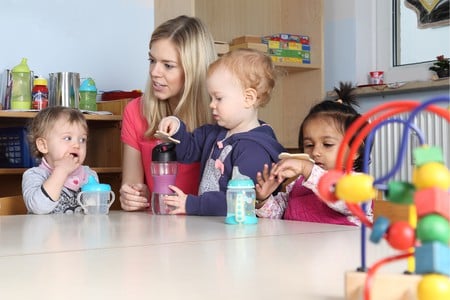
Parents are not amateurs. They play an essential and irreplaceable role in their children’s early learning. They are the central figures in their children’s lives, shaping their world long before any formal education begins.
Unlike professional teachers, the work of parenting comes with no formal recognition, no salary, no breaks, and no structured training. Yet parents carry enormous responsibility for their children’s wellbeing and development, and research consistently shows how powerful their influence is.
A child’s learning and relationships at home strongly shape what they gain from early childhood education. Parents hold deep, long-term knowledge of their child, knowledge that spans daily routines, family history, and shared experiences. This insight is far broader than what teachers can gather in the limited time they spend with children in an early childhood centre or licensed home-based setting.
Teachers contribute to children’s learning for a comparatively short part of their lives and within a specific context. This is why strong partnerships between parents and teachers matter so much. When both work together, they create the most supportive and effective learning environment for every child.
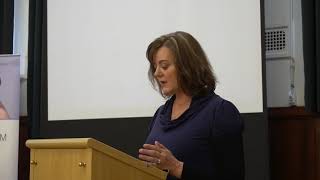
Below are notes from the Keynote Address by Sarah Alexander, to the International HIPPY Symposium, 22 Sept, 2005, in Auckland.
Parenting is Important for Optimal Child Development and Outcomes
Parenting plays a central role in children’s development and long-term outcomes. There is strong and consistent evidence that what parents do in the early years has a powerful influence on children’s learning, behaviour, and wellbeing. Research shows three broad areas where parenting makes a significant difference: children’s cognitive and language development, their social and emotional development, and their physical health and safety.
The Dunedin Multidisciplinary Health and Development Study found that mothers’ attitudes and behaviours when children were three years old predicted children’s intellectual performance and language at age five. The way children were disciplined before age five, and the degree to which parents agreed on parenting strategies, also influenced behaviour in adolescence.
Other research highlights the richness of the home environment for learning. Tizard and Hughes showed that four-year-olds experienced more cognitively stimulating interactions at home than in early childhood centres, because they shared more experiences, engaged in real-life activities, and talked about a wider range of topics with their parents.
Studies also show that the parent-child relationship has a stronger and more consistent influence on children’s early school adjustment than the child-teacher relationship. Warmth, shared emotion, and a balance of guidance and autonomy in mother-child interactions predicted social skills, work habits, frustration tolerance, and overall competence at school.
Parents also shape children’s health and safety behaviours. Research by Lees and Tinsley found that mothers who used direct teaching approaches and expressed positive emotions during learning had children who engaged in healthier behaviours, with effects that continued into the school years.
Together, this body of evidence shows that parenting is a critical factor in children’s development. What parents do in everyday life has lasting effects on children’s learning, behaviour, and wellbeing, and these effects extend well beyond the early years.
Parents are not amateurs when it comes to their own children
The knowledge and experience a parent or primary caregiver gains through daily life and through their relationship with their child is uniquely valuable. This knowledge is accompanied by emotion and love, which distinguishes the parent child relationship from the relationship a child has with a professional teacher.
If you were to visit a zoo or walk through a park and saw an adult with children, it might be difficult to tell at first glance whether the adult was a parent or a teacher. Many behaviours that teachers display can also be seen in parents. However, with closer observation, certain qualities often reveal that the adult is more likely to be a parent.
You may notice expressions of affection, warmth, and inclusion. A parent’s love is unconditional. In contrast, as Anne Meade noted, children who are quiet, withdrawn, or difficult can sometimes be left on the fringes of interaction by early childhood teachers. You may also observe a shared understanding between the adult and child, built from long-term familiarity. They may talk about past events or shared memories and connect these to what they are doing in the moment. Their roles may shift naturally as they take turns teaching, learning, helping, and questioning one another.
What you cannot easily see is the depth of knowledge a parent holds. A teacher may make assumptions about what a child knows or can do, but these assumptions can be incomplete when compared with the insight a parent has developed over years of shared experiences. A teacher’s knowledge is tied to the context of the early childhood setting, while a parent’s knowledge spans every part of the child’s life.
Research supports this. A French study found that parents, even those facing significant disadvantage, had a powerful positive effect on children’s cognitive development when they participated alongside teachers in early childhood programmes. Their involvement enriched the learning environment and helped counter the effects of social and economic disadvantage. Parents acted as what the researchers called naive tutors, combining the strengths of both experts and novices. They were deeply involved in their children’s activities, shared more reference points with them, and gradually developed confidence and skill in supporting learning. Through this participation, parents began to see themselves as teachers and strengthened their capacity to support their children’s development.
This body of evidence shows that parents bring something to their children’s learning that cannot be replicated by professionals. Their knowledge, emotional connection, and long-term involvement make them essential partners in supporting children’s growth and development.
What matters most for children’s learning is what parents do with and for their children, not who parents are or what their background may be
Research from the University of Chicago shows that simple, everyday behaviours such as monitoring television viewing or taking children to the library have a strong influence on children’s academic skills at school entry. Children whose mothers had less formal education but provided a rich family literacy environment often outperformed children whose mothers were more highly educated but engaged in fewer literacy activities with them.
A large British study of more than three thousand children also highlighted the importance of the home learning environment. When parents actively engaged in activities with their children, this supported both intellectual and social development. The quality of the home learning environment was more strongly linked to child outcomes than family income or parents’ education levels, and it was only moderately related to socioeconomic status. In other words, what parents do matters far more than how wealthy or educated they are.
New Zealand research by Megan Goodridge further illustrates this point. She found significant differences in children’s early writing development even among families of the same cultural background and social class. In one Maori family, the child produced a high number of writing samples because the family provided organised learning opportunities, shared activities, and regular encouragement. They believed their child was an active learner who needed guidance, and they supported her interests across home, community, and kohanga reo.
In contrast, another family offered little support for early writing. Writing happened only when an older sibling brought homework home, and the parents were unsure whether their child did any writing at kindergarten. They had few goals for writing and were uncertain about the need to provide support. This child produced far fewer writing samples and engaged in a narrower range of literacy activities. Had he attended the same kohanga reo as the first child, his outcomes might have been different, but the key difference lay in what happened at home.
These examples show that the actions families take to support learning are critical. This support is shaped not only by parents’ beliefs and knowledge, but also by their confidence and ability to put what they know into practice. When parents feel capable and understand how to help their children, they can make a powerful difference in their child’s development, regardless of their background.
Programmes to Support Parents as their Child’s Educator are Vital
Programmes that support parents in their role as their child’s first and most important educator are essential. They recognise and strengthen the central place parents hold in their children’s lives, and they help ensure that all families have the knowledge, skills, and confidence needed to guide their children’s learning.
Such programmes matter for several reasons. Parents are the primary figures in their children’s development, and parent child relationships have a significant influence on children’s outcomes. Not all parents, however, have access to the support or information they need to feel confident in this role. At the same time, children are spending increasing amounts of time in non-family care. While adults struggle with work life balance, many children struggle with reduced time for family connection, shared learning, and memory building. Modern pressures, long work hours, screen time, and policy settings that increase hours in formal care all contribute to this.
Research from the Barnardos Family Support Service shows that most parents have a strong desire to be better parents and are willing to participate in programmes that focus on parenting. To nurture a child, parents need to feel a sense of self-worth and confidence, and they need to be emotionally available. They also need practical skills and knowledge to take an active role in their child’s learning. Programmes such as HIPPY, PAFT, and Family Start are designed with this purpose in mind.
Studies of parent education and support programmes show a range of benefits. Parents gain knowledge, develop new skills, and receive support in managing challenges. One of the greatest benefits for children comes from the time parents commit when they participate. In programmes like HIPPY and PAFT, parents must be available for home visits, group meetings, and regular one-on-one learning sessions with their child. This sustained, daily involvement over two or more years strengthens learning and deepens the parent child relationship.
For parents, this commitment often builds a strong sense of self-efficacy. Many experience the satisfaction of realising that they can support their child’s learning and make a meaningful difference. With support, parents are more likely to feel hopeful and to look ahead with confidence, knowing that their actions can positively influence their child’s outcomes well into the school years and beyond.
Conclusion
Recognising the vital role of parents and families in young children’s learning is essential. We need to prioritise supporting all parents to be in the driver’s seat so they can experience confidence, satisfaction, and a sense of success in their parenting.
Why? Because:
- The role of parents and the family in children’s lives is far greater and more influential than that of early childhood or school teachers alone.
- There is substantial research showing that parenting is critically important for optimal child development and educational outcomes.
- Parents are not amateurs when it comes to understanding their own child.
- What parents do for their children matters far more than who they are or what their background may be.
References for Parents are Not Amateurs
Christian, K., Morrison, F.K., Bryant, (1998). Predicting kindergarten academic skills: Interactions among childcare, maternal education, and family literacy environments. Early Childhood Research Quarterly, 13(3), 501-521.
Alexander, S.E. (2003). Quality teaching early foundations: Best evidence synthesis. Wellington: Ministry of Education.
Goodridge, M.J. & McNaughton, S. (1994). How families and children construct writing expertise before school: An analysis of activities in Maori, Pakeha, and Samoan families. Reading Forum NZ, 3, 3 – 14.
Lees, N.B. & Tinsley, B.J. (2000). Maternal socialization of children’s preventive health behaviour: The role of maternal affect and teaching strategies. Merrill-Palmer Quarterly, 46(4), 632 – 652
Meade, A. (1985). Are early educators meeting children’s demands or needs? Australian Journal of Early Childhood, 10(1), 46 – 48.
Pianta, R. C., Nimetz, S.L. & Bennett, E. (1997). Mother-child relationships, teacher-child relationships, and school outcomes in preschool and kindergarten. Early Childhood Research Quarterly, 12, 263 – 280.
Pryor, J. & Woodward, L. (1996). Families and parenting. In. P.A. Silva. & W.R. Stanton (Eds.) From child to adult: The Dunedin Multidisciplinary Health and Development Study. New Zealand: Oxford University Press.
Sanders, J., Munford, R., Llewelyn Richards-Ward (1999). Working successfully with families: Stage three. Palmerston North: Child and Family Research Centre, Barnardos NZ.
Sylva, K., Melhuish, E., Sammons, P., Siraj-Blatchford, I., Taggart, B., & Elliot, K. (2003). The effective provision of pre-school education (EPPE) project: Findings from the pre-school period. Unpublished paper, University of London, London.
Tijus, C. A., Santolini, A. & Danis, A. (1997). The impact of parental involvement on the quality of day-care centres. International Journal of Early Years Education, 5(1), 7 – 20.
Tizard, B., & Hughes, M. (1984). Young children learning. London: Fontana.
Key themes
- Parents are not amateurs.
- Good parenting is important for optimal child development.
- What matters most is what parents do for their children (not who the parents are).
- Parents should be supported in being their child’s educator.