Parents as First Teachers (PAFT) – Reports

Search in Research
home visit visiting teacher

Parents as First Teachers Programme in NZ

The Parents as First Teachers Programme was an established parent education and support service. The programme catered for children in the first three years of their learning and development. It delivered measurable benefits for families, and these reports document those impacts through survey data and parent/provider perspectives. They offer important lessons for policy‑makers considering how early‑years support is funded, delivered, and sustained.

At the time these reports were commissioned, PAFT was managed by Early Childhood Development (ECD) but was shortly taken over by the Ministry of Education.  Then the PAFT programme was shifted to be the responsibility of Ministry of Social Development. In 2016 the government closed the programme.  

This 1st of two reports presents the findings of an analysis of a Family Exit Survey completed by 400 families. The overall conclusion of the report is that according to families, participation in PAFT benefits families.  The benefits included:

  • Strengthening parenting skills,
  • Encouraging parents to take greater responsibility for their child’s education, and
  • Accessing community, health, and early childhood education services.

At the time that the families in this study enrolled in the Parents as First Teachers Programme was available to any family who wished to enrol in it. This subsequently changed due to greater targeting of families within communities to ensure equity of access, especially of Maori, Pacific Island, single parent, teen-parent, and low-income families.
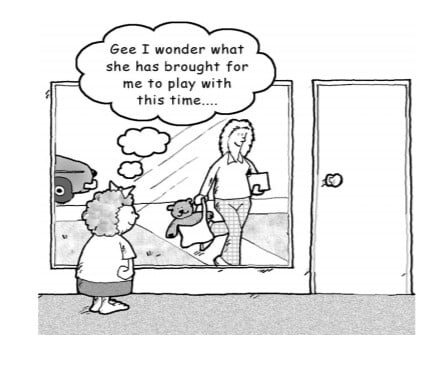
Parents as First Teachers cartoon

As PAFT holds clear benefits for families, irrespective of their background characteristics, the issue of universal access should be considered.  It is also important because the families in this study were concerned about the issue and commented (without prompting) on the current perceived less-than-positive environment of funding cutbacks and limiting access by families with children not considered to be “at-risk”.

The success of PAFT for families was in the following key aspects:

  1. The parent educator – who is the “face” of PAFT and must have rapport with the family.  
  2. The place of delivery – mainly in the home, which parents preferred with flexibility to meet at other venues (99% were comfortable with this method of delivery).
  3. The PAFT Ahuru Mowai and Born to Learn curriculum – providing up-to-date material and information, and encouraging parents with knowledge to be their child’s first educator. For example, the written materials were useful for 88 percent of families; the ideas on play activities, books and toys were extremely or very suitable for 98 percent of families.
  4. The strengths-based philosophy – concentrating on what is going right and building on that rather than what is wrong in parenting. Focusing on prevention and support, not intervention and blame. For example, 47.5 percent of parents spontaneously mentioned that they had become more relaxed and confident in themselves and as parents.
  5. The holistic approach – working with parents/caregivers, children, and other family members, providing parent education while taking an interest in parent and child issues and problems. This includes, for example, identifying children’s developmental needs and delays; explaining and role modelling alternatives to physical punishment; supporting mothers with post-natal depression; helping families through changes and crises such as the birth of a new baby or a death in the family.
  6. Support of family and cultural diversity – in beliefs, values and practices: 93.5 percent of families reported that cultural differences were supported or were never an issue.  Families commented favourably on the interest shown by parent educators in their personal values on different issues, for example, about organic food and shared-bed parenting.
  7. Providing links with the community through information and referrals to health, community and early childhood education services, for example, by age three 90 percent of PAFT children had attended an early childhood education service such as childcare or playcentre, and 51 percent of families had enrolled at a state kindergarten. 

In summary, the survey evidence points to a strong demand for PAFT by families and very high levels of satisfaction with the service.  It also identifies outcomes for families that they consider important. These outcomes could have longer-term benefits for society. Through providing a continuity of parent education and support for families during their child’s first three years and focusing on the family in context, PAFT is a unique early childhood education service that complements existing centre-based services. This report has identified issues for PAFT that have an impact on policy and these were further investigated in a second report.
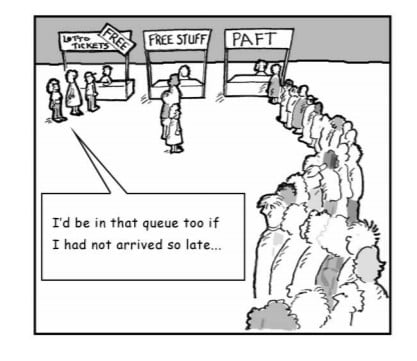
Parents as First Teachers cartoon

The second report – this is a descriptive report which focused on:

  • family participation in the programme,
  • family satisfaction and comfort with the programme, and
  • outcomes of the programme from the perspectives of parents and providers.

The study was designed to provide a “portrait” or description of PAFT – what the programme is, how it functions for families and its impact – to help to inform policy analysis and decision-making. This report also includes a brief overview of PAFT’s past and current operation.

A multiple methods approach was taken. Quantitative and qualitative data was drawn from a range of sources: families at two programme sites (interviews), families who had completed any programme (surveys), parent educators and programme coordinators at four programmes (interviews), and a small number of community professionals (interviews).

Relevant programme management documentation was also examined, namely: accountability reports by programme providers submitted to Early Childhood Development and the ECDU’s own progress reports to the Ministry of Education. 

For a copy of the report click on the file below.
Already a Research Subscriber?
Reasons to Subscribe
Tertiary education libraries and individuals.

Enjoy online access to full copies of the latest issues of the NZ-International Research in ECE journal and more than 25 years of past issues of peer-reviewed published articles.

You will also have access to the NZ Doctoral thesis (Ph.D, and Ed.D) and the NZ Master’s thesis directory of theses relevant to early childhood education and care.

For those who are new to doing research, thesis supervisors, and conference paper selectors, we have a range of articles to inform and support you.  These include a guide to ethics when doing, writing, and disseminating research; reviewing abstracts and conference submissions, and more.

Sign-up now

Are you a teacher educator or academic, a practitioner, or a policy advisor, who is keen to keep up with ECE research?

Maybe you are planning to do some research yourself? Or maybe you are advising and supervising students who are undertaking projects?

Enjoy unrestricted access to the hundreds of articles in the Research Area of our OECE website.

Choose your own username and password when you subscribe online. This will be your login for access.

Libraries can request IP address access for staff and students on the library site, instead of password access.  Please note that this is dependent on whether system settings at your end can support this.

Your investment

Personal research user membership – $79.00 for 12-months

Libraries and tertiary education institutions – $250.00 for 12-months

Please see and abide by the Terms & Conditions of membership.

Article copyright belongs to the OECE / ChildForum. You are welcome to add a link to this research article on your website.

Related Posts

teacher wages, pay scales, in childcare and early childhood education

What ECE Teachers and Workers Earn: Pay, Benefits and Conditions

Anyone thinking about getting a job in ECE working in ECE or thinking about moving to a different service will find clear, practical information in this article about pay rates, employment conditions, and what to expect in different roles. It explains everything from starting salaries and pay‑step calculations to workplace rights, benefits, and how to recognise a supportive, professional environment.

Read More »

Cobra Effects: How the Education and Training (ECE Reform) Amendment Bill Could Bite Back

Submission to the Education and Workforce Committee

The Education and Training (ECE Reform) Amendment Bill
Submitted by: Office of Early Childhood Education (OECE)
Date: 29 August 2025 

CONTENTS:
– Introduction
– Summary of Key Concerns
– Our Position and Recommendations
– Errors and the Bill’s Shortcomings
– Closing Statement

INTRODUCTION

The Education and Training (Early Childhood Education Reform) Amendment Bill is promoted as a solution to improve the effectiveness of the early childhood education (ECE) regulatory system. 

During the Bill’s first reading, Hon David Seymour shared the frustrations of ECE service operators he had spoken with—concerns that prompted the Ministry for Regulation review of the ECE regulatory system. He cited issues such as conflicting rules, a dictatorial approach, minor regulations enforced under threat of closure, and inconsistent enforcement.

The Bill is positioned as a long-overdue fix for these concerns, though it remains unclear whether the scale or severity of these issues truly warrants a full legislative overhaul. 

However, the proposed reforms risk triggering serious unintended consequences—what’s known as the cobra effect, where attempts to solve a problem end up making it worse.

SUMMARY OF KEY CONCERNS

1. Sector Impact

The Bill is designed to reduce regulatory burdens for service providers—particularly those who struggle to understand existing requirements or view current regulations and penalties for non-compliance as unfair to themselves and their business operations.

However, these reforms could backfire on the very providers the Bill aims to support.

Looser regulation is likely to attract new entrants driven by commercial interests, potentially forcing high-quality providers to close due to unfair competition.

Read More »
child with paint brush paints brightly coloured picture at kindergarten

Masters Thesis Directory

This is an education masters thesis directory. It shows NZ masters theses on research, policy analysis and/ or theory relevant to young children’s care, health, and teaching and leaning. The education masters thesis directory includes M.A., M.Ed., M.Phil, M, Health Science theses.

An education doctoral thesis directory is also available if yo

This is a member/subscriber only post. To access it, please see the message below for details on access and joining.

Read More »
NZ International Research in Early Childhood Education journal

Creating an Early Childhood Curriculum Pathway for Sustaining Indigenous Knowledges

Practices of equality and diversity in terms of early childhood education curriculum are examined. ECE is a transmitter of Western knowledges to Indigenous Fijian people and the research participants perceived young children to be the most affected by these knowledges. Read the full paper below. Or to order a pdf copy of the article go to the main NZIRECE Journal page.

This is a member/subscriber only post. To access it, please see the message below for details on access and joining.

Read More »
interview, police vetting, staff

Proposed Register of Non-Registered Teachers / Staff who have been police vetted

Police vetting changes to speed up the time it takes to get police vet results back

Wellington. 28 November, 2024.

Changes are in the pipeline for the way police vetting is done for ECE staff (paid and unpaid) who are not registered and certificated teachers.

On the request of Minister David Seymour and centre-based business lobbyists, Th

This is a member/subscriber only post. To access it, please see the message below for details on access and joining.

Read More »

Are you teaching and caring for children or studying for an ECE qualification?

If you are, that’s great!   Join us now, and become a teacher member.

The Office of ECE

Share This Information

Notice for Students and Library Users
You are able to access all Journal Research articles under the library's subscription. But unless you hold a personal membership you are missing out on a whole lot of valuable teaching and policy articles and other important information. At home, or on your mobile device that is not linked to your institution or library's internet or subscription - click on the JOIN button below.

Table of Contents

Table of Contents

The Office of ECE Login

Take Action!

Help spread this vital ECE information, join our free social and email groups and become a member of OECE.

pay parity funding policy

1. Share This Information

2. Follow Our Social Pages

3. Get Regular Updates

Sign up to our free newsletters.

4. Become a Member