


The Descriptive Quality of Kindergarten, Kōhanga Reo, Childcare, and Playcentre

Search Entire Website
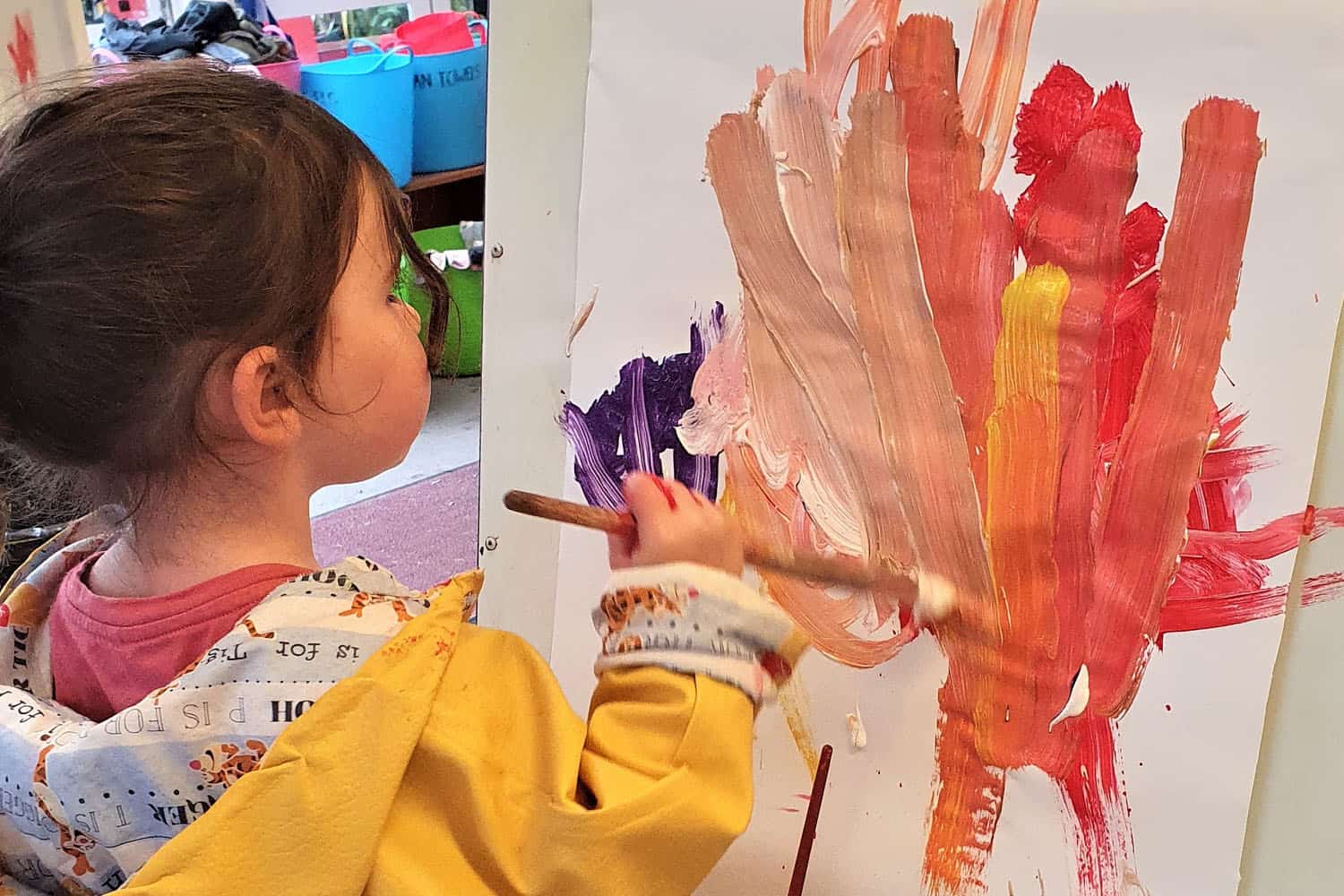
child with paint brush paints brightly coloured picture at kindergarten

Descriptive qualityA values based approach to defining quality.
By Dr Sarah Alexander.
Paper presented at the 13th Biennial Meetings of the International Society for the Study of Behavioural Development, 28 June – 2 July 1994, Amsterdam

Developmental psychologists researching childcare have focussed on evaluating how well early childhood programmes perform according to child development goals and specific measures such as adult-child ratio.

This paper presents a study on early childhood programme quality with an alternative focus. A values-based approach was taken.

In the study the individual and collective ‘heartbeats’ (i.e. philosophies, policies and practices) of eleven early childhood programmes – kindergartens, playcentres, kōhanga reo, and childcare centres – were examined. The primary purpose was to look at the actual essence of centre quality, what made the centres special and distinctive.

As Aristotle (Ethics 1.6) explains, there are two kinds of ‘good’, the first being things which are good in themselves and the second being things which are good as a means of achieving the first kind of good. This paper is about the first kind of ‘good’ early education and care. Much literature already exists on the second kind of ‘good’ early education and care.

Each of the four early childhood groups provided ‘quality’ in distinctive ways. These ways were influenced by past practices and traditions, the purpose of their service and the needs of the parents served, the style of centre management, and the extent of public support and funding.

Te Kōhanga Reo people saw their service as culturally unique and based on a philosophy of early language and cultural teaching for children within an extended family environment.

Kindergarten, childcare and playcentre people saw their services as differing in quality for philosophical reasons such as views on staff training and teacher-parent relationships.

A general finding – and this will be of interest to readers who view quality as a set of universal measurable criteria and not as existing in the eye of the beholder – was that the research-based indicators believed in policy to be the best measures of quality (e.g. staff training and adult-child ratio) were not of paramount importance in practice for quality at every type of centre.

Has this been useful?  Give us your feedback.

You are welcome to add a link to this page on your website. Copyright belongs to the OECE so please do not copy any content without our written permission.

Information provided is of a general nature. It is provided ‘as is’, and we accept no liability for its accuracy or completeness. See our Terms and Conditions.

Related Posts

do we support children eating chocolate eggs at Easter

Easter, 3- 6 April, 2026 — Activities, Recipes, Learning Links and Religious and Commercial Aspects

Easter is a wonderful time to bring joy, creativity, and hands‑on learning into your programme.

Here are some favourite activities that children love and educators can adapt for different ages and abilities. We also give you ideas for learning links and documentation.

But first, it’s important to pause and reflect before planning. Consider how your centre and families feel about the commercialisation of Easter, its religious significance, and health matters such as allergies or chocolate consumption.

This is a member/subscriber only post. To access it, please see the message below for details on access and joining.

Read More »
Teacher with girls in outside playground who are feeding their baby doll

The Concept of Tuakana-Teina dictated by Whakapapa

Tuakana – Teina Relationships. By Ngaroma Williams.

Within Aotearoa, New Zealand early childhood education pedagogy, the relationships of tuakana, teina are misunderstood, misinterpreted and/or misused. Ngaroma Williams explains how and calls for a Maori worldview to be expressed and better understood.

To understand Māori social str

This is a member/subscriber only post. To access it, please see the message below for details on access and joining.

Read More »
toddler chalk drawing on ground

Conflicts of Interest

Conflict of Interest.

A conflict of interest is when you, someone you are close to, employed by, or are personally friendly with may stand to benefit or gain in some way from a decision made at a meeting or within the service.

The board/committee, management, families and all involved in the early childhood service need to be confident that

This is a member/subscriber only post. To access it, please see the message below for details on access and joining.

Read More »
books children reading to each other

Making Books and Reading Fun

Books and Reading Fun. By Barb Morris.

We learn best when we are playing and having fun especially if we are rewarded with smiles, positive comments and cuddles. Children are no exception! So how do they learn? When it comes to reading it is mainly by copying and you, as educators are the most powerful role models that children copy.

This is a member/subscriber only post. To access it, please see the message below for details on access and joining.

Read More »
The Office of ECE

Share This Information

Table of Contents

Table of Contents

The Office of ECE Login

Take Action!

Help spread this vital ECE information, join our free social and email groups and become a member of OECE.

pay parity funding policy

1. Share This Information

2. Follow Our Social Pages

3. Get Regular Updates

Sign up to our free newsletters.

4. Become a Member

Public Area Categories
Categories