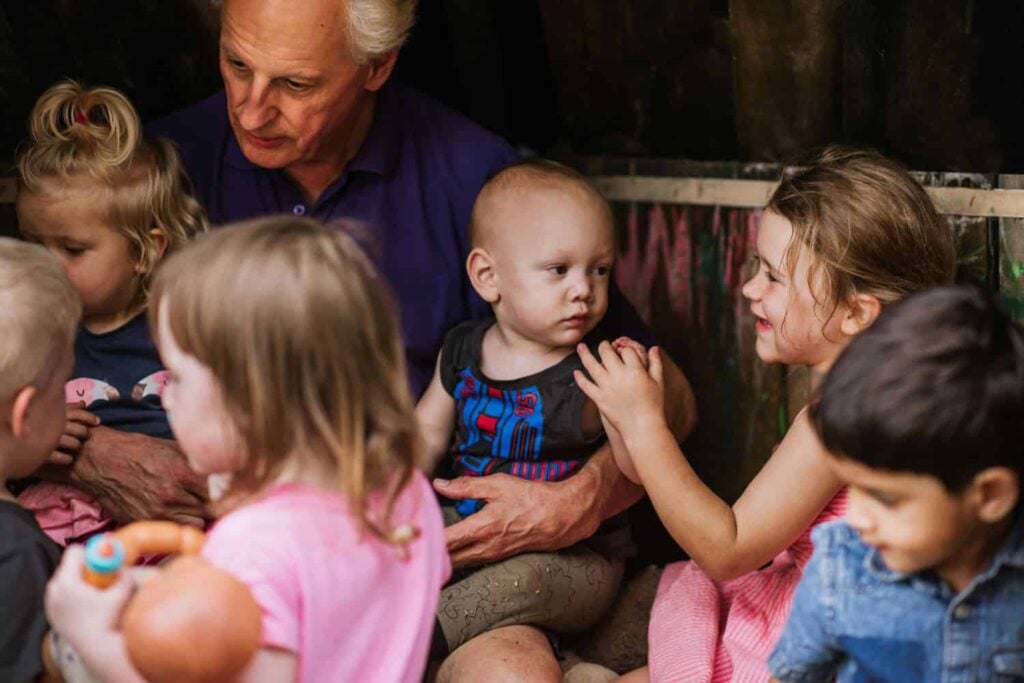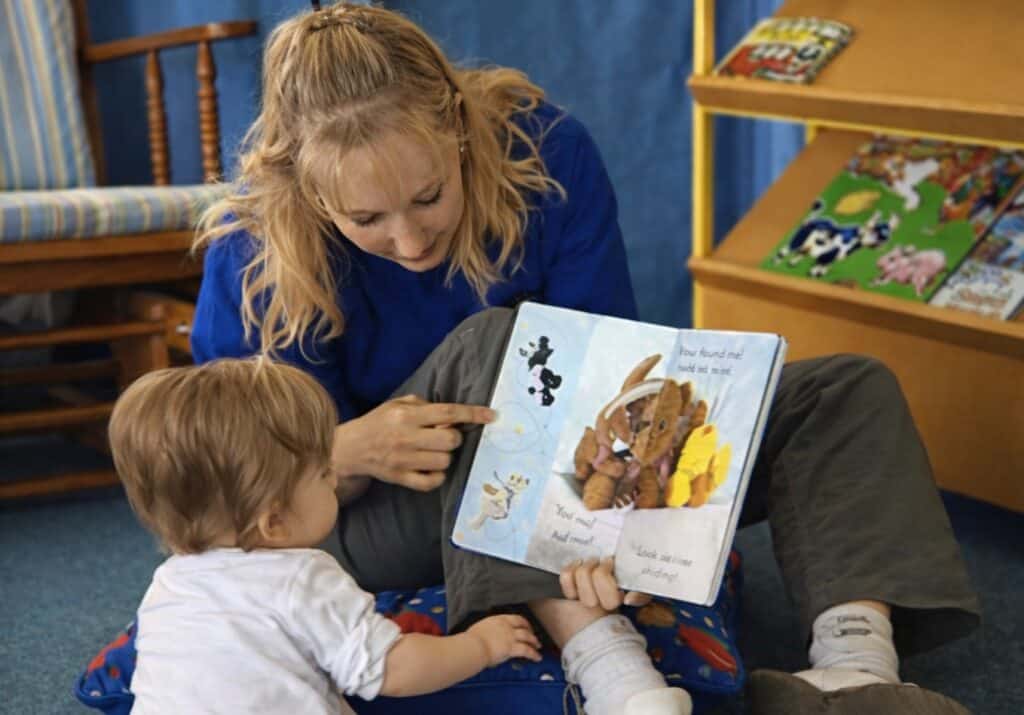
This special issue on Parents as Partners examines how parents and families shape early childhood education, from partnership models and parental wellbeing to fathers’ participation and culturally diverse perspectives on engagement. Together, these articles deepen understanding of parent–teacher partnerships and how meaningful collaboration influences children’s learning and educators’ practice.
The titles, authors and abstracts for papers published in the NZ International Research in Early Childhood Education Journal, Volume 24, 2022 are shown below.
To read any article a member login is needed – join us if you are not already a member. Many libraries subscribe to the journal so you may be able to view articles through your library’s system.
Order a copy of any article
Type in below the year, volume number and author(s) of the article you wish to order. The price per copy is NZ $19. Once you have completed your order it will emailed to you within 24 hours.
Editorial
Parents as Partners in Early Childhood Education and Care
Chris Jenkin
Auckland University of Technology, NZ
Full reference
Jenkin, C. (2022). Editorial NZIRECE Special Issue on Parents as Partners in Early Childhood Education and Care. NZ International Research in Early Childhood Education Journal, 24, pp. 1- 3.
Original Research Paper
Beyond Partnerships with Parents in Early Childhood Education: A Legacy of Adult Experiential Learning in Playcentres
Chris Jenkin and Sue Stover (AUT), Diti Hill-Denee (University of Auckland) and Robyn Reid
Abstract
Within early childhood education, the role of parents is a contested space. While collaborative relationships are emphasised as part of the curriculum, the structure of most early childhood services positions parents as ‘consumers’ who buy a ‘product’ or commodified service that they do not make themselves. In the case of early childhood education, they are purchasing the ‘care and education’ of their children. In New Zealand, this has not always been the case. This article is based on a recent qualitative study that the authors conducted through semi-structured interviews with participants who attended Playcentre with their children and subsequently developed careers in early childhood programmes in tertiary institutions. The findings showed that sustained parent participation in early childhood settings produced experiential learning that led to new career trajectories for them as individuals. While all the participants in the study had deep involvement in the parent co-operative Playcentre, opportunities for parents to learn through shared responsibility in early childhood were not unusual. A historic review of the role of parents in early childhood settings shows that major changes occurred in 1990 throughout the sector with the introduction of the first national standardised ‘quality’ indicators set by governments. Subsequent policy documents have reinforced the importance of respectful collaborative relationships between parents and teachers. However, looking back at their years in Playcentre, the participants in this research recognised that working in partnership with other parents was a key driver for them as adult learners. Sharing responsibilities with other parents – adult learners alongside very young child learners – led them into new capabilities and shaped their approach to their subsequent careers in early childhood teacher education.
Key words: Early childhood education, Playcentre, semi-structured interviews, collaboration.
Full reference
Jenkin, C., Stover, S., Hill-Denee, D. and Reid, R. (2022). Beyond partnerships with parents in early childhood education: A legacy of adult experiential learning in Playcentres. NZ International Research in Early Childhood Education Journal, 24, pp. 4 – 15.
Original Commentary
More than door talks. Insights into parental involvement in the Irish early childhood education and care context
Mary Moloney
Mary Immaculate College, Limerick, Ireland
Abstract
International organisations including the OECD and UNICEF characterise parental involvement in young children’s care and education as a fundamental right and obligation. This is reflected in early childhood curricula internationally. None-the-less, while the principle of parental involvement permeates early childhood curricula, the nature of such involvement is obscure, and open to interpretation. Against the backdrop of a study with 146 families and 46 Early Childhood Education and Care (ECEC) settings in Germany, Cohen and Anders (2019) found that in some contexts, parental involvement consists of “door talks” – a fast and informal way of communicating with parents (p. 10). This paper argues that parental involvement is highly complex, and multi-faceted. As such, it involves much more than ‘door talks.’ Drawing upon Bronfenbrenner’s ecological systems theory, which underpins parental involvement, the paper discusses ECEC as a form of parental support vis a vis addressing poverty and educational disadvantage. Focussing on the concept of parental involvement in the Irish ECEC context, the paper interrogates, Síolta (seed), the National Quality Framework, and Aistear (journey), the Early Childhood Curriculum Framework. In conclusion, the paper looks to the future in Ireland, where in recent policy initiatives, ECEC is increasingly perceived as a form of integrated parenting support.
Key words: Parent involvement, parenting support, early childhood education and care, UNCRC, rights of parents.
Full reference
Moloney, M. (2022). More than door talks. Insights into parental involvement in the Irish early childhood education and care context. NZ International Research in Early Childhood Education Journal, 24, pp. 16 – 33.
Original Research Paper
Educators Listening and Partnering with Parents: Recognising Parental Wellbeing and Agency
Fay Hadley (Macquarie University) and Elizabeth Rouse (Deakin University)
Abstract
Focusing on listening to and partnering with parents authentically, this article explores how one early childhood school, located in a major Australian city, recognised the importance of parental wellbeing and agency. In Australia, the national Early Years Learning Framework (EYLF) positions parents as children’s first and most influential teachers, and the educators’ role is to create an environment where parents are actively encouraged to collaborate on curriculum decisions. However, when parents are positioned as ‘co-teachers’ in their child’s learning, they are considered responsible for ensuring children’s educational success, and educators may see their role as informing parents about ways to better educate their child at home. This deficit position requires parents to work with the educators in meeting children’s learning needs, creating a power imbalance. A qualitative methodology was applied to explore the complexity of parent-educator partnerships, drawing on the voices of both parents and educators. Parents in this study felt listened to and connected with the educators. Educators recognised the strengths they brought as both parents and as people, contributing to their wellbeing as it shifted the spotlight to who they are in their child/ren’s lives, rather than focusing on what they do to influence their child/ren’s learning.
Key words: Parent partnerships, wellbeing, early childhood education, identity, sense of self.
Full reference
Hadley, F. and Rouse, E. (2022). Educators listening and partnering with parents: recognising parental wellbeing and agency. NZ International Research in Early Childhood Education Journal, 24, pp. 34 – 45.
Original Research Paper
Fathers’ Voices: Their Participation in Early Childhood Education
Parisa Tadi (Auckland University of Technology), Amir Sadeghi (RTLB Cluster 12, NZ) and Ali Mansouri Nejad (Farhangian University, Iran)
Abstract
This article explores fathers’ participation in Early Childhood Education (ECE) programmes in New Zealand. It draws on a descriptive study investigating the perceptions of 50 fathers whose children attended ECE centres by utilising the Father Participation Questionnaire (FPQ): father version. Fathers were asked to complete questionnaires that recorded their perceptions of fathers’ participation and asked for their views on the potential areas that might either facilitate or hinder such participation. The results demonstrated that this sample of fathers were aware of their roles and were interested in their children’s educational development and care. The fathers reported that using a common language, including the terms and words that are used in their daily life and work, may further facilitate their participation. Almost all of the fathers considered their inflexibility regarding workload and working hours were barriers to their participation in ECE programmes. The findings also suggest that fathers generally do not believe that teachers’ supporting programmes such as professional development can enhance their ECE participation. The results obtained argue for the continued need to develop awareness, resources, and good practice to enhance fathers’ roles in their children’s educational development in ECE centres. The results are discussed, and the practical implications of the findings are highlighted.
Key words: Fathers’ participation, early childhood education, fathers’ perspectives.
Reference
Tadi, P., Sadeghi, A. & Nejad, A. M. (2022). Fathers’ voices: Their participation in early childhood education. NZ International Research in Early Childhood Education Journal, 24, pp. 46 – 58.
Original Research Paper
Parent Engagement and its Influence on Early Childhood Education Teachers and their Teaching Practices – South African Teachers’ Perception
Anienie Veldsman (Auckland University of Technology), Felicia Elinam Dzamesi (University of Cape Coast, Ghana), Parisa Tadi (Auckland University of Technology), and Amir Sadeghi (RTLB Cluster 1, NZ)
Abstract
Parents play an important role in their children’s learning and their involvement is encouraged. Various studies report that parents are not always engaged in their children’s learning for various reasons. This paper explores South African early childhood teachers’ perceptions of low parent engagement and whether this phenomenon influences teachers and their teaching practices. Bronfenbrenner’s ecological systems theory provides the theoretical framework for this study and highlights the role the environment can play in parents’ involvement. Three case studies involving 13 teachers from three early childhood education (ECE) centres in South Africa were conducted using reflective narratives and focus group interviews. Two themes emerged from thematic analysis focusing on the influence of low parent engagement on teacher well-being and their teaching practices. The study found that ECE teachers and their teaching practices are influenced by low parent engagement. The main reason for low parent engagement is a result of parents’ financial hardship. This study suggests that building resilient parent-teacher relationships and ultimately stronger parent engagement in ECE, an open-door policy, various communication opportunities, and building trust with families are necessary. Through collaboration between parents and teachers, gaps in children’s education can be filled, and parent-teacher relationships and family engagement will be enhanced. Teacher well-being and teaching practices may be improved as a result.
Key words: Parent engagement, low parent engagement, financial hardship, teacher well-being, teaching practices.
Full reference
Veldsman, A., Dzamesi, F.E., Tadi, P. & Sadeghi, A. (2022). Parent engagement and its influence on early childhood education teachers and their teaching practices – South African teachers’ perception. NZ International Research in Early Childhood Education Journal, 24, pp. 59 – 70.