Being Inclusive of LGBT Teachers

Search in Service Provider
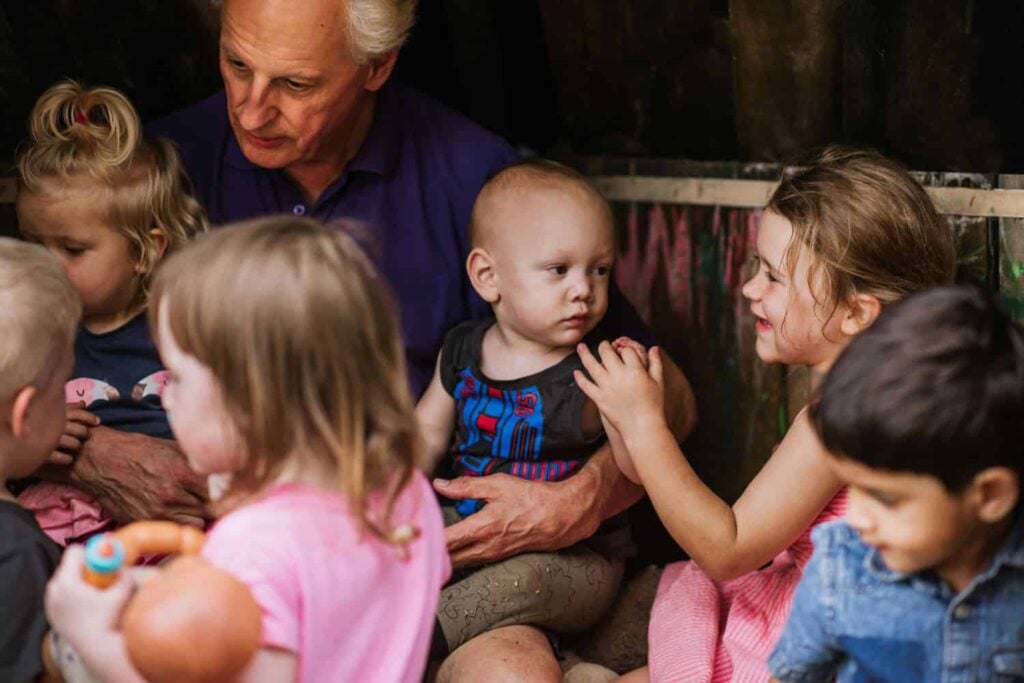
LGBT - image courtesy of www.spreadshirt.com for teacher t-shirts

Equality and acceptance of LGBT teachers in the New Zealand education system is still far from established.

Discrimination can be subtle, such as whispering the word ‘gay’ so that the children can’t hear, but can also be obvious and inappropriate through direct discrimination and exclusion.

Teachers, and particularly leaders, in early c

This is a member/subscriber only post. To access it, please see the message below for details on access and joining.
Already a Service Provider Member?

Not a member?  Service owners, managers, and community organisations may apply to join as a service provider.  

Five Reasons to Join Us
1. Marketing

It is prestigious to belong to the OECE. Membership is usually by invitation.  Online applications can be made if you think your service meets the criteria. To be a member a service must have as its first priority a focus on being high-quality for children and families.  It must also agree to follow the standards in the Code of Conduct for ECE Services.

Running a parent survey when you want to do one is simple – we handle it for you and provide you with a confidential copy of the results. We will also cover the cost of the survey.

Promoting your service online to parents is taken care of.  The OECE has partnered with the My ECE website and the ECE Parents’ Council Aotearoa to give members free advertising for their service.  For details directly contact My ECE

2. Professional

Free subscription access to the ECE Newsroom – your service provider member login will let you view everything in the ECE Newsroom

Complimentary access to over 25 years of published NZ and international research – your service provider member login gives you free access to the Research Library and support

3. Management

Management and ECE employment resources and advice will be at your finger-tips 24/7. We have so much available in the service provider area of our website – ranging from templates for policies, guidance on managing cashflow and debtors, staff drug use, negotiating pay with staff, and through to topics such as best sandpit design. 

We will make running a staff survey simple for you.  You can use our specially designed survey.  We collect the results and will provide you with a confidential report of the findings. (50% discount available to service provider members).

4. Representation

Did you know that the OECE meets personally and regularly with the Ministry of Education national team, and the regulations committee and other forums? 

Political leaders and journalists are able to use the OECE to gain deeper knowledge on a topic or issue, and we provide a sounding board for ideas and feedback.

Members have a direct line of communication with Dr Sarah Alexander, to bring to Sarah’s attention and discuss what’s affecting your service and community of children, families, and staff.

5. Value for Money

We are committed to keeping membership prices affordable and providing value for money. 

Membership rates start at just $250 for 12-months. Or join for 2 years for only $350.  For providers with multiple licensed services, the rates reduce per service the more licensed services you operate.  

Has this been useful?  Give us your feedback.

You are welcome to add a link to this page on your website. Copyright belongs to the OECE so please do not copy any content without our written permission.

Information provided is of a general nature. It is provided ‘as is’, and we accept no liability for its accuracy or completeness. See our Terms and Conditions.

Related Posts

teacher wages, pay scales, in childcare and early childhood education

What ECE Teachers and Workers Earn: Pay, Benefits and Conditions

Anyone thinking about getting a job in ECE working in ECE or thinking about moving to a different service will find clear, practical information in this article about pay rates, employment conditions, and what to expect in different roles. It explains everything from starting salaries and pay‑step calculations to workplace rights, benefits, and how to recognise a supportive, professional environment.

Read More »
Vaccination immunisation of children and educators teachers

Child Vaccination Requirements

Children’s Immunisation and ECE.  

One of the key international measures of a healthy population is a country’s percentage of children fully immunised against diseases.

The higher the immunisation rate, the more successful NZ is seen to be in protecting young children’s health.  However, there are things you need to know and issues

This is a member/subscriber only post. To access it, please see the message below for details on access and joining.

Read More »
Structural indicators of quality ECE and thinking

The Education of Young Gifted Children and Resource Issues

Gifted Children Identification and Resource Issues. Research Report by Valerie Margrain & Sarah Alexander.

An online survey was conducted on the education of young gifted children. The purpose of the survey was to gather information and sector views to help inform policy and practices for young gifted children and those who work with them.

This is a member/subscriber only post. To access it, please see the message below for details on access and joining.

Read More »
job description for early childhood teacher educator manager staff

Job Description for a Head Teacher, Room Leader, or Home-based Visiting Teacher

Job Description for a Head Teacher, Room Leader, or Home-based Visiting Teacher.

Here is a template to help guide you in preparing a job description that matches your service’s philosophy and reflects the position. This person will have additional responsibilities compared with other qualified and unqualified staff and educators.

If you wou

This is a member/subscriber only post. To access it, please see the message below for details on access and joining.

Read More »
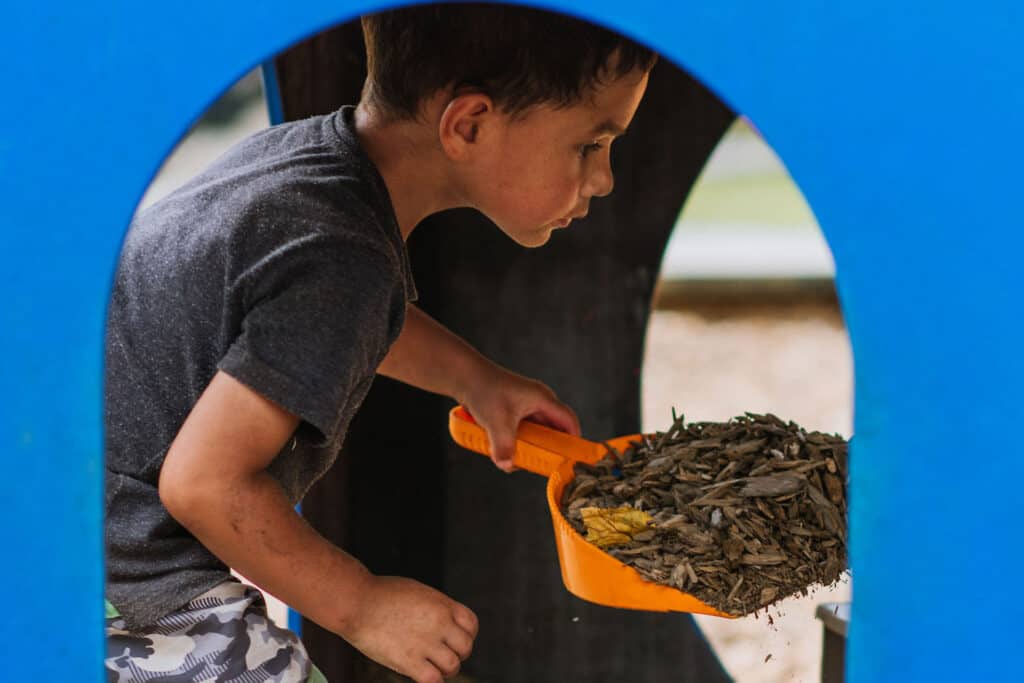
Boy busy in the preschool playground shovelling bark chips/ mulch.

Climate-Smart Pedagogies in Early Childhood Education and Development

FULL REFERENCE: Tiko, L. and Mosen. J. (2026). Advancing climate-smart pedagogies in Fiji’s early childhood education and development.  NZ International Research in Early Childhood Education Journal, 28(1), 6-19.

ABSTRACT: This commentary explores the imperative of embedding climate-smart education within Fiji’s Early Childhood Education and Development (ECED) sector, in response to the nation’s increasing vulnerability to climate change. It critically examines current ECED policies and practices, highlighting gaps in climate responsiveness and the need for locally grounded solutions. Drawing on Indigenous Fijian knowledge systems, including vanua-centered pedagogies (context-centered) and the Framework of Gifting Knowledge, the commentary advocates for a culturally relevant and climate-conscious approach to early education. It argues that empowering Fijian educators and communities to lead climate-smart ECED initiatives is essential for fostering resilience among young children. The commentary also critiques the reliance on external agencies and calls for a shift towards Fijian/Pacific-led strategies that align with Fiji’s national development goals and cultural values. By centering Indigenous epistemologies and climate justice, this paper contributes to the discourse on sustainable and equitable early childhood education in small island developing states.

Log-in to read the full paper below. Or order a pdf copy of the article from the main NZIRECE Journal page.

Key words: Climate-smart education, Indigenous epistemologies, Pacific-led resilience, climate change, child health, place-based education, nature-based, teacher education.

INTRODUCTION: Fiji, like many Pacific Island nations, faces significant climate vulnerabilities, including rising sea levels, severe weather events, and ecosystem changes that directly affect communities and children (Janif et al., 2016; IPCC, 2021). In this context, Early Childhood Education and Development (ECED) plays a vital role in building climate resilience and adaptive capacity. However, Fiji’s ECED policies and practices have yet to fully adopt climate-smart education frameworks that are both culturally grounded and locally driven (UNESCO, n.d.; Hemstock et al., 2020).

This commentary advocates reimagining ECED in Fiji by integrating climate-conscious pedagogy informed by Indigenous knowledge systems, such as vanua-centered learning and traditional ecological knowledge (Ali et al., 2025; Vunibola et al., 2024). It criticises reliance on external models and promotes a shift toward Pacific-led approaches that support Fiji’s development objectives, including the Climate Change Act 2021 and the Framework for Resilient Development in the Pacific. By emphasising Indigenous epistemologies and community engagement, climate-smart ECED can serve as a transformative tool for fostering sustainable futures in Fiji.


Read More »
colourful preschool blocks

NZK, Kelly Seaburg, Barnardos, and Te Rito Maioha Submission to the Ministry for Regulation on Licensing Criteria and the Regulatory System

“Shaping our Future”: The submission to the Ministry for Regulation of a grouping of service providers and their representatives.

A group of service providers and lobby groups want ECE services to be left to run themselves as they see fit.

They made a submission, titled “Shaping our Future” to the Ministry for Regulation calling for a self-regulation and monitoring scheme – the object of which would be to ensure that regulatory responsibility is not concentrated in the hands of the Ministry of Education (or any other government agency).

They include NZ Kindergartens Inc, Te Rito Maioha, Barnardos, a Home Base Childcare Association, and a group led by Kelly Seaburg (New Shoots) which has some of NZ’s biggest private operators like Busy Bees, Kindercare, and Evolve Education.

Read More »
The Office of ECE

Share This Information

Table of Contents

Table of Contents

The Office of ECE Login

Take Action!

Help spread this vital ECE information, join our free social and email groups and become a member of OECE.

pay parity funding policy

1. Share This Information

2. Follow Our Social Pages

3. Get Regular Updates

Sign up to our free newsletters.

4. Become a Member