
Kaiako/teachers with disabilities are warmly invited to participate in a research project being undertaken by a research team from the Open Polytechnic/Te Pūkenga and Te Rito Maioha/ECNZ.
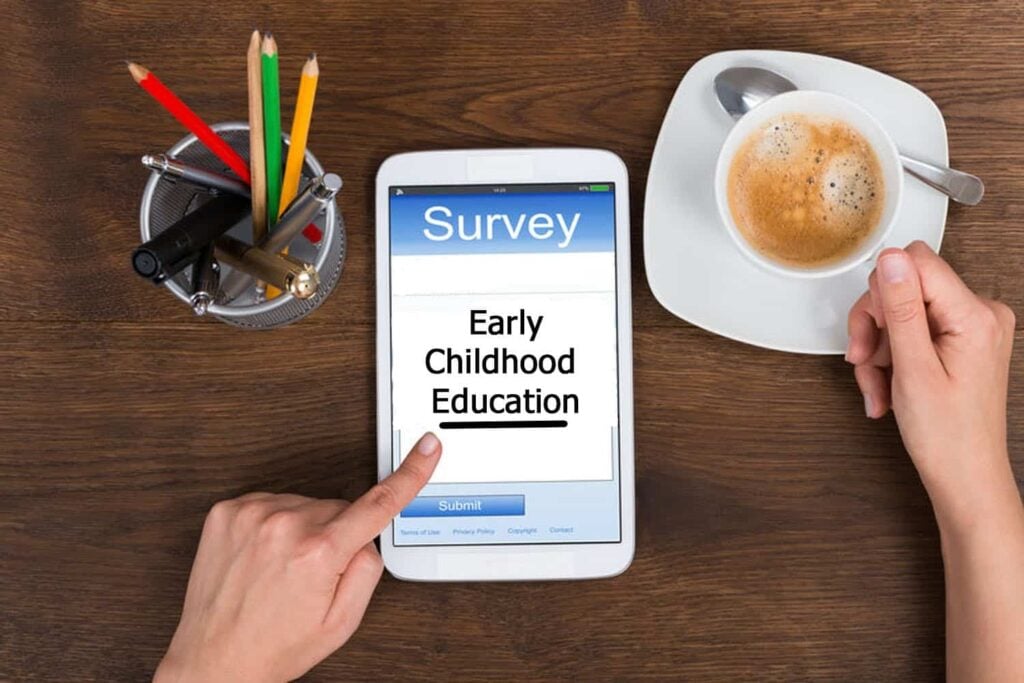
The project is investigating student kaiako and kaiako with disabilities experiences via an online survey.
Student teachers and kaiako can have a wide range of disabilities, including neurodiversity, learning, mental health, physical, sensory, and health. The purpose of this research is to find out more about what makes quality learning, teaching and workplace environments for student kaiako and kaiako with disabilities.
The survey is anonymous, and participation will in no way impact on your relationships with academic staff or students.
Participation is voluntary and is open to all early childhood student kaiako and kaiako with disabilities who are interested in sharing their experiences and contributing to research that seeks to deepen understanding of the barriers to and facilitators of equity in initial teacher education and the early childhood workplace. The survey should take no longer than 30 mins to complete.
If you know of other student kaiako and kaiako with disabilities who would be interested in participating in this survey, please forward this information and link to them. The questionnaire will remain open until April.
Further information, describing the study in more detail is provided below. Thank you in advance for taking an interest in this important kaupapa.
Ngā mihi,
Kerry Purdue, Veronica Griffiths, Erin Hall, Derek Hartley, Fleur Hohaia-Rollinson, Jackie Solomon, and Donna Williamson-Garner.
Kaiako with disabilities in ECE Survey- Information Sheet
Kia ora,
You are invited to take part in this research. Please read this information before deciding whether or not to take part. If you decide to participate, thank you. If you decide not to participate, thank you for considering this request.
Research project team
We (Kerry Purdue, Veronica Griffiths, Erin Hall, Derek Hartley, Jackie Solomon, and Donna Williamson-Garner (Open Polytechnic/Te Pūkenga), and Fleur Hohaia-Rollinson (Te Rito Maioha ECNZ) are academic staff members in early childhood education programmes at our institutions. We are undertaking a research project on student kaiako and kaiako with disabilities in early childhood education (ECE).
What is the aim of the project?
This project builds on our research related to kaiako with disabilities in ECE (Griffiths et al., 2023; Purdue et al., in press). Objective 3 of Aotearoa New Zealand’s He Taonga te Tamaiti, Every Child a Taonga: Early Learning Action Plan 2019–2029 (Ministry of Education, 2019) is directed towards ensuring a well-qualified, diverse, culturally competent ECE teaching workforce. The document also outlines actions needed to attract, retain and support diverse kaiako in the ECE sector. These actions include “reducing barriers to people with disabilities entering the teaching workforce” (Ministry of Education, 2019, p. 24).
Despite growing awareness in Aotearoa New Zealand of the equity and inclusion issues experienced by people with disabilities, further attention is needed to address the barriers that prevent student kaiako and kaiako with disabilities from participating fully in the early childhood education sector. For the purposes of this project, we are using The United Nations Convention on the Rights of Persons with Disabilities (UNCRPD) definition of disability which states that “persons with disabilities include those who have long-term physical, mental, intellectual or sensory impairments which in interaction with various barriers may hinder their full and effective participation in society on an equal basis with others” (United Nations, 2006, p. 4). Diversity in early years teams creates opportunities for tamariki, whānau, families and kaiako to learn more about differences together which is very important in our super diverse but still inequitable Aotearoa New Zealand and world.
Student kaiako and kaiako with disabilities currently working towards an early years teaching qualification and/or working within the sector can have a wide range of impairments, including neurodiversity, learning, mental health, physical, sensory, and health. The purpose of this research is to find out more about what makes quality learning, teaching and workplace environments for student kaiako and kaiako with disabilities. We are interested in what student kaiako and kaiako with disabilities tell us about their inclusion and exclusion experiences of training and working in early learning services, and the implications of these experiences for disabled kaiako rights, wellbeing and belonging. This research will deepen our understanding of the barriers to and facilitators of equity and inclusion in initial teacher education and the early childhood education workplace.
If you are a student kaiako or kaiako with disabilities, your participation will support this research by providing the sector with further insights into, and understandings of, how to ensure initial teacher education programmes and early childhood services are fair and equitable places. The information you provide will also help us to learn more about key factors that help attract and retain disabled kaiako in the early learning workforce.
This research has been approved by the Open Polytechnic of New Zealand Ethics Committee.
How can you help?
You are invited to participate if you are an early childhood student kaiako or kaiako with disabilities training or working in early childhood education. If you agree to take part, you will complete a questionnaire via the link below. The questionnaire will ask you several questions about your experiences as a student kaiako or kaiako with disabilities in early childhood education, and it will take you approximately 30 minutes to complete.
You can complete the questionnaire online or submit an audio response. (If you are providing an audio response to this survey, please upload your audio file at the end of the questionnaire. Note, only PDF, DOC, DOCX, PNG, JPG, JPEG, GIF files are supported. The maximum file size supported is 16MB.)
If the online questionnaire is not accessible for you and you would like to take part in this project, please get in touch and tell us how we can support you to participate. We are more than happy to make changes based on your needs.
What will happen to the information you give?
This research is anonymous. This means that nobody, including the researchers will be aware of your identity. By answering the questionnaire, you are giving consent for us to use your responses in this research. Your answers will remain completely anonymous and unidentifiable. We will endeavour to ensure your anonymity and non-identifiability. There may be potential for a reader to identify a participant’s experience in extracts used in a publication, although the likelihood of this is remote. Once you submit the survey, it will not be possible to remove the information you have provided. Please do not include any personal identifiable information in your responses (e.g., names of workplaces, people or locations). The research data will be securely stored for five years and then destroyed.
What will the project produce?
The information from our research will be used in academic publications and conferences. You can check our publications list on our staff website for research outputs related to this project.
You may be interested in reading an article from a 2023 study.
Purdue, K., Griffiths, V., Hall, E., Hartley, D., Hohaia-Rollinson, F., Malcolm, J., Solomon, J., Tate, A. & Williamson-Garner, D. (2024). Barriers to and facilitators of inclusion and equity for teachers with disabilities in early childhood education: Advancing the conversation in Aotearoa New Zealand. NZ International Research in Early Childhood Education Journal, 26, pp. 30 – 44.
If you accept this invitation, what are your rights as a research participant?
You do not have to accept this invitation to complete the questionnaire. If you do decide to participate, you have the right to:
- choose not to answer any questions (unless they are marked mandatory)
- leave the questionnaire and not complete it;
- receive a summary of the research findings. This can be requested by emailing Kerry.
If you have any questions or problems, who can you contact?
If participation in this survey has raised any issues for you, please contact your local NZEI branch representative, your GP (local doctor), or the Mental Health Foundation/Helpline for support.
If you have any questions, either now or in the future, please feel free to contact: Dr Kerry Purdue, Email: [email protected]
Human Ethics Committee information
If you have any concerns about the ethical conduct of the research, you may contact the Open Polytechnic Ethics Chair: Dr Steve McKinlay via the Research Office. Email [email protected] Ethics approval number: (EC-202411-10)