

ECE sector’s Government confidence at an all-time low, OECE survey results for 2025 show.
Every year the Office of Early Childhood Education (OECE) surveys 1000 people in the sector a few weeks before the Government’s Budget release to gauge its perception of the Government’s recent track record in ECE.
In 2025, participants included early childhood service employees (both qualified and unqualified kaiako), employers and service owners, advocates, sector veterans and recent retirees, as well as a handful of people in associated roles, such as teacher educators.
The results show that, overall, those at the coalface are increasingly pessimistic about the state of ECE in Aotearoa.
The majority of respondents said the Government was continuing to take the sector in the wrong direction – this has been the resounding view for five consecutive years.
In the words of one participant, a kindergarten employee:
Address the real issues – archaic government funding mechanisms and long-term supply of qualified teachers to the sector – and the direction could change.
As it is, I see more and more decisions made about profit over quality education.
During the last year, the Government has introduced sweeping changes to how the sector operates. Among these have been the removal of restrictions for opening new services, Cabinet’s acceptance of recommendations by the Ministry for Regulation to strip back regulations, and the scrapping of requirements for centre employers to pay relievers in line with pay parity scales.
In a bid to help ease the cost to teachers of practising, the Government has also decided to waive fees for teacher registration and the renewal of practicing certificates for the next three years.
Then, just last week, Workplace Relations and Safety Minister Brooke Van Velden announced plans to alter the criteria for pay equity claims. The move scrapped all existing claims that were yet to be finalised, including the teachers’ claim (which covered ECE teachers as well as their primary and secondary school colleagues).
The findings of our research show that, while some in the sector – particularly private centre owners – are supportive of these changes, on the whole the sector is disillusioned by them.
Unfortunately, the outlook for the next 12 months is equally grim. The sector isn’t feeling hopeful that things will improve anytime soon.
Results
1. Generally speaking, do you feel the Government is taking things in the right direction for ECE, or would you say things are seriously heading in the wrong direction?
Responses indicate confidence has hit an all-time low since the OECE launched the survey in 2018.
A net -73% of respondents believed the Government’s management of the ECE sector was going in the right direction. This compared to a net -63% of respondents at the same time last year.
TABLE 1
| Year | Right direction | Wrong direction | Neutral or can’t say | Net % right direction |
|---|---|---|---|---|
| 2018 | 26% | 42% | 32% | -16% |
| 2019 | 30% | 49% | 21% | -19% |
| 2021 | 16% | 55% | 29% | -39% |
| 2022 | 21% | 63% | 16% | -42% |
| 2023 | 13% | 72% | 15% | -59% |
| 2024 | 11% | 74% | 15% | -63% |
| 2025 | 9% | 82% | 9% | -73% |
*Survey did not run in 2020 due to Covid-19 pandemic.
A selection of the responses to this question
This is some of what those who thought the sector was going in the right direction had to say:
- “[It’s] moving in the right direction, and please remove pay parity, as it’s totally unenforceable for centre owners” – Private centre provider
- “Needs to be more common-sense and less unnecessary regulation” – Childcare company owner
- “I believe the positive changes include the removal of certain barriers that previously made it difficult for centres to qualify for higher funding bands. For example, the removal of the 80 discretionary hours reporting requirement and adjustments to the PR (Person Responsible) requirement have reduced administrative burden” – Private centre provider
- “We are a small amazing centre that needs less red tape” – Private ECE centre
These were some of the comments made by people who thought the sector was going in the wrong direction:
- “We need more qualified staff” – Teacher in a large daycare chain
- “The current government is stripping back years of hard mahi to get pay parity and pay equity for people in female dominated fields” – Manager of a private ECE service
- “How can the Government think that this is how we are able to be the best teachers we can, when everything they do belittles our teaching?” – Kindergarten teacher
- “The government is messing about with regulations which keep both kaiako and tamariki safe. There seems to be no value put on the work that kaiako do, or in the need for qualifications” – Kindergarten employee
- “Having been part of the quality ECE service and qualifications developed in the mid 1980s, I know that with this overt support of private provision where money is the focus our international reputation has slipped well down and out of the democratic balance between community and privatisation” – Retired ECE veteran
2. What about the outlook for the next 12 months specifically – do you think things will improve, worsen, or stay the same for the ECE sector?
Pessimism in the sector remains high. A net -77% of respondents were optimistic about the outlook of ECE.
TABLE 2
| Year | Improve | Worsen | Stay the same | Net improve |
|---|---|---|---|---|
| 2018 | 23% | 36% | 41% | -13% |
| 2019 | 12% | 46% | 42% | -34% |
| 2021 | 8% | 54% | 38% | -46% |
| 2022 | 4% | 63% | 33% | -59% |
| 2023 | 4% | 74% | 22% | -70% |
| 2024 | 7% | 78% | 15% | -71% |
| 2025 | 6% | 83% | 11% | -77% |
The main group of respondents who considered things to be rosier were operators/owners of education and care centres.
A selection of the responses to this question
Those who felt the outlook was improving said:
- “The Minister has given his assurance that he will change the licensing criteria and funding system, and that will be great for us and the sector” — Education and care centre owner
- “It feels like our sector is being taken seriously” – Education and care centre owner
- “They are looking to make things more equal across the ECE sector, which is a good thing. Everyone is choosing kindergarten because they are offering FREE [hours] for 2- and 3-year-olds and we cannot compete” – Community ECE centre provider
- “ECE should be easier to manage. I particularly like that they are addressing the double up of compliance issues, and working to reduce our ongoing work load of paperwork” – Ex-owner of many centres, and currently a centre manager
- “We have amazing unqualified teachers. Most of them are better than the qualified ones. To meet the registered percentage for higher funding, we are forced to recruit from overseas. These are lovely people, but they don’t understand our ECE kaupapa. I would rather get teachers who understand the NZ ECE kaupapa regardless of their qualification” – Education and care centre owner
Participants who felt the outlook was worsening said:
- “Ratios! Funding! Quality of learning and health and safety – all the above we struggle with!” – Kōhanga Reo
- “As a small home-based provider, it’s getting harder and harder to operate. Funding is inequitable across the sector and costs are rising, but the funding isn’t” – Home-based provider
- “Taking away the need for a locally based visiting teacher is definitely the wrong direction. This is not best practice and I can see the quality of care and support for educators go downhill drastically” – Home-based provider
- “Devastated that striving for best practice can be wiped out by those who have no appreciation of the importance of the early years and do not listen to the concerns of the sector. This is not just about early childhood education and care but also about decisions being made that impact negatively on children and their families” – Representative of a non-governmental organisation for child advocacy
3. How the sector rated the Government’s performance in improving the quality of ECE (from 1 to 5 stars, five being the highest)

This is what respondents said in their reviews:
- “This government does not understand education; it focuses on ‘productivity’ and ‘efficiency’. Children are not products to be built and used.”
- “Not enough considering more and more children are entering ECE in full time status each year, and these overcrowded centres are literally damaging their brains.”
- “A one-star rating reflects deep dissatisfaction—and I stand by that. There’s been a lot of talk, but not enough meaningful action. Quality ECE requires sustained investment in kaiako, fair pay, manageable ratios, and a genuine understanding of what tamariki and whānau need. Right now, it feels like the sector is being asked to do more with less, and that’s not sustainable.”
- “Removing the acknowledgment of tangata whenua and making it optional is disgusting. Another knife into our indigenous whānau.”
- “They talked the right talk at the beginning about making it easier to provide quality without the bullshit but not looking like it’s happening now.”
4. How the sector rated the Government’s performance in improving ECE staff pay and working conditions (from 1 to 5 stars, five being the highest)

On this topic, participants said:
- “The Budget will be interesting. The new policy changes (teacher registration fees free for the next three years) are just a front for the lack of other things that should be addressed: funding and staff salaries and ratios.”
- “The last two years have been a circus of on and off pay parity. No certainty for EC kaiako at all!”
- “Removing pay parity for relievers is a backward step. Capping at pay step 6 like for kindergarten teachers would have been better.”
- “My husband works as a lifeguard, I have a Bachelors degree, but he gets paid more!”
- “The new living wage increase to $28.95 an hour that’s coming up is higher than the first couple of ECE pay steps for a qualified and registered teacher. Pay parity has got to be addressed, and has got to keep up with kindergarten and school teacher pay.
5. How the sector rated the Government’s performance in reducing ECE costs for families and improving affordability (from 1 to 5 stars, five being the highest)
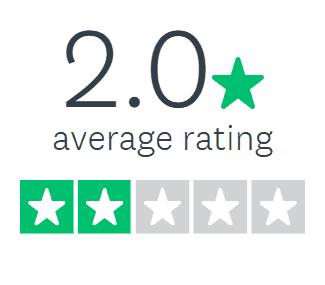
These are examples of respondent’s comments made alongside their ratings:
- “Most kindergarten associations do a much better job of making ECE more affordable than the government does.”
- “Have they done this? Anything put in place, like Family Boost, seems farcical as costs in other areas continue to rise. There is no reduction of costs for families – it’s all smoke and mirrors designed to baffle with bullshit.”
- “Reducing qualified teachers and red tape and [having] more centres won’t make ECE cheaper for families, it will just mean more profit. The FamilyBoost scheme’s quarterly payments are complicated and I’m hearing families miss out when they have too many pay cycles in that quarter, when they may otherwise have been entitled to a small amount of help.”
- “When a government strips the money earning potential of our most vulnerable populations it has already created a barrier for people to be able to send their children to ECE. When they start stripping quality out of ECE, that is also a barrier to the service.”
What next?
The confidence survey results show pay equity and parity, insufficient ratios and resourcing and funding issues continue to be some of the biggest pain points of the sector.
Clearly, the government does not have a good understanding of what quality or even good early childhood education and care is like and requires.
Now, the pressing questions are:
- Will there be anything in Budget 2025 to reverse the grim situation the ECE sector is perceived to be in?
- Can the Coalition Government Ministers listen better to views within the sector and respond with policies that will be viewed as being good for children and enhancing the quality of care and education the sector can provide?
- Seeing these problems, will other political parties actively call the Government out on decisions and changes that have potential to, or will, make things worse still? To date, only the Green Party has put forward an alternative.