
Bungle Over new Te Whāriki Curriculum

Search Newsroom Posts
Te Whāriki

April 12, 2017.

A new early childhood curriculum replacing the current ‘Te Whāriki’ document has been published on the Ministry of Education website. It was without prior announcement until its release today and near the eve of the long Easter weekend and the start of term break.

The curriculum’s draft revision faced strong criticism from many in the sector regarding content and presentation, and the Federation of Rudolf Steiner Schools sought legal advice and wrote to the Minister claiming that the consultation process breached statutory and legal requirements.

Dr Sarah Alexander says that the final copy is significantly better than the draft, the Ministry having obviously put in a large effort to get things right.
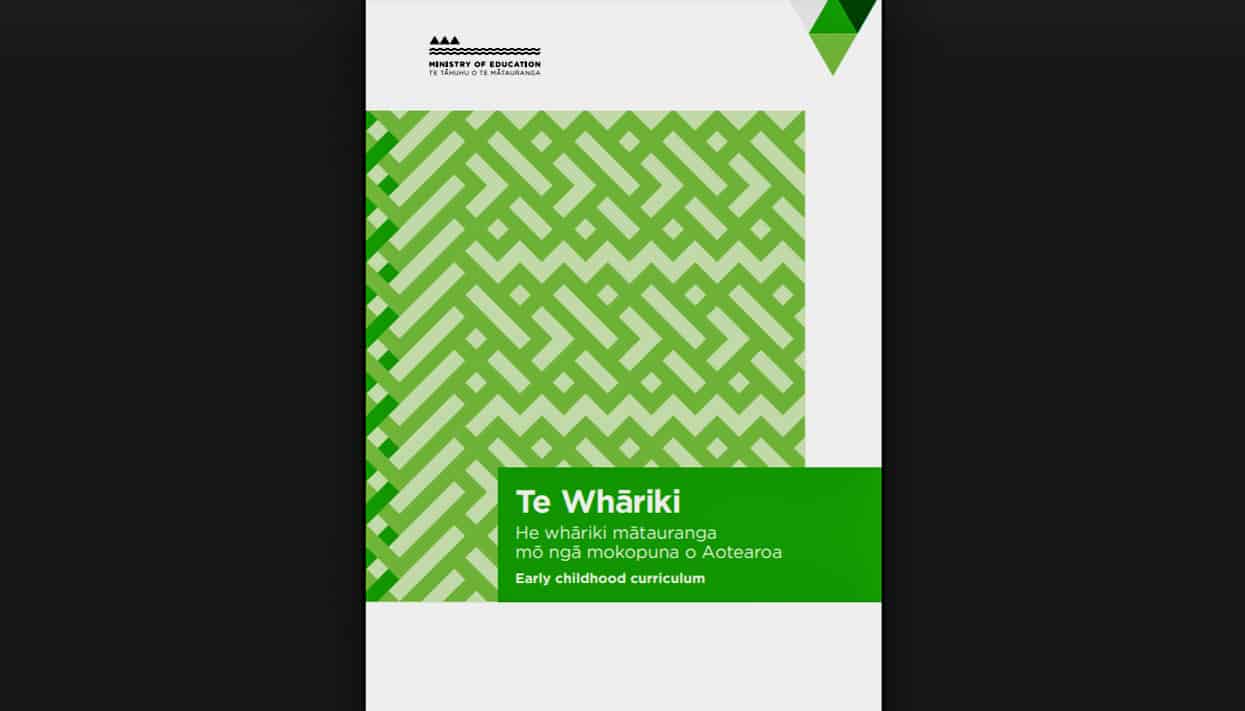
te whariki  2017 news release

“However, there remain some major deficiencies that could have also been put right had the Ministry done more work on this.

“Many teachers were expressing a lack of ownership and sense of disempowerment owing to the way the Ministry consulted the sector over a draft revision and the short time frame just before Christmas,” says Dr Alexander.

Teachers were not given an opportunity to view and give feedback on another iteration of the draft following the pre-Christmas-rushed consultation to make sure it is the best it can be before the final copy was published today.

The lack of consultation and engagement in discussions with parents throughout NZ has also been disappointing given that children are not participating in formal compulsory education.

“The curricula of other countries were not reviewed and drawn on to make use of international knowledge and experience since it was first written 20 years ago. It also does not appear that the final document has had any independent international expert review, which is unfortunate”, says Dr Alexander.

Dr Helen Hedges, a writer contracted by the Ministry to re-write the curriculum, commented in a blog on the short time frame for revision saying, “I was honoured to be selected to be part of the writing team to update and revise the document – in an impossibly short time frame.”

In a video celebrating 20 Years of Te Whāriki, Professor Helen May, a lead writer of the original curriculum emphasised that curriculum should not be prescriptive.

“From the start, we had a vision of a fully qualified early childhood workforce. We did not put this in Te Whāriki but we did pitch it at a level that assumed teachers would have theoretical knowledge, the cultural knowledge, and the professional judgment, to weave the curriculum with their whanau, with the children, with their colleagues.”

Dr Alexander warns that by the Ministry adopting the word ‘kaiako’ and defining it in a footnote explicitly as encompassing all qualified and unqualified teachers, instead of defining kaiako as teacher and leaving it at that, the path has been laid for the de-professionalism of early childhood teaching.

In the new Te Whāriki document, the Ministry also states:

“Although ECE services use a range of different terms, this document uses kaiako because it conveys the reciprocal nature of teaching and learning.”

Dr Alexander says that this may leave early childhood teachers wondering about the purpose of becoming qualified and retaining their certification and why they are referred to as ‘kaiako’ when all school teachers are not and teaching and learning is also reciprocal at school level.

According to Prof May, the original Te Whāriki was not designed to be a curriculum that told teachers what to do. At the time one large childcare chain operator even advised the writers they should “just make it easy for my girls so they’ll know what to do on Monday”.

The new Te Whāriki had been designed more towards telling teachers what to do and it outlines evidence to be collected on children’s learning and states what children must demonstrate to show they have achieved learning outcomes.

“There is now a real possibility of movement towards checklist teaching,” says Dr Alexander.

“Our young children must be able to have an unpressured early childhood with rich learning experiences and play. This is probably not the path that most parents and teachers would want to see New Zealand early childcare and education services take.”

Already subscribed?
ECE Newsroom

NZ’s own specialist ECE newsroom. 
Access national and local stories, in-depth analysis, & original commentaries.  

Membership Support for Teachers & Educators

(Comes with free Newsroom and Research access)

Membership Support for ECE Service Owners, Managers, & Community Organisations

(Comes with free Newsroom and Research access)

Researchers & Tertiary Education Libraries

Full access to over 25 years of ECE academic research articles – NZIRECE Journal.
Plus, guidance and resources on doing and publishing research

Has this been useful?  Give us your feedback.

You are welcome to add a link to this page on your website. Copyright belongs to the OECE so please do not copy any content without our written permission.

Information provided is of a general nature. It is provided ‘as is’, and we accept no liability for its accuracy or completeness. See our Terms and Conditions.

Related Posts

teacher wages, pay scales, in childcare and early childhood education

What ECE Teachers and Workers Earn: Pay, Benefits and Conditions

Anyone thinking about getting a job in ECE working in ECE or thinking about moving to a different service will find clear, practical information in this article about pay rates, employment conditions, and what to expect in different roles. It explains everything from starting salaries and pay‑step calculations to workplace rights, benefits, and how to recognise a supportive, professional environment.

Read More »
Early childhood education financial and money matters

Maximising 20-Hours ECE Funding Around Public Holidays

20-Hours ECE Changes.

When a service is closed for statutory holidays and is not providing care for children it does not receive funding.

Unfortunately this can mean a loss of income for a service, which is difficult especially when there are still wages and other costs to pay.

However, there is a trick to getting around this. &nbsp

This is a member/subscriber only post. To access it, please see the message below for details on access and joining.

Read More »
Happy toddler showing pleasure.

Funding Parents, Not Just Childcare Services

Parents overseas are being offered a financial choice to either stay home or use early childhood education, a policy framed as expanding fairness and and choice. Why other governments should back this shift in funding from the service to parents is explored in the full article.

Read More »
Child being comforted by early childhood teacher after bumping their head.

Head injuries, choking and an explosion among 200+ health and safety incidents at ECE services

A child’s neck became wedged in a fence and their breathing was restricted after they fell off a bike while attending early childhood education.

The injury was one of 244 serious incidents that ECE services notified to national health and safety regulator.

More than half of the injuries involved trips, slips or falls, the Office of Early Childhood Education’s analysis of the data, which we obtained under the Official Information Act, found.

What is a notifiable injury or illness? From the WorkSafe Website: All injuries or illnesses that require (or would usually require) a person to be admitted to hospital for immediate treatment are notifiable. A notifiable incident is an unplanned or uncontrolled work-related incident that exposes the health and safety of workers or others to a serious risk arising from immediate or imminent exposure to such dangers as a gas leak or explosion. A notifiable event is any of the following work-related events: a death, a notifiable injury or illness or a notifiable incident.

Incidents included:
– A child being given food they were allergic to.
– A child eating laundry powder after following a staff member into the laundry room.
– A child sliding down a piece of play equipment with a plastic tube in their mouth, leading to the tube hitting the back of their throat “with force” as they hit the ground. 

This is a member/subscriber only post. To access it, please see the message below for details on access and joining.

Read More »
moles article 2

Museum Visit

Museum visit with children.

You might think museums are stuffy.  But, they can be interesting even for younger children particularly if there are hands-on activities.

A trip to the museum can be a great springboard for learning.  It can provide inspiration and play ideas for many weeks following. 

Here are some suggestions

This is a member/subscriber only post. To access it, please see the message below for details on access and joining.

Read More »
early childhood research journal online

It is Difficult to Review the Quality of Education if You Don’t Know What Children are Learning: ERO and Self-Review of Early Childhood Services

A critical look at the New Zealand Education Review Office’s draft guidelines for reviewing early childhood services is provided in this paper. ERO’s guidelines provide a range of “evaluation indicators” to inform centres as to what is considered to be effective practice. The indicators that ERO provides in relation to the assessment of chi

This is a member/subscriber only post. To access it, please see the message below for details on access and joining.

Read More »
The Office of ECE

Share This Information

Table of Contents

Table of Contents

The Office of ECE Login

Take Action!

Help spread this vital ECE information, join our free social and email groups and become a member of OECE.

pay parity funding policy

1. Share This Information

2. Follow Our Social Pages

3. Get Regular Updates

Sign up to our free newsletters.

4. Become a Member