
Beyond Quality in Early Childhood Education & Care Postmodern Perspectives

Search in Research
child climbs fruit tree

Beyond Quality in Early Childhood Education & Care Postmodern Perspectives by Gunilla Dahlberg, Peter Moss & Alan Pence.
This review was first published in the NZJES journal, 34(2), 1999,  pp. 368 – 369. Reviewed by Dr Sarah Alexander. 

Beyond Quality challenges the discourse of early childhood education and over two decades of a substantial amount of research on the measurement of programme quality.

The authors’ interests in early childhood education differ and they live in different countries – Sweden (Dahlberg), England (Moss) and Canada (Pence) – but the book represents a coming together of international researchers who have a shared unease with the way quality is currently defined as universal and measurable indicators related to outcomes in children’s development.

The arguments presented from philosophical and pedagogical perspectives are seductive, and the book could well provide a turning point in the thinking of many researchers, academics and policy-makers on what quality means in early childhood education and how quality can be achieved (if it can ever be fully realised in practice).

The problem with the current view of quality was first addressed in a published book edited by Moss and Pence in 1994 entitled Valuing Quality in Early Childhood Services. That book reflected the difficulties researchers had in moving from the positivist paradigm toward recognition of multiple perspectives on quality. While there has been some acknowledgement in recent years of the need to consider values and stakeholder views, researchers have in the main continued to argue for quality to be defined narrowly in terms of child development outcomes. This has been due to a fear that an otherwise “anything goes” relativism could result.

Beyond Quality extends the values-based approach detailed in the earlier book, and taking a postmodern perspective, argues that researchers cannot continue to claim the “truth” and the right to define quality for others.

The authors contend that the supposedly indisputable knowledge promulgated by experts – and their practice of reducing the complexities of early childhood settings to set of rationale measurable criteria – is philosophically indefensible. To quote: “Method has been emphasised at the expense of philosophy, the ‘how’ rather than the ‘why’ prioritised” (p.99). In developing this argument the authors examine the images or constructions of the child, the purposes of early childhood institutions, and locate these within the times (historical, social, and economic) in which we live. The authors use the terms “minority world” and “majority world” to argue that a small part of the world – the developed countries – has defined quality for the majority.

Beyond Quality provides more than a theoretical discussion about the problem with quality; it also incorporates detailed explanations of practice from a postmodern perspective, including work in Stockholm and with aboriginal peoples of Canada. These examples show that there are possibilities for local action and the development of new meanings and practices. Of likely major interest to readers is the advancement of the concept of “meaning making”. Meaning making is about “what is going on in the pedagogical work and other projects in the early childhood institution, in particular making visible and public what children are actually doing, through various forms of documentation, and about different people entering into dialogue about that work” (p. 109). Pedagogical documentation is discussed as an example of how critical thinking and reflection can combine to open up new ways of thinking and new practices.

By arguing against, and proposing an alternative to the predominant view of quality, the authors could be placing their acceptance in the research community at risk. I think, though, that while the authors have gone out on a limb the thoroughness and care which has gone into this book will mean that in the years to come they will be recognised as having written the authoritative text on the problem with the way quality has been perceived, researched, and controlled.

Beyond Quality is probably not a very straightforward read for people who do not already have a good knowledge of the debate on quality within the early childhood literature or of the questioning of positivism within the field of psychology. Having said this, the authors do define key terms and try to make the book accessible to a wide readership, although the depth of philosophical discussion and ideas presented makes this a book that will probably only interest academics. Perhaps a further project for the authors would be to prepare a publication to assist practitioners in questioning the current view of quality, taking inspiration from examples such as the work in Reggio Emilia and Stockholm.

In New Zealand a national quality assurance system is in the planning stage for all early childhood services and is to be linked to funding from government. It is to be hoped that this book has not come out too late for the people behind this proposal to question the reasons for and the usefulness of yet another layer of requirements.  Dahlberg, Moss and Pence point out that “original and inspiring work, such as Reggio, comes about from a mix of structure and agency, but while structure can be legislated for, agency can not be” (p. 16). They suggest the development of local knowledge and local action to enable the individual, the group, and the community to engage in critical thinking and meaning making, and to take responsibility and develop new ways of thinking and doing.

Published by Falmer Press, London.
ISBN 07507 07690
Leave a Reply

Already a Research Subscriber?
Reasons to Subscribe
Tertiary education libraries and individuals.

Enjoy online access to full copies of the latest issues of the NZ-International Research in ECE journal and more than 25 years of past issues of peer-reviewed published articles.

You will also have access to the NZ Doctoral thesis (Ph.D, and Ed.D) and the NZ Master’s thesis directory of theses relevant to early childhood education and care.

For those who are new to doing research, thesis supervisors, and conference paper selectors, we have a range of articles to inform and support you.  These include a guide to ethics when doing, writing, and disseminating research; reviewing abstracts and conference submissions, and more.

Sign-up now

Are you a teacher educator or academic, a practitioner, or a policy advisor, who is keen to keep up with ECE research?

Maybe you are planning to do some research yourself? Or maybe you are advising and supervising students who are undertaking projects?

Enjoy unrestricted access to the hundreds of articles in the Research Area of our OECE website.

Choose your own username and password when you subscribe online. This will be your login for access.

Libraries can request IP address access for staff and students on the library site, instead of password access.  Please note that this is dependent on whether system settings at your end can support this.

Your investment

Personal research user membership – $79.00 for 12-months

Libraries and tertiary education institutions – $250.00 for 12-months

Please see and abide by the Terms & Conditions of membership.

Article copyright belongs to the OECE / ChildForum. You are welcome to add a link to this research article on your website.

Related Posts

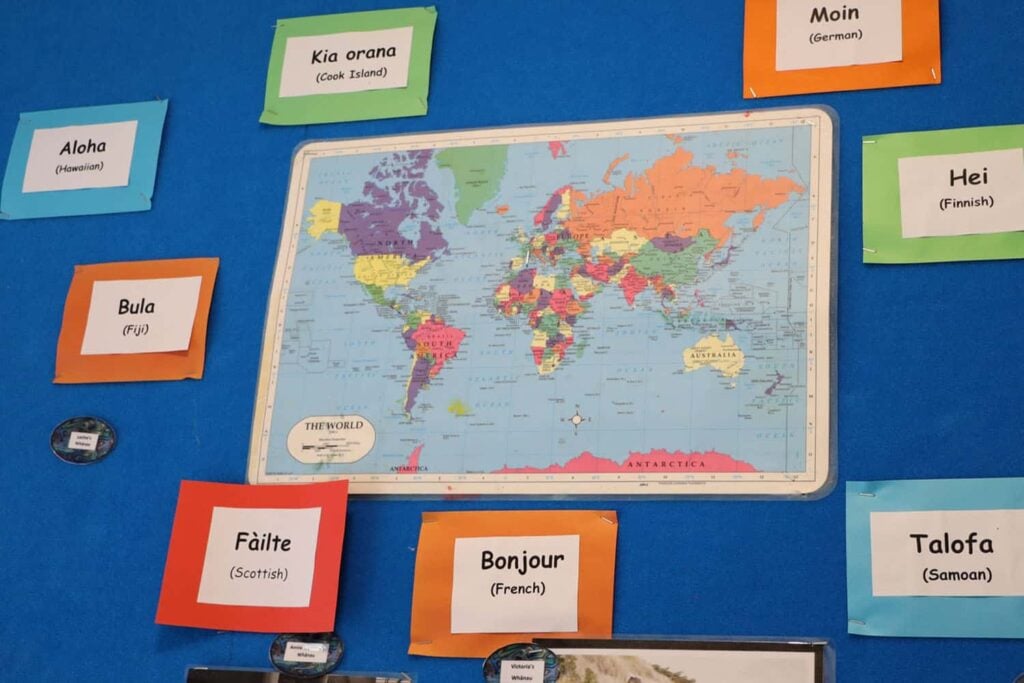
Multi-cultural awareness and providing a curriculum that supports the culture of families at early childhood centres and services.

Teaching Overseas or Coming to NZ? Don’t be Disadvantaged

Returning to Teaching in NZ or Going Overseas to Teach.

This article covers key things to be aware of, plan for, do, and get evidence of, to reduce the possibility of disadvantage upon your return to NZ. 

Working in an early childhood overseas can be an enriching experience and a good way for teachers to continue their

This is a member/subscriber only post. To access it, please see the message below for details on access and joining.

Read More »
early childhood research journal online

Breach of Trust – Getting it Right for Children in Early Childhood Care and Education in Ireland

Breach of Trust – Getting it Right for Children in Early Childhood Care and Education in Ireland.

Mary Moloney. Mary Immaculate College, Ireland.

Full Reference: Moloney, M. (2014). Breach of trust – Getting it right for children in early childhood care and education in Ireland. NZ Research in Early Childhood Education Journal. Special

This is a member/subscriber only post. To access it, please see the message below for details on access and joining.

Read More »
young toddler reading book at kitchen table while having a snack

Teaching Pre-Reading Skills

Teaching Pre-Reading Skills. By Barbara Morris.

Is it important for parents and early childhood educators to be involved in teaching pre-reading skills to children? Yes it is!

Parents play an important part in helping their children acquire pre-reading skills. There are many ways early childhood educators can support the acquisition o

This is a member/subscriber only post. To access it, please see the message below for details on access and joining.

Read More »
early childhood research journal online

Advocating for a Comprehensive Approach to Assessment in New Zealand Early Childhood Education

Advocating for a comprehensive approach to assessment in New Zealand early childhood education.

Qilong Zhang. Waiariki Institute of Technology, NZ.

Full Reference: Zhang, Q. (2015). Advocating for a comprehensive approach to assessment in New Zealand early childhood education. NZ Research in Early Childhood Education Journal, 18, 67 –

This is a member/subscriber only post. To access it, please see the message below for details on access and joining.

Read More »
Child playing nurses and doctors, puts a plaster on an a baby's leg.

Waiver Forms

Waivers and Indemnity against theft or damage to a child’s belongings, injury, or death.

An early childhood service may choose to include a waiver or disclaimer for parents to sign at the time of enrolment. This may be included in the enrolment form or as a separate form.

The service may ask the parents/caregivers of a child with a serious

This is a member/subscriber only post. To access it, please see the message below for details on access and joining.

Read More »

Are you teaching and caring for children or studying for an ECE qualification?

If you are, that’s great!   Join us now, and become a teacher member.

The Office of ECE

Share This Information

Notice for Students and Library Users
You are able to access all Journal Research articles under the library's subscription. But unless you hold a personal membership you are missing out on a whole lot of valuable teaching and policy articles and other important information. At home, or on your mobile device that is not linked to your institution or library's internet or subscription - click on the JOIN button below.

Table of Contents

Table of Contents

The Office of ECE Login

Take Action!

Help spread this vital ECE information, join our free social and email groups and become a member of OECE.

pay parity funding policy

1. Share This Information

2. Follow Our Social Pages

3. Get Regular Updates

Sign up to our free newsletters.

4. Become a Member