

Prof Heather Joshi – Director Of One of Britain’s Largest Studies of Children and their Families

Search Entire Website
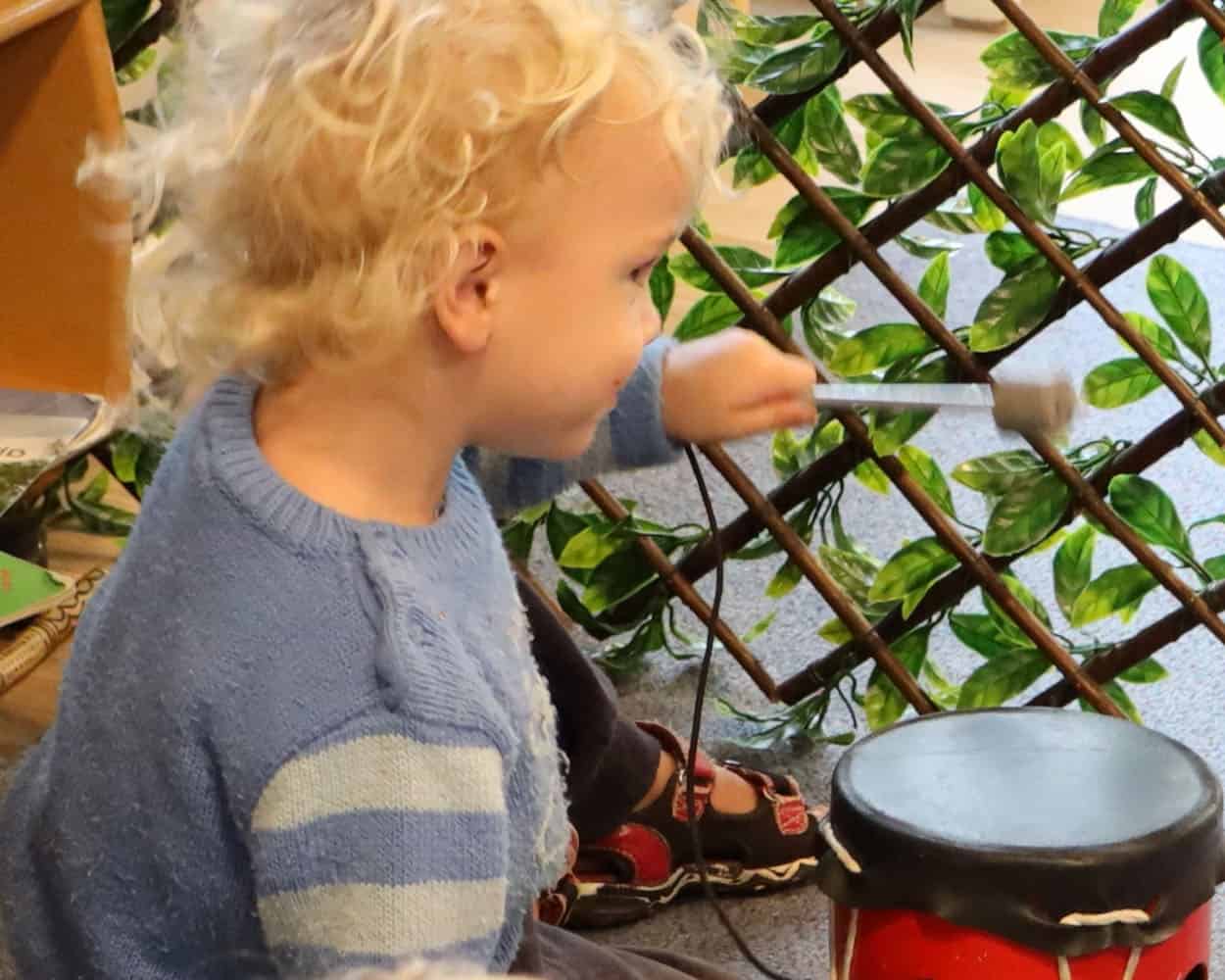
Daycare toddler is banging a drum - listen to me!
heather joshi

Heather Joshi.
May 16, 2010
.

Professor Heather Joshi is the former director of the Centre for Longitudinal Studies in London where she oversaw one of Britain’s largest current studies of children and their families – the Millennium Cohort Study. This gave her overall responsibility for the three national birth cohort studies: NCDS, BCS70 and MCS.

Her research interests include child development, family issues, gender and economics and recently she has published a number of papers on the impact of working mothers.

She studied politics, philosophy and economics at Oxford University and her 40 year career has seen her work in places including the UK Home Office and the London School of Hygiene and Tropical Medicine.

She has statistics at her fingertips to illustrate the position of women in the workplace but she needs look no further than her own family to show how things have changed.

Her great grandmother was a school teacher but left her job when she got married. Her grandmother was one of the first women to graduate from the London School of Economics but stopped work when she was expecting her first child and even her mother, just half a century ago, took a 24 year break from her career as a marine biologist to care for her children and elderly relatives.

“I am immensely proud to say that from 1967 she became one of the world’s leading authorities on biological aspects of marine oil pollution,”  Professor Joshi says.

“I deeply regret that she didn’t have more opportunity to make more of a scientific contribution in her frustrated years at home. The pressures on even as strong a woman as her fifty years ago may seem hard to appreciate these days.”

Professor  Joshi has been able to do what her ancestors couldn’t and mix a successful career with raising children but she says she couldn’t have done it without the help of some “excellent nannies”, many of whom now have families of their own but remain in touch

Despite combining her own career and motherhood Professor Joshi has campaigned, albeit by her own admission unsuccessfully, to change the definition of working mother to encompass all mothers, not just those in paid employment, saying she finds it demeans the unpaid work involved in raising children which “deserves respect even if it is a full-time occupation for some”.

She was awarded an OBE in 2002 for services to women.

Heather has shared her knowledge with us on the effects on children of mothers going back to work/ employment.


Has this been useful?  Give us your feedback.

You are welcome to add a link to this page on your website. Copyright belongs to the OECE so please do not copy any content without our written permission.

Information provided is of a general nature. It is provided ‘as is’, and we accept no liability for its accuracy or completeness. See our Terms and Conditions.

Related Posts

change infant nappies in childcare

Trusted Woman ECE Centre Teacher Engaged in Sexual Exploitation of Children

Indecent pictures of children, including bathroom pics, were taken by teacher “K” at her early childhood centre, using her mobile phone and shared online. 

Parents at the UK early childhood centre she worked at described her as bubbly, friendly, and competent. She was a married woman and mother, and the kind of person you would assume you could trust with your child.

The abuse went unnoticed at the centre and only an accidental discovery by a businessman, whose partner stumbled across the images on a computer, brought the abuse to light resulting in prosecution.

What can we learn from this case of a female teacher sexually abusing children?  We learn that:

There is a danger for children of allowing camera phones or technology in centres that could transmit images of them.

It is commonly believed that women do not engage in paedophilia and that only men abuse young children – however there is possible under-reporting of women who abuse young children.    

This article looks at issues of centre governance and management that allowed this to happen to identify how governance and management can be improved. It looks also at the importance of staff/teacher supervision and the role of students on teaching practice/placement. 

The story as reported by the Plymouth Safeguard Children Board is summarised below highlighting the main concerns about the system and the centre itself including staff relationships, staff and child supervision, policies, and structure.

Keep children safe in your ECE service

1. Make sure your service meets the National Code for Early Childhood Service Conduct

Section 2(d) of the Code states: “No person while providing care and education will have a personal electronic device that can take photos or videos unless the device is authorised for essential purposes (such as for communication at a time of emergency). Only service-issued electronic devices are used when taking images or videos of children. The appropriate use of service-issued electronic devices and storing of images and videos of children is clearly outlined in our policies and procedures.”

2. Have an effective complaints policy and whistle-blowing procedures at your service, for any staff or parent to report their concerns safely (anonymously and without fear)

3. Ensure your service has a robust Child Protection Policy – learn more and review and improve your current policy.

4. Have safe recruitment procedures, including using values-based interviewing techniques and questions when interviewing job applicants.

Keep reading below to learn more about what happened at the centre.

The Centre is called “Z” and the teacher is “K”.

This is a member/subscriber only post. To access it, please see the message below for details on access and joining.

Read More »
Edible_gardens_2

Creating Edible Gardens with Children

Edible gardens in early childhood centres and homes provide a valuable resource for teaching many aspects of the early childhood curriculum while also creating and sustaining a regular growth and supply of fruits and vegetables.

One of the joys of encouraging children into gardening is the pleasure of seeing, tasting and sharing the results of the effort.  Dispositions such as perseverance and curiosity are nurtured through the experience of growing and tending to plants.

Gardening provides a real, as opposed to an artificial, context for the learning of natural science, maths, and language. 

On this page we present information and guidance on: purposes of an edible garden, what size and structure works well, produce use, and which plants are most suitable to grown in ECE for speed, fun, and for children to eat.

Motivations and reasons for an edible garden include

This is a member/subscriber only post. To access it, please see the message below for details on access and joining.

Read More »
The Office of ECE

Share This Information

Table of Contents

Table of Contents

The Office of ECE Login

Take Action!

Help spread this vital ECE information, join our free social and email groups and become a member of OECE.

pay parity funding policy

1. Share This Information

2. Follow Our Social Pages

3. Get Regular Updates

Sign up to our free newsletters.

4. Become a Member

Public Area Categories
Categories