

Curriculum Policy

Search in Service Provider
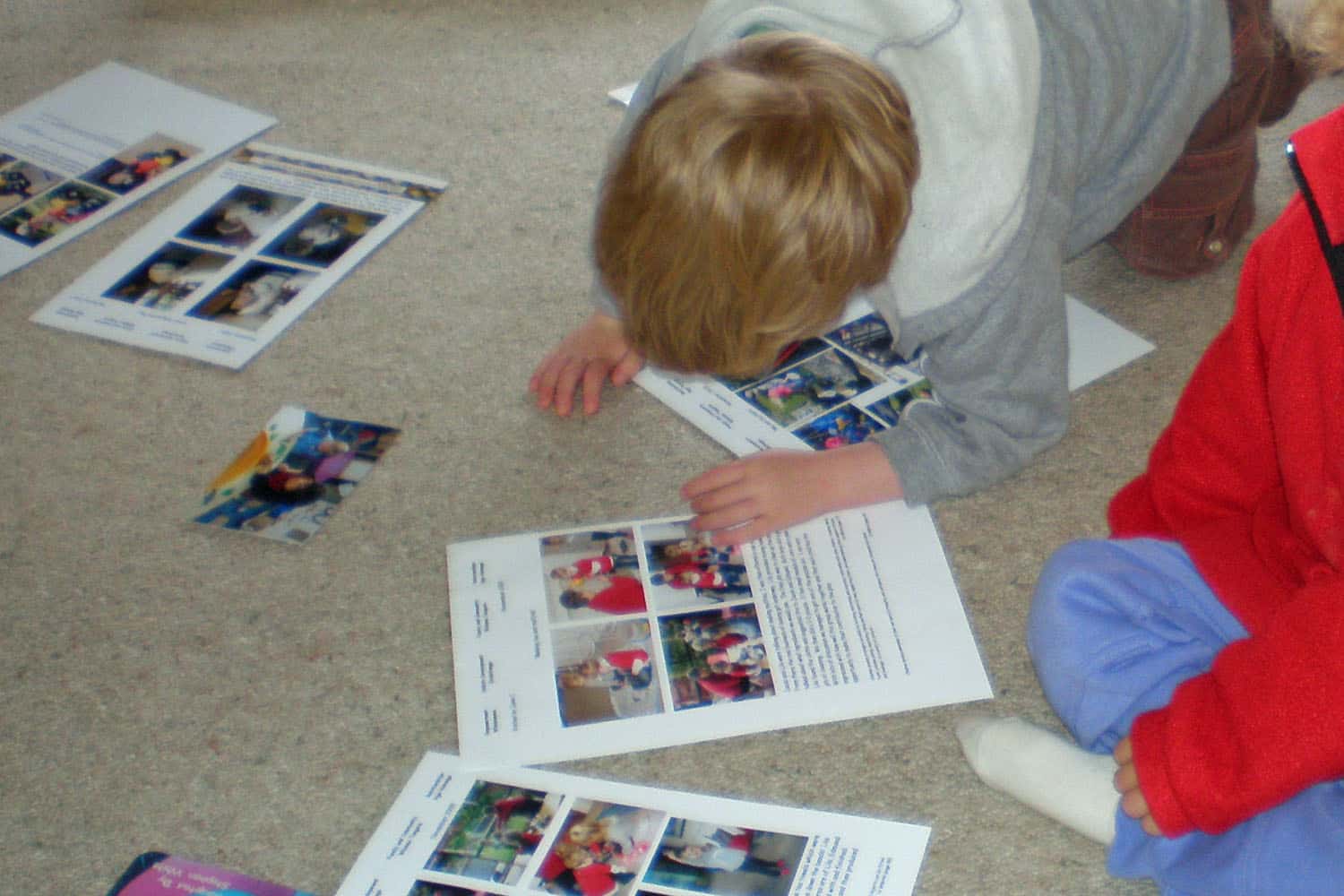
learning stories children looking at their photos

Use and adapt the following curriculum policy to suit your service and meet regulatory requirements.

Your curriculum policy must be consistent with the curriculum framework and be informed by assessment, planning, and evaluation (documented and undocumented) that demonstrates an understanding of children’s learning, their interests, whānau, and life contexts.

As well as providing a curriculum policy template for you, we’ve included the questions the Ministry of Education commonly asks and focuses on when it is checking an ECE service’s curriculum policy and implementation.

RATIONALE:
To ensure the process of planning, evaluating and delivering a localised curriculum is consistent with

This is a member/subscriber only post. To access it, please see the message below for details on access and joining.
Already a Service Provider Member?

Not a member?  Service owners, managers, and community organisations may apply to join as a service provider.  

Five Reasons to Join Us
1. Marketing

It is prestigious to belong to the OECE. Membership is usually by invitation.  Online applications can be made if you think your service meets the criteria. To be a member a service must have as its first priority a focus on being high-quality for children and families.  It must also agree to follow the standards in the Code of Conduct for ECE Services.

Running a parent survey when you want to do one is simple – we handle it for you and provide you with a confidential copy of the results. We will also cover the cost of the survey.

Promoting your service online to parents is taken care of.  The OECE has partnered with the My ECE website and the ECE Parents’ Council Aotearoa to give members free advertising for their service.  For details directly contact My ECE

2. Professional

Free subscription access to the ECE Newsroom – your service provider member login will let you view everything in the ECE Newsroom

Complimentary access to over 25 years of published NZ and international research – your service provider member login gives you free access to the Research Library and support

3. Management

Management and ECE employment resources and advice will be at your finger-tips 24/7. We have so much available in the service provider area of our website – ranging from templates for policies, guidance on managing cashflow and debtors, staff drug use, negotiating pay with staff, and through to topics such as best sandpit design. 

We will make running a staff survey simple for you.  You can use our specially designed survey.  We collect the results and will provide you with a confidential report of the findings. (50% discount available to service provider members).

4. Representation

Did you know that the OECE meets personally and regularly with the Ministry of Education national team, and the regulations committee and other forums? 

Political leaders and journalists are able to use the OECE to gain deeper knowledge on a topic or issue, and we provide a sounding board for ideas and feedback.

Members have a direct line of communication with Dr Sarah Alexander, to bring to Sarah’s attention and discuss what’s affecting your service and community of children, families, and staff.

5. Value for Money

We are committed to keeping membership prices affordable and providing value for money. 

Membership rates start at just $250 for 12-months. Or join for 2 years for only $350.  For providers with multiple licensed services, the rates reduce per service the more licensed services you operate.  

Has this been useful?  Give us your feedback.

You are welcome to add a link to this page on your website. Copyright belongs to the OECE so please do not copy any content without our written permission.

Information provided is of a general nature. It is provided ‘as is’, and we accept no liability for its accuracy or completeness. See our Terms and Conditions.

Related Posts

cake birthday celebration homebased

Nuances and Perceptions of Home-based Early Childhood Education

Full reference: Davitt, G., Chellapan, L., & Keighron, C. (2025).  Nuances and perceptions of home-based early childhood education in Aotearoa New Zealand.  NZ International Research in Early Childhood Education Journal, 27, pp. 56-68.

Login to read the full research paper below. Or order a pdf copy of the article from the main NZIRECE Journal page.

ABSTRACT:
Home-based early childhood education (HBECE) describes a type of early childhood education and care (ECE) that encompasses several widely recognised philosophies and pedagogical practices. Among psychologists, counsellors, therapists, and education professionals, there has been an increasing interest in researching HBECE. The aim of this research was to gain a broader view of the specific context, nuances, and perceptions of HBECE in Aotearoa New Zealand. Four focus group online interviews, with eighteen participants in total were held. The participants were service providers, visiting teachers, educators, and parents. From the interviews we identified benefits, challenges, and the overall perception of HBECE. Benefits focused on the family type environment, relationships, continuity of care, and small group size. Participants spoke of licensing and funding changes, namely: regulatory compliance, funding, and documentation. They perceived HBECE to be undervalued within the wider ECE sector and the community at large.

Key words:  Group size, continuity of care, home-based ECE, personalised learning, flexible childcare.

This is a member/subscriber only post. To access it, please see the message below for details on access and joining.

Read More »
Early childhood education financial and money matters

More ECEs than ever have opted-in to full ‘pay parity’: Is yours one of them?

Here’s the latest data and why more early childhood education centres than ever are agreeing to pay teachers at full ‘pay parity’ wage rates.

More early childhood education centres than ever before have agreed to pay teachers at the full pay parity salary rates, the latest attestation data released by the Ministry of Education shows.

This is a member/subscriber only post. To access it, please see the message below for details on access and joining.

Read More »
running, rugby, soccer and football games with young children

Commonwealth Games – July 23 to Aug 2, 2026

Involving children in the Games is a perfect fit with the Te Whariki curriculum – focusing on wellbeing (physical and mental health), belonging, contribution (including good sportsmanship), communication, and exploration.

Children become inspired in seeing their heroes and following the achievements and stories of their own country’s represent

This is a member/subscriber only post. To access it, please see the message below for details on access and joining.

Read More »
Adults talking about early childhood education and childcare.

An Ethical Guide to Doing, Writing and Disseminating Research

The Ethics of Doing, Writing and Disseminating Research.

By Joy Cullen, Helen Hedges and Jane Bone. Republished by the Office of Early Childhood Education First Published in our NZ Research in ECE Journal, Volume 12, pp. 109-118.

This statement is intended to guide academic researchers, teachers, postgraduate students, managers, licensees

This is a member/subscriber only post. To access it, please see the message below for details on access and joining.

Read More »
The Office of ECE

Share This Information

Table of Contents

Table of Contents

The Office of ECE Login

Take Action!

Help spread this vital ECE information, join our free social and email groups and become a member of OECE.

pay parity funding policy

1. Share This Information

2. Follow Our Social Pages

3. Get Regular Updates

Sign up to our free newsletters.

4. Become a Member