
Investing in Teachers is Investing in Children – Our Future Leaders

Search Entire Website
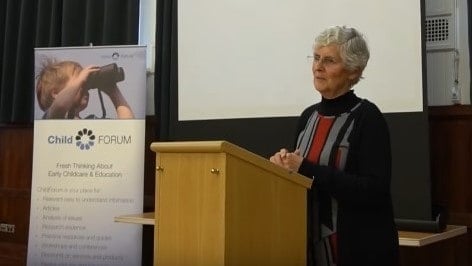
ECE Teacher Pay meeting - a presentation by Janet Dixon

Investing in teachers is investing in children
Janet Dixon: Speech at the ECE Teacher Pay mass meeting.
Wellington.
July 14, 2019.

Kia ora, Talofa, my name is Janet Dixon. I have been involved with ECE in some way since 1967!

I remember a friend of my father said “Janet is too intelligent to be an Early Childhood teacher” of course that only increased my determination to be an ECE Teacher.
ECE Teacher Pay meeting - a presentation by Janet Dixon

Recently I have been wondering if that is still the way this country thinks – you don’t need a brain to be with children!

What has happened to New Zealand? To the reputation of our wonderful holistic curriculum, quality centres and well qualified committed teachers.

The curriculum still has a strong reputation overseas. We can be incredibly proud of that.

The well-qualified committed teachers are certainly still here!

But, whatever happened to higher numbers of qualified teachers, smaller group numbers especially for younger children and financial support for trained teachers doing a professional job?

Is what we are seeing part of the lack of value for babies and young children and misunderstanding about how these children grow and develop?

Some exciting things have been substantially researched bout how young brains develop in cortisol free situations with adults who understand the effect of attachment and this calmness.

But wait, I heard recently that there has been a large increase in the number of reports about children and teachers in centres being hurt (sometimes seriously) by other children. Does this describe a cortisol free environment with wise trained teachers?

Are our young children happy and learning in a “safe environment”?

Does this situation rather reflect minimum numbers of professionally trained teachers on the lowest pay scale with other untrained adults with maximum regulation numbers of children so that employers can cream off an $18 mill profit annually?

Where are the ethics in that?

Otago University’s longitudinal study which is being carried out with more than 1000 New Zealanders since they were born, fore fronts the degree of self-control children attain at the age of three, and predicts how happy, healthy and wealthy they will be as adults. Ritchie Poulton, the director of the study says that self- control is an incredibly important trait….. you could even think of it as an essential raw ingredient for life success!”

What huge expectations we have of ECE Teachers to support each child to achieve this!

In addition, teachers have a lot of occupational hazards. For example, teachers are dealing with:

  • Back pain and injuries from carrying babies, children and heavy play equipment
  • Loss of hearing (from being in an environment of constant loud noises)
  • Being hurt by a child (accidentally or—–?
  • Subject to ongoing infection, illness and disease
  • Job insecurity (Currently many Community Centres are under threat of closure and/or are actually closing).
  • A lack of sufficient recognition
  • Low monetary reward for hours worked

Why would such conditions attract you into this profession?

Isn’t it simple

These children are our future leaders and politicians – a long-term investment for us all. Investing in teachers is a must.


Has this been useful?  Give us your feedback.

You are welcome to add a link to this page on your website. Copyright belongs to the OECE so please do not copy any content without our written permission.

Information provided is of a general nature. It is provided ‘as is’, and we accept no liability for its accuracy or completeness. See our Terms and Conditions.

Related Posts

teacher wages, pay scales, in childcare and early childhood education

What ECE Teachers and Workers Earn: Pay, Benefits and Conditions

Anyone thinking about getting a job in ECE working in ECE or thinking about moving to a different service will find clear, practical information in this article about pay rates, employment conditions, and what to expect in different roles. It explains everything from starting salaries and pay‑step calculations to workplace rights, benefits, and how to recognise a supportive, professional environment.

Read More »
child reading and literacy best age start school

Supporting and Involving Fathers

Early childhood education services in general do not do well when it comes to being inclusive of dads and supporting and involving fathers. Services could be doing better if teachers and service operators knew how. 

New Zealand families are gradually changing and men are becoming more involved in raising their children.

However, public reali

This is a member/subscriber only post. To access it, please see the message below for details on access and joining.

Read More »
Parent Professional Guidance category

Sick Leave: ECE Employer Guide to Legal Duties, Proof, and Best Practices

ECE employers – managing sick leave is becoming increasingly complex, and getting it wrong can put pressure on ratios, disrupt staffing, and create legal and health‑and‑safety risks.

This guidance covers exactly what you must provide, how to support staff appropriately, and how to protect your service when absences occur.

Running an early childhood service means constantly balancing legal obligations, maintaining safe staffing levels, and finding cover at short notice.

Log in with your member details to read the full guidance. If your service’s membership has lapsed or you’d like to join, get in touch and we’ll help you get set up quickly.

Sick leave is one of the hardest parts of that balancing act – especially when absences create strain or when you’re unsure how to respond in a way that is both fair and compliant.

This is a member/subscriber only post. To access it, please see the message below for details on access and joining.

Read More »
early childhood research journal online

Cultural-Historical Borderlands: Common Grounds, Limits and Building Bridges in an Early Childhood Community

This paper discusses how early childhood education may be understood and experienced as a cultural-historical borderland, where mental borders and limits are made by people. Drawing on border theory and cultural-historical theory, different perspectives are considered in the study reported here on understanding the challenges and hopes that a commu

This is a member/subscriber only post. To access it, please see the message below for details on access and joining.

Read More »
overworked teachers and kindergarten staffing issues

School Entry Assessments

School Entry Assessments.

One of the most important things an early childhood service can do for its older children is to help them prepare for school.

Shortly after they begin school new entrants will be assessed by their teachers.

These assessments are called school entry assessments and take place between four and eight weeks afte

This is a member/subscriber only post. To access it, please see the message below for details on access and joining.

Read More »
website 110

Immigrant Children and Families

Immigrant Children in ECE. By Angel Chan.

As New Zealand has opened its doors more to immigrants from all over the world, early childhood services are experiencing significant growth in the enrolment of immigrant children.

Many immigrant children and parents have learning and parenting styles different from ‘New Zealanders’, posing ch

This is a member/subscriber only post. To access it, please see the message below for details on access and joining.

Read More »
The Office of ECE

Share This Information

Table of Contents

Table of Contents

The Office of ECE Login

Take Action!

Help spread this vital ECE information, join our free social and email groups and become a member of OECE.

pay parity funding policy

1. Share This Information

2. Follow Our Social Pages

3. Get Regular Updates

Sign up to our free newsletters.

4. Become a Member

Public Area Categories
Categories