Strong governance and effective management only work when everyone understands the difference between the two.
This is a member/subscriber only post. To access it, please see the message below for details on access and joining.


Anyone thinking about getting a job in ECE working in ECE or thinking about moving to a different service will find clear, practical information in this article about pay rates, employment conditions, and what to expect in different roles. It explains everything from starting salaries and pay‑step calculations to workplace rights, benefits, and how to recognise a supportive, professional environment.

Discover the key organisations and sector groups shaping early childhood education in New Zealand – who they are, what they do, and how they influence the services, policies, and people at the heart of the ECE sector.

Getting a job. How can my ECE qualification help me to get a job? With an early childhood teaching qualification you may find yourself attractive
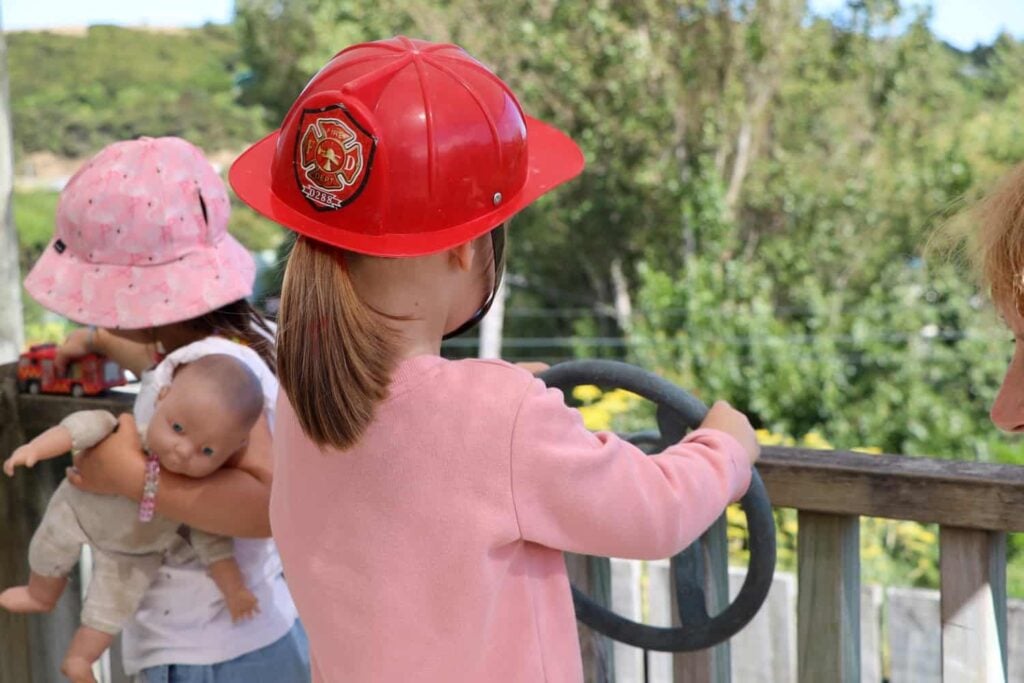
Making signs enriches play and learning.
All around us are signs – what ones can you see?
Signs can be used to tell us what to do like “stop” and “give way” on the road.
They can be used to let us know about dangers (e.g. “wet floor”) and to make announcements (e.g. “cooking at 2pm today”).
Signs can also be used to labe

Report on a project to increase child enrolment and attendance rates at early childhood centres in socio-economically deprived areas of NZ.
FULL REFERENCE: Tyler, J., Davies, M. & Bennett, B. (2018). Increasing early childhood education enrolment and attendance rates in South Auckland, New Zealand. NZ International Research in Early Childhood Education Journal, 21(1), 100–111.
Log-in to read the full research paper below. Or order a pdf copy of the article from the main NZIRECE Journal page.
ABSTRACT: This paper reports on a project to increase enrolment and attendance rates at seven early childhood education (ECE) centres in socio-economically deprived areas of Auckland, New Zealand, between January and June 2014. Participating centres used Breakthrough Series collaborative methodology with the Model for Improvement (Langley et al., 2009) to develop and test change ideas according to local context. Enrolment and attendance data were collected weekly using a custom-designed spreadsheet which provided centres with individualised data and aggregated overall project data. Data were analysed using run charts. Overall median enrolment increased from 76.4% to 88.9%, and overall median attendance increased from 44.9% to 59.2%. The project showed that staff in ECE centres can use Breakthrough Series Collaborative methodology with the Model for Improvement to increase enrolment and attendance rates without extra government funding. The project also built the capability of ECE centre staff to effect improvement, reducing future need to procure external expertise to lead change. This approach to change can contribute to closing the gaps in ECE attendance among socio-economic and ethnic groups who typically have lower rates of participation.
Key words: Enrolment, attendance, improvement methodology, participation, socio-economic deprivation, ethnicity.
INTRODUCTION
In New Zealand there is wide variation in the levels of educational success among different population groups, with those at the lower end more likely to be from Māori, Pacific Island or lower socio-economic status (SES) backgrounds (NZQA, 2015). Children who do not participate in ECE, or who attend regularly for less than one year, are disproportionately from these same groups (Mitchell, et al., 2013).
Unlike most other countries in the OECD, nearly all of NZ’s ECE services are publicly funded privately owned services. ECE services in New Zealand must be licensed as in compliance with regulations by the Ministry of Education to operate (Education Counts, 2016a). Having a licence entitles ECE services to funding, which was estimated in 2010 by the Ministry of Education to cover approximately 83% of the cost of each child’s attendance at the centre (Ministry of Education, 2010). Centres also obtain revenue from fees and charges to families and other sources such as community donations.
Over the past decade there has been a strong policy focus on increasing the number of children in ECE and the time they spend in ECE prior to starting school, along with increasing the supply of child places. The introduction of the 20-Hours Free ECE policy in 2007 for 3 to 5 year old children made ECE more financially affordable for many families. This was followed by the Government making ‘promoting participation’ its major policy goal for ECE, supported by promotional campaigns and setting a Better Public Service target of 98% of children participating in ECE in the year before starting school by 2016 (Ministry of Social Development, 2012).
This ground‑breaking New Zealand study examines how different early childhood settings construct “quality” from a values‑based perspective. By comparing the unique meanings held across kindergartens, childcare centres, playcentres and kōhanga reo, it reveals how diverse philosophies shape what quality truly looks like.

A fantastic guide to doing research! Jeanette Rhedding-Jones explains that there is much to learn, understand, and consider when planning, doing, publishing and evaluating research.

We provide a policy template as well as highlighting the main issues for your team to discuss and ensure your policy is practical, protective and aligned with the realities of social media use in New Zealand early childhood settings.
Make time to think through the key considerations, risks and decisions involved.
At the end of this article, you will find a Social Media Policy template that you can adapt and use to create a policy that suits your service’s needs, values and social media practices.
When used well, social media can strengthen communication, build community and serve as a powerful marketing tool. When used poorly, it can compromise privacy, blur professional boundaries and damage trust.
Social media refers to Internet based tools that allow users to publish information, opinions, images and other content. In New Zealand early childhood settings, the most commonly used platforms include

Are ECE services truly funded for only up to 6 hours in a day based on licensed child-places? Some people think so. Others say no,