
Diseases Requiring Children and Adults Not to Be at ECE

Search in Teacher
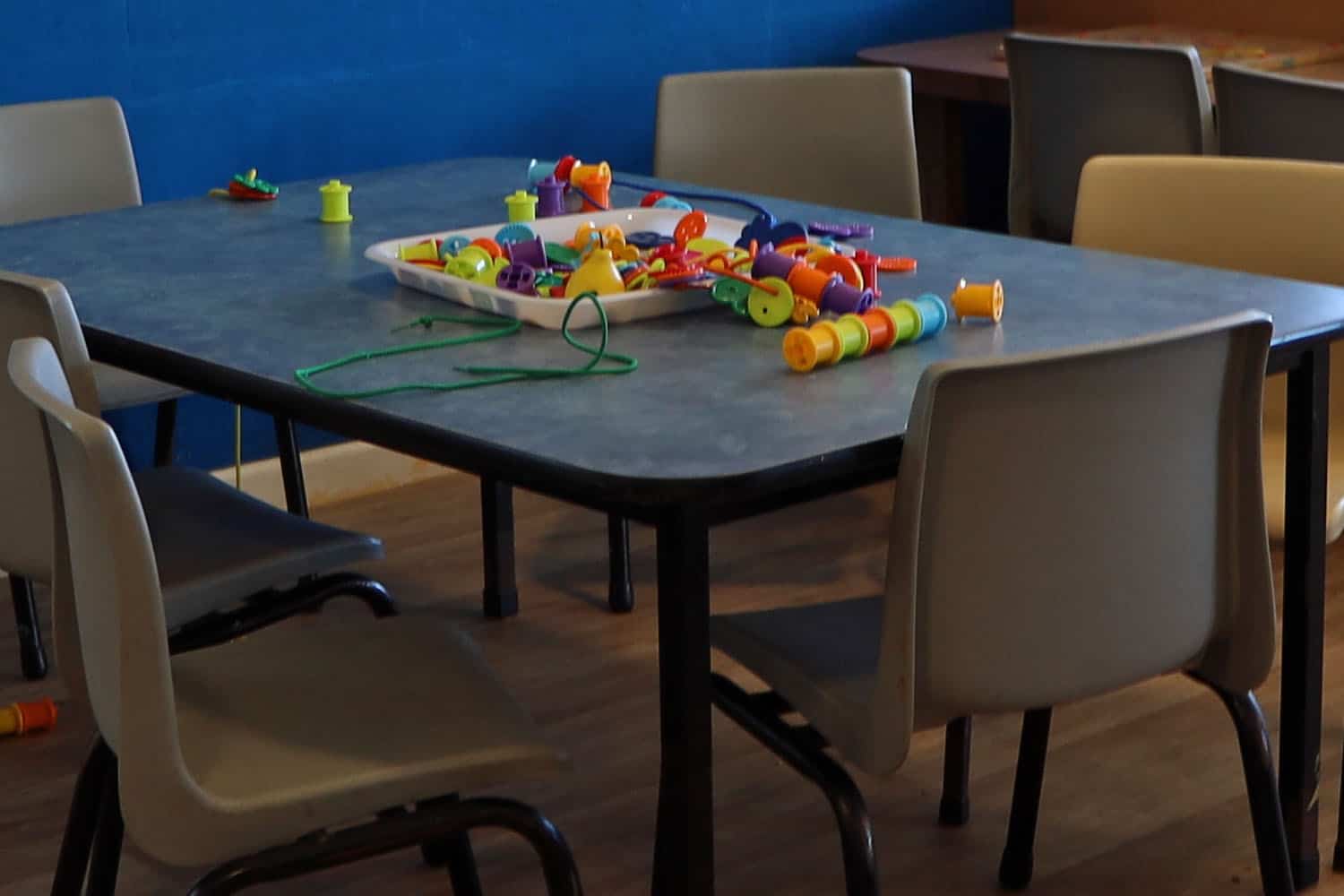
preschool table with threading activity to promote child hand-eye co-ordination

Diseases and Conditions Requiring Exclusion of Children and Adults from Coming In Contact with Any Other Person at the ECE Service.

Below is a list of the diseases and conditions likely to be passed on to children and to have a detrimental effect on them.  When a child or adult has one of these diseases or conditions the early childhood s

This is a member/subscriber only post. To access it, please see the message below for details on access and joining.
Already a Teacher Member?

Are you teaching and caring for children or studying for an ECE qualification?

If you are, that’s great!   Join us now, and become a teacher member.

Five Reasons to Join Us
1. Professional recognition

It is prestigious to belong to the OECE – you can skite about it! 

Ask us for an OECE Member Certificate, to include in your professional portfolio as proof you are engaged in reading and professional learning that advances your understanding of the relationship between practice and outcomes for children.

2. Extra benefits

No need to pay a subscription fee for access to NZ’s specialist ECE Newsroom – your member login will let you view everything in the ECE Newsroom. 

No need to pay to access the best NZ and international research – your member login gives you free access to the Research Library and support. 

3. Professional growth and no-judgement help

Teaching resources and advice on probably everything you can think of, including what to wear as a teacher, how to ask for a pay raise, identifying child behaviour causes and responding to needs, new play activity ideas, etc., etc.  all of this is at your finger-tips 24/7 whenever you need help or advice – login to view. 

4. Representation

Did you know that the OECE meets personally and regularly with the Ministry of Education national team, and the regulations committee and other forums? 

Political leaders and journalists are able to use the OECE to gain deeper knowledge on a topic or issue, and we provide a sounding board for ideas and feedback.

The OECE promotes safe working environments for teachers.  We also promote the absolute need for full pay parity with school teachers for all certificated teaching staff working in teacher-led centres and in home-based, and whether permanently or casually employed. 

5. Value for Money

We are committed to keeping membership prices affordable and providing value for money. 

Teacher membership is just $89 for a full year, or save by joining for 2 years.

Has this been useful?  Give us your feedback.

You are welcome to add a link to this page on your website. Copyright belongs to the OECE so please do not copy any content without our written permission.

Information provided is of a general nature. It is provided ‘as is’, and we accept no liability for its accuracy or completeness. See our Terms and Conditions.

Related Posts

sun protection and children with sunhats engaged in waterplay in home-based ECE

Sun Protection Policy

Early childhood service sun protection policy and guidance.

A few years ago I was a head teacher in a kindergarten. We prided ourselves on not allowing children outside without hats and sun screen. We deliberately created areas in the grounds that were shaded. One very hot February day we had a sprinkler out and the children had a wonderful

This is a member/subscriber only post. To access it, please see the message below for details on access and joining.

Read More »
early childhood research journal online

Changing Roles and Responsibilities: The Development of Coaching in Early Intervention

This paper examines if coaching has a potential role in helping authentic collaborative partnerships between early intervention teachers and early childhood educators and families.
Coaching is a process that can empower. It can also help ECE teachers to examine their own perceptions about the knowledge they hold.

FULL REFERENCE: Mataiti, H., van Bysterveldt, A. & Miller, J. (2016). Changing roles and responsibilities: The development of coaching in early intervention education settings, in Aotearoa New Zealand. NZ Research in ECE Journal, Special Issue: Equality and Diversity, 19, 15 – 31.

Log-in to read the full research paper below. Or order a pdf copy of the article from the main NZIRECE Journal page.

ABSTRACT: Facilitative coaching aims to empower coach-ees by eliciting their inbuilt capacities as individuals and building upon these to achieve self-chosen goals. The practice is increasingly preferred in early intervention (EI) education settings, due to its strong alignment with family-centred approaches. The practice of coaching involves a shift in the roles and responsibilities of those working with children with EI needs. Specifically, coaching is a way of moving away from an expert, directive approach, toward one that facilitates and empowers adults working with the child day to day in natural environments. This has significant potential to break down historical imbalances of power between specialist practitioners, and families and educators, thus supporting key policy directions in Aotearoa New Zealand NZ. This paper utilises the elements of rules, community and division of labour (roles and responsibilities) from the conceptual framework of Activity Theory to provide an overview of the development of and potential for coaching in EI in Aotearoa New Zealand (NZ), focusing on the practice of the specialist teaching practitioner, the Early Intervention teacher (EIT).

KEY WORDS: Coaching; early intervention; activity theory; roles and responsibilities.

INTRODUCTION

Over the past decade, in an effort to provide services that are family-centred, culturally responsive and ecologically sound, early interventionists in early childhood education (ECE) have moved away from instructional models of teaching and providing direct therapy for children (Alliston, 2007; Ministry of Education – Te Tāhuhu o te Mātauranga (MoE), 2011a). Changes in governmental policy in Aotearoa New Zealand (NZ) have also resulted in a significant shift toward ways of working with families/whānau (families) that are facilitative, capacity-building and solution-focused. These are regarded as most helpful for aspirations of empowerment and self-determination of families to be realised (NZ Taskforce on Whānau Centred Initiatives, 2010). One practice that appears to align with these directions is coaching, a relational process applied in a range of settings over the last thirty years, which takes place between two people in order to achieve pre-determined outcomes (Green & Spence, 2014).

Read More »

Share This Information

Table of Contents

Table of Contents

The Office of ECE Login

Take Action!

Help spread this vital ECE information, join our free social and email groups and become a member of OECE.

pay parity funding policy

1. Share This Information

2. Follow Our Social Pages

3. Get Regular Updates

Sign up to our free newsletters.

4. Become a Member